



Shell Net Zero Strategy 2026: Targets and Capital
Shell still holds a 2050 net zero ambition and a 2030 interim target, and reaffirmed both in April 2026. It also retired its 2035 target in 2024, has sold or shelved a series of renewables positions through 2026, and lifted its production growth outlook from one percent a year to four. The gap between what Shell promises and where its capital goes is the story. Here is what the targets actually say, what the money is doing, and what it means for suppliers.
- The 2050 net zero ambition and the 2030 interim targets are intact and were explicitly reaffirmed in Shell's 27 April 2026 ARC Resources announcement. The 2035 target of a 45 percent net carbon intensity cut was retired in March 2024 and has never been replaced.
- Shell is closer to some targets than others. On 2025 reporting, Scope 1 and 2 emissions were down about 36 percent against 2016, roughly 70 percent of the way to the 2030 halving, while net carbon intensity was down 9.0 percent, inside but at the bottom of the 2025 interim band.
- Lower-carbon activity is capped by design. At the March 2025 Capital Markets Day Shell said it expects lower-carbon platforms to account for up to 10 percent of capital employed by 2030, and management has attached a return hurdle of above 10 percent to that portfolio before the end of the decade.
- 2026 was a year of renewables retrenchment. Shell agreed to sell Sprng Energy in India for around 1.8 billion dollars, sold its European onshore renewables business to TotalEnergies, and has had its offshore wind portfolio under review.
- The direction of capital is gas and liquids. The 16.4 billion dollar ARC Resources acquisition completed on 2 September 2026, adding around 370 thousand barrels of oil equivalent per day and lifting Shell's production growth outlook to about 4 percent a year to 2030 from about 1 percent previously.
- For suppliers the growth budget is in integrated gas, upstream, Canadian Montney integration, turnarounds and trading technology, not renewables construction, and it sits inside a live structural cost reduction of 5 to 7 billion dollars by 2028 against 2022.
One ambition, three interim numbers, one retired target
Shell's headline ambition is to become a net zero emissions energy business by 2050, covering emissions from its own operations and from the end use of the energy products it sells. Underneath that sit three interim measures. Shell aims to halve Scope 1 and 2 emissions from operations under its operational control by 2030 against a 2016 baseline. It aims to cut the net carbon intensity of the energy products it sells by 15 to 20 percent by 2030 against 2016. And it holds an ambition to reduce customer emissions from the use of its oil products, principally petrol and diesel, by 15 to 20 percent by 2030 against a 2021 baseline.
The most consequential change came on 14 March 2024, when Shell published its Energy Transition Strategy 2024. As Carbon Brief reported at the time, Shell chose to retire its 2035 target of a 45 percent reduction in net carbon intensity, citing uncertainty in the pace of change in the energy transition, and simultaneously weakened the 2030 net carbon intensity target from 20 percent to a 15 to 20 percent range. The oil products ambition was introduced in the same document. Shareholders approved the strategy at the May 2024 annual general meeting.
Since then the targets have held. At the March 2025 Capital Markets Day Shell said it would "maintain the climate targets and ambition set out in Shell's Energy Transition Strategy 2024". In the 27 April 2026 filing announcing the ARC Resources acquisition Shell stated that its "2030 climate-related targets and ambition remain unchanged", which is notable given the acquisition materially increased its production outlook.
Shareholder pressure has faded rather than intensified. At the May 2026 annual general meeting a climate resolution asking Shell to report on value under declining-demand scenarios attracted 13.01 percent support, well down from the 30.47 percent peak recorded in 2021.
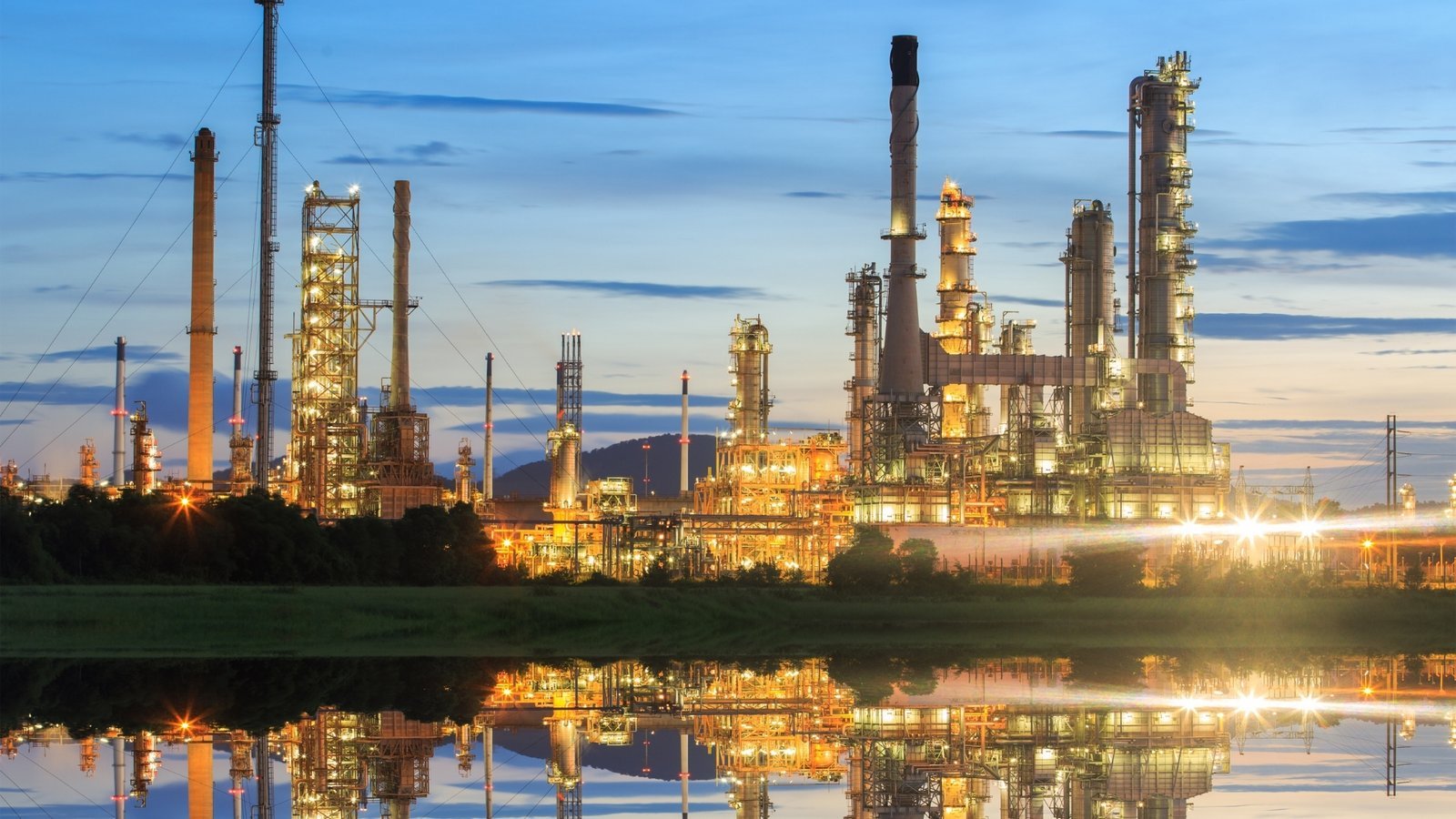 المشروع 54An integrated refining and petrochemical complex at first light, reflected in still water. Shell's 2030 targets remain intact while its capital increasingly concentrates in gas, liquids and trading-linked low-carbon businesses.
| هدف | Baseline | Status in 2026 | Latest reported progress |
|---|---|---|---|
| Net zero emissions energy business | By 2050 | يعيش | Ambition, not a numeric interim |
| Halve Scope 1 and 2, operational control | 2016, by 2030 | يعيش | Down about 36 percent, roughly 70 percent of the way |
| Net carbon intensity of products sold, minus 15 to 20 percent | 2016, by 2030 | Live, weakened from 20 percent in 2024 | Down 9.0 percent, within the 2025 interim band of 9 to 13 percent |
| Customer emissions from oil products, minus 15 to 20 percent | 2021, by 2030 | Live, ambition rather than target | Down about 18 percent |
| Net carbon intensity minus 45 percent | 2016, by 2035 | Retired March 2024 | Not replaced |
Gas, liquids and a capped low-carbon allocation
The 2025 Capital Markets Day cut cash capital expenditure guidance to 20 to 22 billion dollars a year for 2025 to 2028, down from 22 to 25 billion. Within that, integrated gas and upstream were allocated roughly 12 to 14 billion dollars and downstream, renewables and energy solutions around 8 billion. Shell set LNG sales growth of 4 to 5 percent a year to 2030, committed to distributions of 40 to 50 percent of cash flow from operations through the cycle with a 4 percent progressive dividend, and targeted cumulative cost reductions of 5 to 7 billion dollars by the end of 2028 against 2022.
Chief executive Wael Sawan set out the destination plainly at that event: "We want to become the world's leading integrated gas and LNG business and the most customer-focused energy marketer and trader, while sustaining a material level of liquids production." The lower-carbon framing in the same filing was explicitly bounded: platforms "where we expect to have up to 10% of capital employed by 2030".
ARC Resources changed the growth arithmetic. Announced on 27 April 2026 at an enterprise value of 16.4 billion dollars, comprising about 13.6 billion of equity and roughly 2.8 billion of net debt, and completed on 2 September 2026, it added around 370 thousand barrels of oil equivalent per day and roughly 2 billion barrels of oil equivalent of proved plus probable reserves, with around 250 million dollars of expected synergies. Shell raised its production growth outlook to about 4 percent a year to 2030 against 2025, from about 1 percent previously, while maintaining liquids at around 1.4 million barrels per day. Sawan's framing on announcement was: "This establishes Canada as a heartland for Shell while furthering our strategy to deliver more value with less emissions."
2026 also brought a sequence of low-carbon exits. Shell agreed to sell Sprng Energy Group in India, about 5.0 gigawatts peak, to Aditya Birla Renewables for approximately 1.8 billion dollars, sold its European onshore renewables business to TotalEnergies, and has had its offshore wind portfolio under review. On the second quarter 2026 earnings call, as carried in a third-party transcript, Sawan explained the filter being applied: "A lot of our low-carbon business models are going to be trading back models. So what you see us doing is divesting assets that don't fit into a trading back capability… some of that capital today is sitting unproductively because we are still building up, take CCS, for example, take Holland Hydrogen I in Rotterdam. So this is capital that will start to show a return likely in 2027 onwards… we will expect a return on that part of the business to be north of 10% before the end of the decade." Chief financial officer Sinead Gorman was more direct on the portfolio test: "And then you look at our Renewables portfolio. We've talked before about where do we have capabilities versus others and hence, the exit from Sprng in India as well." These quotes come from a transcript provider rather than Shell's own published record, so treat the wording as reported rather than as a company filing.
Mid-pack on rhetoric, gas-heaviest on substance
BP has executed the hardest reset of the European majors. Its 2025 strategy reset directed around 75 percent of group capital expenditure to upstream, cut transition spending to 1.5 to 2 billion dollars a year, more than 5 billion below prior guidance, reduced group capex toward 13 to 15 billion by 2027 and dropped its 2030 renewables capacity target. We covered the reasoning in لماذا تخلت شركة بي بي عن استراتيجيتها لتحقيق صافي انبعاثات صفرية؟ and the supplier consequences in what BP's reset means for suppliers and vendors.
TotalEnergies remains the most power-weighted European major, with low-carbon capital expenditure of roughly 4 billion dollars a year including 3 to 4 billion in integrated power, and it is the buyer of Shell's European onshore renewables. Equinor retired its 10 to 12 gigawatt renewables-by-2030 target and now allocates around 10 percent of capex to an integrated power business with a target of more than 20 terawatt hours of power production by 2030. ExxonMobil cut its low-carbon spending by roughly a third to around 20 billion dollars through 2030, concentrated on carbon capture, hydrogen, biofuels and carbon materials, with no renewable power generation at all.
Shell sits in a distinctive position. Unlike BP and Equinor it has not dropped a headline 2030 climate target since 2024, so on stated commitment it looks more consistent than its closest European peer. On capital allocation, however, the 2026 moves, ARC, the renewables exits and the shift from 1 percent to 4 percent production growth, place it materially closer to the US majors than its target language suggests. That reading is our assessment rather than a company statement.
Third-party assessments dispute the alignment case. Reclaim Finance has assessed Shell's production plan as running above an International Energy Agency net zero trajectory, and the Australasian Centre for Corporate Responsibility has continued to challenge the LNG growth case. Both are campaign organisations with a stated position, and should be read as such, but their analysis is the main published counterweight to Shell's own framing.
Follow the gas money, bring a returns case
Four things follow from the capital picture. First, the growth budget sits in integrated gas and upstream, which take roughly 12 to 14 billion dollars of a 20 to 22 billion dollar annual envelope, with 2026 running higher at 24 to 26 billion including the ARC consideration. Canada and the Montney are now a declared heartland, LNG Canada is at full capacity, and brownfield debottlenecking, turnarounds and integration work are where near-term scopes are concentrated.
Second, the cost programme is live and it will be felt in procurement. Shell is targeting cumulative cost reductions of 5 to 7 billion dollars by 2028 against 2022, had achieved roughly 6 billion by mid 2026, and reported around 0.7 billion in the first half of 2026, all against system-wide input inflation that management put at 5 to 6 percent. In practice that means framework consolidation, fewer and larger suppliers, and sustained pressure to absorb inflation rather than pass it on.
Third, the low-carbon opportunity is narrow and financial rather than ideological. With lower-carbon platforms capped at up to 10 percent of capital employed and a stated return expectation above 10 percent before the end of the decade, a proposition that leads with decarbonisation credentials and no returns case will not clear the internal hurdle. Carbon capture, hydrogen at Holland Hydrogen I and low-carbon fuels are the live areas; renewables engineering and construction largely is not.
Fourth, the emissions targets that remain still shape buying criteria. Because the Scope 1 and 2 halving and the net carbon intensity target are intact, methane abatement, flaring reduction, electrification of operations, energy efficiency and credible product carbon intensity data continue to function as evaluation criteria in tenders. Suppliers should also expect counterparty churn in the divested renewables assets, where contracts move to Aditya Birla, TotalEnergies and any offshore wind acquirer. Shell requires suppliers to adhere to its General Business Principles and Supplier Principles in model procurement contracts, and that requirement has not loosened.
The trajectory Shell itself publishes runs to 2030: production growth of about 4 percent a year, liquids sustained near 1.4 million barrels per day, LNG sales growth of 4 to 5 percent a year, free cash flow per share growth above 10 percent a year, capex held at 20 to 22 billion for 2027 and 2028, lower-carbon platforms capped at 10 percent of capital employed, and the 2030 climate targets reaffirmed. Those commitments are internally consistent only if gas is treated as the transition. Whether that holds is the open question, and it is the one worth watching.
استمع وخذها معك
هل تفضل الاستماع إلى التسجيل الصوتي، أم تحتاج إلى العرض التقديمي للمراجعة الداخلية؟ يتوفر العرض التقديمي الكامل كحلقة بودكاست وعرض شرائح قابل للتنزيل.
What best describes Shell's 2026 position, as you read it?
الأسئلة المتكررة
No. Shell's ambition to be a net zero emissions energy business by 2050 remains in place, as do its 2030 interim targets, and Shell explicitly restated in its 27 April 2026 ARC Resources filing that its 2030 climate-related targets and ambition remain unchanged. What Shell did abandon, in March 2024, was its 2035 target of a 45 percent reduction in net carbon intensity, which it retired citing uncertainty in the pace of the energy transition and has not replaced. It also weakened the 2030 net carbon intensity target from 20 percent to a 15 to 20 percent range at the same time.
Shell has not published a single low-carbon capital expenditure line in the way some peers do, but it has published a ceiling. At its March 2025 Capital Markets Day it said it expects lower-carbon platforms to account for up to 10 percent of capital employed by 2030. Management indicated on the second quarter 2026 earnings call that around 15 billion dollars of capital was employed in that portfolio and that it expects a return above 10 percent from it before the end of the decade. Group cash capital expenditure guidance is 20 to 22 billion dollars a year for 2025 to 2028, with 2026 elevated to 24 to 26 billion because of the ARC Resources consideration.
Shell's stated test is whether an asset fits a trading-led business model and clears a return hurdle. Chief executive Wael Sawan described the filter on the second quarter 2026 earnings call as divesting assets that do not fit into a trading back capability, and chief financial officer Sinead Gorman framed the Sprng Energy exit in India as a question of where Shell has capabilities relative to others. In practice Shell agreed to sell Sprng Energy to Aditya Birla Renewables for around 1.8 billion dollars, sold its European onshore renewables business to TotalEnergies, and placed its offshore wind portfolio under review, while retaining carbon capture, hydrogen and low-carbon fuels positions.
BP has gone further in retrenchment. Its 2025 reset directed around 75 percent of capital expenditure to upstream, cut transition spending to 1.5 to 2 billion dollars a year, and dropped its 2030 renewables capacity target. Shell has kept its 2030 climate targets intact and has not dropped a headline target since 2024. On capital allocation, however, the two are converging: Shell's 2026 acquisition of ARC Resources, its renewables divestments and its move from about 1 percent to about 4 percent production growth narrow the practical gap considerably, even though the stated commitments differ.
Growth scopes are concentrated in integrated gas and upstream, particularly Canada and the Montney following ARC Resources, plus turnarounds, brownfield debottlenecking and trading and digital capability. A structural cost reduction programme of 5 to 7 billion dollars by 2028 against 2022 is running against 5 to 6 percent input inflation, so expect framework consolidation and pricing pressure. Low-carbon opportunities are narrow and must carry a returns case above 10 percent. Because the Scope 1 and 2 and net carbon intensity targets remain live, methane abatement, flaring reduction, electrification, efficiency and verifiable product carbon data continue to carry weight in tender evaluation.
احصل على التالي إسقاط معلومات استخباراتية
انضم إلى قادة الطاقة والصناعة واحصل على معلوماتنا التسويقية، ونمو الذكاء الاصطناعي، وهيكلة الإيرادات، مباشرة وبدون حشو.
اسمك مدرج في القائمة
أهلاً بكم في موجز نمو الطاقة، تابعوا بريدكم الوارد للاطلاع على النشرة القادمة.