










Die Diskrepanz zwischen der Leistung von Energieanlagen und den Ausgaben für die Kundengewinnung hat einen kritischen Punkt erreicht. Entscheidungsträger fordern nun, dass Marketingkennzahlen die realen Gegebenheiten des Stromnetzes und den tatsächlichen Ertrag der verwalteten Anlagen widerspiegeln.
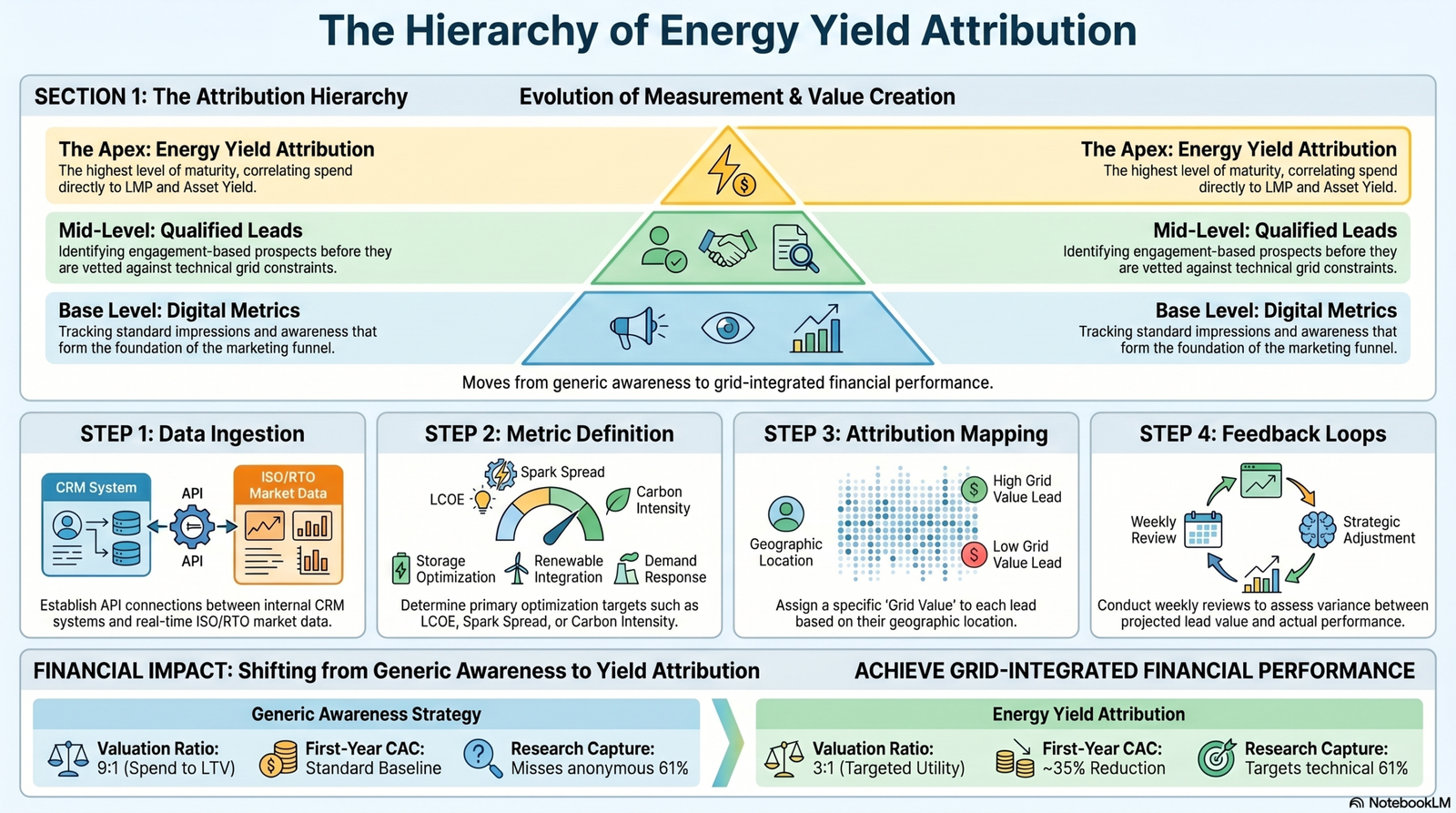
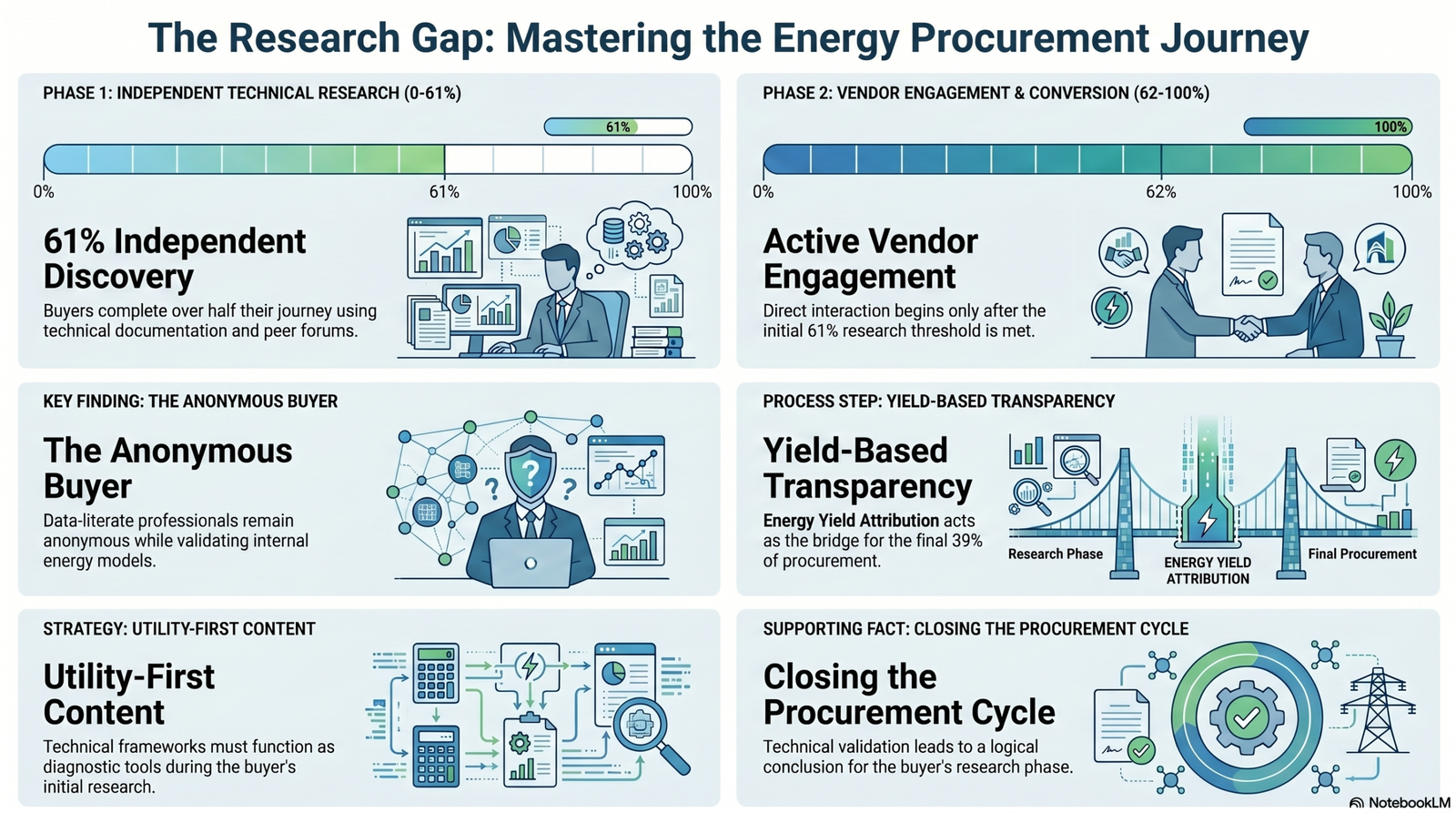
Die Energieertragszuordnung ist ein datengestütztes Framework, das die Akquisitionskosten mit der Netzleistung in Echtzeit und der Anlagenleistung synchronisiert. Durch die Integration von Preissignalen unabhängiger Systembetreiber (ISO) in Zuordnungsmodelle können Unternehmen die “9:1-Bewertungsfalle” vermeiden, bei der die Kundenakquisitionskosten (CAC) den Kundenwert im ersten Jahr (LTV) übersteigen. Aktuelle Daten zeigen, dass B2B-Energieeinkäufer 611 TP3T ihrer Recherchen selbstständig über technische Dokumentationen und Fachforen durchführen, bevor sie einen Anbieter beauftragen. Daher ist ertragsbasierte Transparenz die notwendige Brücke für die verbleibenden 391 TP3T des Beschaffungszyklus.
Laut Prognosen werden die globalen Investitionen in netzgebundene Speichersysteme und Anlagen zur Nutzung erneuerbarer Energien im Jahr 2025 die Marke von 1,4 Billionen US-Dollar überschreiten. Internationale Energieagentur (IEA), Der Wettbewerb um Industrieaufträge hat sich verschärft. Die Leadgenerierung muss nun im Hinblick auf Netzengpässe, Abschaltrisiken und Preisschwankungen bewertet werden.
Definition der Energieertragszuordnung
Die Energieertragszuordnung ersetzt den generischen ROI, indem sie Marketing-Conversions der technischen Leistung eines Energieanlagenwerts oder dem finanziellen Ertrag eines Stromabnahmevertrags (PPA) zuordnet. Standard-ROI-Modelle sind unzureichend, da sie den zeitabhängigen Wert eines Vertrags im Verhältnis zur Netznachfrage nicht berücksichtigen.
In diesem Sektor ist ein Lead, der in Zeiten niedriger Grenzkosten generiert wird, grundsätzlich weniger wertvoll als ein Lead, der in Zeiten hoher Netzbelastung gewonnen wird. Marketing-Dashboards, die Grenzkostenfaktoren oder standortbezogene Grenzkosten (LMP) von Institutionen wie [Name der Organisation/des Unternehmens] ignorieren, sind daher ungeeignet. PJM-Verbindung liefern ein unvollständiges Finanzbild.
Die strategische Bedeutung der Forschungsphase 61%
Die Beschaffung im Energiesektor wird von datenkompetenten Fachleuten durchgeführt, die während des Großteils des Kaufprozesses anonym bleiben. Diese Einkäufer benötigen eine technische Validierung interner Modelle anstelle von traditionellen, auf Information basierenden Inhalten.
Die Marketingstrategie muss sich darauf konzentrieren, nutzbringende Produkte in den Vordergrund zu stellen. Eine Marketing-Dashboard-Vorlage dient als Diagnoseinstrument und wird während der Recherchephase in den Workflow des Käufers integriert. Wenn das Rahmenwerk eines Anbieters zum primären Analyseinstrument des Käufers wird, ergibt sich die Lösung als logische Konsequenz seiner Recherche.
Die 9:1-Bewertungsfalle entschärfen
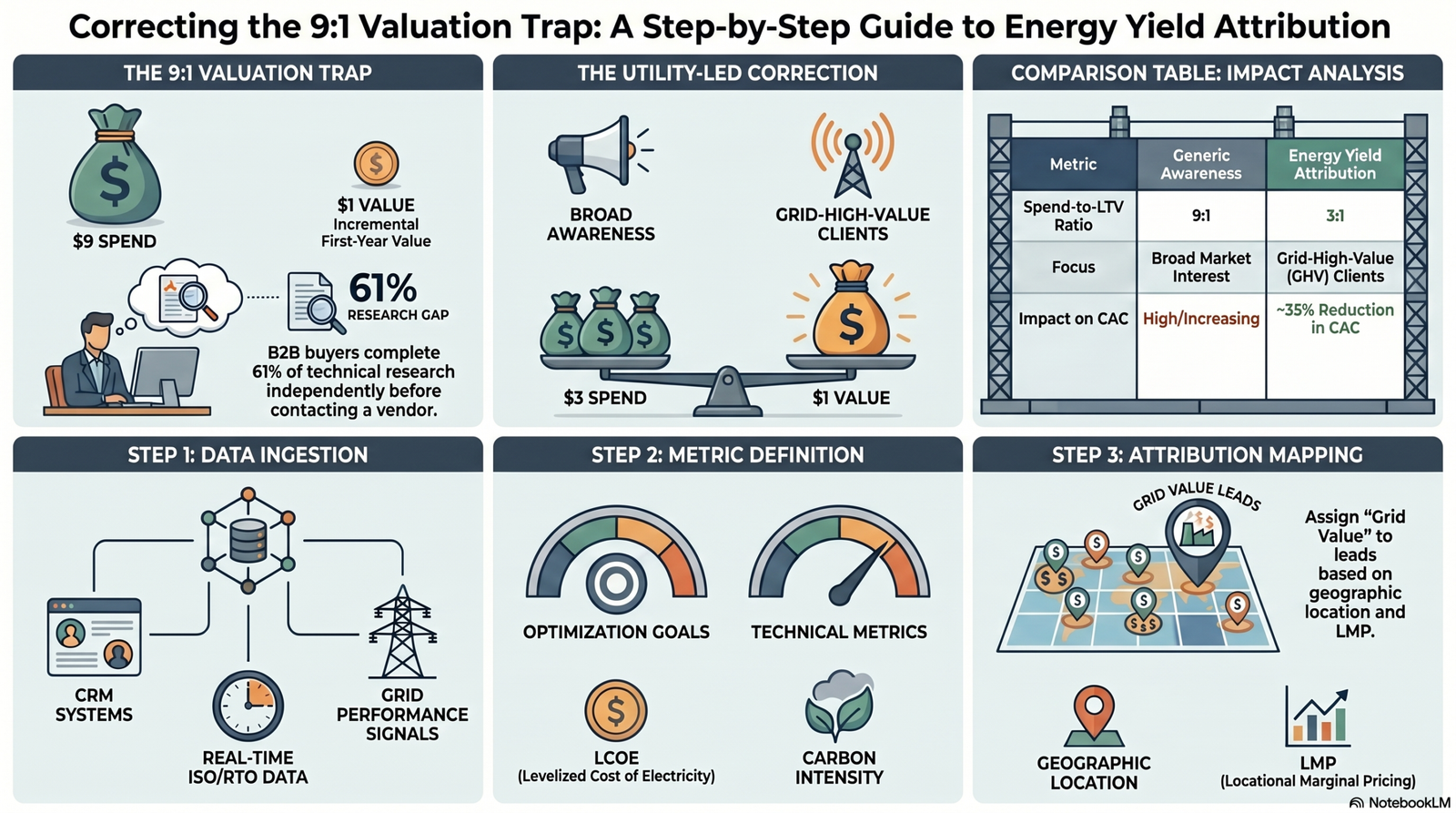
Die 9:1-Bewertungsfalle tritt ein, wenn ein Energieunternehmen $9 für allgemeines Markenbewusstsein aufwendet, für jeden $1 zusätzlichen LTV im ersten Jahr. Dieses Ungleichgewicht resultiert aus der Fokussierung auf breites Interesse anstatt auf spezifische, renditestarke Signale, die häufig in Marktinformationen zu finden sind. BloombergNEF.
Durch die Nutzung der Energieertragszuordnung identifizieren Unternehmen Vertriebskanäle, die “Grid-High-Value”-Kunden (GHV) generieren – Kunden, deren Bedarfsprofile den Anlagenkapazitäten des Anbieters entsprechen. Die Verlagerung der Ausgaben auf diese Segmente kann die Kundenakquisitionskosten (CAC) im ersten Jahr um ca. 351 TP3T senken.
Betriebliche Skalierbarkeit und Netzausrichtung
Die Skalierbarkeit wird häufig durch die “Qualitätslücke” zwischen Marketing und Netzbetrieb beeinträchtigt. Leads, die in Regionen generiert werden, in denen der Betrieb sie aufgrund geografischer Beschränkungen oder Verzögerungen bei der Netzanbindung nicht profitabel bedienen kann, erhöhen die Kundenabwanderung. Analysten sollten Leads mit den folgenden Daten abgleichen: Rasterkarten der US-Energieinformationsbehörde (EIA) um die Ausrichtung sicherzustellen.
Die Ertragszuordnung schafft eine einheitliche Datenumgebung. Durch die Synchronisierung von Marketingdaten mit SCADA-Systemen skaliert das Unternehmen entsprechend den realen Gegebenheiten. So wird sichergestellt, dass die Pipeline mit potenziellen Kunden in ISO-Zonen gefüllt wird, in denen das Unternehmen über freie Kapazitäten verfügt oder strategische Interessen verfolgt.
Implementierungsrahmen
Die Implementierung eines ertragsbasierten Dashboards erfordert eine systematische Integration von Marktdaten und die Ablehnung von oberflächlichen Kennzahlen.
- Datenerfassung: Einrichtung von API-Verbindungen zwischen CRM-Systemen und Echtzeit-ISO/RTO.
- Metrische Definition: Bestimmen Sie die primäre Optimierungsmetrik (z. B., LCOE, Funkenstreuung oder Kohlenstoffintensität).
- Attributionsmapping: Weisen Sie jedem Lead basierend auf seinem geografischen Standort einen “Rasterwert” zu.
- Rückkopplungsschleifen: Führen Sie wöchentliche Überprüfungen durch, um die Abweichung zwischen dem prognostizierten Lead-Wert und der tatsächlichen Anlagenperformance zu beurteilen.
Wichtigste Erkenntnisse
- Ertrag vor Kapitalrendite priorisieren: Der traditionelle ROI ist ein nachlaufender Indikator. Die Energieertragsattribution bringt die Akquisition mit den physikalischen Gegebenheiten des Stromnetzes in Einklang.
- Ziel ist die Forschungsphase 61%: Bereitstellung technischer Hilfsmittel zur Gewinnung von Käufern während der anonymen Phase des Kaufprozesses.
- Die 9:1-Falle beseitigen: Wenn die Kundenakquisitionskosten (CAC) im Verhältnis zum Kundenwert (LTV) weiterhin unverhältnismäßig hoch sind, sollte auf technisch wertvolle Anlagen umgeschaltet werden.
- Wertorientierte Standortgrenzpreise: Ein Lead in einem überlasteten ISO-Knoten ist deutlich wertvoller als einer in einem gesättigten Markt.
Häufig gestellte Fragen
Wie unterscheidet sich die Zuordnung des Energieertrags vom Marketing-ROI?
Der Marketing-ROI misst den finanziellen Aufwand im Verhältnis zum Ertrag. Zuordnung des Energieertrags setzt die Marketingausgaben in Beziehung zur technischen und finanziellen Leistungsfähigkeit der Energieanlagen und stellt so sicher, dass das Wachstum mit der Rentabilität des Stromnetzes im Einklang steht.
Ist dieser Rahmen auf alle Teilsektoren des Energiesektors anwendbar?
Ja. Auch wenn die konkrete Kennzahl variiert (z. B. Abregelung bei erneuerbaren Energien im Vergleich zum Durchsatz im Midstream-Bereich), bleibt das Prinzip der Verknüpfung von Akquisition und physischer Leistung konstant.
Über den Autor
Redaktionsteam von Projekt 54 – Spezialisiert auf industrielle digitale Transformation und Energiemarktstrategie.
Erkunden Sie dieses Thema weiter
[PODCAST-PLAYER: Entschlüsselung der Energieertragszuordnung]
[PRÄSENTATION: Der Energiemarketing-Rahmen 2026]
Präsentation herunterladen (PDF) Präsentation herunterladen (PPTX)
Externe Links:
Internationale Energieagentur (IEA)
Rasterkarten der US-Energieinformationsbehörde (EIA)
Fokus-Keyword: Energieertragszuordnung
SEO-Titel: Energieertragszuordnung: Der Leitfaden für Führungskräfte zur Marketing-ROI
URL-Slug: energy-yield-attribution-guide
Meta-Beschreibung / Auszug: Optimieren Sie die Energieertragszuordnung, um Ihre Marketingausgaben an die Netzleistung anzupassen und die Bewertungsfalle von 9:1 zu vermeiden. Laden Sie jetzt die kostenlose Vorlage herunter.
Titelbild ALT-Text: Eine hochmoderne digitale Benutzeroberfläche, die Kennzahlen zur Energieertragszuordnung, Daten zur Netzeffizienz und Diagramme zur finanziellen Kapitalrendite für Führungskräfte im Energiesektor anzeigt.