



EU ETS2: The Delay Moved the Invoice, Not the Clock
Europe postponed its second carbon market to 2028. Almost nothing else was postponed. Permits have been mandatory since January 2025, verification since 2026, and auctions still start in 2027. For the roughly 11,400 fuel suppliers inside the system, the compliance machine never stopped.
- The delay is law. The Council adopted the amended European Climate Law on 5 March 2026, postponing ETS2 compliance to 1 January 2028. The original Article 30k energy price review that many commentators expected to trigger a delay was superseded and is no longer relevant.
- Auctions were deliberately left in 2027. Member states get the revenue a year before the cost lands, because the Social Climate Fund has to be visibly spending before consumers see a carbon component in fuel prices.
- Monitoring, permits and verification never paused. A permit plus an approved monitoring plan was required by 1 January 2025, reports are due each 30 April, and third party verification applies from 2026. Only the surrender date moved.
- The EUR 45 trigger is not a price cap. It is a supply release valve. The June 2026 agreement doubled the release volume from 20 million to 40 million allowances, which is roughly four per cent of annual covered emissions on the Council's own figures.
- The obligated party cannot abate. Fuel suppliers account for the emissions, end users decide consumption. That makes ETS2 a pricing, contracting and hedging problem rather than an operations problem.
- Any fixed price fuel contract whose delivery window crosses 1 January 2028 now carries an unpriced carbon component, and the hedging market for it is thin. The December 2028 future was described as barely trading in August 2026.
One date moved. The rest of the system kept running
ETS2 was created by Directive (EU) 2023/959 of 10 May 2023, which inserted a new Chapter IVa, Articles 30a to 30k, into the original Emissions Trading Directive 2003/87/EC. It is a separate cap and trade market covering fuels used in road transport, buildings and parts of small industry, sitting alongside but not inside the existing EU ETS.
The delay was not a technical postponement buried in a delegated act. It was the price of a political bargain. At the Environment Council of 4 and 5 November 2025, central and eastern member states traded their support for the 2040 climate target in exchange for concessions on ETS2 and on the 2035 combustion engine rules. The Council reached its position after an all night negotiation, and Poland, Slovakia and Hungary abstained on the final text. Council and Parliament reached provisional agreement on 10 December 2025, Parliament approved in February 2026, and the Council formally adopted the amended European Climate Law on 5 March 2026.
One correction worth making, because it is still repeated in briefings. The original design contained an automatic delay mechanism under Article 30k: the Commission was to assess by 15 July 2026 whether oil and gas prices were high enough to push the start back by a year. Through 2025, most commentary treated that clause as the live route to a 2028 start. It never ran. Member states simply legislated the postponement instead, and the clause is now spent.
A second correction. Commissioner Wopke Hoekstra indicated in October 2025 that early ETS2 auctions might be brought forward into the second half of 2026. After the delay decision the Commission instead proposed, on 8 December 2025, to begin early auctioning in January 2027. Anyone still briefing auctions from 2026 is working from a superseded statement.
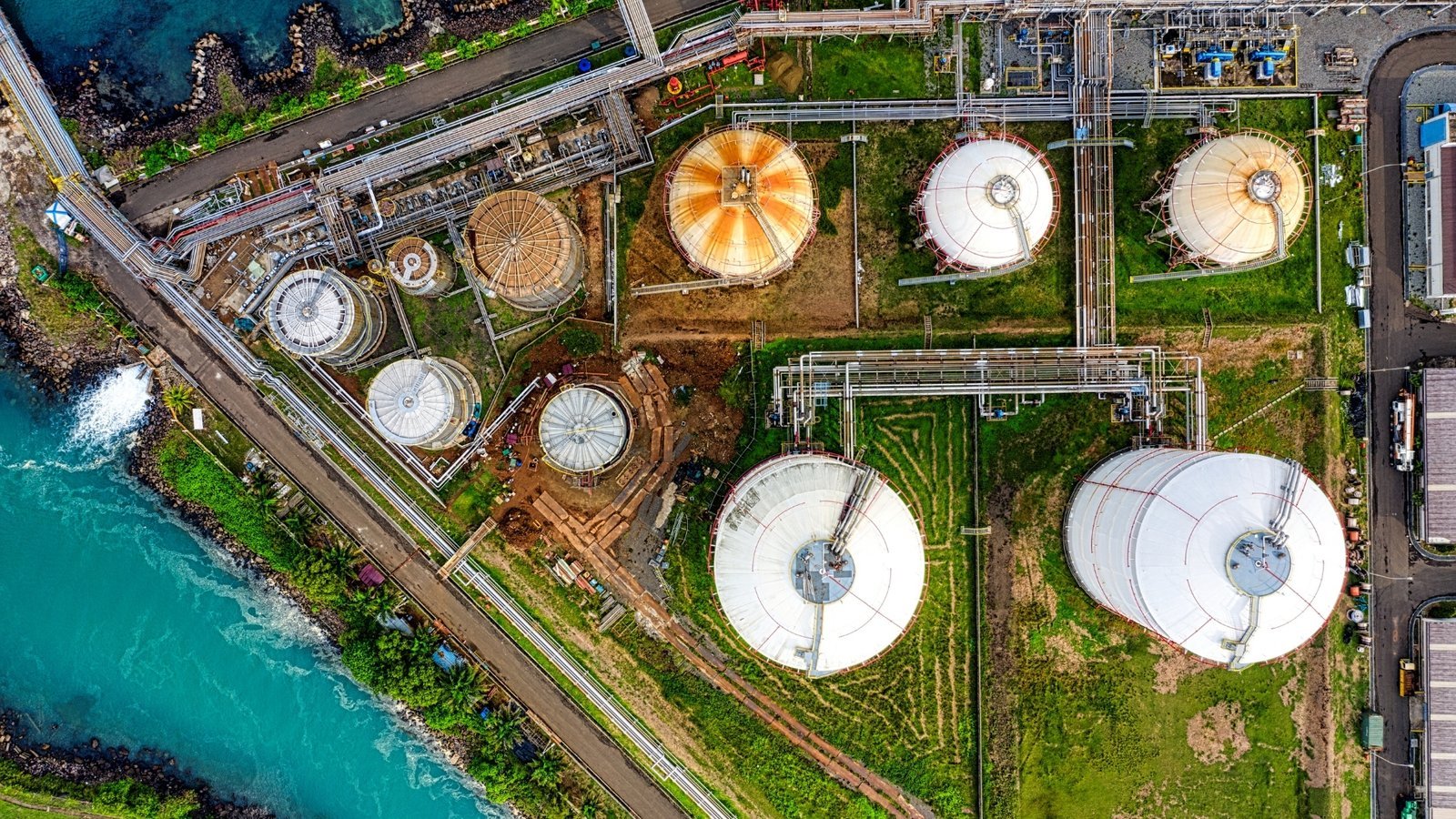 Projet 54ETS2 regulates upstream. The obligation attaches where fuel is placed on the market, typically at entities already registered in tax warehouses, not at the pump and not at the boiler.
| Obligation | Original timing | Position after the delay |
|---|---|---|
| Greenhouse gas emissions permit plus approved monitoring plan | Held by 1 January 2025 | Unchanged. Already in force |
| Monitoring and reporting of emissions | From 2025 | Unchanged. Annual report due 30 April |
| Third party verification of annual data | From 2026 | Unchanged. Accredited verifier required |
| Auctioning of allowances | 2027 | Unchanged. Still begins 2027 |
| Compliance obligation begins | 1 January 2027 | Moved to 1 January 2028 |
| First surrender of allowances | 31 May 2028 | Moved to 31 May 2029, for 2028 emissions |
The fuel supplier, not the driver and not the household
This is the single most misunderstood feature of the system, and getting it right is commercially useful. The European Commission is explicit: although ETS2 is a cap and trade system like the existing EU ETS, it covers emissions upstream, and it will be fuel suppliers, rather than end consumers such as households or car users, that are required to monitor and report their emissions and to surrender allowances.
The Council's own formulation puts it the same way: the system applies to distributors supplying fuels to the buildings and road transport sectors and certain other sectors, and those suppliers must monitor and report emissions from the fuels they sell, then surrender allowances equivalent to those emissions.
In practice, national authorities identify regulated entities by hooking onto existing tax machinery. For oil and gas this typically means suppliers already registered in tax warehouses, because the excise duty point is the cleanest available proxy for fuel placed on the market. Coal is harder, because coal products are not uniformly subject to excise duties across Europe, and authorities generally need extra procedures to separate covered from non covered fuel uses. Veyt's preliminary estimate is that approximately 11,400 fuel providers across Europe registered monitoring, reporting and verification plans and reported 2024 emissions. That is an analyst estimate, not an official count.
There is no individual cap per supplier. Fuel providers compete for a limited number of allowances but are not assigned personal emission budgets, and the overall cap is enforced through the market. All allowances are auctioned, with no free allocation, on the explicit policy assumption that regulated entities can pass compliance costs through to consumers.
Which produces the structural asymmetry that defines the commercial problem. In ETS2, fuel providers account for emissions but end users determine fuel consumption. The obligated party has limited ability to influence demand. It cannot abate its way out. It can only price.
Scope is not uniform
Fuels used in agriculture, forestry and leisure boating are excluded by default, but Austria, Finland, the Netherlands and Sweden have opted to include additional segments. Member states may also seek exemptions where an existing national fuel tax already exceeds the allowance cost. Do not assume one EU footprint.
Germany is a special case
Germany has run its own national fuel ETS, the nEHS, since 2021 across almost the same scope, at an administered price of EUR 55 per tonne in 2025 moving to a EUR 55 to 65 corridor in 2026. German customers have been paying a known, capped carbon price. They will move to a market price.
The cost is not the compliance
Permits, monitoring plans, annual reports and accredited verification are already binding and already cost money. The allowance purchase is the visible number, but the administrative obligation arrived three years earlier.
It is a release valve, and it was never built to hold a level
The Commission describes the safeguard plainly: during the first two years ETS2 is operational, if the allowance price exceeds EUR 45 in 2020 prices, adjusted for inflation, additional allowances may be released from the ETS2 market stability reserve to address excessive price increases. Allowances may also be released if the price increases too rapidly.
Three things are routinely got wrong about that sentence. First, it is not a cap, it is a supply side release trigger. Second, EUR 45 is a 2020 price figure, so the nominal trigger in 2028 will be materially higher once indexed, and no official nominal figure has been published, so nobody should be quoting one. Third, in the base design the trigger is time limited to the first two operational years.
The 11 June 2026 provisional agreement between Council and Parliament strengthened the machinery. It extended the lifetime of the reserve beyond 2030 so that held allowances keep their validity for future release, doubled the price trigger release volume from 20 million to 40 million allowances, and smoothed the supply trigger so that release is more gradual when allowances in circulation fall below 260 million, avoiding a threshold effect. It also mandated a review of ETS2 including a thorough assessment of the price stability mechanisms.
Set that against the size of the market. ETS2 is expected to cover roughly 1,000 million tonnes of CO2, with a 2027 cap of 1,036 million allowances published by the Commission in December 2024. A 40 million allowance release is therefore about four per cent of annual covered emissions. That is arithmetic on two published figures, and it is our calculation rather than an official one, but the conclusion it supports is not controversial: enough to dampen a spike, not enough to hold a level.
The most exposed buyers say so directly. The IRU, representing commercial road transport, concluded that the revised mechanism remains a soft price correction tool rather than a hard price cap, and that while the reinforced reserve should help dampen excessive price increases, it does not guarantee an upper limit for carbon prices.
Every serious long term forecast also sits above the trigger in real terms, though each carries a vintage problem that matters. ClearBlue Markets modelled roughly EUR 55 per tonne at launch rising to around EUR 105 average by 2030, on a 2027 launch assumption. BloombergNEF forecast EUR 149 by 2030, published before both the delay and the reserve strengthening, so treat it as a stale high case. Veyt cut its own long term outlook by 17 per cent to EUR 180. Even the low emissions scenarios breach EUR 45. The forecasting community does not expect the safeguard to bind beyond the launch window.
One honest caveat on status. The ETS2 market stability reserve amendment reached provisional agreement on 11 June 2026 and was approved in the Parliament's environment committee on 6 July 2026, but we could not confirm final adoption and Official Journal publication as of 26 September 2026. Treat it as agreed, not as in force. It is also frequently confused with a separate file: on 23 September 2026 the Council agreed a mandate on invalidation rules in the original EU ETS reserve, which is the main carbon market, not ETS2.
The revenue has to arrive before the invoice, or the bargain collapses
The sequencing looks odd until you look at what the money is for. ICAP states the purpose of retaining 2027 auctioning as providing member state governments with revenues to fund decarbonisation solutions for vulnerable households ahead of the system's start.
The vehicle is the Social Climate Fund: at least EUR 86.7 billion over 2026 to 2032, including a mandatory 25 per cent co financing contribution from member states, funded from ETS2 auction revenues plus 50 million allowances drawn from the existing EU ETS. Its rollout was formally launched at a Commission conference in Brussels on 5 March 2026, the same month the delay became law.
Access is conditional, and the conditions are the political lever. A member state must transpose the ETS2 Directive into national law and submit a Social Climate Plan for Commission assessment, with payments released against milestones and targets. Transposition was originally due by mid 2024 and some countries have still not completed it. To bridge the gap, the Commission and the European Investment Bank set up an ETS2 Frontloading Facility making up to EUR 3 billion available over 2026 and 2027, so states can pre finance investment against future ETS2 revenue.
Read commercially, this is a schedule of public money entering building retrofit, heating replacement and transport electrification in specific member states on specific milestones. For anyone selling heat pumps, insulation, charging infrastructure, fleet conversion or the engineering and installation around them, the Social Climate Plan of each target market is a demand forecast with dates attached, published by the buyer.
One figure to avoid. Veyt's explainer refers to a first funding batch of EUR 50 billion raised in 2025. The Commission says 50 million allowances from the existing EU ETS. These are not the same claim and one is likely a transcription slip. Use the Commission's.
| Instrument | Taille | Période |
|---|---|---|
| Social Climate Fund | At least EUR 86.7 billion, including 25 per cent national co financing | 2026 to 2032 |
| Allowances to the Fund from the existing EU ETS | 50 million allowances | From 2027 |
| EIB and Commission ETS2 Frontloading Facility | Up to EUR 3 billion | 2026 to 2027 |
| 2027 ETS2 cap | 1,036 million allowances | 2027 |
| 2028 auction volume | 30 per cent above cap, for liquidity | 2028 |
Contracts first, hedging second, positioning third
The compliance clock did not stop. Only the invoice moved. That single reframing is the most commercially useful thing to carry into a conversation with an obligated entity, because it separates you from every competitor still briefing the delay as a reprieve.
The immediate contractual exposure is tenor. Any fixed price fuel supply agreement whose delivery window crosses 1 January 2028 now carries a carbon component that was not priced when it was signed. The cost accrues from the first litre delivered in 2028, even though the surrender is not due until 31 May 2029. That is our analytical inference from the dated obligations above rather than a sourced finding, but the arithmetic is not in dispute, and it is the question a fuel supplier's commercial director will not enjoy being asked by their board first.
The hedging position is genuinely thin, and that is documented. ICE launched the first EU ETS2 futures in May 2025 and EEX followed in July 2025, both offering 2027 and 2028 delivery contracts. This allows fuel providers to begin hedging carbon exposure, but liquidity remains limited, and as of 25 August 2026 Veyt described the December 2028 future as barely trading. Nobody should put a current spot or futures number in a deck without pulling it from EEX or ICE directly.
There is also a political risk that is being under priced. The coalition that delivered the delay did not disband, it abstained. A revision clause sits in the Climate Law, an ETS review proposed in July 2026 is in negotiation with a Council position targeted for December 2026, and a further review of ETS2 is mandated. The first visible consumer price impact lands in 2028, a year in which the cost arrives without the political cover of a completed Social Climate Fund rollout in every member state. 2027 is a year of live legislative risk, not a quiet run up.
For marketing and sales teams selling compliance software, verification services, emissions accounting, fuel switching technology, biomethane or low carbon fuels, the addressable audience is now defined with unusual precision: the regulated entities identified by each national authority, most of them already registered in tax warehouses, all of them already holding permits and monitoring plans. That is not a persona exercise. It is a list.
And on scope, one thing not to overclaim. CBAM entered its definitive regime on 1 January 2026, but it is keyed to the original EU ETS and to the phase out of free allocation there. ETS2 has no free allocation and therefore no phase out to mirror, and road transport and buildings fuels are not CBAM goods. There is no border adjustment for ETS2. We found no primary source addressing an interaction between the two, which is itself informative: they are not designed to interact.
Audit contract tenor first
Identify every fixed price arrangement with delivery after 1 January 2028. That is the unhedged book. It is a faster diagnostic than any emissions model and it produces a number a finance director can act on.
Treat the Social Climate Plans as a pipeline
Each member state publishes milestones and targets to unlock its share of EUR 86.7 billion. Those documents name the interventions and the timing. Very few suppliers read them as demand signals.
Sell the obligation, not the price
Permits, monitoring plans, annual reports and accredited verification are already mandatory. The buyer with a verification deadline has a dated problem. The buyer worried about an allowance price in 2029 has an opinion.
Écoutez et emportez-le avec vous
Vous préférez le format audio ou vous avez besoin de la présentation pour une analyse interne ? Le compte rendu complet est disponible sous forme d’épisode de podcast et de diaporama téléchargeable.
What is the most likely outcome for the ETS2 price safeguard by 2030?
Questions fréquemment posées
Compliance starts on 1 January 2028, after the Council formally adopted amendments to the European Climate Law on 5 March 2026 postponing the original 1 January 2027 start by one year. Auctioning of ETS2 allowances still begins in 2027, and the first surrender of allowances is due by 31 May 2029 covering 2028 emissions. Monitoring, permit and verification obligations were not delayed and have applied since 1 January 2025.
Fuel suppliers and distributors, not end consumers. ETS2 is an upstream system: the entity that places fuel on the market for road transport, buildings and certain other sectors monitors and reports the emissions inherent in that fuel, has it verified by an accredited third party, and surrenders the matching allowances. National authorities identify regulated entities, and for oil and gas this typically means suppliers already registered in tax warehouses. Veyt's preliminary estimate is around 11,400 fuel providers across Europe.
No. There is a soft safeguard, not a cap. If the price exceeds EUR 45 per tonne in 2020 prices, additional allowances may be released from the market stability reserve, and the June 2026 agreement doubled that release from 20 million to 40 million allowances. On the Council's own figures that is roughly four per cent of annual covered emissions, which dampens a spike without holding a level. The IRU stated that the mechanism does not guarantee an upper limit for carbon prices, and the base design time limits the trigger to the first two operational years.
At least EUR 86.7 billion over 2026 to 2032, including a mandatory 25 per cent co financing contribution from member states, funded from ETS2 auction revenues plus 50 million allowances from the existing EU ETS. A member state must transpose the ETS2 Directive and submit a Social Climate Plan to access it, with payments released against milestones. The Commission and the European Investment Bank also set up a frontloading facility of up to EUR 3 billion for 2026 and 2027.
Partially. ICE launched the first EU ETS2 futures in May 2025 and EEX followed in July 2025, with 2027 and 2028 delivery contracts available. Liquidity is limited: Veyt described the December 2028 contract as barely trading as of 25 August 2026. The practical consequence is that fixed price fuel contracts running past 1 January 2028 carry a carbon component that is difficult to hedge at scale, which makes contract tenor the more urgent exposure to audit.
Obtenez la suite gouttelettes de renseignement
Rejoignez les leaders des secteurs de l'énergie et de l'industrie et recevez directement nos informations stratégiques en matière de marketing, de croissance par IA et d'architecture des revenus, sans superflu.
Vous êtes sur la liste
Bienvenue dans The Energy Growth Brief, consultez votre boîte de réception pour le prochain numéro.