



Saipem7: When the Contractors Consolidate Instead
The merger of Saipem and Subsea7 names roughly 300 million euro of annual synergies, of which about 200 million euro sits in operating expenses, with improved terms with suppliers and longer charter periods listed as levers. The objections came from the customers. For everyone below the tier one line, supplier margin is not a side effect of this deal. It is part of the business case.
- The scale is real. Saipem's 24 July 2025 announcement put combined revenue for the twelve months to 31 December 2024 at approximately 21 billion euro, EBITDA above 2 billion euro, and a combined backlog of 43 billion euro as at 31 March 2025, with roughly 44,000 people, more than 9,000 engineers and project managers, over 60 owned and chartered construction vessels and 13 drilling rigs.
- Supplier terms are named in the synergy case. The merger presentation targets approximately 300 million euro of annual synergies at run rate by year three, of which roughly 200 million euro is operating expenses, against one off integration costs of approximately 200 million euro. Longer charter periods and improved terms with suppliers appear explicitly as procurement levers.
- The objections came from the buy side. Reporting on Brazil's CADE clearance on 23 June 2026 records that major producers argued the combined firm could impose additional costs, delay projects and pressure some clients into exclusive long term contracts. Note that published accounts differ on exactly which companies objected, so the individual names should be treated as unconfirmed.
- Brussels frames it as three going to two. The European Commission's 22 July 2026 statement describes Saipem and Subsea7 as two of the three leading suppliers in the world for subsea umbilicals, risers and flowlines in oil and gas and in carbon capture and storage, plus trunklines and subsea decommissioning, with only one comparable competitor remaining and other rivals considerably smaller.
- The market they are consolidating into is expanding. Westwood Global Energy Group forecast offshore field development capital expenditure of 137 billion US dollars in 2026, a 30 per cent rise on 105.2 billion US dollars in 2025, with subsea EPC award value of 17 billion US dollars, SURF demand of roughly 4,000 km and export line demand of 2,600 km.
- Both companies are trading well while the regulators deliberate. Saipem reported first half 2026 revenue of 7,345 million euro and adjusted EBITDA of 836 million euro, with new orders up 33.4 per cent. Subsea7 reported second quarter 2026 revenue of 1,927 million US dollars at a 24 per cent adjusted EBITDA margin. Saipem reports in euro and Subsea7 in US dollars, so the two sets of figures should not be added without stating a conversion rate.
A fifty fifty merger that is now a regulatory question, not a commercial one
Saipem and Subsea7 signed a merger agreement on 24 July 2025 to combine under the name Saipem7, through an EU cross border statutory merger that absorbs Subsea 7 S.A. into Saipem. The renamed entity is to be incorporated in Italy, headquartered in Milan, and listed on both the Milan and Oslo exchanges. Shareholders of each company hold 50 per cent, with Siem Industries at about 11.8 per cent, Eni at about 10.6 per cent and CDP Equity at about 6.4 per cent.
The scale announced at signing was a combined 21 billion euro of revenue for the twelve months to 31 December 2024, EBITDA above 2 billion euro, free cash flow above 800 million euro after lease repayment, and a 43 billion euro backlog as at 31 March 2025. Roughly 44,000 people, more than 9,000 of them engineers and project managers. More than 60 owned and chartered construction vessels and 13 drilling rigs.
The commercial logic was never seriously contested. Alessandro Puliti, General Manager and Chief Executive Officer of Saipem, made the fleet argument directly in February 2025: contracts are signed and executed 18 months to two years later, the schedule is more rigid with a smaller fleet, and a larger fleet lets a contractor absorb a client's two month slip. Claudio Descalzi, Chief Executive Officer of Eni, said at the same time that the transaction was creating a global leader of significant industrial and technological value.
What has taken eighteen months is consent. The United Kingdom's Competition and Markets Authority cleared the deal on 4 November 2025 without a Phase 2 reference, recording a combined share of supply by revenue of 25 per cent or more in SURF and pipelay on the UK Continental Shelf, and concluding that Saipem imposes at most a weak constraint on Subsea7 for SURF projects in the North Sea. Brazil's CADE cleared it without restrictions on 23 June 2026. Australia's ACCC moved to a Phase 2 review on 3 July 2026. The European Commission notified on 16 June 2026, opened Phase 2 on 22 July 2026 with a deadline later extended to 16 December 2026, then stopped the clock on 25 August 2026 pending missing information.
Stuart Fitzgerald, who became Chief Executive Officer of Subsea 7 S.A. on 1 July 2026 after John Evans retired, said on 16 September 2026 that the data had been provided and a restart was expected imminently, with a Commission timeline likely within about 24 hours. As at 30 September 2026 the revised post restart deadline is not in the public record, no remedies have been publicly offered, and completion slipping into early 2027 remains a live possibility.
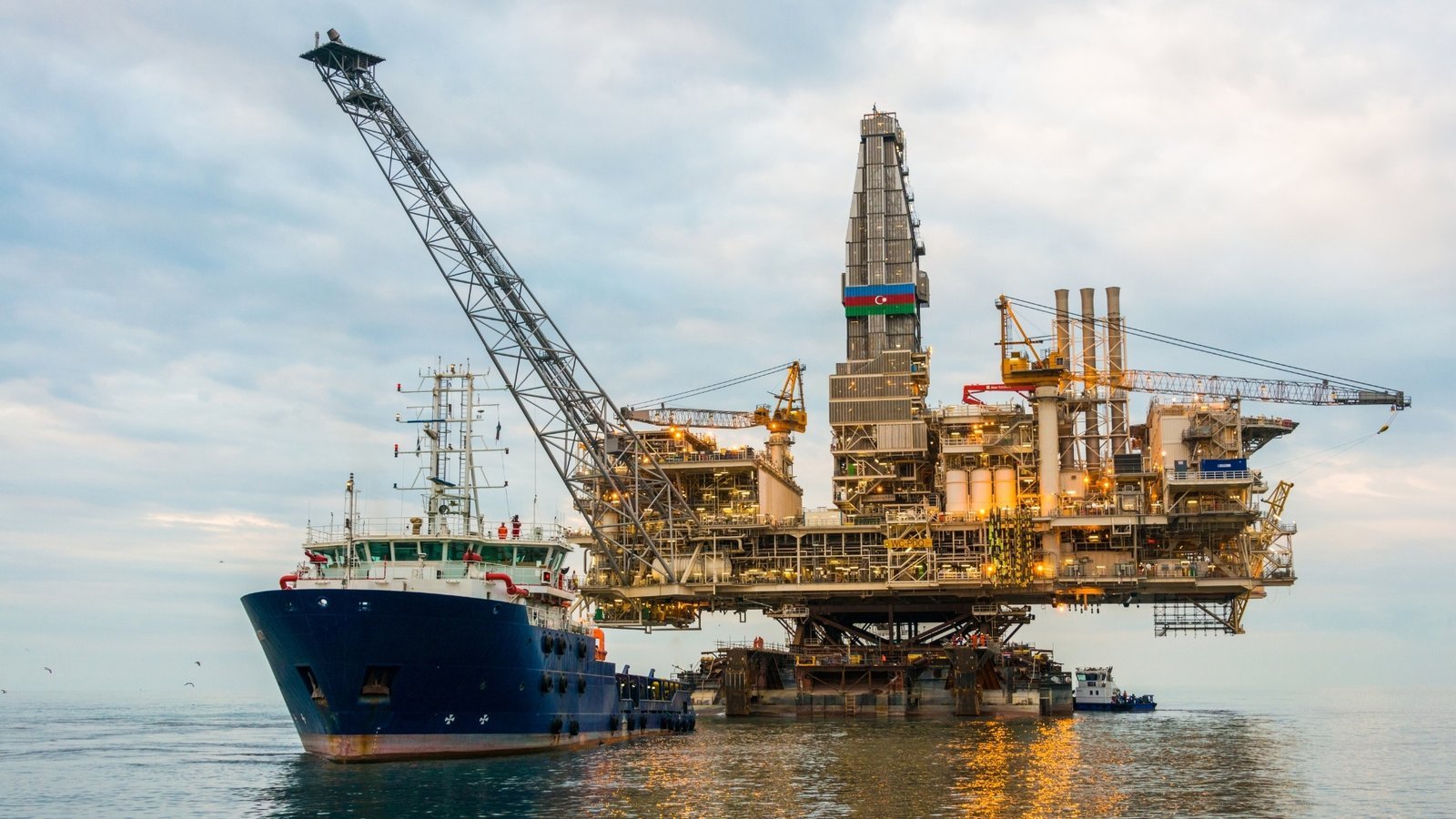 Projet 54Specialist offshore construction capacity took a decade to shed and will not return in two, which is the condition that made this merger possible.
The scarcity moved, and the buyers noticed first
The interesting fact about this transaction is not that two contractors want to merge. It is who tried to stop them. Reporting on the Brazilian clearance records that major producers told the regulator they feared the combined firm could impose additional costs, delay projects and pressure some clients into exclusive long term contracts. Published accounts differ on precisely which companies lodged objections, so the names should be treated as unsettled, but the direction of the complaint is not in doubt: the customers argued against their own suppliers combining.
That inverts the usual story in this industry. For a decade the standard account of offshore contracting was of operators squeezing a fragmented supply chain, tendering aggressively into overcapacity and pushing risk downward. What the Commission's framing describes is the opposite condition. In SURF for oil and gas and for carbon capture, and in trunklines and subsea decommissioning, Brussels sees two of the three leading suppliers in the world combining, with one comparable competitor left and the remaining rivals considerably smaller and limited in their ability to compete across the board.
The cause is the decade of underinvestment that preceded it. Specialist construction vessels are long lived, expensive and slow to order, and the offshore downturn removed capacity from the system. Demand has now returned: Westwood Global Energy Group forecast offshore field development capital expenditure of 137 billion US dollars in 2026, a 30 per cent rise on 2025, with subsea EPC awards of 17 billion US dollars, SURF demand of roughly 4,000 km up 32 per cent, and export line demand of 2,600 km up 47 per cent. Capacity that took ten years to shed does not return in two.
So the contractors are consolidating into scarcity rather than competing it away, and they are doing it while their order books are full. Subsea7's backlog at 30 June 2026 stood at 13,645 million US dollars, of which 5.6 billion US dollars sits in 2027 and 4.1 billion US dollars in 2028 and beyond. Fitzgerald's framing in the second quarter results was that tendering activity is high, reflecting the attractive economics and strategic importance of the prospects in target markets. A contractor with three years of visible work does not merge from weakness.
For a commercial team the read across is uncomfortable but useful. Negotiating leverage in this chain has not disappeared. It has moved one layer down, from the operator's procurement team to the tier one contractor's, and the people who will feel it are the vendors and subcontractors who sell to that tier one.
Different margins, different currencies, one backlog
The two halves of Saipem7 are not symmetrical businesses, and the difference matters for anyone forecasting how the combined procurement function will behave. Subsea7 runs at roughly double Saipem's EBITDA margin on roughly half the revenue. A merged entity chasing a 300 million euro synergy target while carrying the lower margin half's cost base is a merged entity with a strong internal incentive to attack input costs.
One methodological warning before reading the table. Saipem reports in euro, Subsea7 and TechnipFMC in US dollars. The figures below are presented as each company reported them and should not be summed without stating a conversion rate and date.
| Métrique | Saipem | Subsea7 | Saipem7 as announced | TechnipFMC Q2 2026 |
|---|---|---|---|---|
| Revenue | 7,345 million euro H1 2026, guidance about 15.5 billion euro FY26 | 3,717 million US dollars H1 2026, guidance 7.4 to 7.8 billion US dollars FY26 | About 21 billion euro for the twelve months to 31 December 2024 | 2,763.1 million US dollars in the quarter |
| Adjusted EBITDA and margin | 836 million euro H1 2026, 11.4 per cent | 856 million US dollars H1 2026, about 23 per cent | Above 2 billion euro on the 2024 basis | 581.9 million US dollars, 21.1 per cent |
| Backlog | 29,861 million euro at 30 June 2026 | 13,645 million US dollars at 30 June 2026 | 43 billion euro at 31 March 2025 | 16,440.0 million US dollars total |
| Order intake | 5,737 million euro H1 2026, up 33.4 per cent, plus 2.3 billion euro in July | 2.1 billion US dollars in Q2 2026, book to bill 1.1 times | Not disclosed on a combined basis | 2,726.6 million US dollars inbound |
| People and fleet | Part of the combined figure | Part of the combined figure | About 44,000 people, over 60 construction vessels, 13 drilling rigs | Not disclosed on this basis |
| Annual synergy target | n / A | n / A | About 300 million euro run rate by year three, against about 200 million euro one off integration cost | n / A |
| Contexte du marché | Offshore field development capex forecast at 137 billion US dollars in 2026, up 30 per cent on 105.2 billion US dollars in 2025, Westwood Global Energy Group, 6 August 2026 |
Your margin is named in someone else's synergy slide
Start with the number that is rarely this explicit. Of the approximately 300 million euro annual synergy target, roughly 200 million euro is operating expenses, and the merger presentation names longer charter periods and improved terms with suppliers among the levers. That is a public statement that supplier pricing is a deliverable of the transaction. A vendor currently holding separate Saipem and Subsea7 frame agreements at different prices should assume a harmonisation exercise that lands at or below the lower of the two, combined with pressure to extend term in exchange for volume that may or may not materialise. The window to renegotiate on your own terms is before completion, not after.
Then the list itself. Saipem alone states more than 20,000 qualified suppliers across over 1,600 product and service categories. Two overlapping approved vendor lists will be rationalised, and the vendors who survive will be those already qualified on both sides or occupying a category where only they qualify. If you are qualified with one party and not the other, treat the next twelve months as a qualification sprint rather than a commercial one, because qualification is the gate that decides whether you are in the negotiation at all.
Expect the contract shape to change with it. Fleet utilisation synergies are realised through longer charters and multi project framework agreements rather than project by project awards. For vessel owners, subsea equipment manufacturers and specialist trades that cuts both ways: more predictable utilisation, thinner unit margins, and more schedule risk pushed down the chain, because schedule flexibility is precisely what the combined group is selling to its own clients as a differentiator. Puliti's fleet argument, that a bigger fleet can absorb a client's slip, only works if somebody absorbs it, and that somebody is usually a subcontractor.
The qualification bar itself is rising on data rather than price. Saipem already runs vendors through the Open-es platform, with over 4,000 registered, and a Carbon Tracker platform with 307 vendors. A combined group operating under Italian and EU reporting obligations will extend that, and Scope 3 data provision moves from a differentiator to a gate. Suppliers who cannot produce product level emissions data on request will find themselves screened out for a reason that has nothing to do with their engineering.
Finally, know where the money is going. Saipem's own first half 2026 backlog is 62 per cent asset based services and 34 per cent energy carriers, with offshore drilling now only about 4 per cent and shrinking further after the 15 September 2026 completion of its 285 million US dollar sale of Saudi shallow water drilling operations to ADES. SURF, trunklines, carbon capture transport and injection, and offshore wind are where the concentration risk sits. If your business is weighted to shallow water drilling or conventional onshore work, this merger is not demand for you and should not be planned as if it were.
Someone has to be the second source, and the buyers have said so on the record
There is a genuine and time limited opening, and it exists because of the objections rather than despite them. Major producers have now told competition authorities, on the record, that they are concerned about cost increases, project delay and exclusivity pressure from a consolidated contractor. That is documented buy side appetite for credible alternatives, and it is rare to have it in writing.
For mid tier contractors and specialist vendors that changes the reception a second source pitch gets. The argument is no longer that you are cheaper. It is that the operator's own procurement risk register now has a named concentration entry, and that qualifying an alternative is a mitigation their own regulatory submissions imply they want. Tender qualification teams have rarely had a better hook.
There is also a narrower and shorter window. Until the merger completes, Saipem and Subsea7 must continue to bid against each other. That competitive bidding window closes on day one of Saipem7. Any operator with a discretionary award timing decision has an incentive to pull it forward, and any supplier whose pricing benefits from those two bidding separately should understand that the clock is running.
Watch the specific catalysts rather than the narrative. The European Commission's revised deadline after the restart, which was not public as at 30 September 2026. Whether any remedies are offered, given that Brussels has framed the concern as three suppliers going to two, which makes a vessel or SURF asset divestiture the obvious shape, though none has been proposed. The ACCC Phase 2 outcome in Australia, running up to 90 business days from 3 July 2026. The six remaining authorities of the sixteen. Third quarter results from both companies in late October 2026, for the first hard read on order intake and integration spend. And the 2027 sanctioning wave implied by Westwood's 137 billion US dollar 2026 capex forecast, which will be priced by whatever field structure exists when it tenders.
Écoutez et emportez-le avec vous
Vous préférez le format audio ou vous avez besoin de la présentation pour une analyse interne ? Le compte rendu complet est disponible sous forme d’épisode de podcast et de diaporama téléchargeable.
If your largest customer merged with its closest competitor, what would you do first?
Questions fréquemment posées
Not as at 30 September 2026. Shareholders approved it in September 2025 and roughly ten of sixteen competition authorities have cleared it, but the European Commission's Phase 2 investigation is ongoing after a stop the clock period in August 2026, and Australia's ACCC is also in Phase 2.
Saipem7. Subsea 7 S.A. is absorbed into Saipem through an EU cross border statutory merger, with the renamed entity incorporated in Italy, headquartered in Milan and listed on both the Milan and Oslo exchanges. Existing shareholders hold 50 per cent each.
Reporting on Brazil's clearance records that major producers argued the combined firm could impose additional costs, delay projects and pressure clients into exclusive long term contracts. The European Commission's concern is that SURF, trunkline and decommissioning work goes from three credible global suppliers to two.
Expect a rationalised approved vendor list, harmonised pricing across two previously separate frame agreements, and pressure toward longer charter terms. The merger's own case counts improved terms with suppliers inside a 300 million euro annual synergy target, so margin compression is a stated objective rather than a side effect.
The pre suspension deadline was 16 December 2026, extended from 26 November 2026. The clock stopped on 25 August 2026 and a restart was expected in mid September 2026. The revised deadline was not in the public record as at 30 September 2026, and completion slipping into early 2027 is possible.
Westwood Global Energy Group forecast offshore field development capital expenditure of 137 billion US dollars in 2026, up 30 per cent on 105.2 billion US dollars in 2025, with subsea EPC awards worth 17 billion US dollars, SURF demand around 4,000 km and export line demand of 2,600 km.
Alessandro Puliti is General Manager and Chief Executive Officer of Saipem. Stuart Fitzgerald became Chief Executive Officer of Subsea 7 S.A. on 1 July 2026, following the retirement of John Evans, which supersedes part of the leadership structure announced when the merger agreement was signed in July 2025.
None had been made public as at 30 September 2026. Given that the European Commission has framed the concern as three leading suppliers reducing to two, a vessel or SURF asset divestiture would be the conventional remedy shape, but no such proposal is on the public record and none should be assumed.
Obtenez la suite gouttelettes de renseignement
Rejoignez les leaders des secteurs de l'énergie et de l'industrie et recevez directement nos informations stratégiques en matière de marketing, de croissance par IA et d'architecture des revenus, sans superflu.
Vous êtes sur la liste
Bienvenue dans The Energy Growth Brief, consultez votre boîte de réception pour le prochain numéro.