


COP31 Will Not Ban Anything. It Will Publish a Buying List.
COP31 opens in Antalya on 9 November 2026 under a split presidency: Türkiye runs the Action Agenda, Australia runs the negotiations. Most supplier briefings will read it as a climate summit and look for a fossil fuel prohibition that is not coming. The commercially useful reading is different. The one hard number Türkiye has put on the table, electricity rising from just over 20 per cent of global final energy consumption to 35 per cent by 2035, is a demand signal for grid, storage and flexibility equipment. The fossil fuel roadmap arriving at Antalya is a presidency document with no binding force. The thing that turns into purchase orders is neither of those. It is the national implementation and investment plans that countries were invited to produce.
- COP31 runs 9 to 20 November 2026 in Antalya. Türkiye hosts and owns the Action Agenda, Australia leads negotiations. That split matters commercially: the Action Agenda carries the quantified targets, and the Action Agenda is the half that does not need consensus.
- The 35 by 35 pledge is the first quantitative electrification target inside the COP process. Electricity goes from just over 20 per cent of global final energy consumption to 35 per cent by 2035. IRENA puts the implied renewable share of power generation at about 78 per cent by 2035, from 31.7 per cent in 2024.
- The fossil fuel roadmap is a presidency product, not a decision. The COP30 cover decision of 22 November 2025 omitted fossil fuels entirely. The roadmap is being assembled from voluntary submissions by roughly 21 Parties and groups, and will be presented, not adopted.
- The separate Santa Marta conference in April 2026 drew 57 countries and produced no binding instrument. Eighteen backed one. That is the realistic ceiling on prohibition-style outcomes, and it is why planning against a ban is planning against the wrong risk.
- The Global Implementation Accelerator is the mechanism that converts ambition into procurement. Countries are invited to publish implementation and investment plans. A supplier that reads those plans in the quarter they appear is reading the tender pipeline before it is a tender.
- Adaptation finance was told to triple by 2035 with no stated baseline year. UNEP reported developed countries provided 26 billion dollars in 2023 against needs of roughly 310 billion dollars a year. Treat announced finance as an intention, not as a funded budget line.
Two presidencies, two different products, only one of which needs consensus
COP31 is the thirty first Conference of the Parties to the United Nations Framework Convention on Climate Change. It runs from 9 to 20 November 2026 in Antalya, Türkiye. The arrangement that decides what actually emerges from it was settled long before the venue was: Türkiye and Australia hold the presidency jointly, under agreed partnership modalities. Türkiye hosts the conference and leads the Action Agenda. Australia leads the negotiations.
That is not a protocol detail. A COP produces two quite different kinds of output, and the split puts them in different hands. The negotiated track produces decision text, which requires consensus among nearly two hundred Parties and therefore converges on whatever language no one will veto. The Action Agenda track produces pledges, coalitions and quantified initiatives, which require only the people who want to sign. One of those tracks can carry a number. The other, in practice, usually cannot.
Australia convened the pre-COP ministerial with Pacific island nations in Fiji from 5 to 8 October 2026. The incoming presidency and the President of Negotiations have been writing to Parties jointly, including a letter dated 5 October 2026, and ran consultations on 14 October 2026 asking Parties which outcomes would accelerate implementation and keep 1.5 degrees within reach. The framing in those consultations is consistent and it is worth noting: COP30, in the Presidencies' own words, marked a shift to implementation.
For a company that sells transformers, cable, compressors, valves, inspection services or engineering hours, the practical consequence is simple. Reading the negotiated decision will tell you very little. Reading the Action Agenda will tell you what equipment categories a large group of governments has just committed to buying more of.
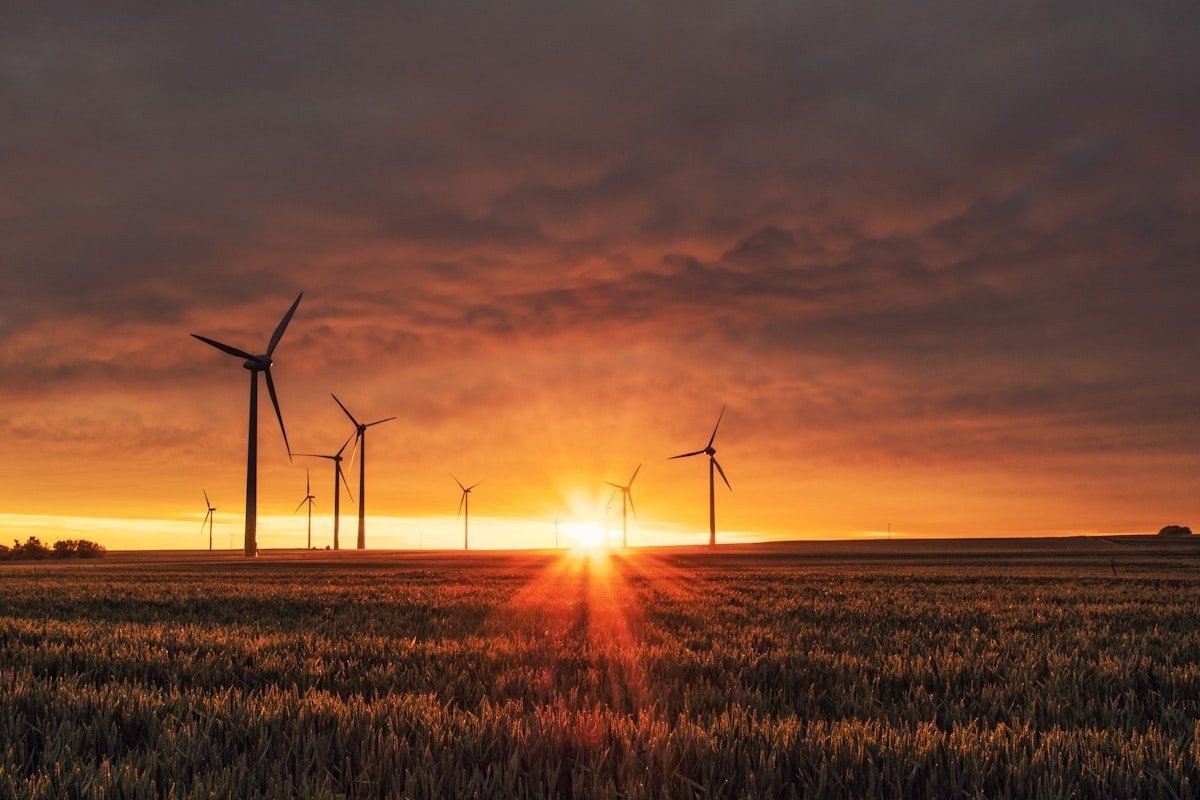 Projet 54Wind turbines at sunset. The COP31 Presidency's 35 by 35 pledge moves the binding constraint from generation capacity to the grid, storage and flexibility equipment needed to deliver it.
The first time electricity has had its own number inside the COP process
The Türkiye presidency's headline Action Agenda initiative is a pledge to raise electricity's share of global final energy consumption to 35 per cent by 2035. The current share is just over 20 per cent. The pledge was launched in New York in September 2026 alongside a separate Antalya AI Pledge covering responsible use of artificial intelligence in clean technologies.
The significance is structural rather than rhetorical. Previous COP targets have been expressed in capacity, in emissions, or in finance. Dr Norbert Allnoch of the International Economic Forum for Renewable Energies made the point directly when the proposal surfaced: “With this initiative, electricity is receiving its own quantitative target within the COP process for the first time.” A target expressed as a share of final energy consumption is a target about end use, and end use is where equipment is installed.
IRENA published the arithmetic on 14 July 2026. Global renewable power generation reached 9,836 terawatt hours in 2024, up 9.8 per cent year on year, the strongest annual growth on record, and supplied 31.7 per cent of global electricity generation. Conventional generation grew 1.4 per cent over the same period. In IRENA's scenario, reaching 35 per cent electrification by 2035 would require renewables to reach roughly 78 per cent of global power generation. That is not achievable by adding wind and solar alone. IRENA is explicit that it requires major investment in grids, battery storage and other flexibility options.
Read as a procurement statement rather than a climate statement, the pledge says this: the signatories intend to move the bottleneck from generation to delivery. Generation equipment is already scaling. Transmission, distribution, substations, transformers, protection, storage, and the engineering capacity to install and commission all of it, are the categories that have to grow fastest to make the number arithmetically possible. Suppliers in those categories should expect the demand side of their market to be talked about in 2027 national planning documents in language borrowed from this pledge.
One caution belongs here, and it should be stated as a caution rather than smuggled in as a forecast. A pledge is not a budget. The gap between the 35 by 35 ambition and the 78 per cent renewable generation share it implies is large enough that independent analysts have questioned whether it is deliverable at all. Treat it as a direction of travel with a number attached, which is more than previous COPs have offered, and considerably less than a contract.
Electrification target
Electricity to 35 per cent of global final energy consumption by 2035, from just over 20 per cent. First quantitative electrification target in the COP process.
Implied generation mix
IRENA: about 78 per cent renewable share of global power generation by 2035, against 31.7 per cent in 2024.
Where the constraint moves
Grids, storage and flexibility, not generation capacity. IRENA names these explicitly as the required investment.
Second pledge
The Antalya AI Pledge, covering responsible use of artificial intelligence in clean technologies, launched alongside it.
No. The roadmap exists, and it is a presidency document built from voluntary submissions
This is the question most supplier risk registers get wrong, so it is worth answering precisely. The COP30 cover decision, the so called global mutirao, was adopted at the closing plenary in Belém on 22 November 2025 without objection. It does not mention fossil fuels. It does not mention a roadmap away from them. A group of 82 nations pushed for firmer language and did not get it. COP30 CEO Ana Toni said a great majority of country groups regarded a fossil fuel roadmap as a red line, though the list of those countries was never published.
What exists instead was announced from the podium rather than agreed in the text. At the closing plenary, COP30 President André Corrêa do Lago said the presidency would bring forward two roadmaps, one on transitioning away from fossil fuels in a just, orderly and equitable manner, and one on halting and reversing deforestation, to be presented at COP31. The UNFCCC secretariat issued an invitation for contributions at his request. As of the latest published record the roadmap is still at the input gathering stage: submissions from roughly 21 Parties and groups, including AOSIS, the European Union, Japan, the least developed countries group, Norway, the United Kingdom and Vanuatu, dated around March and April 2026, with no draft text and no target date.
A second data point sets the ceiling on how far this can go. The first International Conference on Transitioning Away from Fossil Fuels was held in Santa Marta, Colombia from 24 to 29 April 2026, hosted by Colombia and the Netherlands. Fifty seven countries took part. No legally binding agreement to control fossil fuel use was reached, although 18 nations backed the idea. Participants agreed three workstreams: national and regional roadmaps tied to countries' nationally determined contributions, reform of the financial system including fossil fuel subsidies, and movement toward a fossil fuel free trade system. The next conference will be co-hosted by Tuvalu and Ireland.
Fifty seven countries attending and eighteen supporting a binding instrument is the honest measure of where prohibition politics sits in 2026. For a supplier, the planning implication is not that the transition is slowing. It is that the transition will not arrive as a ban with a date on it. It will arrive as national roadmaps, finance conditions and procurement rules, each of which lands in a specific country on a specific timetable and each of which is tractable commercially. E3G's Cosima Cassel described the Belém outcome as essentially the most that could be agreed without triggering a veto, and said the link to the earlier UAE consensus implicitly keeps the transition away from fossil fuels alive. Implicitly alive is the correct phrase to plan against.
The implementation plans, published country by country, long after the cameras leave
Paragraph 41 of the Belém decision launched the Global Implementation Accelerator, a voluntary mechanism led by the COP presidencies, alongside a Belém Mission to 1.5 stewarded jointly by the COP29, COP30 and COP31 presidencies. The decision calls on countries to accelerate full implementation of their pledges and, critically for anyone selling into them, invites them to produce implementation and investment plans. Information sessions were scheduled in Bonn in June 2026 and at COP31 itself, with a high level event attached.
This is the output that converts. A nationally determined contribution is a statement of ambition. An implementation and investment plan is a statement of what will be built, roughly when, and roughly with whose money. By mid 2026, 147 Parties had submitted updated nationally determined contributions. The number that will have published usable investment plans a year from now will be far smaller, and the countries that do will be the ones worth staffing against.
The finance picture should be read with the same discipline. The Belém decision calls for efforts to triple adaptation finance by 2035, five years later than an earlier draft's 2030 date, and without a stated baseline year. It reaffirms the Glasgow goal of doubling adaptation finance to 40 billion dollars by 2025. UNEP reported that developed countries provided 26 billion dollars in 2023, against estimated needs of around 310 billion dollars a year. The least developed countries had asked for tripling to 120 billion dollars by 2030. NRDC's Joe Thwaites noted that in the absence of other language, 2025 should be assumed as the baseline. Separately, the Baku to Belém Roadmap to 1.3 trillion dollars continues as a presidency workstream.
The practical test for a commercial team is whether a given announcement has a payer, a legal instrument and a date. The 35 by 35 pledge has a date and no payer. The fossil fuel roadmap has neither. A national implementation plan backed by a multilateral development bank facility has all three, and it is the only one of the three that should move a hiring decision or a stocking decision.
| COP31 output | Legal status | Has a quantified target | Converts to procurement |
|---|---|---|---|
| 35 by 35 electrification pledge | Voluntary Action Agenda pledge | Yes, 35 per cent of final energy by 2035 | Indirectly, through national plans and grid investment |
| Antalya AI Pledge | Voluntary Action Agenda pledge | Non | Indirectly, through clean technology programmes |
| Roadmap on transitioning away from fossil fuels | Presidency initiative, presented not adopted | No, still at input stage | No, but shapes national roadmaps and finance conditions |
| Global Implementation Accelerator | Voluntary, launched by decision paragraph 41 | Non | Yes, through country implementation and investment plans |
| Adaptation finance tripling | Call in the cover decision, no baseline year | Partial, tripling by 2035 | Only where a funded instrument follows |
| Santa Marta workstreams | Outside the UNFCCC process entirely | Non | No, but signals national roadmap direction |
Three moves, none of which depend on what the final text says
The first move is to decide, before the summit, which signatory countries matter to your order book, and to assign someone to read their implementation and investment plans when they appear. Not the communique, not the press release. The plan. The window in which that document is public and no competitor has priced against it is the only genuine information advantage a COP produces, and it is measured in weeks.
The second move is to pre-position evidence in the categories the 35 by 35 pledge implies. If the constraint moves to grid, storage and flexibility, then the questions buyers will ask shift from price per unit to deliverable capacity, lead time, and the ability to prove both. We have argued elsewhere that European connection reform converts a supplier's delivery date into the thing that unblocks a project rather than a line item in a quote. The electrification pledge extends the same logic globally. The company that can show a reserved manufacturing slot and a compliance pack will be shortlisted before the company that can only show a better price.
The third move is to stop treating COP as a content moment and start treating it as a calendar anchor. Buying groups in energy are large and slow, and the research phase runs months ahead of any approach. A briefing published in the two weeks before Antalya, answering what the summit changes for a named procurement category, will be read by people who are building a 2027 plan. The same briefing published in December will be read by nobody.
None of these three depend on the outcome of the negotiations. That is the point. The negotiated text is the part of COP31 that a supplier can neither predict nor influence, and it is also the part that will change the least about what gets bought next year.
Écoutez et emportez-le avec vous
Vous préférez le format audio ou vous avez besoin de la présentation pour une analyse interne ? Le compte rendu complet est disponible sous forme d’épisode de podcast et de diaporama téléchargeable.
Your 2027 plan has a line for the energy transition. COP31 opens in three weeks. Which input do you actually build the plan on?
Questions fréquemment posées
COP31 runs from 9 to 20 November 2026 in Antalya, Türkiye. Türkiye and Australia hold the presidency jointly under agreed partnership modalities: Türkiye hosts the conference and leads the Action Agenda, while Australia leads the formal negotiations. Australia convened the pre-COP ministerial with Pacific island nations in Fiji from 5 to 8 October 2026.
It is the COP31 Presidency's headline Action Agenda initiative: raising electricity to 35 per cent of global final energy consumption by 2035, from just over 20 per cent today. It was launched in New York in September 2026 alongside the Antalya AI Pledge on responsible artificial intelligence in clean technologies. It is the first time electrification has carried its own quantitative target inside the COP process. IRENA's analysis of 14 July 2026 indicates that meeting it would require renewables to supply roughly 78 per cent of global power generation by 2035, against 31.7 per cent in 2024.
No binding phase out is on the negotiating table. The COP30 cover decision adopted on 22 November 2025 did not mention fossil fuels at all, despite 82 nations pushing for firmer language. A roadmap on transitioning away from fossil fuels will be presented at COP31, but it is an initiative of the COP30 Presidency assembled from voluntary submissions by roughly 21 Parties and groups, still at the input gathering stage, and it will be presented rather than adopted. The separate Santa Marta conference in April 2026 drew 57 countries, of which 18 backed a binding instrument, and produced no legally binding agreement.
The national implementation and investment plans that countries were invited to produce under the Global Implementation Accelerator, launched in paragraph 41 of the Belém decision. Those documents name what will be built, roughly when, and with whose money, which no summit communique does. By mid 2026, 147 Parties had submitted updated nationally determined contributions, but an NDC states ambition while an investment plan states procurement. The test to apply to any COP announcement is whether it has a payer, a legal instrument and a date.
The Belém decision calls for efforts to triple adaptation finance by 2035, five years later than an earlier draft's 2030 target, and without a stated baseline year. It reaffirms the Glasgow goal of doubling adaptation finance to 40 billion dollars by 2025. UNEP reported developed countries provided 26 billion dollars in 2023 against estimated needs of around 310 billion dollars a year, and the least developed countries had asked for tripling to 120 billion dollars by 2030. Because no baseline year is specified, the size of the commitment is genuinely ambiguous, and it should be treated as an intention rather than a funded budget line.
Obtenez la suite gouttelettes de renseignement
Rejoignez les leaders des secteurs de l'énergie et de l'industrie et recevez directement nos informations stratégiques en matière de marketing, de croissance par IA et d'architecture des revenus, sans superflu.
Vous êtes sur la liste
Bienvenue dans The Energy Growth Brief, consultez votre boîte de réception pour le prochain numéro.