








Which Companies Are Eni Satellites? The 2026 List
Eni names seven live satellite companies and one announced. They are not subsidiaries. They are separately capitalised vehicles with their own boards, their own balance sheets, their own debt, and their own procurement systems. If you sell to Eni, you are probably not selling to them. Here is the full list, the ownership, and who the actual buyer is.
- Seven live satellites, one announced. Plenitude, Enilive, Eni CCUS Holding, Azule Energy, Searah, Var Energi and Ithaca Energy, with a Novamont linked biochemicals satellite flagged as next.
- A satellite is not a subsidiary and not a JV operating stake. It is a separately capitalised legal entity with third party equity, its own balance sheet and its own management. Eni's Baleine asset in Cote d'Ivoire is dual exploration, a sibling mechanism, not a satellite.
- The model has paid. Eni states that dual model portfolio management has generated more than 13 billion dollars since 2013, and that aligned capital in its two main transition businesses implies an enterprise value of over 23 billion euros.
- Searah is the newest, established 8 June 2026 with PETRONAS, starting at more than 300,000 boe per day, targeting more than 500,000 within three years, with a 6 billion dollar revolving credit facility and a stated investment pipeline above 20 billion dollars over five years.
- For suppliers this is the whole point: qualification with Eni does not get you into a satellite. Azule runs its own vendor database and tenders. Var Energi requires Ivalua and Magnet JQS. Ithaca runs its own supply chain function. There is no single sell to Eni motion.
- Because satellites are self financing and increasingly deconsolidated, Eni's group capex line, falling to under 6 billion euros a year, materially understates the addressable spend.
The definition does the work
Eni describes the mechanism plainly on its satellite model page: it carves businesses out into lean, separately financed companies, then sells stakes to partners in order to confirm the market value and immediately free up additional resources.
So the test for a true satellite is threefold. It must be a separately capitalised legal entity. It must carry third party equity. It must have its own balance sheet, its own financing and its own management. On that test, seven companies qualify today.
Three things are commonly and wrongly called satellites. Eni's Global Gas and LNG Portfolio is an internal business unit. Versalis is still a consolidated Eni business, and the satellite there is the future Novamont linked entity, not Versalis itself. And Baleine, in Cote d'Ivoire, is a licence interest sold down under the dual exploration model, which is a related but different mechanism: Eni discovers, then sells a stake early to crystallise value before first oil. Eni agreed the sale of a further 10 percent of Baleine to SOCAR in January 2026.
The distinction matters commercially. A dual exploration sale changes who owns a barrel. A satellite creates a new company with a new procurement department.
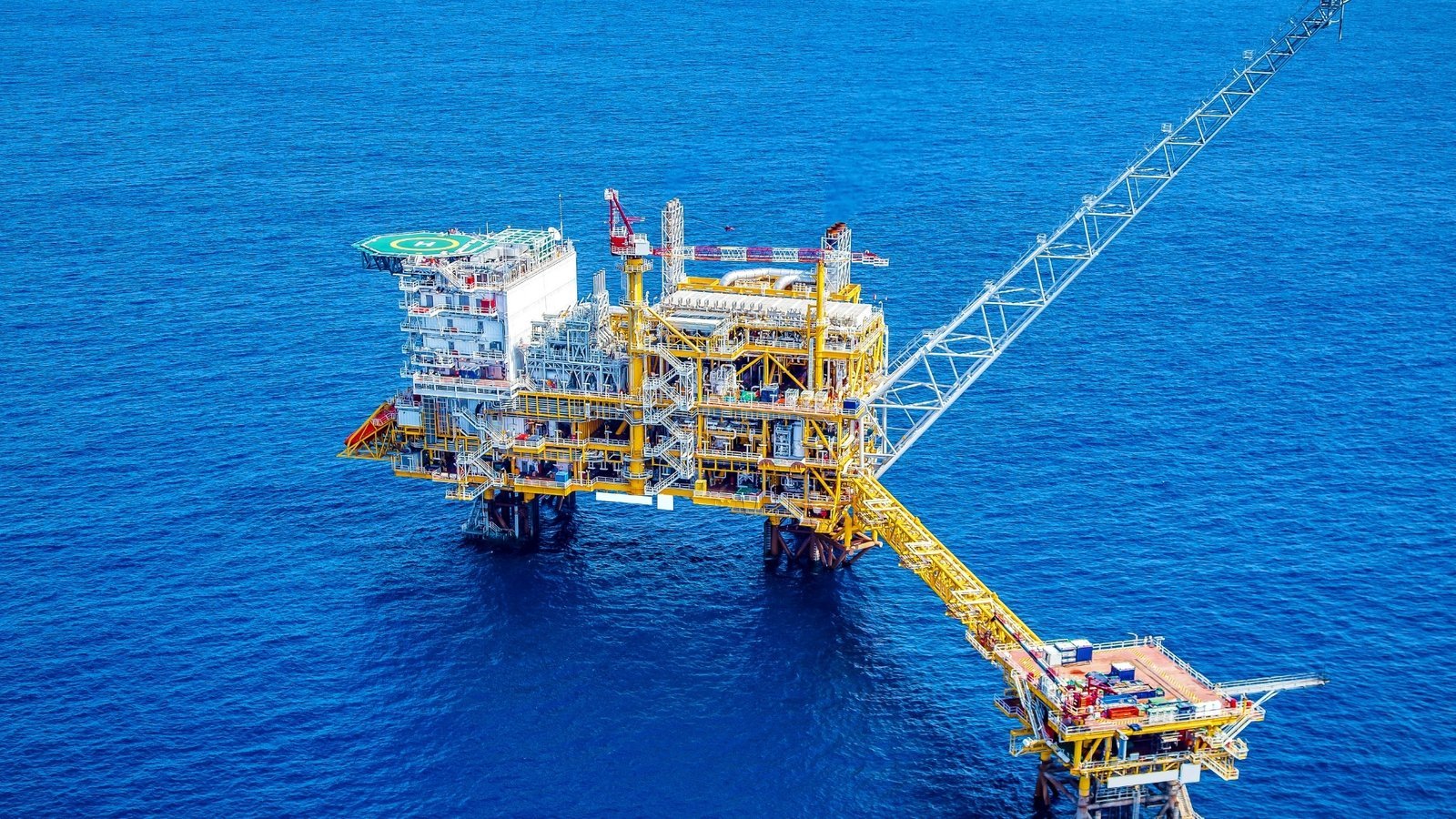 Project 54A satellite is a separate structure with its own footings, connected to the parent, not part of it.
The 2026 list, with ownership and scale
The table below is the current position as at July 2026. Where a figure is disputed we say so rather than picking a side.
| Satellite | What it does | Eni stake | Partner | Listed | Scale |
|---|---|---|---|---|---|
| Var Energi ASA | Independent E&P on the Norwegian Continental Shelf | 63.04 percent, register dated 12 July 2026 | HitecVision, largely exited, plus free float | Yes, Oslo Bors, IPO February 2022 | Record Q1 2026 production of 406,000 boe per day, quarterly dividend of 300 million dollars |
| Azule Energy | Upstream oil and gas plus solar, 18 licensed blocks | 50 percent | bp, 50 percent | No, but issues its own bonds, 1.2bn dollars in Jan 2025 and 850m dollars in Jan 2026 | 2025 profit of 450 million dollars, down from 618m on lower Brent. Own CEO, CFO and Procurement Director |
| Ithaca Energy plc | UK Continental Shelf production | About 36 to 38 percent. Eni's own site says 38 percent, market reporting after the Sept 2025 placing says about 36 percent | Delek Group, about 50.5 percent | Yes, London Stock Exchange | FY2026 guidance of 120,000 to 130,000 boe per day |
| Plenitude | Retail energy, renewables and EV charging | About 70 percent today, falling to about 65 percent after the March 2026 capital increase, then deconsolidated | Ares Management 20 percent for 2bn euros, plus Energy Infrastructure Partners 10 percent | No, IPO shelved for a private capital route | 5.8 GW renewables installed at end 2025, target 15 GW by 2030, more than 11m customers. Implied enterprise value 13.1bn euros |
| Enilive | Biorefining, biomethane, SAF and mobility | 70 percent | KKR, 30 percent | No | Post money equity value of 11.75bn euros. 1.65 Mt biofuel capacity at end 2025, 5 Mt target by 2030 |
| Eni CCUS Holding | Carbon capture and storage platform, UK and Netherlands | 50.01 percent, joint control | Global Infrastructure Partners, part of BlackRock, 49.99 percent | No | Raised more than 500m pounds of debt from 13 international lenders, announced May 2026 |
| Searah | Integrated upstream, gas and LNG across Indonesia and Malaysia, 19 assets | 50 percent | PETRONAS, 50 percent | No | Established 8 June 2026. Initial production above 300,000 boe per day, targeting above 500,000 within three years. 6bn dollar revolving credit facility |
Yes, and Eni publishes the numbers
At its Capital Markets Update on 19 March 2026, Eni stated that value accretive dual model portfolio management has generated more than 13 billion dollars since 2013, and that it has converted 60 percent of its discoveries into production or sale since 2014.
On the transition satellites specifically, Eni said that in the past two years it has attracted aligned capital from leading financial players into its two main transition businesses, implying an enterprise value of over 23 billion euros. That is Plenitude and Enilive.
The 2025 cash is itemised in Eni's full year results. KKR paid 3.57 billion euros for 30 percent of Enilive. Ares paid 2.0 billion euros for 20 percent of Plenitude. Energy Infrastructure Partners paid 0.21 billion euros for a further 2.4 percent of Plenitude. Those three Eni disclosed line items sum to roughly 5.78 billion euros of gross third party equity into satellites in 2025. That addition is ours, not an Eni published aggregate, and it should not be confused with the separate figure Eni reports for net proceeds from portfolio management, which was 1.73 billion euros in 2025.
Claudio Descalzi, Chief Executive Officer of Eni, on 19 March 2026:
"We are unique in the industry in creating stand-alone, self-financing, sustainable businesses for our Transition activities. The success of our strategy is confirmed by aligned investments we have received from leading financial investors, with material value realised for shareholders supporting further sustainable growth, adding balance and resilience to Eni."
The effect flows straight into guidance. Eni's capex falls to under 6 billion euros a year on average across 2026 to 2030, explicitly thanks to the deconsolidation of certain activities. Free cash flow is guided above 40 billion euros over the same period, or above 45 billion including the portfolio effect. And the shareholder payout was raised to 35 to 45 percent of cash flow from operations, citing new satellites and deconsolidated cashflows.
Not Eni. The satellite.
This is the finding that matters commercially, and it is verifiable from the satellites' own procurement infrastructure.
Eni's own route is qualification through eniSpace and its e-procurement system: you apply for commodity codes, you are vetted by Vendor Management on HSE, quality, technical, financial and compliance grounds, and you become eligible for tender invitations. Being qualified with Eni does not get you into a satellite.
Azule Energy runs its own vendor database and its own public tender process, with expressions of interest going to its own vendor application address, plus mandatory registration in Angola's ANPG national concessionaire local content supplier register. It has its own Procurement Director and publishes standalone tender adverts.
Var Energi requires suppliers to register and maintain a profile in Ivalua and to prequalify through Magnet JQS, the Nordic joint qualification system. That is an entirely different stack from Eni's.
Ithaca Energy runs its own supply chain function with a UK content commitment. Plenitude, Enilive, Eni CCUS Holding and Searah each have their own management, balance sheets and, for CCUS and Searah, their own project financing and credit facilities, which means their own capex approval chains.
Three consequences follow, and they should reorganise any account plan that currently says Eni at the top of it.
Seven gates, not one
Separate qualification systems, separate tender pipelines, separate procurement leadership, separate budgets funded by the satellite's own debt and equity rather than by Eni headquarters.
The spend is bigger than the capex line
Because satellites are self financing and deconsolidated, Eni's falling group capex understates addressable spend. Searah alone signals more than 20 billion dollars over five years.
The co-investor sets the culture
Azule is half bp, so bp procurement DNA plus Angolan local content law. Var Energi is Oslo listed and Norwegian JQS governed. Searah is half PETRONAS. An Eni relationship transfers weakly.
Decision rights sit at the satellite board
Where the co-investor has joint control, as GIP does at Eni CCUS and Ares will at Plenitude, material decisions need the partner, not Eni alone.
Two new satellites and a deconsolidation
April 2025: KKR completed its move to 30 percent of Enilive, at an 11.75 billion euro post money equity value.
August to December 2025: Global Infrastructure Partners, part of BlackRock, acquired 49.99 percent co-control of Eni CCUS Holding. A brand new satellite, closed on 18 December 2025.
November 2025: Ares Management completed its 20 percent entry into Plenitude for 2 billion euros.
January 2026: Eni agreed the sale of a further 10 percent of Baleine to SOCAR, under dual exploration. The price was not disclosed and we will not estimate it.
March 2026: Eni announced the deconsolidation of Plenitude through a 1.5 billion euro non proportional capital increase, at a pre money equity value of 10.75 billion euros and an implied enterprise value of 13.1 billion euros, taking Eni to about 65 percent and moving to joint control with Ares.
June 2026: Eni and PETRONAS established Searah, the newest satellite, a 50/50 across 19 assets in Indonesia and Malaysia, with a 6 billion dollar revolving credit facility.
Next, and not yet formed, is the Novamont linked biochemicals satellite that Eni flags on its own satellite page.
If you want the wider strategic logic behind why Eni structures itself this way, we set it out in our dossier on Eni's business model and what it means for B2B suppliers, and on the dual exploration and satellite model itself.
Listen & take it with you
Prefer audio, or need the deck for an internal review? The full briefing is available as a podcast episode and a downloadable slide presentation.
You are already a qualified Eni supplier. What does that get you with Var Energi, Azule and Ithaca?
Frequently asked
Seven live satellites as of July 2026, named on Eni's own strategic vision pages: Plenitude, Enilive, Eni CCUS Holding, Azule Energy, Searah, Var Energi and Ithaca Energy. An eighth, a biochemicals satellite linked to Novamont, has been announced but not yet created. Eni's Global Gas and LNG Portfolio and Versalis are not satellites, and the Baleine project in Cote d'Ivoire is a dual exploration asset sale rather than a satellite vehicle.
A satellite is separately capitalised, carries third party equity, and has its own balance sheet, its own financing and its own management. Eni describes the model as carving businesses out into lean, separately financed companies and then selling stakes to partners to confirm market value and free up resources. An ordinary subsidiary is consolidated, funded from group capex and procures through the group's systems. The practical test is whether the entity raises its own debt and runs its own procurement. Eni CCUS Holding raised more than 500 million pounds from 13 lenders. Searah secured a 6 billion dollar revolving credit facility. Those are satellites.
At its Capital Markets Update on 19 March 2026, Eni stated that dual model portfolio management has generated more than 13 billion dollars since 2013, and that aligned capital in its two main transition businesses implies an enterprise value of over 23 billion euros. In 2025 alone, Eni disclosed 3.57 billion euros from KKR for 30 percent of Enilive, 2.0 billion euros from Ares for 20 percent of Plenitude, and 0.21 billion euros from Energy Infrastructure Partners. Eni's separately reported figure for net proceeds from portfolio management in 2025 was 1.73 billion euros, which is a different, net measure and should not be conflated with the gross inflows.
Yes, and this is the commercially important point. Each satellite runs its own procurement. Var Energi requires registration in Ivalua and prequalification through Magnet JQS. Azule Energy maintains its own vendor database, publishes its own tenders, has its own Procurement Director, and requires registration in Angola's ANPG local content supplier register. Ithaca Energy runs its own supply chain function with a UK content commitment. Qualification with Eni through eniSpace does not make you eligible with any of them.
Eni is the majority shareholder but Var Energi is a separate listed company. Eni International BV holds 63.04 percent, per the shareholder register dated 12 July 2026, with the remainder in free float following the Oslo Bors listing in February 2022. Var Energi has its own board, its own dividend policy, currently 300 million dollars a quarter, and its own supplier qualification systems. It reported record production of 406,000 barrels of oil equivalent per day in the first quarter of 2026.
Get the next intelligence drop
Join energy and industrial leaders getting our marketing, AI-growth and revenue-architecture intelligence, direct, no filler.
You're on the list
Welcome to The Energy Growth Brief, watch your inbox for the next dispatch.