



How Long Is the B2B Sales Cycle in Energy?
A direct, sourced answer to one of the most searched questions in energy B2B. The measured sales cycle in energy runs near 155 days, among the longest of any sector, and the full decision from scoping to signature routinely takes 12 to 24 months. This guide gives the numbers, explains where the time goes, and shows what a cycle this long means for how you market and sell.
- The energy sector sales cycle sits near 155 days on 2026 cross industry benchmarks, among the longest measured, just behind pharmaceuticals at about 153 days. The all industry median is far shorter, near 84 days, so energy runs well above typical B2B.
- The measured number understates reality. End to end, from scoping a capital project to selecting a supplier, energy decisions routinely run 12 to 24 months, and multi year for large infrastructure, because much of the journey happens before a deal is ever logged in a CRM.
- Length is structural, not a performance problem. Buying committees average 6 to 10 stakeholders, CFOs gate most deals above 50,000 US dollars, and buyers complete 4 to 5 pieces of independent research before contacting a supplier. Around 77 percent of B2B buyers call their latest purchase very complex or difficult.
- The proposal and evaluation stage alone can run about 50 days in energy, reflecting technical scoring, prequalification questionnaires, local content checks and HSE review. These gates, not sales inactivity, are where much of the calendar disappears.
- Cycles have lengthened, not shortened. Enterprise deals that closed in 4 to 6 months in 2020 now often take 6 to 12 months, with strategic accounts above 500,000 US dollars in annual value planning for 9 to 12 months or more, up 20 to 30 percent since 2021.
About 155 days measured, 12 to 24 months in full
The short answer is that the energy B2B sales cycle is long, and getting longer. Cross industry benchmarking for 2026 places the energy sector near 155 days from first qualified opportunity to closed deal, one of the longest of any industry and close behind pharmaceuticals at about 153 days. For comparison, the all industry median sits near 84 days, so an energy sale takes close to twice as long as a typical B2B purchase.
That measured figure is only the part a CRM can see. The complete decision starts well before an opportunity is logged, when a capital project is first scoped, budgeted and taken through internal approval, and it ends only when a supplier is selected and contracted. That full arc commonly runs 12 to 24 months in energy, and multi year for large infrastructure such as LNG trains, pipelines or grid programmes. Treating the 155 day figure as the whole journey is the single most common planning error in energy sales.
For sellers and marketers, the practical takeaway is that a prospect you engage today may not issue a tender for a year or more, which is exactly why we argue for building familiarity early in brand versus demand in energy B2B, and for measuring across the whole cycle in marketing attribution for energy B2B.
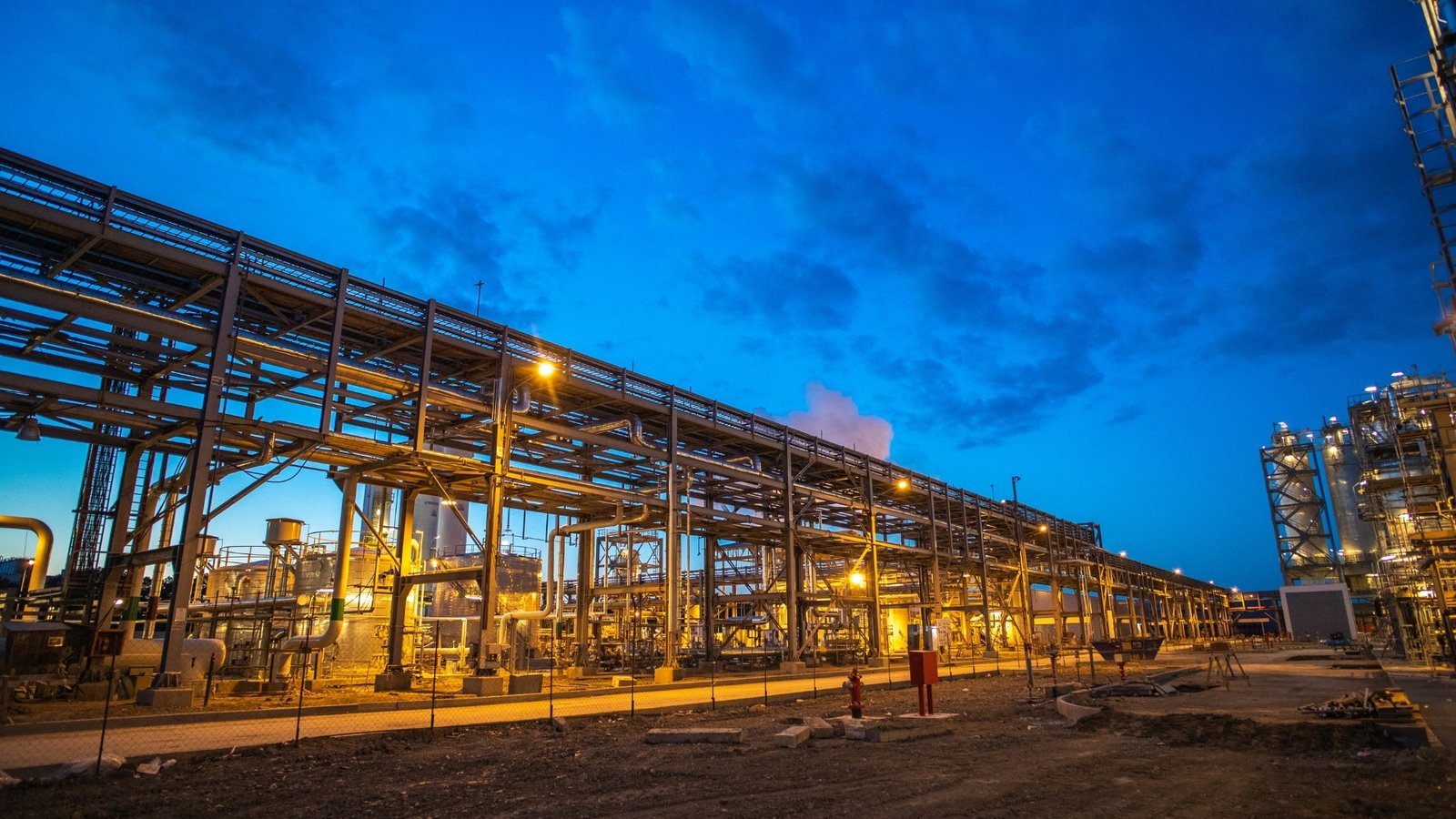 Project 54A long energy process plant lit at dusk, a picture of the extended, multi stage decision behind an energy B2B purchase.
Committees, capital and compliance gates
The first driver is the buying committee. A typical B2B purchase now involves 6 to 10 stakeholders, and in energy that group spans engineering, operations, procurement, HSE, finance and often local content or joint venture partners. Each has a veto, a different priority and a different timeline, and aligning them takes months. We map this group and how to sell to it in selling to the new energy buying committee.
The second driver is capital and process. Energy purchases are frequently large enough that a CFO gates the decision, and they run through formal procurement: prequalification questionnaires, technical scoring, local content and HSE review, and multi round tendering. This is the world of structured buying we set out in what is B2B energy procurement, and it is deliberately slow because the cost of a wrong supplier on a safety critical, multi decade asset is enormous.
The third driver is self directed research. Buyers now complete 4 to 5 pieces of independent research before they ever contact a supplier, and around 77 percent describe their most recent purchase as very complex or difficult. Much of the real evaluation happens off your radar, which lengthens the visible cycle and rewards suppliers who were already known and trusted before the buyer surfaced.
A map of the calendar, stage by stage
Breaking the cycle into stages shows why it resists compression. The pre pipeline phase, scoping, budgeting and internal approval, is invisible to the seller and can run many months on its own. Once an opportunity is live, proposal and evaluation alone can absorb about 50 days in energy, before contracting, legal and final sign off add more.
The table sets the energy cycle against typical B2B benchmarks and deal sizes, so you can calibrate expectations to your own deal profile rather than to a generic average.
| Deal or sector profile | Typical cycle length | Note |
|---|---|---|
| All industry median (B2B) | about 84 days | Baseline across sectors |
| Energy sector (measured) | about 155 days | Among the longest, near pharma at 153 |
| Energy proposal and evaluation stage | about 50 days | Technical scoring and prequalification |
| Enterprise deal (cross sector) | 6 to 12 months | Up from 4 to 6 months in 2020 |
| Strategic account above 500k USD ACV | 9 to 12 months or more | Plan for this as the baseline |
| Energy capital project, end to end | 12 to 24 months plus | Scoping to signature, multi year for infrastructure |
Engineer for the long game, not the quarter
A 12 to 24 month decision changes the job of marketing. If you only appear when a buyer is in market, you are already late, because the shortlist forms during the long invisible phase. This is why energy rewards sustained brand and thought leadership that keeps you familiar across the whole cycle, and why an account based approach, orchestrated patiently across a wide committee, fits the sector so well, as we set out in account based marketing for energy B2B.
It also changes measurement. Last click and 90 day attribution windows capture only a fraction of a two year journey, so they systematically undervalue the early touches that actually built the relationship. The fix is a triangulated measurement system built for long cycles, which we detail in marketing attribution for energy B2B.
The strategic conclusion is simple. In a market where the sale takes a year or more, patience is a competitive advantage. The suppliers that win are the ones that stay present, credible and useful across the whole decision, so that when the committee finally moves, they are already the trusted name. Certainty, engineered, not assumed.
Listen & take it with you
Prefer audio, or need the deck for an internal review? The full briefing is available as a podcast episode and a downloadable slide presentation.
What slows your energy deals down the most?
Frequently asked
The measured energy B2B sales cycle runs around 155 days, about five months, one of the longest of any sector on 2026 benchmarks. The full decision from scoping to supplier selection commonly runs 12 to 24 months, and longer for major infrastructure, because much of the journey happens before a deal enters the CRM.
Because energy decisions combine large buying committees of 6 to 10 stakeholders, capital budgets that require CFO approval, and formal procurement gates such as prequalification, technical scoring, local content and HSE review. Buyers also complete 4 to 5 pieces of independent research before contacting a supplier, so much of the evaluation happens before the visible cycle even begins.
Longer. Enterprise deals that closed in 4 to 6 months in 2020 now often take 6 to 12 months, and strategic accounts above 500,000 US dollars in annual value routinely plan for 9 to 12 months or more, an increase of roughly 20 to 30 percent since 2021 as committees grew and scrutiny tightened.
You rarely compress the structural gates, but you can start further ahead. Being already known and prequalified before a tender opens, multithreading early across the whole buying committee, and framing return and risk for finance as well as engineering all reduce delay. Sustained brand presence and account based marketing are the most reliable levers, because they move you from cold to trusted before the clock starts.
Get the next intelligence drop
Join energy and industrial leaders getting our marketing, AI-growth and revenue-architecture intelligence, direct, no filler.
You're on the list
Welcome to The Energy Growth Brief, watch your inbox for the next dispatch.