



Content Marketing for Energy Companies: The B2B Playbook for Oil, Gas and Renewables
Content marketing is how energy companies stay known and trusted across a buying cycle that runs for a year or more. This guide sets out why it works, the content types that earn attention from a technical buying committee, how to map content to a long decision, and how to measure it, with the numbers and the energy specifics that generic advice leaves out.
- Content marketing generates roughly three times more leads than outbound marketing at about 62 percent lower cost, and organisations with a documented content strategy generate about three times more leads per dollar than those without. Around 73 percent of B2B marketers now run a documented strategy.
- The reported return is high: average content marketing ROI is cited near 7.65 US dollars for every dollar spent, against an average B2B marketing return of roughly 5 to 1. Content budgets have risen to about 26 percent of total marketing spend for 2026, reflecting that shift.
- Content fits how energy buys. With only about 5 percent of buyers in market at any moment and a sales cycle that runs 12 to 24 months across a committee of 6 to 10 people, content is how a supplier stays useful and familiar through the long, mostly self directed research phase before a tender.
- Channel and format matter. About 89 percent of B2B marketers use LinkedIn for lead generation and 62 percent say it produces results, and short form video is now the highest ROI format, cited by roughly 49 percent of marketers, so an energy content engine should be multi format, not blog only.
- In energy, credibility is the currency. The content that earns a technical committee is sourced, specific and genuinely useful: engineering and procurement guides, real project case studies, proprietary data and analysis, and expert led video, not thin promotional copy. This is the body of knowledge approach we take across our own insights.
Useful, credible material that earns a technical audience
Content marketing is the practice of attracting and retaining a defined audience by consistently publishing material they find genuinely useful, rather than interrupting them with advertising. In energy B2B, the audience is a technical, risk aware buying committee, so the bar for useful is high: engineering detail, real project evidence, proprietary data and defensible analysis, not slogans. Done well, it makes a supplier the trusted reference on a problem long before that problem becomes a tender.
This sits alongside, and feeds, the rest of the marketing engine. Content is the raw material of brand building, the mechanism behind search and answer engine visibility, and the substance an account based programme uses to engage named accounts. We place it in the wider system in our energy marketing strategy and digital marketing for energy companies playbooks.
The reason to take it seriously is commercial, not creative. Content marketing generates about three times more leads than outbound at roughly 62 percent lower cost, and organisations with a documented strategy generate around three times more leads per dollar than those without. For an energy company, that is the difference between paying full price for every lead and building an asset that compounds.
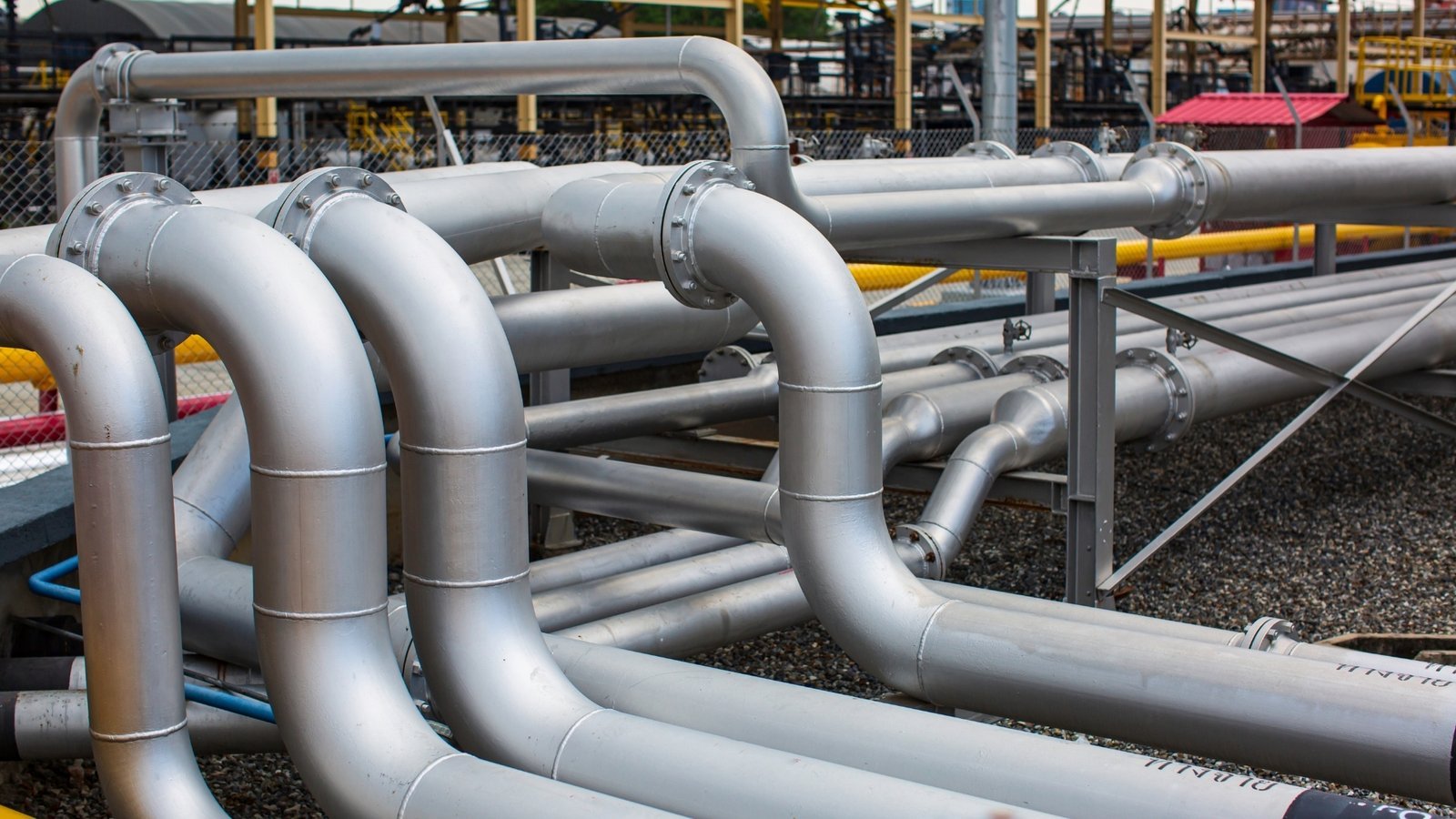 Project 54A network of industrial pipelines, the distribution system a content engine builds to carry an energy brand's ideas to a wide buying committee.
It fits a long, committee led, self directed purchase
Energy buying is long, collective and self directed, which is exactly the environment content is built for. Only about 5 percent of potential buyers are in the market at any moment, a pattern we examine in brand versus demand in energy B2B, and the sale itself runs 12 to 24 months across a committee of 6 to 10 stakeholders. Content is the only cost effective way to stay useful to that many people, for that long, before anyone is ready to talk to sales.
It also matches modern buyer behaviour. Buyers complete four to five pieces of independent research before contacting a supplier, so the companies whose content answers those early questions shape the shortlist before a rep is ever involved. The economics follow: reported content marketing ROI sits near 7.65 US dollars per dollar spent, against an average B2B return of about 5 to 1, and content budgets have climbed to roughly 26 percent of total marketing spend for 2026.
Finally, content is the fuel for AI visibility. As buyers and answer engines increasingly summarise the web, the sourced, structured, genuinely authoritative material wins citation, which is why we treat content and generative engine optimization for energy B2B as two sides of the same discipline.
Four content types that do the work
Not all content is equal in energy. Thin, promotional posts are ignored by a technical committee, while a handful of formats consistently earn attention and trust. Four carry most of the weight.
Authority thought leadership
Sourced, opinionated analysis that makes you the name associated with a problem. This is the top of the engine: it builds the brand and mental availability that decides future shortlists, and it is what earns citation from press, analysts and answer engines.
Technical and procurement guides
Practical, detailed material that helps engineers and procurement teams do their job, from prequalification and local content to specification and safety. Genuinely useful reference content earns trust and captures buyers during the long self directed research phase.
Evidence: case studies and data
Real project outcomes and proprietary data are the proof a risk averse committee needs. Case studies address the committee's fear of a wrong choice, and original data earns links, citations and authority that generic content never will.
Expert led video and audio
Short form video is now the highest ROI content format, cited by about 49 percent of marketers, and expert led explainers and briefings translate complex energy topics for a mixed committee. Multi format distribution multiplies the reach of every idea you publish.
Match the format to the stage and the stakeholder
Because the energy decision is long and involves many roles, a content engine has to serve different stages and stakeholders at once. The table maps content types to where they work hardest across the cycle, so the plan covers the whole journey rather than clustering everything at the bottom of the funnel.
| Stage of the long cycle | Primary content job | Formats that fit | Main metric |
|---|---|---|---|
| Out of market (the 95 percent) | Stay known and trusted | Thought leadership, LinkedIn, video, PR | Share of voice, branded search |
| Early research (problem aware) | Answer the first questions | Guides, explainers, data, SEO and AI content | Organic and AI visibility, engagement |
| Active evaluation (in market) | Prove and de risk the choice | Case studies, technical detail, ROI content | Pipeline influenced, conversions |
| Committee alignment | Equip every stakeholder | Role specific one pagers, finance and HSE content | Multithreading, deal velocity |
Document the strategy, then measure across the cycle
The single biggest predictor of results is having a documented strategy: the roughly 73 percent of B2B marketers who write one down report markedly better returns, because it forces focus on audience, topics and distribution rather than random acts of content. Start with the buying committee's real questions, commit to a sustained cadence, and distribute every piece across search, LinkedIn, email and video rather than publishing once and hoping.
Measurement has to respect the long cycle. Last click reporting will undervalue content that planted a seed 18 months before a deal closed, so pair engagement and organic visibility metrics with the triangulated, long cycle approach we set out in marketing attribution for energy B2B, including self reported attribution to catch the content touches that analytics miss.
The strategic point is that content marketing in energy is not a campaign, it is an asset. Built consistently, it compounds into a body of knowledge that lowers the cost of every lead, strengthens the brand, and feeds both search and AI visibility. That is revenue architecture, engineered, not assumed.
Listen & take it with you
Prefer audio, or need the deck for an internal review? The full briefing is available as a podcast episode and a downloadable slide presentation.
What is the weakest link in your energy content marketing?
Frequently asked
It is the disciplined creation and distribution of useful, credible material, technical guides, data led analysis, case studies, thought leadership and video, that builds trust with a technical buying committee across a long purchase. In energy it works as an asset that keeps a supplier known and useful through the 12 to 24 month decision, rather than as a one off campaign.
Yes. Content marketing generates about three times more leads than outbound at roughly 62 percent lower cost, and organisations with a documented strategy generate around three times more leads per dollar. Reported content marketing ROI sits near 7.65 US dollars per dollar spent. It fits energy especially well because the sale is long, committee led and self directed.
Four types do most of the work: authority thought leadership that builds brand and earns citation, technical and procurement guides that help engineers and buyers, case studies and proprietary data that de risk the choice for a cautious committee, and expert led video, now the highest ROI format. A strong energy content engine is multi format and sourced, not thin promotional copy.
Pair near term engagement and organic and AI visibility metrics with long cycle measurement, because last click reporting undervalues content that influenced a deal a year or more earlier. Use self reported attribution, the how did you hear about us question, and share of voice and branded search to capture content's effect across the full 12 to 24 month journey.
Get the next intelligence drop
Join energy and industrial leaders getting our marketing, AI-growth and revenue-architecture intelligence, direct, no filler.
You're on the list
Welcome to The Energy Growth Brief, watch your inbox for the next dispatch.