



SLB's Digital Reinvention: How the Oilfield Services Leader Turned Software Into Its Growth Engine
SLB is the largest oilfield services company in the world, and in 2026 it is quietly becoming a technology company. Its second quarter results show the core drilling and services business flat to soft, while recurring digital revenue and AI data center work grow at double and triple digits. This is a deliberate re-architecture of where the profit comes from, and it carries a direct lesson for anyone selling into energy: differentiate on technology and recurring value, not on volume.
- SLB posted second quarter 2026 revenue of about 8.97 billion dollars, up 5 percent year on year, beating estimates on strength in Digital and Production Systems.
- Digital annualized recurring revenue hit 1.04 billion dollars, up 15 percent year on year, with EBITDA margins near 35 percent, far above the group average.
- Data Center Solutions revenue jumped 80 percent year on year to 186 million dollars, and management expects it to exit 2026 above a 1 billion dollar annualized run rate.
- North America revenue rose 36 percent to 2.24 billion dollars, while international revenue fell 3 percent to 6.67 billion dollars on Middle East softness.
- The ChampionX acquisition, closed in 2025, added production chemicals and artificial lift and delivered a third straight quarter of sequential margin expansion.
- The commercial lesson for energy B2B: recurring, technology led revenue is more valuable and more defensible than one off volume, and buyers now reward integrated platforms over point tools.
A quarter that beat, driven by the parts SLB wants to grow
On 24 July 2026 SLB reported second quarter revenue of about 8.97 billion dollars, up 5 percent year on year from 8.55 billion dollars and roughly 3 percent ahead of analyst estimates. Adjusted earnings were 55 cents per share, ahead of the 51 cent consensus. Shares rose sharply on the print, reflecting relief that the company is growing through a soft patch in the drilling cycle.
The headline number matters less than its composition. The beat was led by Digital and Production Systems, and by broad based gains outside the Middle East. North America revenue rose 36 percent year on year to 2.24 billion dollars, while international revenue slipped 3 percent to 6.67 billion dollars, held back by weaker activity in parts of the Middle East. In other words, the growth came from the higher margin, technology heavy segments, not from the traditional international services engine.
This is the tell. SLB is a services company by history, but the results it now leads with are the ones that behave like a software business: recurring, high margin, and scalable. That is a choice, and it is reshaping the company's investment case.
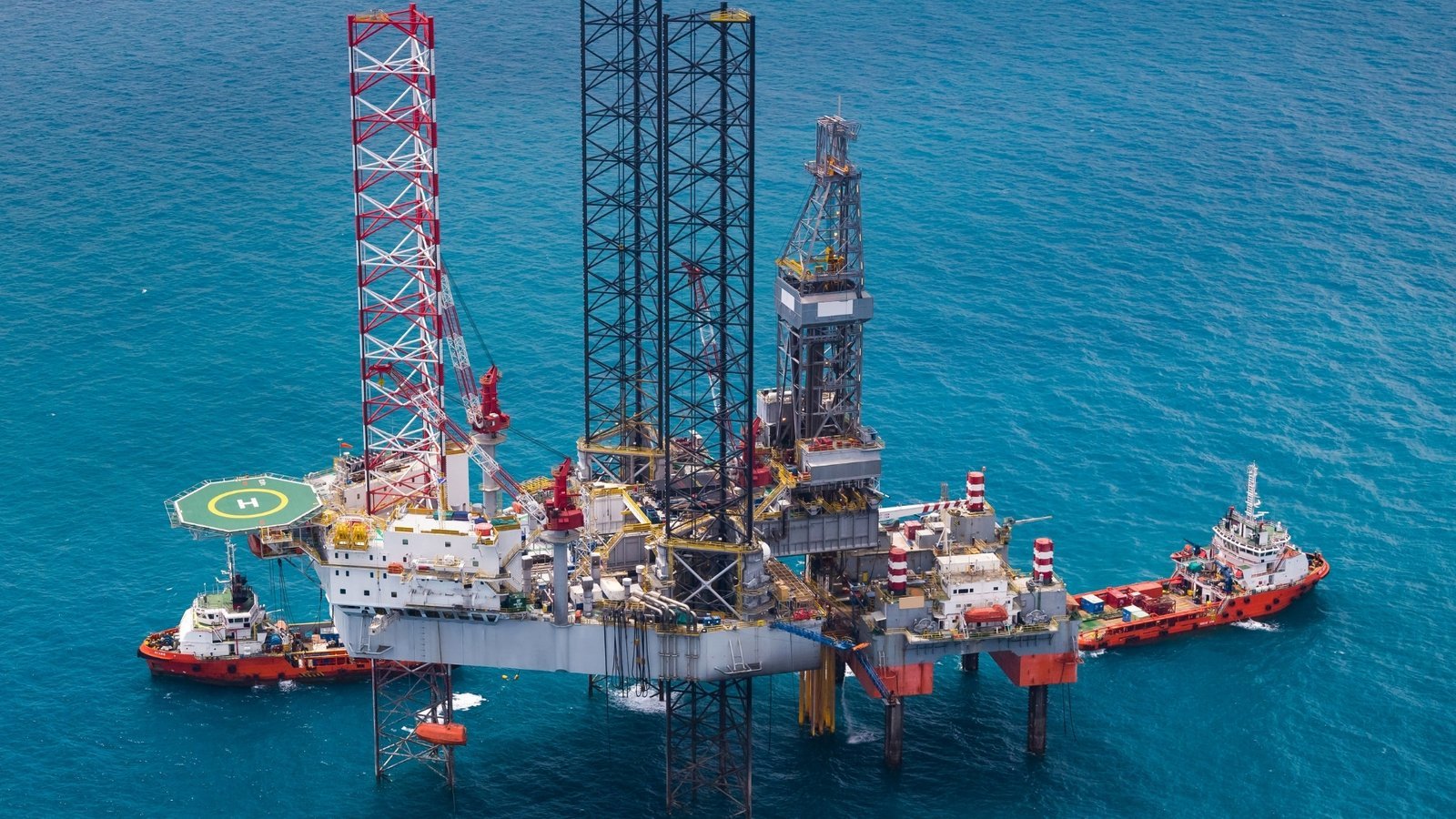 Project 54A jack up drilling rig and its support vessels offshore, the physical core of the oilfield services business SLB is now wrapping in digital and AI led revenue.
Recurring revenue is the point, not a side project
Digital annualized recurring revenue reached 1.04 billion dollars in the quarter, up 15 percent from 904 million dollars a year earlier, with sequential digital revenue up 9 percent and EBITDA margins near 35 percent. For context, that margin sits well above the company average, so every incremental digital dollar is worth more to the bottom line than a dollar of conventional services.
The engine is a platform stack. On the earnings call, chief executive Olivier Le Peuch framed it directly: digital operation and AI will be the key lever of growth and adoption in the market, and SLB's move from Delfi to Lumi to Agora, its edge platform, and Tela, its AI platform, provides, in his words, the comprehensive differentiated offering that is attracting market award. Read past the product names and the strategy is clear: bundle data, cloud, edge and AI into one integrated offering that customers subscribe to rather than buy once.
Recurring revenue changes the shape of the business. It smooths the drilling cycle, it lifts blended margins, and it deepens the customer relationship because a subscribed platform is far harder to displace than a one off tool or service call. That is why SLB keeps putting the digital number first even though it is still a fraction of group revenue.
Recurring over one off
Digital ARR of 1.04 billion dollars, up 15 percent, converts lumpy project revenue into a subscription base that smooths the cycle.
Margin over volume
Digital EBITDA margins near 35 percent mean each digital dollar contributes far more profit than a conventional services dollar.
Platform over point tools
The Delfi to Lumi to Agora to Tela stack is sold as one integrated, AI enabled offering, which is harder for rivals to unbundle.
Selling the picks and shovels of the AI build out
The fastest growing line in the quarter was Data Center Solutions, where revenue rose 80 percent year on year and 33 percent sequentially to 186 million dollars. Management expects the business to exit 2026 above a 1 billion dollar annualized run rate, and said the backlog supports a run rate above 2 billion dollars exiting 2027. That is a striking trajectory for a segment most investors did not associate with an oilfield services company two years ago.
The logic is that AI data centers need power, cooling, and the kind of large scale industrial engineering, subsurface expertise and thermal management that SLB has built over decades in energy. Rather than treat the AI boom as someone else's story, SLB is positioning to supply the infrastructure underneath it, in the same way Chevron and others are moving to sell power and behind the meter solutions. It is a deliberate widening of the addressable market beyond the barrel.
For a company whose core market grows slowly, finding a large adjacent market that grows quickly is the difference between a value stock and a growth story. SLB is engineering optionality: if drilling stays soft, data center and digital can carry the growth narrative.
The international engine is the swing factor
The soft spot is international, and specifically the Middle East, where a 3 percent year on year decline in international revenue offset some of the North American and digital strength. The Middle East has been the backbone of oilfield services demand for a decade, so softness there is a genuine watch item, not a rounding error. Much of it reflects the pace of national oil company spending and short cycle activity rather than a structural decline.
This is why the digital and data center pivot is strategically important rather than merely fashionable. When the traditional demand base wobbles, a company that has built recurring and adjacent revenue has somewhere else to grow. The ChampionX business, added in 2025, helps here too: it delivered a third consecutive quarter of sequential margin expansion despite chemical cost inflation, broadening SLB's production and recovery footprint at a point in the cycle when new drilling is restrained.
The read across for the wider services sector, including the GCC oilfield services market, is that the winners in a flat spending environment will be those selling differentiated technology and production optimisation, not commodity capacity.
| Metric | Q2 2026 | Change vs prior year |
|---|---|---|
| Group revenue | 8.97 billion dollars | up 5 percent |
| Adjusted EPS | 55 cents | beat 51 cent consensus |
| Digital annualized recurring revenue | 1.04 billion dollars | up 15 percent |
| Data Center Solutions revenue | 186 million dollars | up 80 percent |
| North America revenue | 2.24 billion dollars | up 36 percent |
| International revenue | 6.67 billion dollars | down 3 percent |
Engineer recurring value, then sell the platform
The strategic lesson travels well beyond oilfield services. SLB is the market leader, and it is choosing to compete on integrated technology and recurring revenue rather than on how much equipment it can push through the door. Every energy B2B seller faces the same choice in miniature: compete on price and volume, or build a differentiated, measurable, recurring offering that a buyer will subscribe to and struggle to replace.
Three moves are worth copying. First, lead with the recurring, high margin part of your business in every proposal and every piece of marketing, because that is what a sophisticated buyer and an investor both value most. Second, bundle point capabilities into a platform with a clear, named architecture, so buyers evaluate one integrated decision rather than a shopping list. Third, follow the demand into adjacent, faster growing markets, as SLB has done with data centers, rather than defending a slow core. This is revenue architecture, engineered rather than assumed, and it is the same discipline energy majors such as ExxonMobil and TotalEnergies are applying to their own portfolios.
For marketers specifically, the SLB story is a reminder that the most persuasive proof is a number that recurs. A subscription base, a retention rate, or a margin that expands quarter after quarter tells a buyer far more than a feature list. Build the offer so those numbers exist, then make them the centre of the narrative.
Listen & take it with you
Prefer audio, or need the deck for an internal review? The full briefing is available as a podcast episode and a downloadable slide presentation.
For your own business, where is the biggest unlock in the next year?
Frequently asked
Yes. Schlumberger rebranded to SLB in 2022. It remains the world's largest oilfield services company by revenue, providing technology and services to oil and gas operators across drilling, reservoir performance, well construction, production systems and, increasingly, digital and data center infrastructure.
Digital is still a minority of group revenue, but it is the strategic priority. In the second quarter of 2026 digital annualized recurring revenue was 1.04 billion dollars, up 15 percent year on year, at EBITDA margins near 35 percent, against group revenue of about 8.97 billion dollars for the quarter. The company leads with the digital number because it grows faster and earns higher margins than the rest of the business.
AI data centers need power, cooling and large scale industrial engineering, which overlaps with SLB's decades of energy infrastructure, subsurface and thermal management expertise. Data Center Solutions revenue rose 80 percent year on year in the second quarter of 2026, and management expects it to exceed a 1 billion dollar annualized run rate by the end of 2026, giving SLB a fast growing market adjacent to its slower core.
ChampionX is a production chemicals and artificial lift business that SLB acquired, with the deal closing in 2025. It broadens SLB's production and recovery footprint and, in the second quarter of 2026, delivered a third consecutive quarter of sequential margin expansion despite chemical cost inflation, supporting group profitability while new drilling remains restrained.
Compete on differentiated, recurring, technology led value rather than on volume. Lead with the recurring, high margin part of the business, bundle point capabilities into an integrated platform that buyers subscribe to, and follow demand into faster growing adjacent markets. Recurring revenue smooths the cycle, lifts margins and deepens customer relationships, which is why it commands a premium from both buyers and investors.
Get the next intelligence drop
Join energy and industrial leaders getting our marketing, AI-growth and revenue-architecture intelligence, direct, no filler.
You're on the list
Welcome to The Energy Growth Brief, watch your inbox for the next dispatch.