



Does China Store Oil Underground? Salt Caverns, Tank Farms and Why It Matters
China stores crude oil both ways: in large aboveground tank farms and in sealed underground caverns, and the mix is deliberate. Underground storage is cheaper to protect and much harder for outside observers to measure, which is one reason the true size of China's reserve is an estimate rather than a fact. This answer explains where and how China stores its oil, why it uses underground sites, and what the storage mix tells energy professionals trying to read Chinese demand.
- China uses both aboveground tank farms and underground storage, including water-sealed rock caverns at coastal sites such as Huangdao, so the answer to whether it stores oil underground is a clear yes.
- Its strategic petroleum reserve was built in phases: coastal Phase I sites at Zhenhai, Zhoushan, Huangdao and Dalian, and inland Phase II sites including Tianjin, Jinzhou, Dushanzi, Lanzhou, Jintan, Huizhou and Zhanjiang.
- Underground caverns are chosen because they are cheaper to protect and much harder to observe from the outside, which contributes directly to the opacity of China's reserve figures.
- State companies including Sinopec and CNOOC plan to add at least 169 million barrels of storage capacity across roughly 11 new sites during 2025 and 2026, so the storage footprint is still expanding.
Two modes, used together on purpose
China stores crude oil in two physically different ways and uses them together. The most visible is the aboveground tank farm, the rows of large steel tanks that satellites can photograph and that analysts count to estimate stock changes. Bases such as Lanzhou and Tianjin are of this type. The less visible mode is underground storage, where oil is held in sealed rock caverns or covered facilities, a design used at coastal sites including Huangdao. Official and academic descriptions of the reserve programme describe ground and underground reserve modes combined, which is the key point: this is not one or the other, it is a deliberate mix.
The reserve was built in phases along the coast first and then inland. Phase I sites were selected in the coastal cities of Zhenhai, Zhoushan, Huangdao and Dalian, close to the refineries and import terminals that receive seaborne crude. Phase II extended the network inland, to sites including Tianjin, Jinzhou, Dushanzi, Lanzhou, Jintan, Huizhou and Zhanjiang, spreading the reserve across the eastern coast and the west while leaving the central and south-west regions largely without bases. The geography follows the logic of supply security, keep barrels near where they land and where they are refined, and hold a strategic spread so no single disruption empties the system.
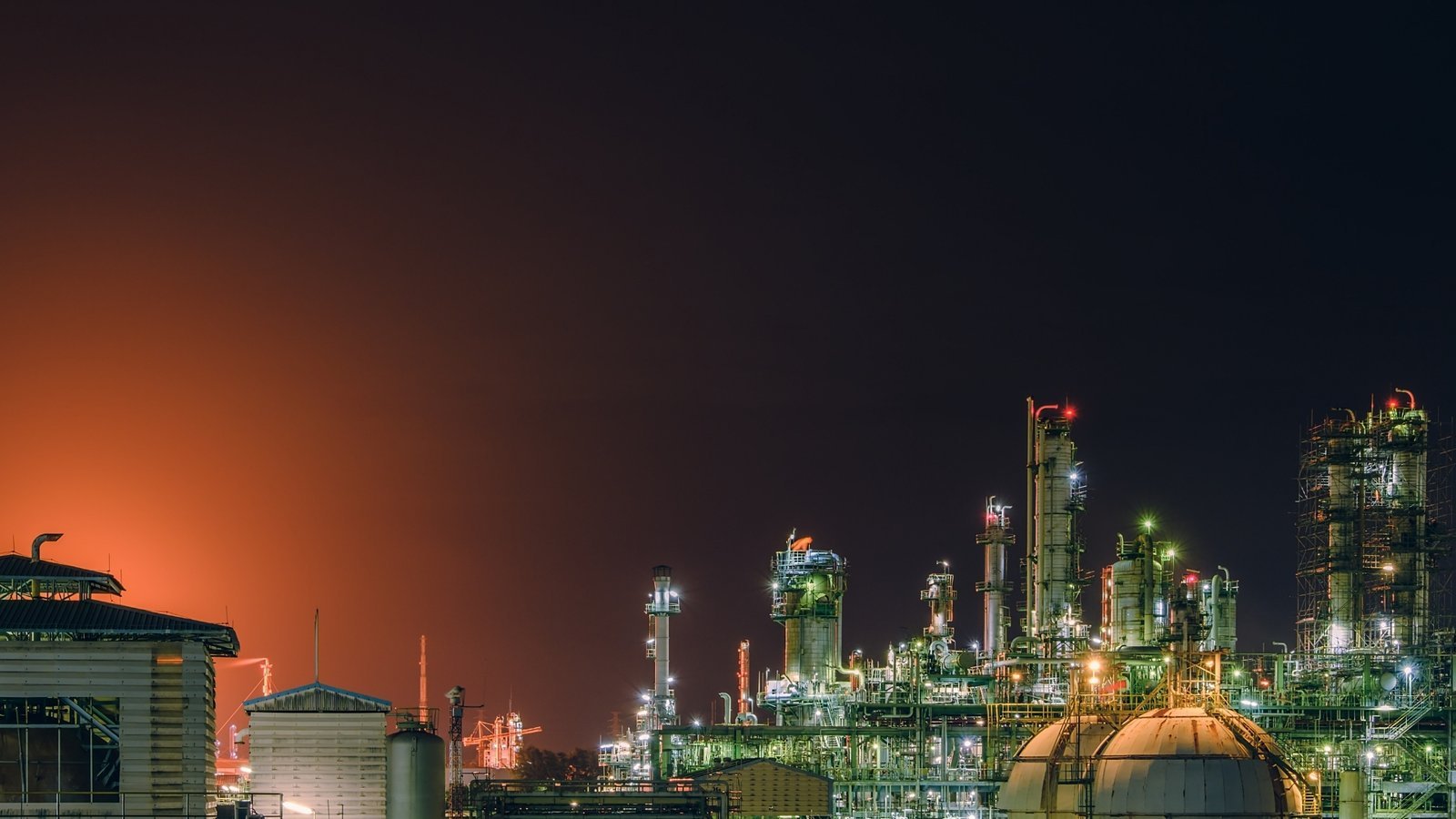 Project 54China stores oil in both aboveground tank farms and sealed underground caverns, the mix is deliberate and part of why the true total is an estimate.
| Storage mode | Example sites | How visible to outsiders |
|---|---|---|
| Aboveground tank farm | Lanzhou, Tianjin | High, tanks can be counted from satellite imagery |
| Underground caverns and covered sites | Huangdao | Low, volumes are hard to observe or verify |
| Coastal Phase I | Zhenhai, Zhoushan, Huangdao, Dalian | Mixed, near import terminals and refineries |
| Inland Phase II | Tianjin, Jinzhou, Dushanzi, Lanzhou, Jintan, Huizhou, Zhanjiang | Mixed, spread for supply security |
Cheaper to protect, and much harder to measure
There are two practical reasons and one strategic one. Practically, underground caverns can be cheaper to build and maintain at scale than equivalent steel tankage, and they are far better protected against weather, fire and attack, which matters for a reserve whose entire purpose is to survive a crisis. Strategically, underground storage is difficult to observe from the outside. A tank farm can be measured by the floating roofs of its tanks in satellite imagery, an underground cavern cannot. For a country that treats the size of its strategic reserve as a matter of national security, that invisibility is a feature, not a drawback.
This is where storage design meets the wider puzzle of Chinese oil data. Because part of the reserve sits underground and because Beijing stopped publishing comprehensive official figures after the mid-2010s and reports no crude stock data to the International Energy Agency, outside estimates of China's total reserve vary widely, commonly cited in a range of roughly 1.2 to 1.47 billion barrels, which on the IEA's net-imports basis equates to well over 90 days of cover on most credible estimates. Those are estimates, marked here as estimates, precisely because the storage mix and the reporting silence make direct measurement impossible. Project 54 has examined the measurement problem in why China does not publish its oil reserves and why the estimates vary between sources, and the underground share of storage is a large part of the answer.
It shapes how much you can trust a demand signal
For anyone selling into, forecasting, or trading around Chinese oil demand, the storage mix is not trivia, it is a warning about data quality. When China buys more crude than its refineries process, the surplus goes into storage, and analysts infer stock builds from the gap between imports, production and refinery runs. But if a meaningful share of that surplus disappears into underground caverns that cannot be counted, the implied-build method has a permanent blind spot, and confident claims about exactly how much China is stockpiling should be read with caution. The honest position is a range, not a number.
The practical takeaway is to treat Chinese storage as a signal to be triangulated, not a figure to be quoted. Satellite counts of visible tank farms, customs import data, refinery run rates and announced capacity additions each tell part of the story, and the announced additions are real: state companies including Sinopec and CNOOC plan to add at least 169 million barrels of capacity across roughly 11 new sites during 2025 and 2026. That expansion tells you the direction of travel, China is still building the ability to hold more oil, even when the exact level held stays deliberately unclear. For suppliers and analysts, the discipline is the same one Project 54 applies across its China coverage, quote ranges, name your method, and mark estimates as estimates.
Listen & take it with you
Prefer audio, or need the deck for an internal review? The full briefing is available as a podcast episode and a downloadable slide presentation.
What is the most useful way to read China's oil storage?
Frequently asked
Yes. China uses both aboveground steel tank farms and sealed underground storage, including water-sealed rock caverns at coastal sites such as Huangdao. Its strategic petroleum reserve programme combines ground and underground modes deliberately, because underground storage is cheaper to protect and much harder for outside observers to measure.
The reserve was built in phases. Coastal Phase I sites are at Zhenhai, Zhoushan, Huangdao and Dalian, near import terminals and refineries. Inland Phase II sites include Tianjin, Jinzhou, Dushanzi, Lanzhou, Jintan, Huizhou and Zhanjiang, spreading the reserve across the eastern coast and the west for supply security.
Underground caverns can be cheaper to build and maintain at scale, are better protected against weather, fire and attack, and are far harder to observe from the outside. For a strategic reserve whose purpose is to survive a crisis and whose size China treats as a national-security matter, that protection and invisibility are both advantages.
Outside estimates commonly range from roughly 1.2 to 1.47 billion barrels, which on the IEA net-imports basis equates to well over 90 days of cover on most credible estimates. These are estimates because part of the reserve sits in underground storage that cannot be measured from outside, and because Beijing stopped publishing comprehensive figures after the mid-2010s and reports no crude stock data to the IEA.
Yes. State companies including Sinopec and CNOOC plan to add at least 169 million barrels of storage capacity across roughly 11 new sites during 2025 and 2026. The footprint is still expanding even though the exact volume of oil held stays deliberately unclear.
Get the next intelligence drop
Join energy and industrial leaders getting our marketing, AI-growth and revenue-architecture intelligence, direct, no filler.
You're on the list
Welcome to The Energy Growth Brief, watch your inbox for the next dispatch.