



لم يعد نموذج المبيعات التقليدي القائم على العلاقات في قطاع الطاقة كافيًا. فقد تحوّل المشترون التقنيون والمراقبون الماليون نحو التقييم المستقل القائم على البيانات. وبالنسبة لقادة الإدارة العليا في شركات تكنولوجيا وخدمات الطاقة، لم يعد الخطر الرئيسي يكمن في المنافسة فحسب، بل في نتائج "عدم اتخاذ القرار" الناجمة عن غياب توافق آراء المشترين الداخليين.
يمثل إطار تمكين اتخاذ القرار تحولاً استراتيجياً من أساليب البيع التقليدية إلى تزويد المشترين بأدوات تشخيصية، وإثباتات تنظيمية، ونماذج مالية. ويعالج هذا النهج حقيقة أن 61% من مشتري الشركات يفضلون التقييم "بدون مندوب مبيعات". ويساهم تطبيق هذا الإطار في الحد من تقلبات دورة المبيعات، ويؤثر بشكل مباشر على متوسط التكلفة المرجح لرأس المال (WACC) للشركة. وتشير البيانات إلى أن الشركات التي توفر أدوات رقمية عالية الفائدة لديها احتمالية أكبر بمقدار 2.8 مرة لإتمام صفقات عالية القيمة بأقل قدر من الندم.
في ظل بيئة تتسم بتقلبات الأسعار ومتطلبات خفض الانبعاثات الكربونية، انتقل عبء الإثبات. بات على القادة الاستراتيجيين الآن تقديم البيانات الفنية والمالية اللازمة لمدير العمليات لتبرير الإنفاق الرأسمالي الكبير أمام مجلس الإدارة.
تحديد إطار تمكين اتخاذ القرار في مجال الطاقة
إطار تمكين اتخاذ القرار هو نظام من الأصول الرقمية والمنهجيات المصممة لمساعدة المشترين على تجاوز عقبات الشراء الداخلية بشكل مستقل. وعلى عكس تمكين المبيعات التقليدي، الذي يركز على أداء الممثلين، يركز تمكين اتخاذ القرار على تسهيل عملية الشراء للمشتري.
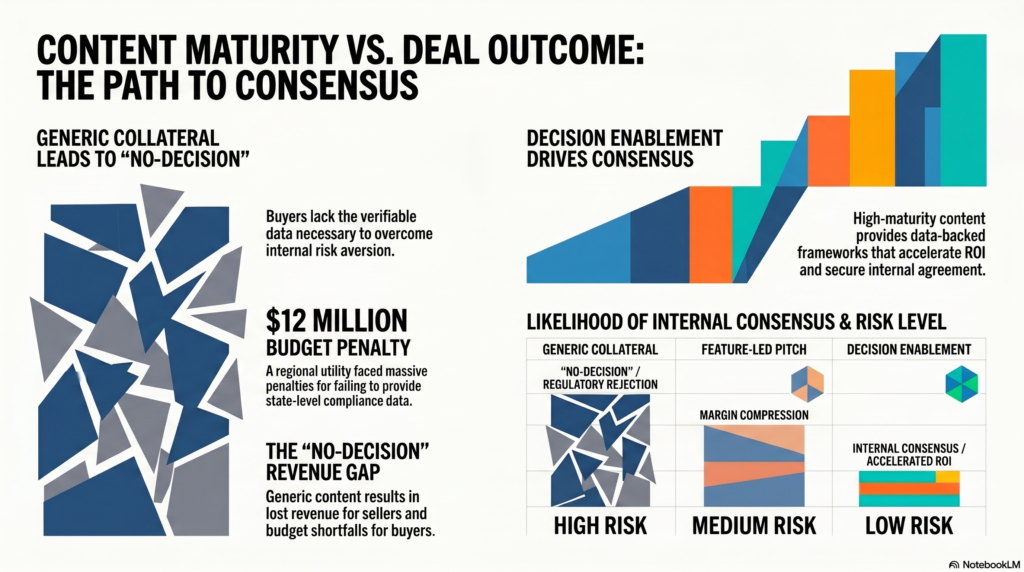
في قطاع الطاقة، يرتكز هذا الإطار على ثلاثة أركان: التحقق الفني، والتوافق مع الأنظمة، والتبرير المالي. ومع ازدياد تعقيد الشبكة الكهربائية نتيجةً لتزايد موارد الطاقة الموزعة، يُعطي المشترون الأولوية لمطابقة بيانات الموردين مع متطلبات استقرار الشبكة على حساب أساليب البيع التقليدية.
تشير الأبحاث إلى أن المشترين يقضون حوالي 17% من رحلتهم في لقاءات مع الموردين. أما الـ 83% المتبقية فتُخصص للبحث الداخلي والتدقيق الفني. ويضمن إطار عمل تمكين اتخاذ القرار، خلال هذه المراحل الداخلية، استخدام أصحاب المصلحة لأطر عمل مدعومة بالبيانات ومقدمة من الموردين للوصول إلى توافق في الآراء.
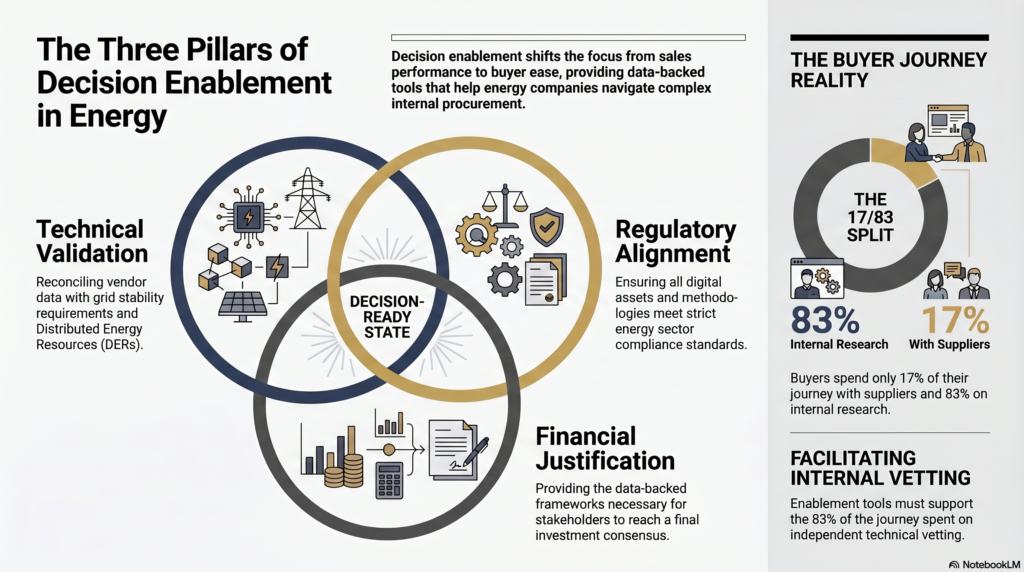
آثار تفضيل التقييم الخالي من النسخ المتماثلة لـ 61%
يُحتّم تفضيل التقييم غير المباشر على شركات الطاقة توفير وثائق فنية عالية الدقة وسهلة الاستخدام. ويؤدي عدم القيام بذلك إلى استبعاد الشركة خلال المرحلة الأولية "غير المرئية" من رحلة الشراء.
عند تقييم أنظمة مثل برامج احتجاز الكربون أو موازنة الشبكة، يقوم المهندسون ومسؤولو الامتثال بإجراء الفحص الأولي. إذا لم يتمكنوا من الوصول إلى أدلة فنية قابلة للتحقق - مثل وثائق API أو خرائط الامتثال لمعايير NERC/FERC - فغالبًا ما يتم استبعاد المورد قبل بدء أي نقاش تجاري.
الآثار الاستراتيجية:
- تكلفة اكتساب العميل (CAC): التعليم في المراحل المبكرة من خلال مندوبي المبيعات الذين يتواصلون بشكل مباشر مع العملاء غير فعال ومكلف.
- تكافؤ المعلومات: وفق بحث غارتنر حول مستقبل المبيعات, يمتلك المشترون بيانات سوقية كبيرة؛ وتكمن قيمة البائع الآن في مساعدة المشتري في تفسير البيانات ضمن قيود تشغيلية محددة.
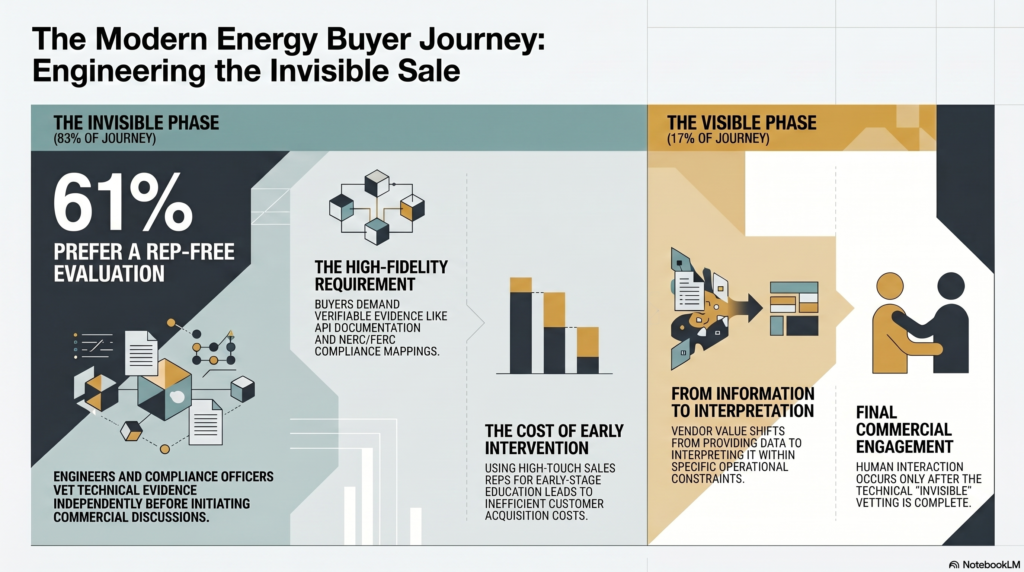
فخ التقييم بنسبة 9:1: العواقب المالية لاحتكاك المبيعات
تُلحق أطر المبيعات غير المتسقة ضرراً بالميزانية العمومية. وتُشير دورات المبيعات المطولة وغير المتوقعة إلى عدم كفاءة تجارية لدى المستثمرين، مما يُؤدي إلى تضخيم متوسط التكلفة المرجح لرأس المال (WACC). ويحدث هذا "الفخ التقييمي" عندما تُقوّض الكفاءة الفنية بسبب عدم القدرة على إتمام الصفقات بشكل موثوق.
في مجال الاستثمار المؤسسي، تؤثر القدرة على التنبؤ التجاري بشكل كبير على قيمة الشركة. فشركة الطاقة التي تتمتع بدورة مبيعات غير متوقعة مدتها 24 شهرًا تمثل مستوى مخاطرة أعلى من منافستها التي تتمتع بدورة مبيعات متوقعة مدتها 18 شهرًا، بغض النظر عن المزايا التقنية الطفيفة.
الآثار المالية:
- زيادة متوسط تكلفة رأس المال المرجح: إن الإيرادات غير الخطية تجعل التمويل أكثر تكلفة.
- التدقيق التنظيمي/البيئي والاجتماعي والحوكمة: قد يؤدي عدم تقديم بيانات موثقة حول عائد الاستثمار في مبادرات خفض الانبعاثات الكربونية إلى إجراء عمليات تدقيق. وفقًا لـ بلومبرج إن إي إف, أصبح وضوح العائد على الاستثمار في إزالة الكربون الآن محركاً رئيسياً لتخصيص رأس المال المؤسسي في قطاع الطاقة.
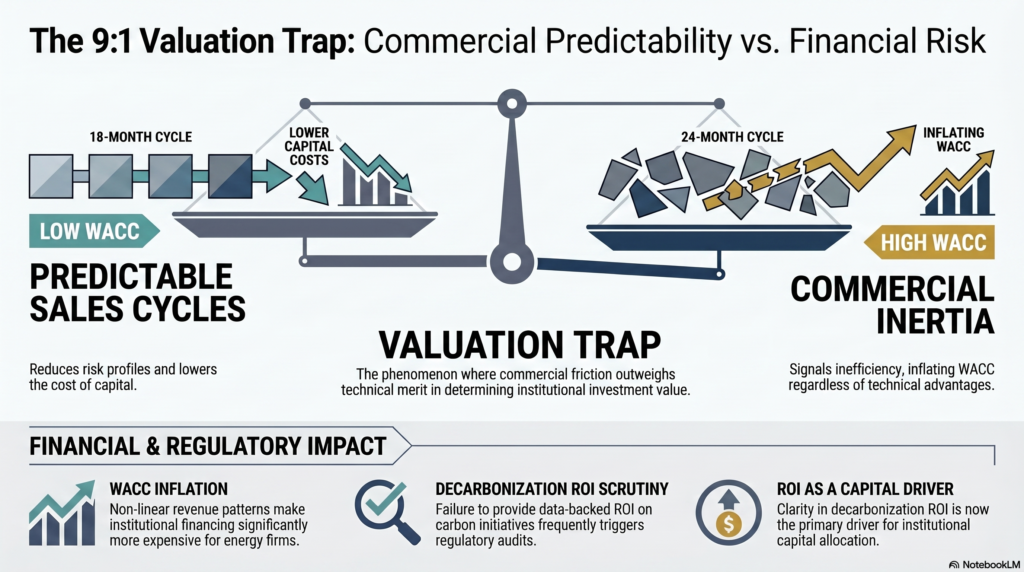
المخاطر المالية لضمانات مبيعات الأدوية الجنيسة
يتمثل الخطر الرئيسي للمحتوى العام في نتيجة "عدم اتخاذ القرار". يحدث هذا عندما يُقرّ المشتري بالحاجة إلى المنتج، لكنه يفتقر إلى البيانات اللازمة للتغلب على النفور الداخلي من المخاطرة. وينتج عن ذلك خسارة في الإيرادات للبائع، ونقص محتمل في ميزانية المشتري.
على سبيل المثال، قد يتم رفض عرض شركة مرافق تقدم عروضًا لمشاريع البنية التحتية من قبل الجهات التنظيمية إذا قدم البائع كتيبات تسويقية بدلاً من بيانات أداء قابلة للتحقق.
|
نوع المحتوى |
نتائج الأعمال |
مستوى المخاطر |
|
الضمانات العامة |
عدم اتخاذ قرار / رفض تنظيمي |
عالية |
|
عرض تقديمي يركز على الميزة |
ضغط الهامش |
متوسط |
|
تمكين اتخاذ القرار |
إجماع داخلي / عائد استثمار متسارع |
قليل |
تضمنت إحدى الحالات الموثقة شركة مرافق إقليمية تواجه غرامة ميزانية قدرها $12 مليون لأن أحد البائعين فشل في تقديم البيانات القابلة للتحقق المطلوبة للامتثال على مستوى الولاية في عرض تعويض الكربون.
العقبات التنظيمية كعنصر من عناصر تمكين المبيعات
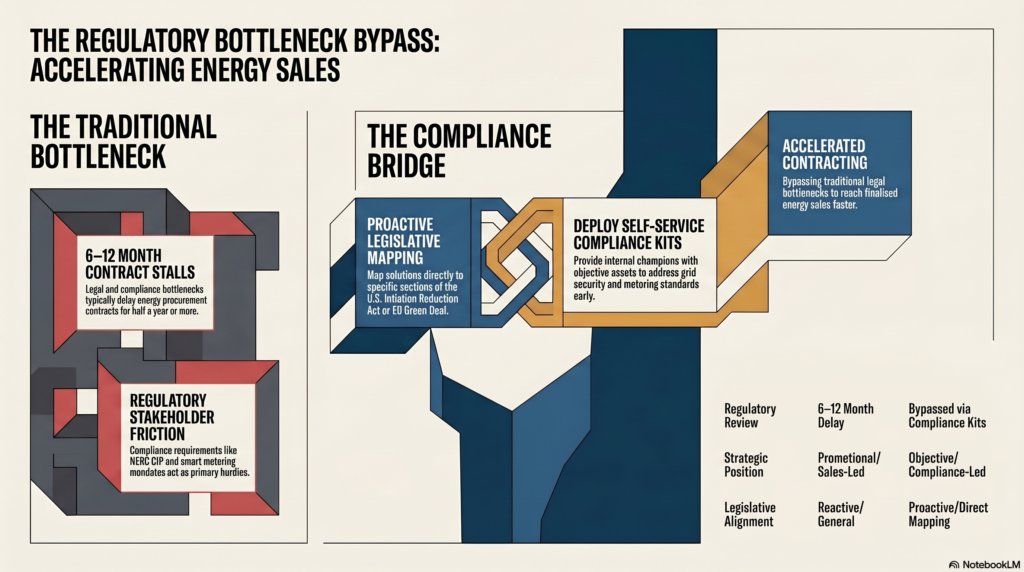
تُعدّ اللوائح التنظيمية جهةً رئيسيةً معنية بشراء الطاقة. ويتناول إطار تمكين اتخاذ القرار الفعال مسألة الامتثال، مثل: معايير NERC CIP لأمن الشبكة أو تفويضات العدادات الذكية الإقليمية - كبوابة يجب معالجتها مبكراً عبر أصول الخدمة الذاتية.
إن توفير "مجموعات الامتثال" يسمح للمدافعين الداخليين بتجاوز العقبات القانونية وعقبات الامتثال التي عادة ما تعرقل عقود الطاقة لمدة تتراوح من 6 إلى 12 شهرًا.
التموضع الاستراتيجي:
- الموضوعية: يجب صياغة الأصول على أنها أدوات مساعدة للامتثال وليست مواد ترويجية.
- التخطيط الاستباقي: ربط الحلول مباشرةً بأقسام تشريعية محددة، مثل قانون خفض التضخم في الولايات المتحدة أو الصفقة الخضراء للاتحاد الأوروبي.
المتطلبات التشغيلية لتنفيذ الإطار
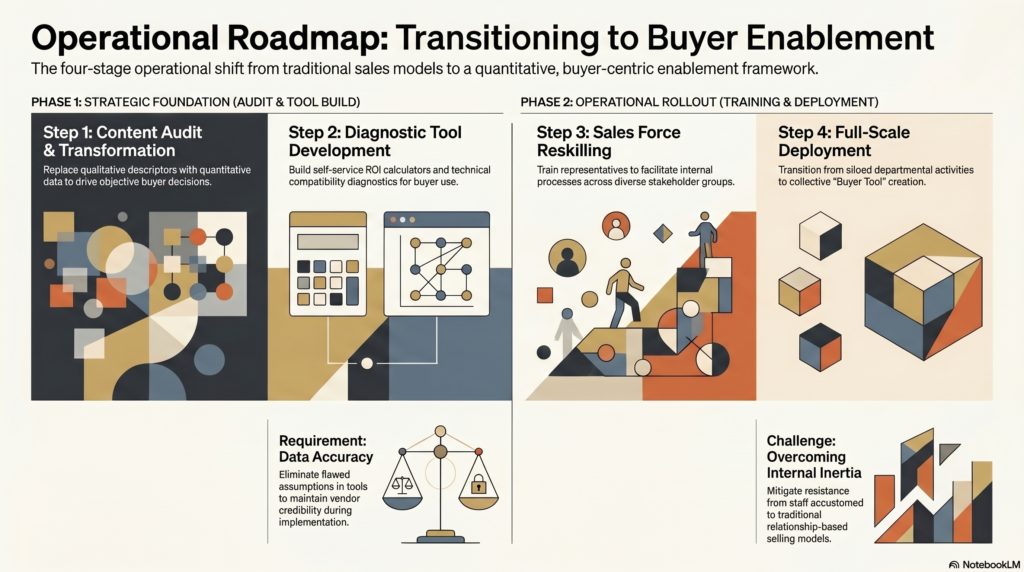
يتطلب التنفيذ الانتقال من الأنشطة الإدارية المنعزلة إلى الإنشاء الجماعي لـ "أدوات المشتري". وهذا تحول في القدرات التنظيمية وليس مجرد عملية شراء برامج.
المتطلبات التشغيلية:
- تحويل المحتوى: استبدل الأوصاف النوعية بالبيانات الكمية.
- تطوير التشخيص: قم بتطبيق حاسبات الخدمة الذاتية لحساب عائد الاستثمار والتوافق التقني.
- إعادة تأهيل مهارات المبيعات: تدريب الممثلين لتسهيل العملية الداخلية للمشتري عبر مجموعات أصحاب المصلحة المعقدة.
مخاطر التنفيذ:
- دقة البيانات: تؤدي الافتراضات الخاطئة في أدوات قياس العائد على الاستثمار إلى تدمير مصداقية البائع.
- القصور الذاتي الداخلي: مقاومة من الموظفين المعتادين على نماذج البيع التقليدية القائمة على العلاقات.
الوجبات الرئيسية
- تُعدّ الخدمة الذاتية الرقمية أمراً بالغ الأهمية: يجب أن تكون الوثائق الفنية كافية لاجتياز الفحص الأولي دون تدخل الممثل.
- الجسر المالي/التقني: يجب أن تقوم أدوات التمكين بترجمة المواصفات الهندسية إلى نتائج مالية لإرضاء المدير المالي.
- حماية التقييم: تؤدي عمليات البيع المتوقعة إلى تقليل مستوى المخاطر وتكلفة رأس المال.
- التكامل التنظيمي: ينبغي التعامل مع وثائق الامتثال باعتبارها ميزة أساسية للمنتج.
- اكتساب المعلومات: يجب أن يوفر المحتوى أطرًا وبيانات محددة تساعد في اتخاذ خيار مستنير.
الأسئلة الشائعة
هل يجعل "التقييم بدون مندوب" فريق المبيعات فائضاً عن الحاجة؟
لا. يتطور دور مندوب المبيعات من مجرد حارس معلومات إلى مستشار عمليات. فهو يساعد المشتري في تجاوز العقبات الداخلية باستخدام الأدوات التي يوفرها الإطار.
كيف يؤثر هذا الإطار تحديداً على متوسط تكلفة رأس المال المرجح؟
يقيس متوسط تكلفة رأس المال المرجح المخاطر. وتزيد دورات المبيعات غير المتوقعة من مخاطر الإيرادات. ويقلل إطار العمل الذي يجعل إتمام الصفقات قابلاً للتكرار والتنبؤ من هذه المخاطر، مما قد يخفض تكلفة التمويل.
هل ينطبق هذا على حلول الهندسة المخصصة؟
نعم. على الرغم من أن الحل النهائي مصمم خصيصًا، إلا أن التقييم الأولي للقدرة يتم من خلال دراسات الحالة ذات القيود المماثلة ومعايير قابلية التشغيل البيني ونماذج العائد على الاستثمار المعيارية.
ما هو السبب الأكثر شيوعاً لفشل التنفيذ؟
عدم دقة البيانات. في قطاع الطاقة، يؤدي تقديم حساب عائد الاستثمار الذي يتجاهل الإعفاءات الضريبية الإقليمية أو العقوبات التنظيمية إلى تقويض العلاقة مع المورد بأكملها.
كيف يمكن لشركة أن تبدأ التنفيذ بموارد محدودة؟
قم بإجراء تدقيق للمحتوى. حدد الأسئلة التقنية المتكررة من اجتماعات التدقيق وحوّل الإجابات إلى أصول رقمية عالية الجودة يمكن للمشترين الوصول إليها.
هل ينطبق هذا على العطاءات البلدية والحكومية؟
نعم. تتطلب الجهات الحكومية المعنية تبريراً موضوعياً. إن توفير "حزم القرارات" المتوافقة مع قواعد الشراء يمنح ميزة تنافسية كبيرة.
نبذة عن المؤلف
فريق تحليل المشروع 54 هو عضو استراتيجي بارز في فريق Project 54 ولديه خبرة تزيد عن 20 عامًا في مبيعات الشركات B2B وأسواق رأس المال، ويركز على الكفاءة التشغيلية في قطاعي الطاقة و SaaS.
استكشف هذا الموضوع بشكل أعمق
[مشغل البودكاست: التحول نحو تمكين اتخاذ القرار في عام 2026]
استمع إلى المناقشة المصاحبة حول هذا الموضوع. مدة المناقشة 18 دقيقة.
[عرض الشرائح: دليل المدير التنفيذي لتمكين اتخاذ القرارات]
قم بتنزيل العرض التقديمي الذي يلخص الأفكار الرئيسية الواردة في هذه المقالة.
تنزيل الشرائح (PDF) | تنزيل الشرائح (PPTX)
روابط خارجية: