



تُحدد نماذج تخصيص الطاقة القائمة على الذكاء الاصطناعي مدى مرونة البنية التحتية للشركات. في الوقت نفسه، تغيرت بنية شراء الطاقة بين الشركات، مما جعل مقاييس تتبع إدارة علاقات العملاء التقليدية غير دقيقة. يعمل مشترو الشركات بشكل مجهول ضمن أدوات تتبع خطوط الإنتاج القياسية؛ وتشير البيانات المؤسسية إلى أن 61% من دورة مشتريات المؤسسة يتم إكمال هذه العملية من خلال بحث تقني مستقل قبل أن يتواصل العميل المحتمل مباشرةً مع مندوب المبيعات. في غياب أطر التتبع الآلية، تظل الإدارة التنفيذية غير مدركة لهذه المرحلة التقييمية الأولية ذات النية العالية. تطبيق رسمي تكامل الطاقة مع الذكاء الاصطناعي تقوم الهندسة المعمارية برسم خريطة طبقة البحث غير المسجلة هذه، وتحسين نشر رأس المال عبر ترابط الطاقة والحوسبة، والحفاظ على سلامة خط الأنابيب قبل حدوث تدهور في الهامش.
مرحلة الشراء غير المرئية تخفي أبحاث المؤسسات ذات النوايا العالية وتؤدي إلى تآكل سرعة خط الأنابيب
يؤدي العمل بدون أطر تتبع آلية متعددة المراحل إلى فصل التنبؤات المالية عن واقع السوق. لأن البداية 61% من دورة حياة المشتريات يحدث ذلك بشكل مستقل، حيث تفشل أنظمة تتبع المراحل الأولى من مسار المبيعات في رصد النوايا المؤسسية. ويؤدي هذا النقص المعلوماتي مباشرةً إلى إبطاء وتيرة المبيعات، مما يُدخل مخاطر غير قابلة للقياس على الميزانيات العمومية للشركات من خلال سوء تخصيص نفقات المبيعات وانخفاض توقعات التحويل.
للتخفيف من هذا التدهور في رأس المال، يجب على المؤسسات نشر بنى تحتية آلية لإعداد تقارير تحليلات الأعمال بين الشركات. إن الكشف عن دورات التقييم الفني غير المسجلة هذه يسمح لموردي المؤسسات بوضع وثائق فنية متخصصة خلال فترة البحث النشط، والاستفادة منها. تكامل الطاقة مع الذكاء الاصطناعي لحماية هوامش التشغيل وتحقيق استقرار الوضع السوقي في مواجهة الداخلين الجدد إلى السوق الذين يتمتعون بالمرونة.
يتطلب دمج الذكاء الاصطناعي في مجال الطاقة رؤوس أموال ضخمة ويؤدي إلى عدم استقرار الشبكة المحلية على نطاق واسع
إن قابلية التوسع في مجال التعلم الآلي التجاري محدودة بسعة الشبكة المادية. عالميًا بلغ إجمالي الإنفاق الرأسمالي على البنية التحتية للبيانات ما يقارب 1 تريليون و4 تريليونات و500 مليار بين عامي 2022 و2024. وقد أدى هذا الإنفاق إلى ارتفاع يمثل الطلب على الكهرباء في مراكز البيانات 1.51 تريليون طن من إجمالي الاستهلاك العالمي, ، مما يمثل سحب سنوي قدره 415 تيراواط ساعة.
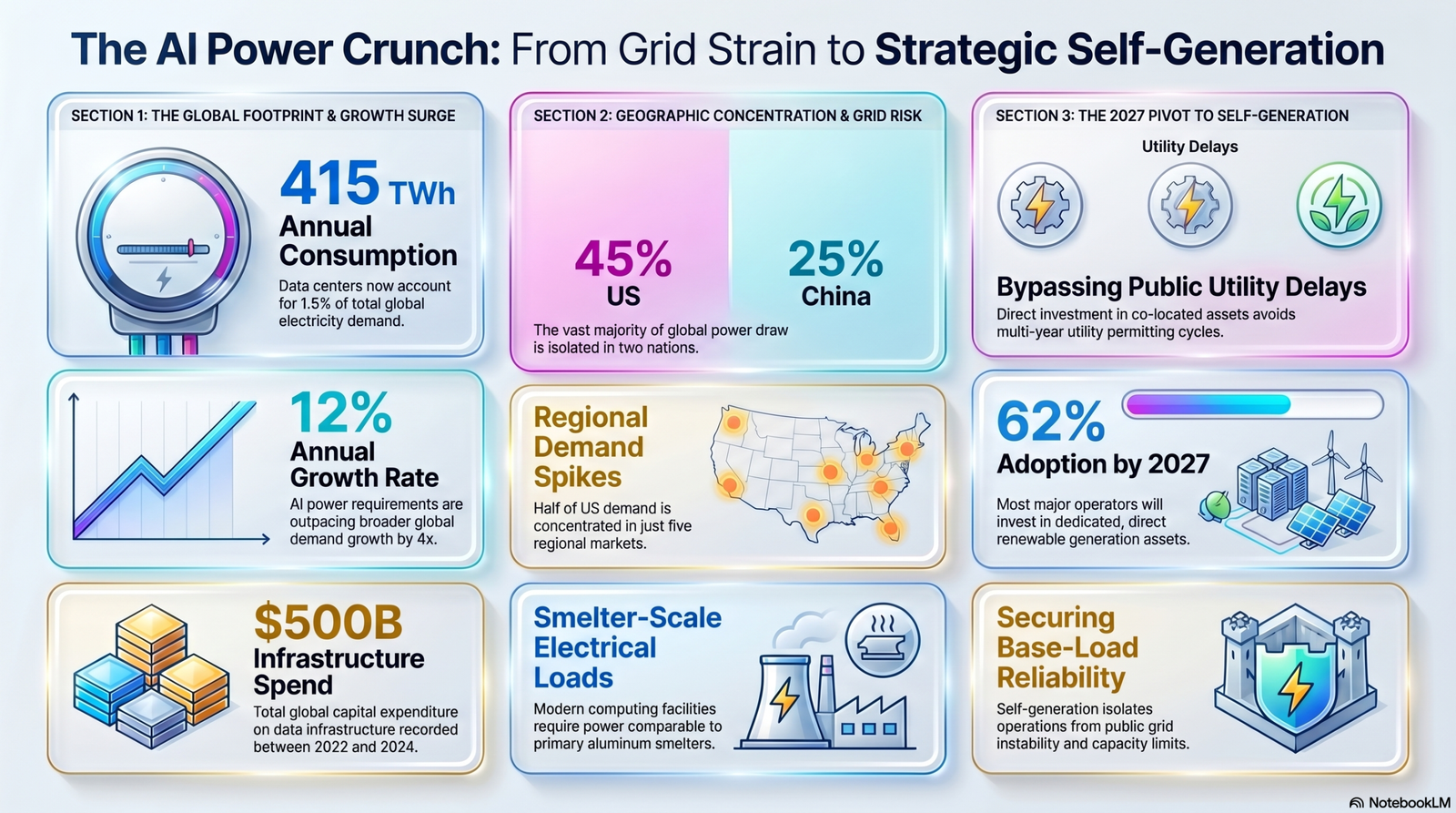
يزداد هذا الطلب الهيكلي على الطاقة بمعدل سنوي قدره 121 تريليون طن، متجاوزًا نمو الطلب العالمي على الكهرباء بأربعة أضعاف. ويؤدي التركيز الجغرافي إلى تفاقم هشاشة الشبكة المحلية. تستحوذ الولايات المتحدة على 451 تريليون طن من استهلاك الطاقة في مراكز البيانات العالمية, ومع ذلك، يتركز ما يقارب نصف هذا الطلب المحلي في خمس أسواق إقليمية فقط. تتطلب مرافق الحوسبة الصناعية أحمالًا كهربائية مماثلة لتلك التي تتطلبها مصاهر الألومنيوم الأولية. وتؤدي هذه الكثافة المكانية إلى ارتفاعات حادة في الطلب تُهدد استقرار شبكة النقل الإقليمية، مما يستلزم استخدام نماذج تنبؤ حسابية آلية للحفاظ على توازن النظام ومنع انقطاعات التيار الكهربائي.
فخ التقييم بنسبة 9:1 يدمر كفاءة تخصيص رأس المال ويضخم تكاليف اكتساب العملاء
تُظهر شركات تكنولوجيا الطاقة عادةً عدم كفاءة مالية فيما يتعلق باكتساب العملاء. إذ يخصص موردو تكنولوجيا الطاقة في قطاع الأعمال (B2B) عادةً مبلغ $9 لتغطية تكاليف اكتساب العملاء (CAC) مقابل كل $1 يتم نشره في البنية التحتية للبيانات اللازمة للقياس الدقيق والتحسين.
يُشكل هذا الخلل سمةً مميزةً لفخ التقييم بنسبة 9:1، حيث تُصنف النفقات الاستراتيجية خطأً على أنها خسائر رأسمالية عادية بدلاً من كونها محركات لقيمة الأصول. ولتحديد العائد الحقيقي على الاستثمار التسويقي، يجب على المديرين الماليين اشتراط تتبع منهجي لجميع تكاليف التشغيل والتكاليف المباشرة لتقييم الأداء على المدى الطويل. تكامل الطاقة مع الذكاء الاصطناعي كفاءة:
$$text{ROI} = frac{text{الإيرادات المُحققة} – text{الاستثمار التسويقي}}{text{الاستثمار التسويقي}} × 100$$
نظراً لأن معاملات البنية التحتية للطاقة تتضمن دورات شراء تمتد لعدة سنوات، فإن مقاييس المحاسبة قصيرة الأجل تعطي إشارات أداء مشوهة. يجب على مشغلي المؤسسات تقييم مقاييس الكفاءة الفورية جنباً إلى جنب مع تقييمات الأصول طويلة الأجل، وتحديداً سرعة تدفق خطوط الأنابيب وقيمة العميل على المدى الطويل.
| الفئة المترية | مؤشر الأداء الرئيسي (KPI) | الأهمية في قطاع الطاقة |
| مقاييس الكفاءة | تكلفة اكتساب العميل (CAC) | يحدد أداء هامش توليد العملاء المحتملين ويحمي صافي الربح. |
| مقاييس التأثير | سرعة خط الأنابيب | يقيس سرعة انتقال الصفقات خلال دورات المبيعات الصناعية متعددة السنوات. |
| القيمة طويلة الأجل | القيمة الدائمة للعميل (LTV) | يؤكد على استدامة إيرادات المشروع متعدد السنوات وتقييم المؤسسة. |
| إشارات الجودة | معدل تحويل MQL إلى SQL | يتنبأ بصحة خطوط عقود المؤسسات ويضمن تخصيص رأس المال. |
يفرض التحول الهيكلي لعام 2027 توليد الطاقة النظيفة ذاتيًا بشكل مباشر لتجاوز تأخيرات شركات المرافق العامة.
لا يزال هناك تباين في الجدول الزمني التشغيلي بين نشر البرمجيات وتطوير البنية التحتية للطاقة. تتوسع الأطر الحاسوبية عالميًا عبر الشبكات في غضون أشهر؛ في المقابل، تتطلب الأصول المادية للطاقة المتجددة وربط المرافق دورات ترخيص وبناء تمتد لعدة سنوات.
بينما 96% من المديرين التنفيذيين في مجال المرافق والتكنولوجيا يؤكد البيان أن البنية التحتية للطاقة المتجددة قادرة على تلبية متطلبات البيانات طويلة الأجل، فقط يشير 13% إلى الرغبة في فرض استخدام الطاقة النظيفة إذا أدى ذلك إلى تقييد سرعة النشر أو زيادة النفقات الرأسمالية قصيرة الأجل، فإن هذه الفجوة في التنفيذ تتطلب إعادة توزيع مخاطر جانب العرض. وتشير التوقعات الحالية إلى أنه بحلول عام 2027،, 62% من كبار مشغلي مراكز البيانات والبنية التحتية للذكاء الاصطناعي سوف تستثمر مباشرة في أصول توليد الطاقة المتجددة المخصصة والمتواجدة في نفس الموقع، مما يعزز الاكتفاء الذاتي. تكامل الطاقة مع الذكاء الاصطناعي مع تجاوز المرافق العامة تمامًا لضمان موثوقية الحمل الأساسي.
يرفض النمط التقني للمشترين التسويق العام ويطالب بالتحقق الدقيق القائم على أسس فيزيائية.
تتطلب دورات الشراء التي يقودها المهندسون التحقق التجريبي الدقيق. وتفشل الرسائل المؤسسية القياسية في التأثير على صناع القرار التقنيين الذين يركزون على الدقة التشغيلية. في المنشآت التجارية النموذجية،, تستهلك أنظمة التدفئة والتهوية وتكييف الهواء ما يقارب 401 تيرابايت من إجمالي طاقة المنشأة. تقوم الفرق الفنية بتقييم الحلول المحتملة من خلال تدقيق نماذج التعلم الآلي المستندة إلى الفيزياء والتي تتوقع السلوك الحراري باستخدام القياس عن بعد المحلي لإنترنت الأشياء.
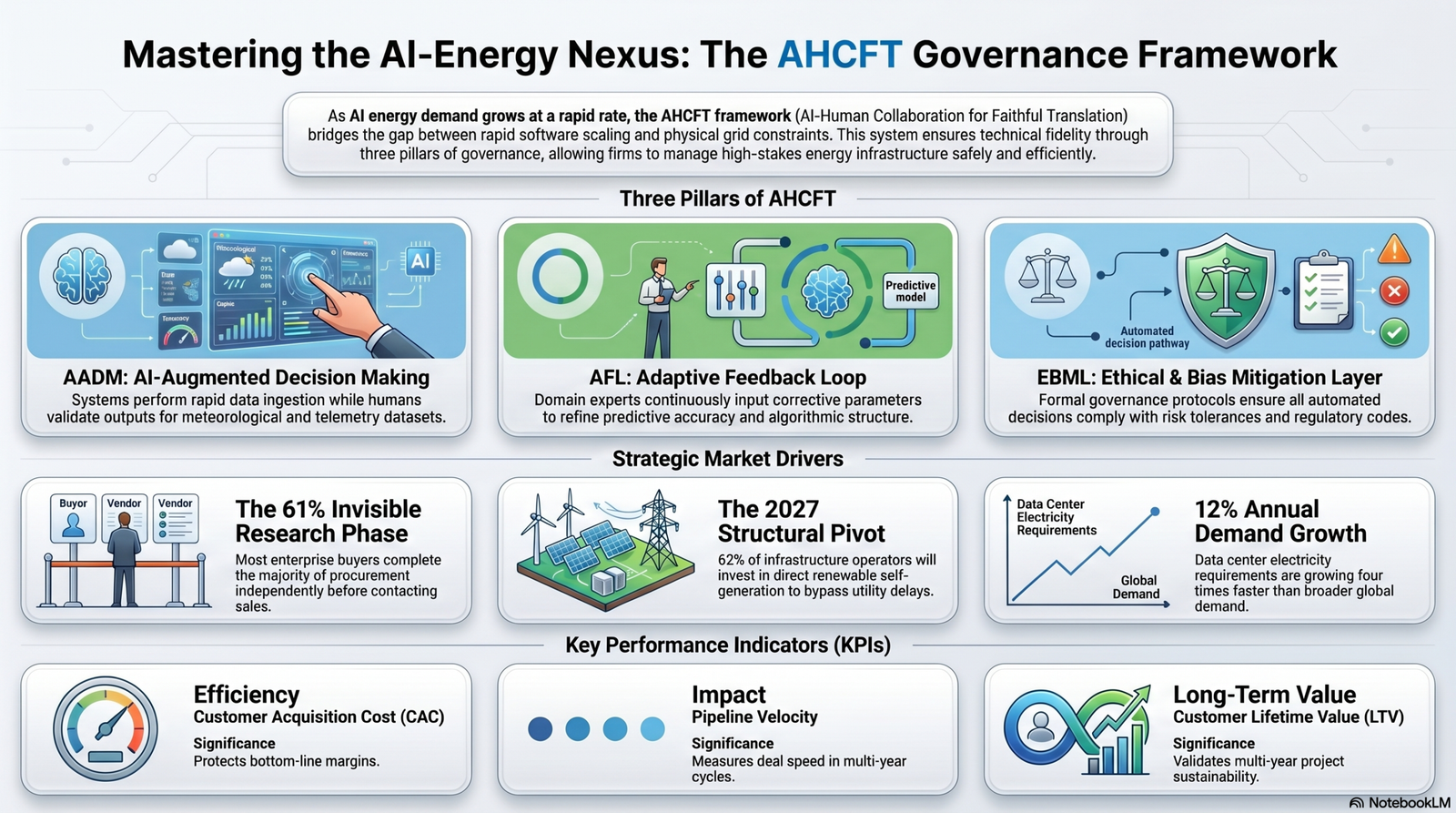
ولتلبية عتبة التحقق الصارمة هذه، يجب على المؤسسات استخدام نموذج التعاون بين الذكاء الاصطناعي والبشر من أجل الترجمة الأمينة (AHCFT)، والذي يحكمه ثلاثة مكونات متميزة:
-
صنع القرار المعزز بالذكاء الاصطناعي (AADM): تقوم الأنظمة الآلية بإجراء استيعاب سريع للبيانات وتحديد الأنماط ضمن مجموعات بيانات الأرصاد الجوية والقياس عن بعد، بينما يقوم المهندسون البشريون بالتحقق من صحة المخرجات.
-
حلقة التغذية الراجعة التكيفية (AFL): يقوم خبراء المجال بإدخال معلمات تصحيحية بشكل مستمر في البنية الخوارزمية الأساسية لتحسين دقة التنبؤ.
-
طبقة الأخلاقيات وتخفيف التحيز (EBML): تقوم بروتوكولات الحوكمة المنظمة رسمياً بتقييم القرارات الآلية لضمان الامتثال الصارم لمستويات تحمل المخاطر واللوائح التنظيمية.
بنية الوكلاء المستقلة تعمل على استقرار مسارات تحويل العملاء المحتملين في قطاع الأعمال من خلال النشر المرتكز على الأهداف
تتطلب دورات الشراء الصناعية تحسينًا مستمرًا للأصول لتقليل فقدان العملاء والتحكم في تكاليف الاستحواذ. ويتيح التحول إلى الأتمتة الموجهة نحو الأهداف للمؤسسات تجاوز إدارة المهام اليدوية. يحدد المشغلون أهدافًا تشغيلية عالية المستوى، ثم تقوم محركات الوكلاء المستقلة بتهيئة وتنفيذ ومعايرة مسارات النشر.
تتولى هذه الأنظمة الآلية إدارة أطر تحسين محركات البحث التقنية (SEO) بشكل مستقل، وتنسق التواصل مع الشركاء الصناعيين، وتنفذ التوزيع البرمجي عبر الشبكات المهنية. ويعتمد هذا التنفيذ على نموذج تفويض منظم: حيث يحتفظ المسؤولون التنفيذيون بالصلاحيات المعرفية والمالية النهائية، بينما تتولى الأنظمة الآلية إدارة سير العمليات التشغيلية المتكررة. ويوسع هذا الإطار نطاق المؤسسة التسويق الرقمي إخراج وتوحيد فهرسة الأصول التقنية داخل قاعدة بيانات المعرفة المؤسسية.
إدارة الأصول التنبؤية تخفف من مخاطر البنية التحتية الكارثية وتقلل من متوسط التكلفة المرجح لرأس المال
يتطلب تحديث الشبكة استخدام بنى التعلم الآلي لحماية أصول البنية التحتية المادية بشكل مباشر. تُعرّض جداول الصيانة التفاعلية التقليدية المشغلين لعقوبات مالية، وأعطال كارثية في الأصول، وزيادة في متوسط التكلفة المرجحة لرأس المال. تستفيد أطر الصيانة التنبؤية القائمة على الأداء من الرؤية الحاسوبية والقياس عن بعد لتحديد التشوهات الهيكلية داخل المصفوفات الشمسية والبنية التحتية لنقل الطاقة قبل حدوث عطل ميكانيكي.
يوفر دمج البنية التحتية المادية مع بنى التوأم الرقمي تخفيفًا آليًا للمخاطر في الوقت الفعلي مدفوعًا بتقنيات متقدمة تكامل الطاقة مع الذكاء الاصطناعي بالإضافة إلى ذلك، تعمل هذه المنصات على توحيد إجراءات الامتثال من خلال إنشاء الوثائق التجريبية المطلوبة لـ أطر الترخيص التنظيمي الفيدرالي. يحد هذا الإشراف من المسؤوليات التشغيلية، مما يفي بتفويضات تخفيف المخاطر الصارمة للمقرضين المؤسسيين والمديرين الماليين.
الوجبات الرئيسية
-
استهلاك البنية التحتية: تزداد متطلبات الطاقة لمراكز البيانات بمعدل 12% سنوياً، متجاوزة بذلك نمو الطلب العالمي على الطاقة بأربعة أضعاف.
-
التعتيم على عمليات الشراء: يكمل العملاء المحتملون المرحلة 61% من سلسلة التقييم من خلال البحث المستقل، مما يتطلب لوحات معلومات تحليلية آلية بين الشركات لتسجيل السلوكيات ذات النية العالية.
-
تفويض عام 2027: ولتجاوز قيود الشبكة العامة، ستقوم 62% من شركات تشغيل البنية التحتية الرئيسية بنشر أصول التوليد الذاتي للطاقة المتجددة المباشرة بحلول عام 2027.
-
فخ الميزانية: إن التخفيف من فخ التقييم بنسبة 9:1 يتطلب موازنة نفقات اكتساب العملاء في الواجهة الأمامية مع استثمارات مماثلة في البنية التحتية لقياس البيانات.
تساهم التخصيصات التقنية المحددة في تخفيف مخاطر التشغيل
تحسين نفقات أنظمة التدفئة والتهوية وتكييف الهواء التجارية باستخدام التعلم الآلي المستند إلى الفيزياء
تستهلك البنية التحتية لأنظمة التدفئة والتهوية وتكييف الهواء ما يقارب 401 تريليون طن من الطاقة في المنشأة. وتدمج نماذج التعلم الآلي المستندة إلى الفيزياء القوانين الفيزيائية التجريبية مع بيانات القياس عن بُعد المستمرة من أجهزة استشعار إنترنت الأشياء لنمذجة الديناميكيات الحرارية الداخلية. ويتيح هذا النهج الهندسي لمنصات التحكم الآلي تحسين استهلاك الطاقة دون التأثير سلبًا على دقة التشغيل أو دورة حياة الأصول.
دور إطار عمل AHCFT في بيئات الطاقة الحساسة للمخاطر
يُرسّخ إطار عمل التعاون بين الذكاء الاصطناعي والبشر من أجل الترجمة الأمينة (AHCFT) هيكل حوكمة موحدًا. فهو يوفق بين إنتاجية التعلم الآلي والإشراف البشري من خلال ثلاثة بروتوكولات متكاملة: اتخاذ القرارات المعززة بالذكاء الاصطناعي (AADM)، وحلقات التغذية الراجعة التكيفية (AFL)، وطبقة تخفيف التحيز والأخلاقيات (EBML)، مما يضمن بقاء المخرجات الحسابية ضمن المعايير التنظيمية المحددة لضمان خط الأساس. تكامل الطاقة مع الذكاء الاصطناعي استقرار.
إعادة تخصيص رأس المال نحو التوليد الذاتي المباشر للطاقة المتجددة
تُنشر أنظمة البرمجيات عبر الشبكات في غضون أشهر، بينما تتطلب ترقيات شبكات النقل الكهربائية ودورات ترخيص الطاقة المتجددة سنوات عديدة. ولمعالجة هذا التباين الزمني المنهجي وعزل العمليات عن حدود سعة الشبكة، ستستثمر 62% من شركات تشغيل البنية التحتية رأس مال مباشر في أنظمة التوليد الذاتي بحلول عام 2027.
تعديلات الوكلاء المستقلين على عمليات تسويق الطاقة القياسية بين الشركات
تعمل محركات الوكلاء المستقلة من خلال تعليمات تركز على الهدف. عند تزويدها بهدف تجاري، تقوم البنية بشكل مستقل بتنفيذ هندسة تحسين محركات البحث التقنية، واكتساب الروابط الخلفية الخوارزمية، وتوزيع المحتوى المبرمج، باستخدام تحسين البيانات المتكرر لتحسين عائد الاستثمار التسويقي على المدى الطويل.
نبذة عن المؤلف: يقدم فريق تحليل المشروع 54 أبحاثًا قائمة على البيانات، ورؤى هيكلية، وأطرًا تقنية مُحسَّنة لكبار المديرين التنفيذيين الذين يديرون تخصيص رأس المال، والتحول التكنولوجي، والمخاطر التنظيمية في قطاعات الطاقة والصناعة العالمية.