



BP Strategy Timeline 2025 to 2026: Every Major Move
Two chairs, two chief executives, a suspended buyback, more than 11 billion dollars of divestments and a cost target raised twice. A dated, sourced chronology of BP's reset from the February 2025 capital markets day to September 2026, and an honest assessment of whether it is working.
- The reset is ahead on cost and portfolio, behind on shareholder returns and the balance sheet. That split is visible in BP's own disclosures and it is the fairest single summary of where things stand.
- The clearest verdict comes from BP itself. On 4 August 2026 Meg O'Neill told shareholders performance over the past few years has not met our own expectations, let alone those of our shareholders.
- February 2026 was the real break with the February 2025 frame. The buyback was suspended and the 30 to 40 per cent of operating cash flow distribution guidance was retired outright, not adjusted.
- The cost target has been raised twice, from 4 to 5 billion dollars by end 2027, to 5.5 to 6.5 billion, then to 6.5 to 7.5 billion on the Gelsenkirchen sale. Cumulative delivery reached 3.543 billion dollars at 30 June 2026.
- Divestments have run faster than the target implied. More than 11 billion dollars of proceeds from completed and announced deals by February 2026, against a 20 billion dollar target with two years still to run.
- The 2030 production target of 2.3 to 2.5 million barrels of oil equivalent a day has been neither restated nor retired under the new leadership. Treat it as not reaffirmed rather than as current guidance.
The numbers, in BP's own words
On 26 February 2025 BP held a capital markets day titled Growing shareholder value, a reset bp, and formally retired all prior strategic and financial aims including those first announced in August 2020. Chief executive Murray Auchincloss said the company had fundamentally reset bp's strategy, reducing and reallocating capital expenditure to its highest returning businesses to drive growth, and relentlessly pursuing performance improvements and cost efficiency, all in service of sustainably growing cash flow and returns.
Chair Helge Lund's framing in the same release is worth keeping, because both men were gone within ten months: the board believes that this is an important strategic reset for bp and is confident that it, together with rigorous performance management, will deliver improved performance and sustainable value for bp's shareholders.
The context was not subtle. Bloomberg had reported on 8 February 2025 that Elliott Investment Management had built a significant stake, and BP shares rose sharply on 10 February. By late April 2025 Elliott had disclosed a holding of just over 5 per cent, reported to be held substantially through equity swaps, which means its voting weight was smaller than the headline figure. Elliott's reported demands, including roughly 20 billion dollars of annual free cash flow by 2027 and the divestment of solar and offshore wind, came through media reporting citing sources rather than any published letter, and should be treated that way.
The reset targets themselves were specific, which is what makes progress measurable.
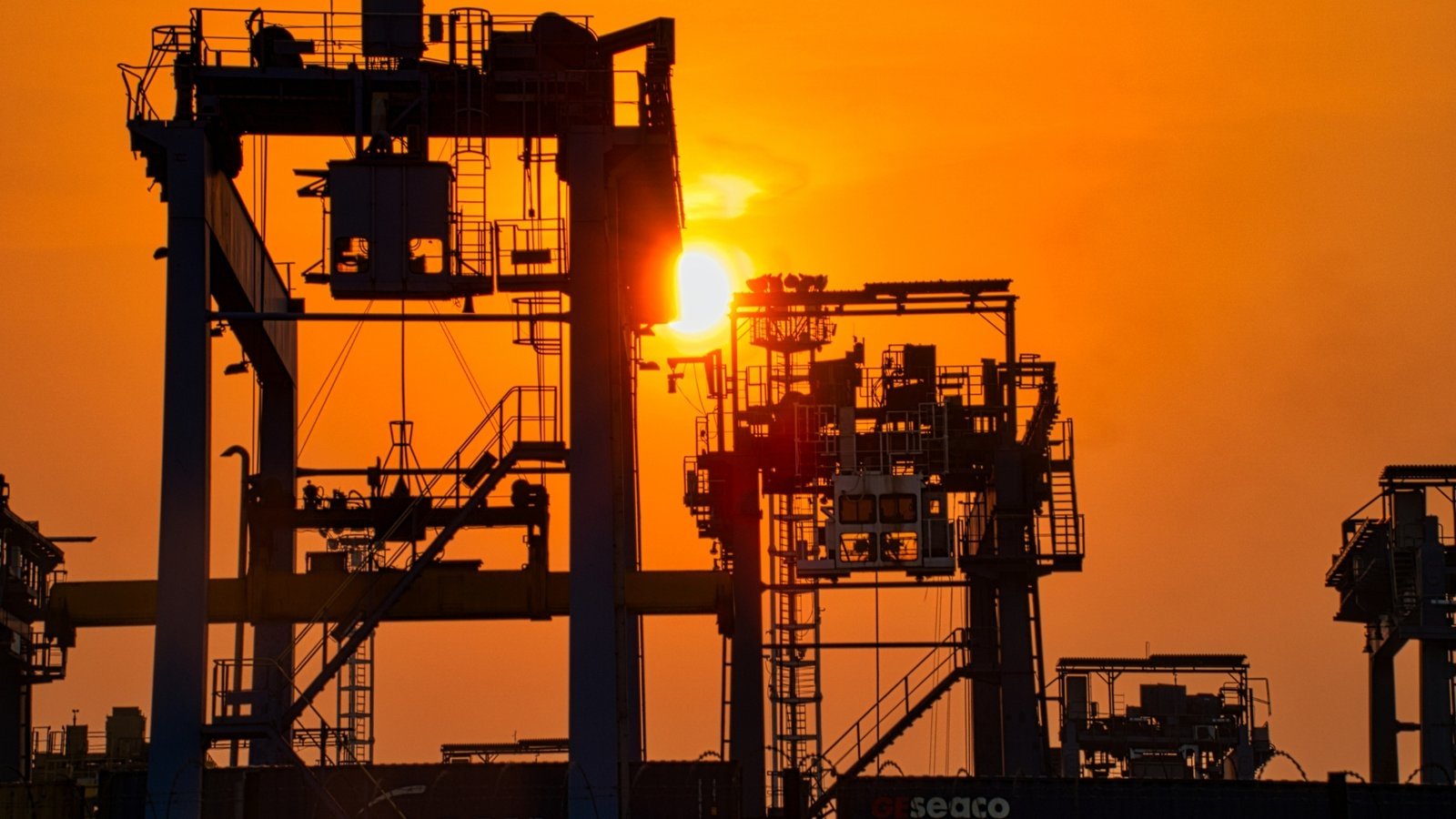 المشروع 54Fifteen refineries in 2006, five after Gelsenkirchen completed in August 2026. The divestment programme is the part of the reset running ahead of schedule.
| Target set 26 February 2025 | BP's stated figure |
|---|---|
| Total capital expenditure | 13 to 15 billion dollars a year to 2027, around 15 billion in 2025 |
| الاستثمار في النفط والغاز | Increasing to around 10 billion dollars a year |
| الاستثمار الانتقالي | 1.5 to 2 billion dollars a year, more than 5 billion lower than previous guidance |
| Divestments | 20 billion dollars announced by end 2027 |
| Structural cost reductions | 4 to 5 billion dollars by end 2027 against a 2023 baseline |
| Upstream production in 2030 | 2.3 to 2.5 million barrels of oil equivalent a day |
| Net debt | 14 to 18 billion dollars by end 2027 |
| Distributions | 30 to 40 per cent of operating cash flow |
| Return on average capital employed | Above 16 per cent in 2027 |
The dated chronology, February 2025 to September 2026
Three threads run through this period and it is easier to follow them separately than chronologically: leadership, portfolio and capital. The table below keeps them in date order, but the pattern is that leadership churn accelerated as the financial targets slipped, not before.
Two dates deserve flagging as unusual even by the standards of a major undergoing a reset. The first is 26 May 2026, when BP announced that the board had unanimously decided that Albert Manifold should no longer serve as chair and director with immediate effect, following serious concerns raised to the board related to important governance standards, oversight and conduct. Senior independent director Dame Amanda Blanc said Albert has helped bring a welcome focus and pace to bp's transformation, however the board has been surprised and disappointed to learn of governance oversight and conduct issues it deems unacceptable and has taken decisive action. Manifold had been chair for roughly eight months. He publicly disputed the board's account in the days that followed, saying he had been removed without warning and without explanation and disputing entirely the characterisation of his conduct. The underlying allegations have not been established publicly and we do not state them as fact.
The second is 9 June 2026, when BP replaced its three segment structure with two, Upstream and Downstream, supported by Supply, Trading and Shipping across both, with renewables moved into the Technology function. Meg O'Neill described it as an important step in accelerating delivery that will reduce complexity and strengthen execution. The low carbon energy segment, created to house the strategy BP announced in 2020, no longer exists as an operating unit. External reporting segments remain unchanged until 31 December 2026, with the new basis from 1 January 2027.
| تاريخ | حدث |
|---|---|
| 26 Feb 2025 | Reset bp capital markets day. All prior strategic and financial aims retired |
| 4 Apr 2025 | Board begins chair succession. Helge Lund to step down, most likely during 2026 |
| 17 Apr 2025 | AGM. 24.28 per cent of votes cast against Lund's re election |
| 22 Apr 2025 | Elliott discloses a stake of just over 5 per cent, reported as largely held via equity swaps |
| 25 Jun 2025 | Wall Street Journal reports Shell in early stage talks to acquire BP. Shell formally denies the same day |
| 18 Jul 2025 | Agreement to sell bp Wind Energy, US onshore, to LS Power. Value not disclosed by BP |
| 21 Jul 2025 | Albert Manifold appointed chair elect, taking the chair on 1 October 2025 |
| 9 Dec 2025 | bp Wind Energy sale completes |
| 17 ديسمبر 2025 | Meg O'Neill named chief executive from 1 April 2026. Auchincloss steps down 18 December. Carol Howle interim |
| 24 Dec 2025 | Agreement to sell 65 per cent of Castrol to Stonepeak at an enterprise value of 10 billion dollars |
| 10 Feb 2026 | FY2025 results. Buyback suspended, distribution guidance retired, cost target raised, around 4 billion dollars of post tax impairments |
| Mar 2026 | Agreement to sell the Gelsenkirchen refinery to Klesch Group. Date reported as 19 March, not verified from a BP release |
| 1 Apr 2026 | Meg O'Neill becomes chief executive |
| 28 Apr 2026 | Q1 2026 results. Hybrid reduction plan announced. Cost target raised again on Gelsenkirchen completion |
| 26 May 2026 | Manifold removed as chair with immediate effect. Ian Tyler appointed interim chair |
| 9 Jun 2026 | Two segment restructuring announced, effective 1 July 2026 |
| 31 يوليو 2026 | BP launches a process to market its UK North Sea business after around 60 years of production |
| 3 أغسطس 2026 | Gelsenkirchen sale completes. Refining portfolio reduced to five sites |
| 4 أغسطس 2026 | Q2 2026 results. O'Neill sets out five priorities. Austrian retail, Archaea and Bay du Nord sales announced or agreed |
| 2 Sep 2026 | Ian Tyler appointed permanent chair. Dame Amanda Blanc to leave after the 2027 AGM |
Earnings recovered in 2026. The balance sheet has not caught up
The quarterly record is the least ambiguous evidence available, because it comes from BP's own results statements and does not depend on interpretation.
Two things stand out. First, the 2026 earnings recovery is real and substantial: underlying replacement cost profit rose from 1.541 billion dollars in the fourth quarter of 2025 to 3.198 billion in the first quarter of 2026 and 5.732 billion in the second, with operating cash flow of 10.858 billion dollars in Q2 2026 against 2.860 billion in Q1. Second, net debt has not fallen in a straight line. It stood at 22.182 billion dollars at end 2025, rose to 25.309 billion at 31 March 2026 on a 6 billion dollar working capital build, and came back to 22.251 billion at 30 June 2026.
The February 2026 results were the genuine inflection. Full year 2025 underlying replacement cost profit was 7.485 billion dollars, but the fourth quarter carried a reported loss of 3.422 billion after around 4 billion of post tax impairments, primarily in the transition businesses within gas and low carbon energy. The board suspended the share buyback and retired the 30 to 40 per cent of operating cash flow distribution guidance. That is not a recalibration of the February 2025 frame, it is the removal of one of its load bearing commitments.
The dividend was maintained and then raised 4 per cent to 8.660 cents in August 2026, so distributions continue. But BP moved from a dividend plus buyback policy to a dividend only policy, while redeeming 2.5 billion euros of perpetual hybrid bonds in June 2026 at a cash cost of 2.9 billion dollars as part of a plan to cut hybrid capital by around 4.3 billion dollars to roughly 9 billion by end 2027.
On costs, delivery is genuinely ahead. Cumulative structural cost reduction reached 3.543 billion dollars at 30 June 2026 against a target raised twice, first to 5.5 to 6.5 billion in February 2026, then to 6.5 to 7.5 billion by 2027 on completion of the Gelsenkirchen sale. Note what raising a target twice while delivering against it signals: the cost programme is the part of the reset management is confident in.
On operations, 2025 set records: plant reliability of 96.1 per cent and refining availability of 96.3 per cent, with seven major project start ups and a reserves replacement ratio of 90 per cent. Q2 2026 slipped, with plant reliability of 92.4 per cent and refining availability of 94.7 per cent against upstream production of 2,201 thousand barrels of oil equivalent a day.
| Quarter | Underlying RC profit | Reported profit or loss | Net debt | Buyback |
|---|---|---|---|---|
| Q1 2025 | 1,381m dollars | 687m dollars | 26,968m dollars | 0.75bn dollars |
| Q2 2025 | 2,353m dollars | 1,629m dollars | 26,043m dollars | 0.75bn dollars |
| Q3 2025 | 2,210m dollars | 1,161m dollars | 26,054m dollars | 0.75bn dollars |
| Q4 2025 | 1,541m dollars | Loss of 3,422m dollars | 22,182m dollars | Suspended |
| FY 2025 | 7,485m dollars | 55m dollars | 22,182m dollars | 4,486m repurchased in year |
| Q1 2026 | 3,198m dollars | 3,842m dollars | 25,309m dollars | None |
| الربع الثاني من عام 2026 | 5,732m dollars | 3,911m dollars | 22,251m dollars | None |
Faster than the target implied, and deeper than the plan described
The divestment programme is the clearest example of the reset running ahead of its own schedule. By the February 2026 results, expected proceeds from completed and announced deals exceeded 11 billion dollars against a 20 billion dollar target running to end 2027, and 2026 proceeds were guided at 8 to 9 billion.
What has been sold matters more than the total. Castrol, agreed in December 2025 at an enterprise value of 10 billion dollars for a 65 per cent stake to Stonepeak with around 6 billion dollars of net cash proceeds expected and completion expected by end 2026, is the largest single item and BP retains 35 per cent with optionality after a two year lock up. The Gelsenkirchen refinery went to Klesch Group, completing on 3 August 2026 and reducing BP's refining portfolio to five sites, down from fifteen in 2006, with an associated underlying operating expenditure reduction of around 1 billion dollars.
Then the ones that say something about direction. bp Wind Energy, the US onshore portfolio, went to LS Power, agreed July 2025 and completed December 2025, with BP not disclosing the value. Archaea Energy, the US biogas business BP acquired in 2022 for around 4.1 billion dollars, was put up for sale in August 2026. Lightsource bp has been reported in talks with a consortium of Wren House and Qualitas Energy, with no signed deal announced as of 26 September 2026. Taken together, the businesses BP assembled to deliver its 2020 strategy are being dismantled.
And the one that will read as an ending. On 31 July 2026 BP launched a process to market its UK North Sea business after around 60 years of production, with press estimates of 1.75 to 3 billion dollars, which are analyst and media figures rather than BP's.
For suppliers, contractors and service companies this is the practical content of the whole chronology. Each completed divestment is a change of counterparty, a new procurement organisation, a new approval chain and frequently a renegotiated contract. The pattern across 2025 and 2026 is that assets have moved from an integrated major with long qualification cycles to financial owners such as Stonepeak and LS Power, or to specialist operators such as Klesch, whose procurement behaviour, capital discipline and appetite for incumbent vendors are entirely different. That transition is where the commercial consequence of BP's reset actually lands.
Ahead on cost and portfolio, behind on the balance sheet, and BP says so
The honest assessment comes from BP's own chief executive, not from outside. In the Q2 2026 results on 4 August 2026, Meg O'Neill wrote that the company is not making the most of its potential, that performance over the past few years has not met our own expectations, let alone those of our shareholders, that we have not delivered consistently, we have written off too much value, and our costs and liabilities are not resilient enough in a low price environment. She added that BP has made progress on reducing structural costs, but has not improved enough where it matters most, the bottom line, and that we need to compete in the weight class we are in.
Score it against the February 2025 targets. Behind: net debt at 22.251 billion dollars on 30 June 2026 is still above the top of the 14 to 18 billion end 2027 range, the buyback is suspended, and the distribution policy has been retired rather than met. Ahead: cost reduction has been raised twice and delivered 3.543 billion, divestments announced exceed 11 billion of a 20 billion target with two years to run, and 2026 proceeds are guided at 8 to 9 billion. Mixed: capital expenditure was cut to 13 to 13.5 billion in February 2026 then raised to 13.5 to 14 billion in August, and operational reliability set records in 2025 before slipping in Q2 2026.
There has been no 2026 capital markets day. O'Neill's five priorities, set out on 4 August 2026, re frame the reset rather than formally replacing it, which is why the February 2025 targets remain the measuring stick. The 2030 production target of 2.3 to 2.5 million barrels of oil equivalent a day has been neither restated nor retired in the 2026 disclosures we reviewed, against 2026 guidance of 2,180 to 2,270 thousand barrels of oil equivalent a day. Not reaffirmed is the accurate description.
On the takeover question, which drives a surprising share of search interest: Shell issued a formal denial on 25 June 2025, stating it had not been actively considering making an offer for BP and had not made an approach, which under the UK Takeover Code barred it from bidding for six months absent specified exceptions. ADNOC and its international arm XRG, ExxonMobil, Chevron and TotalEnergies have appeared in media speculation, none has confirmed interest, no bid has been made, and BP has never confirmed receiving an approach. Worth noting that BP and XRG are now partners on a Venezuela offshore gas licence, which is collaboration rather than a prelude.
One note on sourcing for anyone building on this. Coverage of the Q2 2026 earnings call reported management saying the net debt target would be achieved in 2026, a year ahead of plan. That statement is not in the Q2 2026 stock exchange announcement, which reiterates the 14 to 18 billion by end 2027 target. Attribute it to the call, not to the results release.
استمع وخذها معك
هل تفضل الاستماع إلى التسجيل الصوتي، أم تحتاج إلى العرض التقديمي للمراجعة الداخلية؟ يتوفر العرض التقديمي الكامل كحلقة بودكاست وعرض شرائح قابل للتنزيل.
Which part of BP's reset matters most to a supplier?
الأسئلة المتكررة
Meg O'Neill, effective 1 April 2026. She was previously chief executive of Woodside Energy from 2021 and spent 23 years at ExxonMobil. BP announced the transition on 17 December 2025. Murray Auchincloss stepped down as chief executive and director on 18 December 2025, remaining in an advisory role until December 2026, and Carol Howle, executive vice president for supply, trading and shipping, served as interim chief executive in the intervening period.
Ian Tyler, appointed permanent chair on 2 September 2026. He joined the board in April 2025 and served as interim chair from 26 May 2026, when the board removed Albert Manifold with immediate effect following what BP described as serious concerns related to important governance standards, oversight and conduct. Manifold had held the chair since 1 October 2025, succeeding Helge Lund. Tyler was formerly chief executive of Balfour Beatty. BP separately announced that Dame Amanda Blanc will not stand for re election at the 2027 AGM.
Yes. The board suspended the share buyback at the fourth quarter and full year 2025 results on 10 February 2026, and also retired the guidance to distribute 30 to 40 per cent of operating cash flow. BP repurchased 4.486 billion dollars of shares during 2025 before the suspension. The dividend was maintained and then raised 4 per cent to 8.660 cents in August 2026, so BP moved to a dividend only distribution policy while prioritising balance sheet repair, including a reduction of perpetual hybrid capital of around 4.3 billion dollars to roughly 9 billion by end 2027.
No bid has been made and BP has never confirmed receiving an approach. Shell was reported by the Wall Street Journal on 25 June 2025 to be in early stage talks, and issued a formal denial the same day stating it had not been actively considering an offer and had not made an approach, which under the UK Takeover Code barred it from bidding for six months absent specified exceptions. ADNOC and XRG, ExxonMobil, Chevron and TotalEnergies have featured in media speculation without confirming interest. What BP is doing instead is selling assets: more than 11 billion dollars announced or completed by February 2026 against a 20 billion dollar target, with the UK North Sea business put up for sale in July 2026.
Partly. Ahead on cost and portfolio: structural cost reduction has been raised twice to 6.5 to 7.5 billion dollars by 2027 with 3.543 billion delivered at 30 June 2026, and divestments announced exceed 11 billion of a 20 billion target with two years to run. Behind on the balance sheet and returns: net debt was 22.251 billion dollars at 30 June 2026 against a 14 to 18 billion end 2027 target, the buyback is suspended and the distribution guidance was retired. BP's own chief executive said on 4 August 2026 that performance has not met our own expectations, let alone those of our shareholders.
احصل على التالي إسقاط معلومات استخباراتية
انضم إلى قادة الطاقة والصناعة واحصل على معلوماتنا التسويقية، ونمو الذكاء الاصطناعي، وهيكلة الإيرادات، مباشرة وبدون حشو.
اسمك مدرج في القائمة
أهلاً بكم في موجز نمو الطاقة، تابعوا بريدكم الوارد للاطلاع على النشرة القادمة.