



Growing Shareholder Value: What BP's Reset Document Actually Says
BP's February 2025 capital markets update is the document the market still argues about. It set the capex bands, cut transition spending by more than five billion dollars a year against prior guidance, and committed to twenty billion of divestments. Here are the actual numbers in it, what has happened to each since, and what still has not been delivered.
- The document is a capital reallocation, not a mission statement. Its content is almost entirely a set of spending bands, which is why the specific figures are what people search for.
- Oil and gas investment rises to around 10 billion US dollars a year. This is the positive half of the reset and the half that determines most supplier demand.
- Transition businesses capex falls to 1.5 to 2 billion a year, more than 5 billion a year below previous guidance, with low carbon energy averaging under 0.8 billion a year. That is the cut the market reacted to.
- Total capex is held to 13 to 15 billion a year through 2027, roughly 1 to 3 billion below 2024 levels, with around 15 billion expected in 2025.
- Divestments are targeted at 20 billion US dollars by 2027. More than half is now completed or announced, and BP expects 9 to 10 billion of proceeds in 2026 alone.
- Castrol is the anchor disposal. BP agreed to sell a 65 percent shareholding to Stonepeak for about 6 billion US dollars, valuing the business at an enterprise value of roughly 10.1 billion, with completion expected by the end of 2026.
- Governance has been the volatile variable, not strategy. Chairman Albert Manifold was removed in May 2026 over governance and conduct concerns after less than a year, with Ian Tyler appointed chairman in September 2026.
A capital markets update, February 2025
"Growing shareholder value: a reset bp" is the title BP gave to its capital markets update presented in February 2025. It is not a strategy essay and not an annual report. It is the slide deck and accompanying release in which BP restated where its capital would go for the following three years.
That is why searches for it so often include a number. People are not looking for the narrative, they are looking for a line item: what the transition capex band is, what the oil and gas figure is, what the divestment target is. The document is read as a table, so this article presents it as one.
It followed a period in which BP had been the most forward leaning of the European majors on transition spending, and in which its share price had lagged peers who had not been. The reset is the reconciliation of those two facts.
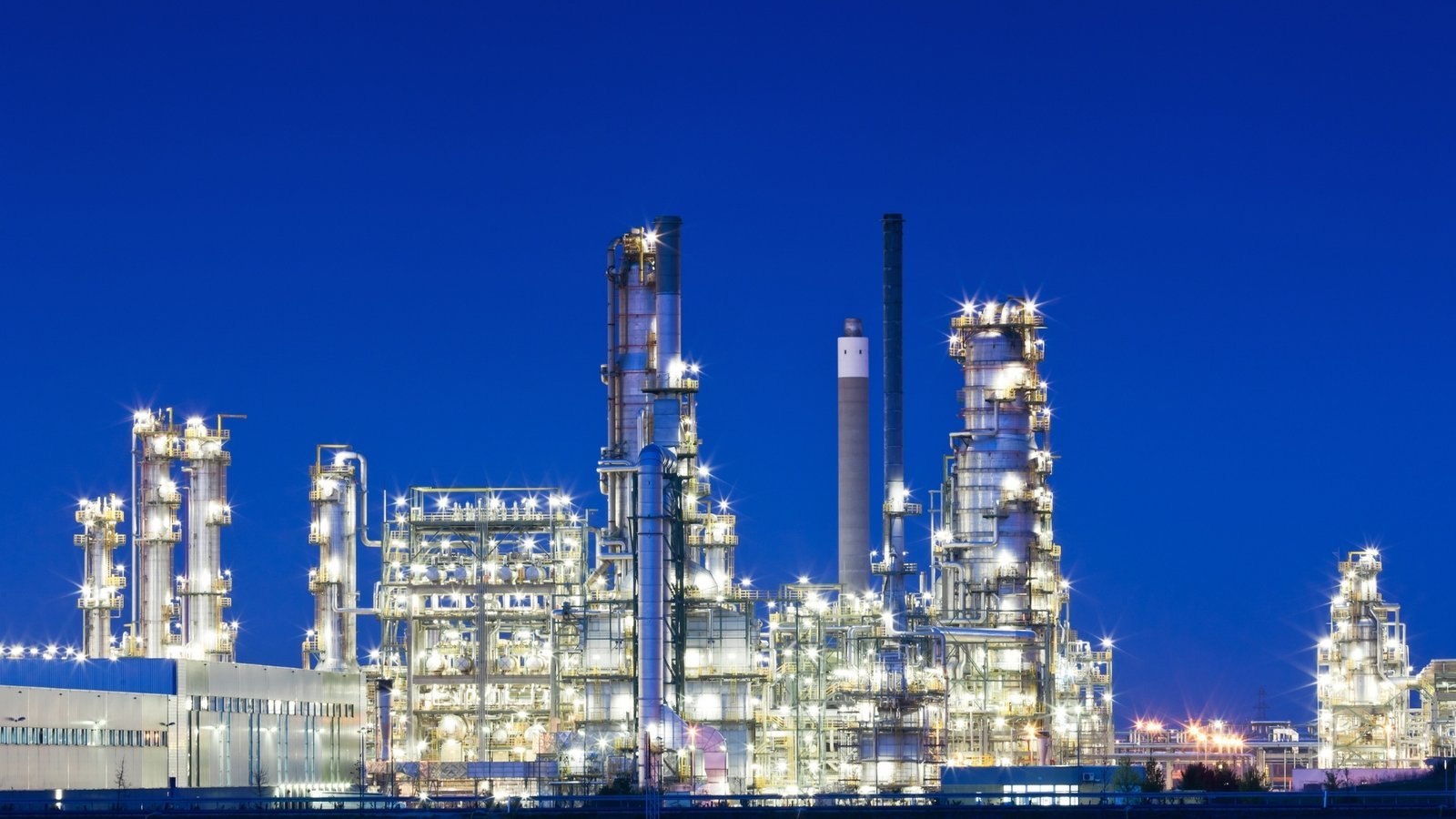 المشروع 54A large refining and processing complex illuminated at night. BP's February 2025 reset capped total capital expenditure at 13 to 15 billion US dollars a year through 2027 while raising oil and gas investment to around 10 billion.
The capital table, line by line
These are the headline commitments made in the document. Where a figure is a range, the range is BP's own, and where the comparison is to previous guidance, that comparison is also BP's.
The most consequential single line is the transition cut. Reducing transition businesses capex to 1.5 to 2 billion US dollars a year represented more than 5 billion a year less than BP had previously guided. That is the largest reallocation of capital by a European major in the current cycle, and it set the template that others followed. We traced the strategic reasoning in لماذا تخلت شركة بي بي عن استراتيجيتها لتحقيق صافي انبعاثات صفرية؟, and the comparison with Shell's own recalibration shows how quickly the peer group converged.
| Line item | Figure in the reset | Comparison |
|---|---|---|
| الاستثمار في النفط والغاز | Around 10 billion US dollars a year | Increased |
| Transition businesses capex | 1.5 to 2 billion US dollars a year | More than 5 billion a year below previous guidance |
| Low carbon energy within that | Averaging under 0.8 billion US dollars a year | Sharply reduced |
| Total capex | 13 to 15 billion US dollars a year through 2027 | Roughly 1 to 3 billion below 2024 levels |
| Capex, 2025 | Around 15 billion US dollars | Top of the band |
| Divestment target | 20 billion US dollars by 2027 | New commitment |
| Named disposals | Lightsource bp, strategic review of Castrol | Specified in the document |
Selective, capital light, and much smaller
The document did not abolish BP's transition activity, it narrowed and restructured it. The stated approach was selective investment in biogas, biofuels and electric vehicle charging, capital light partnerships in renewables, and focused investment in hydrogen and carbon capture.
The phrase that carries the most weight is capital light partnerships. It signals that BP intended to keep exposure to renewables without keeping the balance sheet commitment, which is the structural mechanism by which more than 5 billion a year was removed without the segment disappearing from the story.
For anyone selling into BP's low carbon lines, that distinction is the whole game. Demand did not vanish; the counterparty changed. Work that was previously commissioned by BP directly increasingly sits with a partner or a joint venture, and the procurement relationship moves with it.
Delivery, and one governance shock
The divestment programme is the part of the reset with the clearest scoreboard, and it is running. BP has now completed or announced more than half of the targeted 20 billion US dollars, and expects divestment and other proceeds of 9 to 10 billion in 2026 alone.
Castrol is the anchor. BP agreed to sell a 65 percent shareholding in the lubricants business to Stonepeak for about 6 billion US dollars, at an enterprise value of roughly 10.1 billion, with completion expected by the end of 2026 subject to regulatory approval. Around 6 billion of the 2026 proceeds come from that single transaction.
Alongside it, BP has agreed the sale of its Austrian retail business, agreed terms to bring partners into Kirkuk, completed the sale of the Gelsenkirchen refinery, and launched processes to market its North Sea business and Archaea Energy. That is a portfolio being dismantled at pace rather than a target being quietly deferred.
The genuine surprise since has been governance rather than strategy. Albert Manifold, appointed chairman in October 2025, was removed in May 2026 after the board raised serious concerns about governance standards, oversight and conduct, including bullying, allegations he has disputed. Ian Tyler was appointed chairman in September 2026 following an interim stint leading the board. Murray Auchincloss remains chief executive.
The reason this matters commercially is that it separates two risks that are often conflated. The capital plan has proved durable across a chairman's removal, which suggests the reset is institutional rather than personal. The persistent question of whether BP itself remains independent is a different one, examined in هل يمكن الاستحواذ على شركة بي بي أو تفكيكها؟.
Three practical consequences
The reset is a procurement document as much as an investor one. Read it as a map of where budget exists and where it has been removed.
We set out the supplier view in detail in what BP's reset means for suppliers and vendors. The short version follows.
Upstream budget grew, and it is where the demand is
Around 10 billion US dollars a year of oil and gas investment is the largest single pool in the plan. If your offer serves upstream and its supply chain, the reset was good news and should be positioned as alignment with a stated priority.
Low carbon demand moved, it did not disappear
Capital light partnerships mean the buyer of renewables scope is increasingly a partner or joint venture rather than BP directly. Re-map the account to the entity that now holds the balance sheet commitment.
Divestments redraw the customer list
Castrol, Gelsenkirchen, Austrian retail, North Sea and Archaea are moving or marketed. A contract with BP today may be a contract with Stonepeak or another owner tomorrow, with a different mandate and a different approval threshold.
Total capex is capped, so proposals compete
A band of 13 to 15 billion a year through 2027 means every proposal is competing inside a fixed envelope. Arguments framed as incremental spend lose; arguments framed as displacing a less productive pound win.
استمع وخذها معك
هل تفضل الاستماع إلى التسجيل الصوتي، أم تحتاج إلى العرض التقديمي للمراجعة الداخلية؟ يتوفر العرض التقديمي الكامل كحلقة بودكاست وعرض شرائح قابل للتنزيل.
Your largest account has just capped its capital envelope and cut one segment hard. How do you respond?
الأسئلة المتكررة
It is the title of BP's capital markets update, presented in February 2025, in which the company restated its capital allocation for the following three years. It raised oil and gas investment to around 10 billion US dollars a year, cut transition businesses capex to 1.5 to 2 billion a year, capped total capex at 13 to 15 billion a year through 2027, and committed to 20 billion US dollars of divestments by 2027.
BP reduced capital expenditure into its transition businesses to 1.5 to 2 billion US dollars a year, which the company described as more than 5 billion US dollars a year lower than its previous guidance. Within that, low carbon energy was set to average under 0.8 billion US dollars a year. The activity was narrowed to selective investment in biogas, biofuels and electric vehicle charging, capital light partnerships in renewables, and focused investment in hydrogen and carbon capture.
Total capital expenditure was reduced to 13 to 15 billion US dollars a year through 2027, roughly 1 to 3 billion below 2024 levels, with around 15 billion expected in 2025. Within that envelope, investment in oil and gas rises to approximately 10 billion US dollars a year.
More than half of the 20 billion US dollar programme has now been completed or announced. BP expects divestment and other proceeds of 9 to 10 billion US dollars in 2026, including approximately 6 billion from the Castrol transaction. Other steps include the agreed sale of the Austrian retail business, agreed terms to bring partners into Kirkuk, the completed sale of the Gelsenkirchen refinery, and launched processes for the North Sea business and Archaea Energy.
BP agreed to sell a 65 percent shareholding in Castrol to Stonepeak for about 6 billion US dollars, valuing the lubricants business at an enterprise value of roughly 10.1 billion US dollars. The transaction is expected to complete by the end of 2026, subject to regulatory approvals, and is the single largest contributor to BP's 2026 divestment proceeds.
Murray Auchincloss is chief executive. The chair position has been unstable: Albert Manifold was appointed chairman in October 2025 and removed in May 2026 after the board cited serious concerns about governance standards, oversight and conduct, allegations he has disputed. Ian Tyler was appointed chairman in September 2026 after an interim period leading the board. The capital plan set out in the reset has continued through that change.
احصل على التالي إسقاط معلومات استخباراتية
انضم إلى قادة الطاقة والصناعة واحصل على معلوماتنا التسويقية، ونمو الذكاء الاصطناعي، وهيكلة الإيرادات، مباشرة وبدون حشو.
اسمك مدرج في القائمة
أهلاً بكم في موجز نمو الطاقة، تابعوا بريدكم الوارد للاطلاع على النشرة القادمة.