









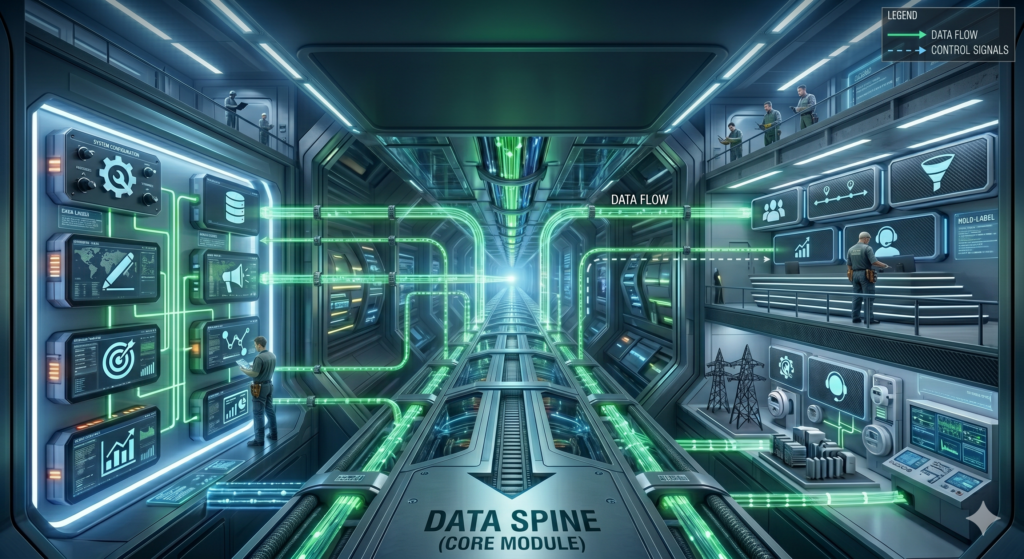
En 2026, la tecnología de marketing funciona como una capa central de la infraestructura empresarial dentro del sector energético intensivo en capital. Para las empresas de servicios públicos, los productores de energía renovable, las grandes compañías de petróleo y gas y las empresas de energía como servicio (EaaS), la configuración arquitectónica de la Pila de MarTech de energía Influye directamente en la capacidad institucional para gestionar la transformación digital junto con los agresivos mandatos globales de descarbonización. Esta capa tecnológica ha evolucionado más allá de la utilidad de marketing localizada para convertirse en un activo corporativo estratégico que dicta el cumplimiento normativo, la articulación de la propuesta de valor y la velocidad de la cartera comercial. Con el valor de mercado global de la tecnología de marketing expandiéndose rápidamente y el ecosistema más amplio escalando a más de 15.500 soluciones distintas según Panorama de la tecnología de marketing de Chiefmartec en 2026, Las decisiones sobre la asignación de capital en lo que respecta a la arquitectura de software tienen implicaciones directas para la eficiencia corporativa, la asignación de recursos y la gestión de riesgos empresariales.
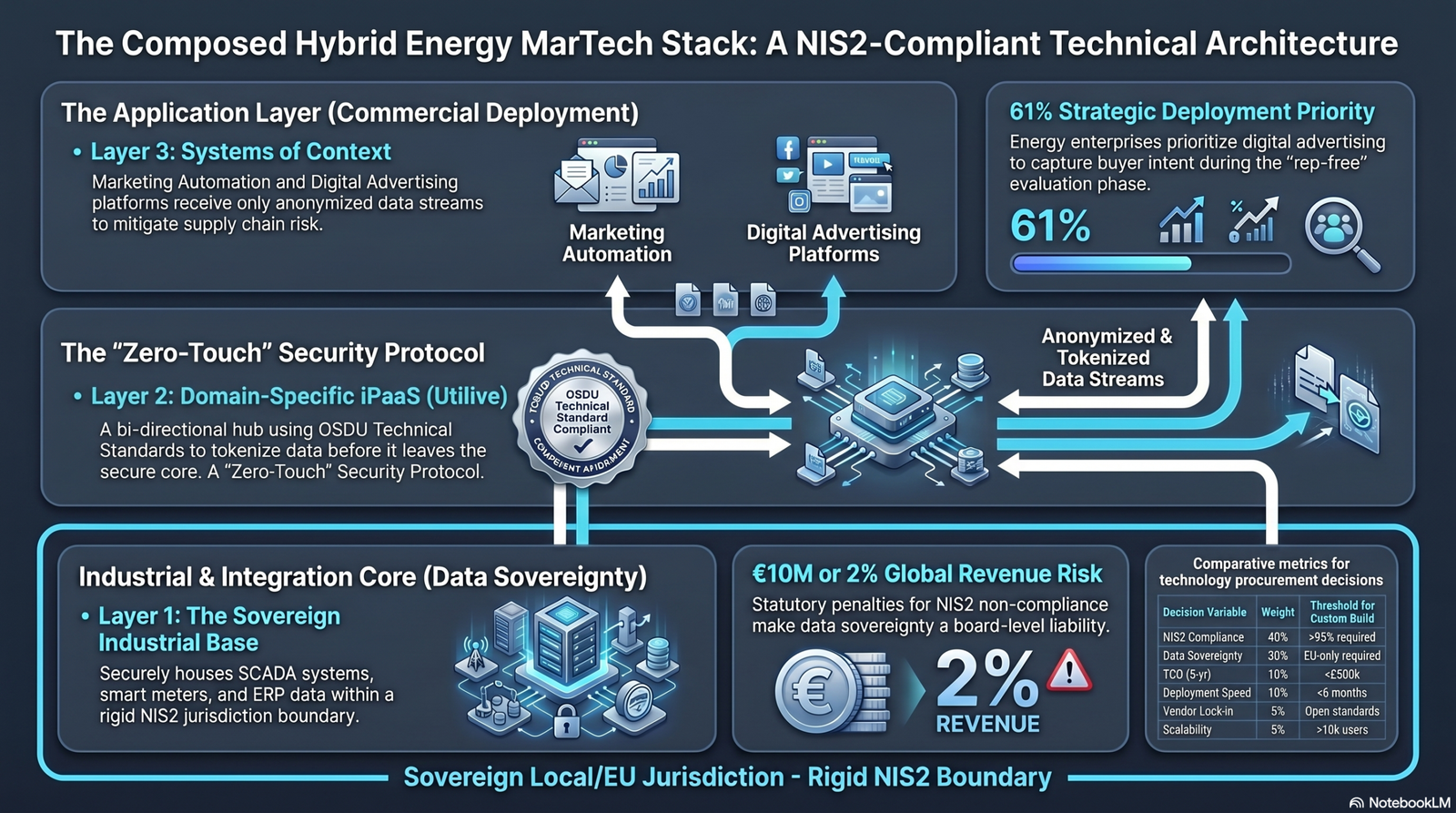
Debido a que el proceso de compra de energía B2B implica ciclos de venta prolongados y grandes comités de compra altamente técnicos, los compradores empresariales suelen realizar una parte sustancial de su fase de evaluación antes de contactar con un representante de cuenta. Para mantener la visibilidad del mercado y captar la intención inicial durante esta fase de evaluación sin representantes, las empresas energéticas priorizan la infraestructura digital, con un 611% de sus carteras tecnológicas centradas en plataformas de publicidad digital. Gestionar estos largos ciclos de venta de forma eficiente requiere alinear las bases operativas con las necesidades específicas. servicios de marketing digital B2B Integrar los sistemas técnicos de referencia con los sistemas comerciales de información contextual. Este equilibrio evita la fragmentación de la información y proporciona a los comités de compra los datos estructurados necesarios para validar proyectos complejos de ingeniería de redes o despliegues de infraestructura antes de que comience el proceso formal de contratación.
La subutilización de la tecnología de marketing eleva los costos de adquisición de clientes en todo el conjunto de tecnologías de marketing del sector energético.
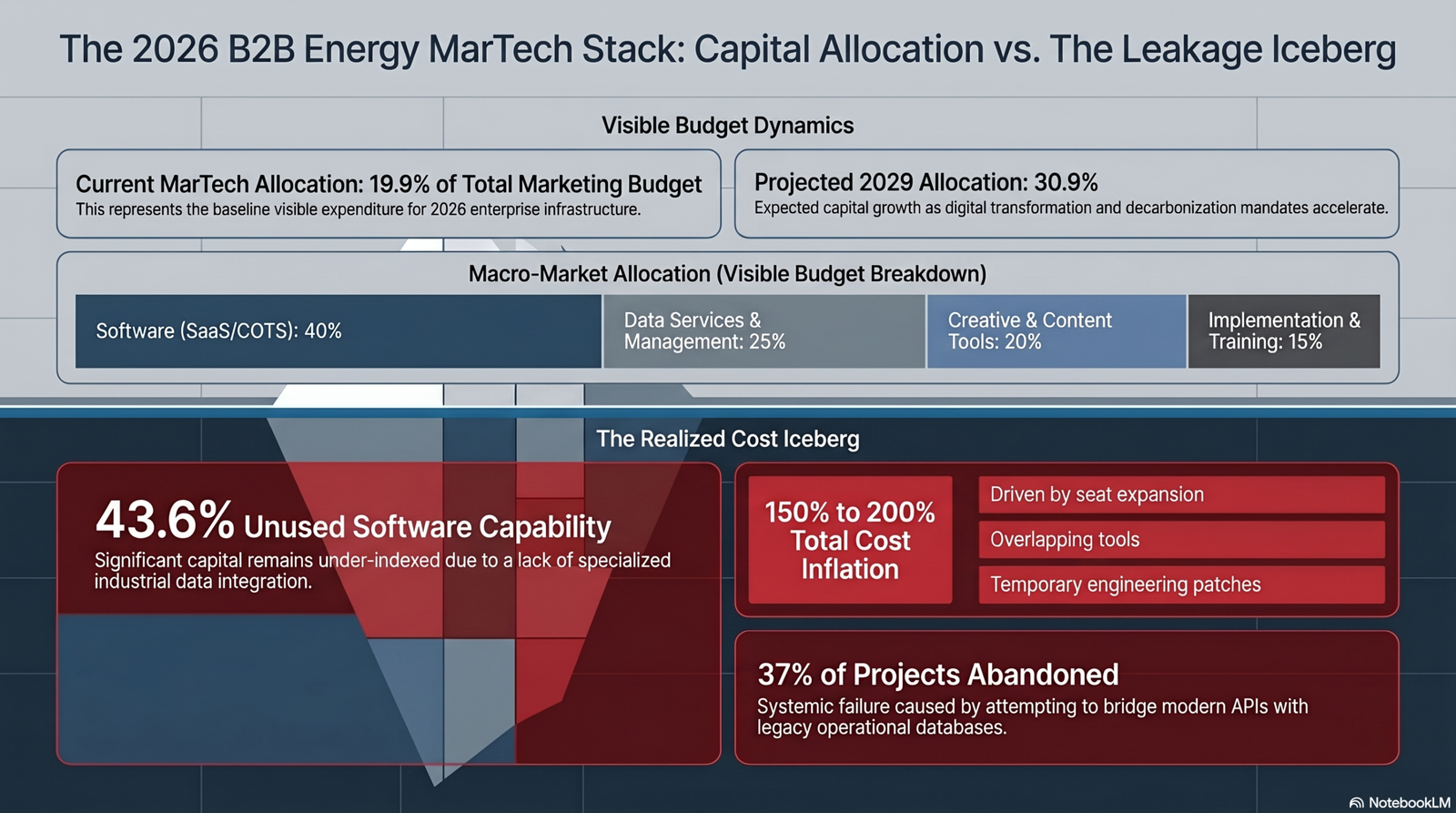
El gasto corporativo en tecnología de marketing actualmente promedia 19,9% de la asignación total de marketing, con datos empíricos de La encuesta de directores de marketing Esto indica un aumento previsto a 30,91 TP3T para 2029. Los datos financieros revelan que las organizaciones no utilizan eficazmente aproximadamente 43,61 TP3T de sus capacidades de tecnología de marketing adquiridas, lo que deja una asignación de capital significativamente subutilizada. Esta brecha de utilización se produce principalmente porque el software comercial genérico (COTS) carece de integraciones nativas para datos industriales especializados, como la telemetría de contadores inteligentes, las salidas de sistemas SCADA y las métricas de consumo en el borde de la red. En consecuencia, la cartera de aplicaciones empresariales estándar se fragmenta considerablemente, funcionando como islas de información aisladas que no dan soporte a las operaciones comerciales ni al análisis de la cartera de proyectos.
Este desajuste estructural crea una clara responsabilidad financiera en el balance de la empresa. Cuando las instalaciones de software básicas no cumplen con los requisitos del sector, las organizaciones suelen incrementar el gasto de capital mediante la compra de aplicaciones complementarias, la ampliación de licencias de usuario o la creación de parches de código temporales. Estas intervenciones provocan que los gastos totales de software como servicio (SaaS) aumenten entre 150% y 200% por encima del precio de lista original del proveedor. Dado que los problemas de integración generan una tasa de abandono de 37% para estas implementaciones de software, el capital se pierde sistemáticamente debido al mantenimiento improductivo del software y a las licencias no desactivadas. Desde la perspectiva del balance, estas ineficiencias inflan los costos de adquisición de clientes (CAC), reducen los márgenes de EBITDA e influyen negativamente en los múltiplos de valoración de la empresa al disminuir la eficiencia general del capital.
Los mandatos regulatorios de NIS2 y los requisitos de soberanía de datos limitan la viabilidad comercial del SaaS.
Los marcos regulatorios que rigen el sector energético tratan el cumplimiento de los datos como una restricción operativa activa en lugar de una casilla de verificación administrativa. Según el Directiva NIS2 de la Unión Europea (Directiva (UE) 2022/2555), La ciberseguridad corporativa, la integridad de la cadena de suministro y la protección de datos están legalmente designadas como responsabilidades de la alta dirección. El incumplimiento de los protocolos NIS2 conlleva importantes riesgos financieros, con sanciones legales para las entidades esenciales que pueden alcanzar hasta 10 millones de euros o 21 TP3T de ingresos anuales globales totales, además de la posible responsabilidad personal de la alta dirección. La directiva impone plazos estrictos para la notificación de incidentes, incluyendo una alerta temprana obligatoria de 24 horas y una notificación exhaustiva de incidentes de 72 horas para interrupciones significativas.
Este entorno regulatorio introduce un riesgo legal directo al utilizar proveedores de software en la nube convencionales. Una parte significativa del software de marketing empresarial líder en el mercado es propiedad de organizaciones con sede en EE. UU. y está operada por ellas, sujetas a la Ley CLOUD de EE. UU., que exige la divulgación de datos a las autoridades federales estadounidenses ante una solicitud legal, independientemente de dónde se almacenen físicamente los datos. Este requisito crea un conflicto jurisdiccional estructural con los estrictos mandatos de soberanía de datos, localización y privacidad que se aplican bajo NIS2 y GDPR. Para una importante empresa energética que gestiona datos críticos de infraestructura nacional, utilizar enrutamiento de datos que no cumpla con la normativa aumenta la exposición al incumplimiento, conlleva el riesgo de multas regulatorias catastróficas y puede elevar el costo promedio ponderado de capital (WACC) de la empresa, ya que los mercados de deuda y seguros reflejan la volatilidad regulatoria.
La ingeniería propietaria genera responsabilidades predecibles de mantenimiento de software a largo plazo.
Para sortear las limitaciones de integración y los riesgos de soberanía de las plataformas SaaS comerciales, los líderes tecnológicos empresariales suelen considerar el desarrollo de software propietario interno. Si bien la introducción de modelos de IA con agentes y herramientas de desarrollo asistidas por IA (codificación "vibe") ha reducido las barreras iniciales y los costos iniciales de la generación de código personalizado, no altera el perfil del costo total de propiedad (TCO) a largo plazo. Por el contrario, la generación automatizada de código a menudo introduce una complejidad de software no controlada y bloques de código sin documentar que requieren corrección humana durante las revisiones de arquitectura posteriores.
El software propietario requiere una asignación continua de ingeniería para mantenerse viable y seguro frente a las amenazas en constante evolución. El costo corporativo total de los ingenieros de software internos calificados para construir y mantener la infraestructura de datos industriales generalmente oscila entre $150,000 y $200,000 por ingeniero anualmente. Para una herramienta de normalización de datos de marketing personalizada que requiere un gasto inicial de desarrollo de $500,000, el gasto operativo anual base para actualizaciones de seguridad, ajustes de API y mantenimiento oscila entre 15% y 20% del desembolso de capital inicial ($75,000 a $100,000). Desviar capital de ingeniería interna para mantener plataformas comerciales estándar crea un costo de oportunidad significativo, ralentizando los plazos de desarrollo de productos energéticos centrales que generan ingresos y erosionando la agilidad tecnológica a largo plazo.
La convergencia de las tecnologías operativas y de la información valida el middleware de integración específico del dominio.
La principal limitación técnica que separa el sector energético de los mercados comerciales tradicionales es la necesaria convergencia entre las Tecnologías de la Información (TI) y las Tecnologías Operativas (TO). Los sistemas de análisis comerciales, las herramientas de gestión de relaciones con el cliente (CRM) y los motores de automatización de marketing no pueden generar valor comercial si permanecen desconectados de activos operativos como los datos de almacenamiento de baterías localizados, las métricas de capacidad de la red de transmisión y la infraestructura de contadores inteligentes. Esta brecha técnica no puede superarse mediante buses de servicios empresariales estándar ni webhooks simples, que no están preparados para gestionar el alto volumen y la velocidad de los datos de telemetría industrial.
Para superar este obstáculo técnico sin tener que desarrollar bases de código personalizadas frágiles que compliquen la auditoría del software, los operadores implementan plataformas de integración como servicio (iPaaS) específicas para cada sector, como la plataforma Utilihive de Greenbird. Estas soluciones de middleware especializadas actúan como un centro de datos industrial, proporcionando conectores preconfigurados y reforzados, diseñados para redes de medición inteligente a gran escala, marcos de gestión de activos y sistemas de IoT industrial. La implementación de una iPaaS nativa para el sector energético desacopla las operaciones centrales de la red de las plataformas comerciales orientadas al cliente, garantizando la seguridad de los datos a nivel empresarial, protegiendo la infraestructura crítica de la red frente a amenazas externas y acelerando el lanzamiento al mercado de servicios basados en datos.
Los operadores energéticos que optimizan el uso del capital implementan arquitecturas compuestas modulares.
La evidencia empírica de las principales empresas energéticas demuestra que la eficiencia óptima del capital se logra mediante una estrategia híbrida ("Blending") que conserva el software comercial como servicio (SaaS) para tareas básicas, mientras que aplica el desarrollo propio exclusivamente a diferenciadores no estandarizados de alto margen. Esta estrategia evita la dependencia de un proveedor específico y, al mismo tiempo, preserva los recursos de desarrollo corporativo para proyectos que generan una diferenciación directa en el mercado.
- Equinor: Se gestionó la fragmentación de datos empresariales mediante la ingeniería de “OMNIA”, una plataforma de datos propia implementada en el sistema. Administrador de datos de Microsoft Azure para energía Esta arquitectura logra resiliencia operativa y escala global al adherirse estrictamente al estándar técnico OSDU de código abierto, eliminando eficazmente los silos de datos entre las unidades de exploración y producción.
- Vattenfall: Se abordó el aislamiento de datos en unidades de negocio independientes definiendo la retención de clientes como un objetivo interdepartamental unificado. Al ejecutar la resolución de identidades a través de registros anonimizados y desplegar el Catálogo de datos de Alation Para gestionar la gobernanza, Vattenfall democratizó el acceso seguro a los datos para más de 300 usuarios internos mensuales. Esta implementación estructural redujo los plazos de prueba de concepto de los proyectos de 3-4 meses a 3-4 semanas, acelerando la extracción de valor empresarial hasta en 811 TP3T al tiempo que garantizaba el estricto cumplimiento del RGPD y la protección de datos personales.
- Caparazón: Implementa modelos de IA personalizados y especializados basados en alto rendimiento. Infraestructura NVIDIA PhysicsNeMo para predecir el comportamiento de la migración de la pluma de captura y almacenamiento de carbono (CCS). Este marco proporciona una aceleración operativa de 100 000 veces con respecto a los simuladores numéricos subsuperficiales tradicionales, con una pérdida mínima en la precisión de la predicción, lo que garantiza una clara ventaja técnica en proyectos de descarbonización a gran escala.
Para analizar las métricas de implementación específicas y los estudios de caso establecidos en estas configuraciones industriales, los líderes tecnológicos pueden acceder a nuestra base de datos empresarial completa. perspectivas.
Los cuadros de mando cuantitativos minimizan las decisiones subjetivas en la adquisición de tecnología.
Antes de la inversión de capital, la adquisición de tecnología empresarial requiere un marco objetivo y ponderado para evaluar si conviene desarrollar, comprar o integrar componentes de arquitectura comercial. Los procesos de adquisición subjetivos suelen derivar en la duplicación de adquisiciones de software y fallos en la integración.
|
Variable de decisión |
Peso de construcción |
Comprar peso |
Umbral para la ejecución de compilación personalizada |
Marco de referencia externo |
|
¿El factor diferenciador clave? |
3.0 |
0.5 |
La ejecución personalizada solo se justifica si la funcionalidad del software define directamente la ventaja competitiva que impulsa la elección del cliente. |
|
|
¿Riesgos regulatorios y de seguridad? |
2.5 |
1.0 |
Se requiere una arquitectura personalizada o aislada si la soberanía de los datos es absoluta y las alternativas SaaS presentan riesgos de incumplimiento de la norma NIS2. |
|
|
¿Ritmo de salida al mercado? |
0.5 |
3.0 |
Se prefieren los modelos SaaS comerciales estándar si la oportunidad comercial requiere la implementación y la generación de ingresos en un plazo de seis meses. |
Indicadores de referencia de Forrester para la gestión ágil de compras |
|
¿Capacidad de ingeniería? |
2.0 |
0.5 |
El desarrollo a medida se limita a organizaciones que cuentan con unidades internas de ingeniería de software dedicadas y capaces de absorber la deuda técnica a largo plazo. |
|
|
¿Complejidad funcional? |
1.5 |
1.0 |
La integración personalizada o híbrida es necesaria si los requisitos de ingesta de datos son muy especializados y no son compatibles con el software comercial estándar. |
Conclusiones clave
- Enfoque de asignación 61%: Las empresas energéticas asignan una prioridad de implementación 61% a las plataformas de publicidad digital dentro de su infraestructura principal para capturar y rastrear la intención del comprador durante la fase de evaluación anónima y sin representantes.
- El déficit de integración: Una tasa media de utilización de herramientas de 56,4%, combinada con una tasa de abandono de proyectos de 37% debido a fallos de integración, perjudica directamente la eficiencia del CAC corporativo y reduce la agilidad empresarial general.
- Exposición a responsabilidad civil según NIS2: El incumplimiento de las normas de ciberseguridad de la cadena de suministro expone a las organizaciones a sanciones de hasta 10 millones de euros o 21 billones de dólares de ingresos anuales globales, lo que transforma la adquisición de software de marketing en un riesgo que supone una responsabilidad para el consejo de administración.
- Índice de gastos de mantenimiento: Las aplicaciones de software personalizadas requieren un gasto anual recurrente en mantenimiento equivalente a entre 151 TP3T y 201 TP3T de la inversión inicial para mantener la operatividad, corregir errores y gestionar los cambios en la API.
- La arquitectura híbrida componible: Los operadores de alto rendimiento evitan la dependencia de un proveedor y la excesiva deuda técnica mediante la utilización de un marco de trabajo integrado que combina software comercial estándar con componentes centrales personalizados a través de estándares de datos abiertos como OSDU.
Aclaraciones técnicas estratégicas
Integración operativa de los protocolos de protección de datos NIS2 en SaaS no soberanos
Para resolver el conflicto entre la Ley CLOUD de EE. UU. y los requisitos de residencia de datos europeos según la NIS2, las empresas energéticas deben implementar una arquitectura de datos desacoplada. Toda la información de identificación personal (PII) y los datos operativos críticos de la red deben procesarse, anonimizarse o tokenizarse dentro de un sistema de información fidedigna seguro y soberano, ya sea local o en la nube, antes de transferir los conjuntos de datos a plataformas de marketing externas y no soberanas. Garantizar que las aplicaciones de terceros solo reciban y procesen hashes anonimizados protege la integridad del cliente, cumple con las obligaciones de auditoría de la cadena de suministro según la NIS2 y exime a la alta dirección de responsabilidad regulatoria directa.
Remediación estructural de la tasa de fallos de integración del software 37%
La tasa de abandono 37% registrada en las implementaciones de software de marketing comercial en el sector industrial se debe fundamentalmente al intento de conectar las API modernas en la nube directamente con las bases de datos operativas locales heredadas. Las empresas pueden mitigar esta tasa de fallos utilizando una plataforma de integración específica del dominio (iPaaS) para estandarizar la traducción de datos, el almacenamiento en caché de mensajes y la alineación de protocolos. Además, los acuerdos comerciales deberían vincular los pagos por hitos del proveedor directamente a la ingesta exitosa de datos operativos, en lugar de al acceso a las licencias de software, transfiriendo así el riesgo de rendimiento al proveedor de tecnología.
El impacto financiero de la IA agente en los costos de propiedad del software personalizado
Aunque la IA con agentes y la generación automática de código ("codificación vibra") reducen el capital inicial necesario para crear aplicaciones personalizadas, no disminuyen el costo total de propiedad a largo plazo. El desarrollo asistido por IA suele generar una mayor deuda técnica y complejidad arquitectónica cuando se implementa sin una supervisión de ingeniería estricta, ya que facilita la proliferación de bloques de código no documentados, redundantes o no optimizados. Los gastos básicos asociados con la gestión del ciclo de vida del software —incluidas las pruebas de regresión de seguridad, la gestión de parches, el análisis de vulnerabilidades y el seguimiento de actualizaciones de API— siguen vinculados a recursos de ingeniería altamente remunerados. En consecuencia, las herramientas de IA reducen los plazos iniciales, pero no disminuyen la tasa de ejecución anual de mantenimiento recurrente de 15% a 20%.
Acerca del autor: En Equipo de análisis del Proyecto 54 Proporciona investigación basada en datos, análisis estructurales y marcos técnicos optimizados para ejecutivos de alto nivel que gestionan la asignación de capital, la transformación tecnológica y el riesgo regulatorio dentro de los sectores energético e industrial globales.