


The One Place Energy Rules Are Still Tightening
While standards loosened across much of the world in 2025, the EU's Energy Efficiency Directive did the opposite on a published schedule. The annual savings obligation stepped up to 1.5 per cent on 1 January 2026 and steps up again to 1.9 per cent on 1 January 2028. For suppliers whose compliance pitch has lost its force elsewhere, this is the instrument that still has a date attached.
- The ratchet is dated, which is what makes it sellable. New annual end use savings of at least 1.5 per cent of final energy consumption apply from 1 January 2026 and at least 1.9 per cent from 1 January 2028, under Article 8 of Directive (EU) 2023/1791. A step change with a date on it is the opposite of the drifting mandates that weakened confidence elsewhere in 2025.
- The step from 1.5 to 1.9 per cent is larger than it looks. It is roughly a quarter more new savings required each year, and it lands at the start of 2028, which means procurement to deliver it is specified during 2027. The sales cycle for anything that needs engineering sits ahead of that, so the relevant window is now, not 2028.
- The public sector is the most datable buyer in the directive. It must cut its own final energy consumption by at least 1.9 per cent a year, as part of a Union wide goal of cutting total final energy consumption by 19 per cent by 2030 compared with the 2017 to 2019 average. Public bodies publish budgets and tender openly, which makes this the one segment where the obligation turns directly into a visible procurement calendar.
- Audits create a recurring, forecastable event. The directive makes energy audits mandatory for enterprises above a consumption threshold and requires them at least every four years. A four year cycle is a renewal rhythm a supplier can plan against rather than a one off compliance scramble.
- District heating has a hard commercial edge. Efficient district heating and cooling must be fully decarbonised by 2050, support for new high efficiency gas cogeneration connected to such systems runs only to 2030, and other new fossil fuel heat generation in those systems is barred. Any proposition that depends on new fossil heat in district systems has a closing window.
- Check the national transposition before you quote a threshold. Transposition was due by 11 October 2025 and member states set their own detail, so the enterprise thresholds that decide whether a given customer is in scope are a national question. See the sourcing note below: we did not verify the Article 11 figures from the primary text in this analysis and have deliberately not quoted them.
What is the EU energy savings obligation schedule to 2030?
Article 8 of Directive (EU) 2023/1791 requires member states to achieve cumulative end use savings over 2021 to 2030, expressed as new annual savings measured against final energy consumption. The schedule is explicit and it escalates.
The steps are 0.8 per cent up to 31 December 2023, 1.3 per cent from 1 January 2024, 1.5 per cent from 1 January 2026, and 1.9 per cent from 1 January 2028. We are currently inside the 1.5 per cent period. The next step is fourteen months away at the time of writing.
Alongside it sits the headline target: a reduction in final energy consumption of at least 11.7 per cent by 2030, measured against the 2020 projections for 2030, as set out by the European Commission. The directive also makes energy efficiency first a fundamental principle to be weighed in relevant policy and major investment decisions, which matters because it reaches into decisions that are not themselves efficiency decisions.
Context for scale, from Eurostat as cited by the Commission: the EU used about 20 per cent less energy in 2024 than in 2006. So this is a ratchet applied to a system already well into a long decline, which is why each further increment is harder and more capital intensive than the last.
The transposition deadline was 11 October 2025. That date matters more than the directive date for anyone selling, because obligations reach companies through national law, not through the directive itself.
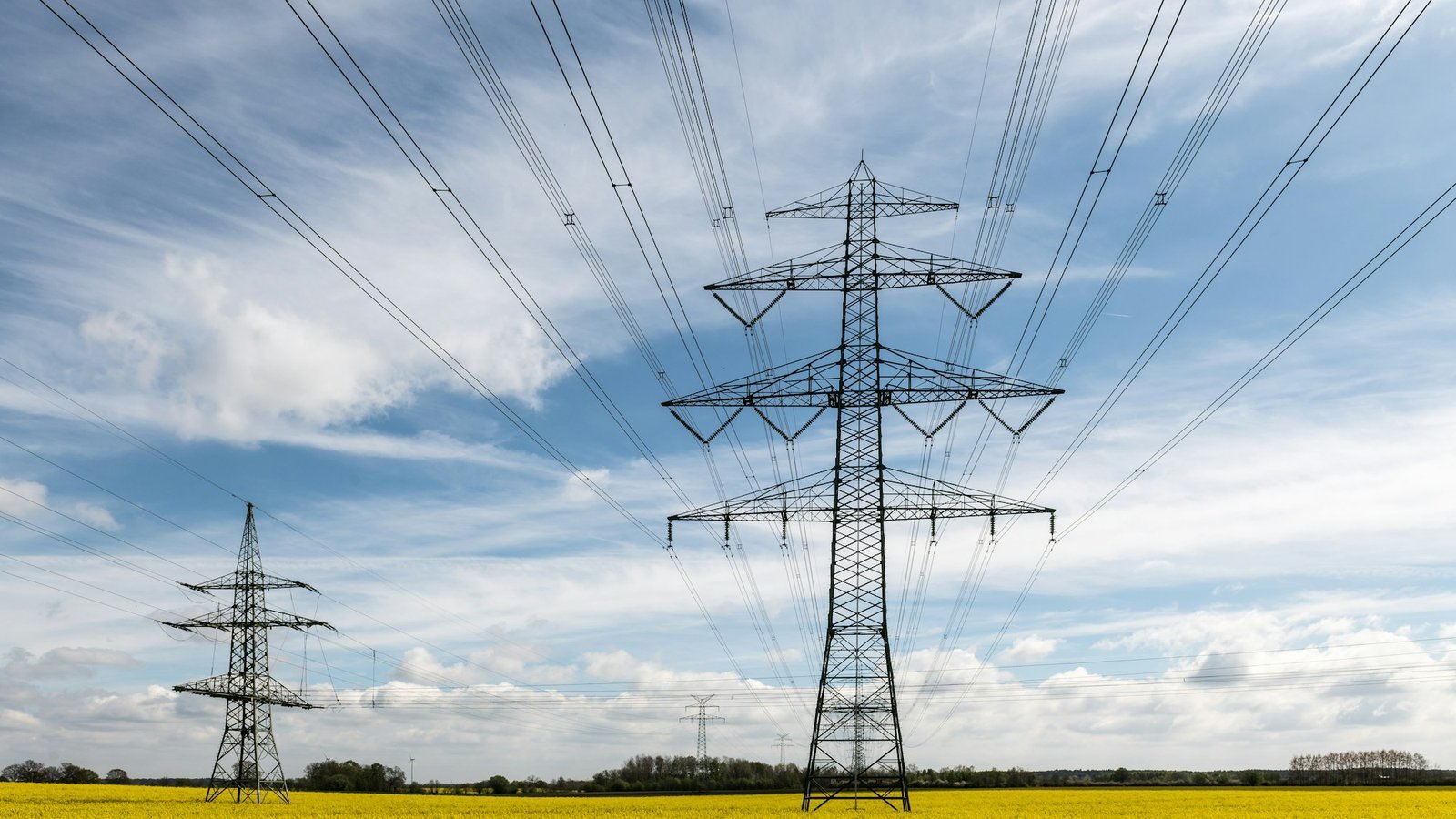 Projet 54High-voltage transmission pylons and lines crossing a yellow rapeseed field under a blue sky.
| To 31 December 2023 | 0.8 per cent of final energy consumption | Complete |
| From 1 January 2024 | 1.3 per cent | Complete |
| From 1 January 2026 | 1.5 per cent | In force now |
| From 1 January 2028 | 1.9 per cent | Next step, procurement specified during 2027 |
| By 2030 | At least 11.7 per cent cut in final energy consumption | Union target against 2020 projections for 2030 |
Why has the EU Energy Efficiency Directive not been rolled back?
Because it is written as a quantified obligation on member states with a schedule, rather than as a performance standard on a product, and those two things fail differently.
A product standard can be relaxed by the body that set it, which is what the IEA found across several jurisdictions in 2025, describing it as a historic reduction in coverage and stringency of efficiency rules. A cumulative savings obligation on a member state is harder to unwind quietly, because the arithmetic is cumulative. The obligation is cumulative over 2021 to 2030, so a slow start leaves more to deliver in the later years.
That does not make it permanent. The Commission ran a public consultation and call for evidence on the post 2030 energy efficiency framework between 20 March and 12 June 2026, and the post 2030 framework was scheduled for publication in the last quarter of 2026. The Commission also published a data centre energy efficiency package on 21 September 2026, with a consultation on minimum performance standards open until 14 December 2026. **Anyone building a case on this instrument should read the post 2030 framework when it lands rather than assume the current trajectory continues.**
The honest framing for a customer is therefore not "regulation is tightening". It is "this specific instrument tightens on this specific date, and here is what is scheduled to be reviewed". That distinction is what separates a credible compliance argument in 2026 from the kind that buyers have learned to discount.
How does the Energy Efficiency Directive create procurement demand?
Three buyers, and they are not equally easy to reach.
The **public sector** is the clearest. It must reduce its own final energy consumption by at least 1.9 per cent a year, as part of a Union wide 19 per cent reduction in total final energy consumption by 2030 compared with the average of 2017, 2018 and 2019. Public bodies tender in the open and publish budgets, so the obligation becomes a visible pipeline rather than an inferred one. The directive also requires member states to address energy efficiency in public procurement, which pushes the criterion into tenders that are not themselves about energy.
**Large energy consumers** are the second. Energy management systems become mandatory for large industrial consumers, and energy audits are mandatory and repeated at least every four years for enterprises above a consumption threshold. The four year cycle is the commercially useful part: it converts a compliance task into a recurring event you can diarise per account.
**Heat networks** are the third and the most time limited. Efficient district heating and cooling must be fully decarbonised by 2050, support for new high efficiency gas cogeneration in those systems runs only to 2030, and other new fossil fuel heat generation in them is barred. Member states must promote local heating and cooling plans in municipalities of more than 45,000 inhabitants, which is where those projects become visible early.
Two of these three are procurement functions with published timetables. That is rare, and it is the reason this directive is worth more to a commercial team than a larger but vaguer policy signal. The buying committee for them behaves the way we described in our energy procurement buyer persona framework.
How does the Energy Efficiency Directive interact with CBAM, ETS2 and CSRD?
It compounds them, and the compounding is the argument most suppliers are not making.
A European industrial customer in 2026 is simultaneously inside a carbon border mechanism, a reporting regime, a second emissions trading system and this savings obligation. Each is usually sold separately, by different vendors, as a separate compliance problem. The customer experiences one budget and one set of engineers.
The adjacencies are concrete. CBAM's definitive period prices embedded carbon at the border, which raises the value of reducing energy intensity rather than merely reporting it. The ETS2 timing changes what energy costs in the same window the savings obligation steps to 1.9 per cent. CSRD et CSDDD determine what has to be disclosed about both.
For a supplier, the practical move is to stop selling against one acronym. A proposal that shows how a single investment serves the savings obligation, reduces CBAM exposure and produces the evidence CSRD requires is worth more than three proposals that each serve one. It also survives better if any single instrument is relaxed, which after 2025 is a risk every buyer now prices.
This is the same lesson in reverse from the global picture: where one instrument can slip, a case resting on four overlapping ones is more robust than a case resting on the strongest single one.
What are the energy audit and energy management system thresholds?
The directive sets consumption thresholds that decide which enterprises must hold an energy management system and which must undergo mandatory audits. **We did not quote them in this analysis, deliberately.**
The reason is a sourcing standard rather than an editorial one. The EUR-Lex HTML of the directive would not serve its operative articles in full when this piece was researched, so Article 11's figures could not be read from the primary text. The published recitals confirm that audits must be mandatory for enterprises above a consumption threshold and repeated at least every four years, and that energy management systems become mandatory for large industrial consumers, but recitals are explanatory and not binding. **Quoting a threshold from memory or from a secondary summary would be exactly the behaviour that makes a compliance deck untrustworthy, so we have not done it.**
What to do instead, and it is the better practice anyway: read the threshold out of your customer's **national transposition**, not out of the directive. Transposition was due by 11 October 2025 and member states set the implementing detail. A threshold quoted from Brussels can be wrong in Warsaw.
If you need the figures for a specific market, take them from that member state's implementing act and cite that act in the proposal. A named national instrument is more persuasive to a procurement lead than a directive reference, because it is the thing their lawyers will actually check.
How should energy suppliers act on the 2028 savings step?
Five things, and the timing on the first two is the whole point.
First, work backwards from 1 January 2028, not forwards from today. If delivery requires engineering, specification happens in 2027, which means the commercial conversation happens across 2026 and early 2027. A campaign launched in 2028 is a campaign aimed at a decision that has already been made.
Second, build the public sector list now. It is the one segment where the obligation, at least 1.9 per cent a year, turns into published tenders. Municipalities above 45,000 inhabitants, where member states must promote local heating and cooling plans, are a usable targeting filter, because the plan precedes the procurement.
Third, diarise the four year audit cycle per account. An audit is a scheduled moment when a customer is contractually obliged to look at exactly the thing you sell. Knowing when it falls is worth more than most intent data.
Fourth, write one proposal that serves several instruments at once rather than three that each serve one. It is more valuable to the buyer and more resilient if any single instrument is relaxed.
Fifth, read the post 2030 framework when it publishes and update the deck. It was scheduled for the last quarter of 2026, following a consultation that ran from 20 March to 12 June 2026. **Do not assume the trajectory past 2030 until it is published.** Being the supplier who already read it is a cheap advantage.
The one line summary for a board: in a year when energy rules loosened almost everywhere, this one steps up by about a quarter on 1 January 2028, the public sector version of it is already visible in tenders, and the work to meet it is specified in 2027.
Écoutez et emportez-le avec vous
Vous préférez le format audio ou vous avez besoin de la présentation pour une analyse interne ? Le compte rendu complet est disponible sous forme d’épisode de podcast et de diaporama téléchargeable.
A European industrial customer tells you they are done with efficiency spending because the rules keep getting relaxed. What is the strongest reply?
Questions fréquemment posées
It is the recast EU Energy Efficiency Directive, Directive (EU) 2023/1791. It sets a Union target of reducing final energy consumption by at least 11.7 per cent by 2030 against the 2020 projections for 2030, establishes energy efficiency first as a fundamental principle of EU energy policy, places a cumulative end use savings obligation on member states across 2021 to 2030, and sets obligations for the public sector, for large energy consumers and for district heating. The deadline for member states to transpose it into national law was 11 October 2025.
Member states must deliver new annual end use savings measured against final energy consumption, on an escalating schedule: at least 0.8 per cent up to 31 December 2023, at least 1.3 per cent from 1 January 2024, at least 1.5 per cent from 1 January 2026, and at least 1.9 per cent from 1 January 2028. The obligation is cumulative across the 2021 to 2030 period, so savings missed in one period increase what is required later rather than disappearing.
Public bodies must reduce their own final energy consumption by at least 1.9 per cent a year, contributing to a Union wide 19 per cent reduction in total final energy consumption by 2030 compared with the average of 2017, 2018 and 2019. Member states must also address energy efficiency in public procurement. Because public bodies tender openly and publish budgets, this is the segment where the obligation translates most directly into a visible procurement pipeline.
The directive makes energy audits mandatory for enterprises whose energy consumption exceeds a threshold, regardless of company size, and requires them to be repeated at least every four years. Energy management systems become mandatory for large industrial energy consumers. The precise consumption thresholds are set in the directive's operative articles and in each member state's transposing law, and this analysis deliberately does not quote a figure because the primary article text could not be read during research. Check the national implementing act for the market in question.
It is under review. The European Commission ran a public consultation and call for evidence on the post 2030 energy efficiency framework between 20 March and 12 June 2026, with publication of that framework scheduled for the last quarter of 2026. A data centre energy efficiency package followed on 21 September 2026. The obligations to 2030 described here are set. Anything beyond 2030 should be treated as open until the post 2030 framework is published.
Obtenez la suite gouttelettes de renseignement
Rejoignez les leaders des secteurs de l'énergie et de l'industrie et recevez directement nos informations stratégiques en matière de marketing, de croissance par IA et d'architecture des revenus, sans superflu.
Vous êtes sur la liste
Bienvenue dans The Energy Growth Brief, consultez votre boîte de réception pour le prochain numéro.