


Does China's Oil Stockpiling Follow IEA Rules? No, and Here Is Why
China is an IEA Association country, not a member. The 90 day stockholding obligation does not apply, China reports no oil inventories to the IEA or to JODI, and it has never joined an IEA collective release. Everything you have read about the size of its reserve is a model.
- Association is not membership. China has been an IEA Association country since 2015. It sits in working groups and joint programmes and owes the agency nothing.
- The 90 day rule flows from the 1974 Agreement on an International Energy Program, a treaty. It binds parties to that treaty. China is not a party.
- China does not report oil inventories. The US Energy Information Administration states plainly that it estimates China's inventories from imports, exports, refining and third party data because China does not publish them.
- China was absent from the IEA's March 2026 collective release, the largest in the agency's history, because it cannot be tasked. It drew down its own commercial stocks instead, at its own pace, from May 2026.
- The last official Chinese figure is nine years old: 37.73 million tonnes, roughly 280.7 million barrels, as of mid 2017.
- The club is widening around China. Nigeria joined as an Association country on 2 July 2026, Brazil started accession in February 2026, and India has been described as being in the final phase toward membership.
No. It is an Association country, and the difference is the whole answer
China has been an IEA Association country since 2015, when the Association category was created precisely because IEA membership is restricted in practice to OECD members, which excludes China, India and Indonesia. China sits alongside Argentina, Egypt, India, Indonesia, Kenya, Morocco, Senegal, Singapore, South Africa, Thailand, Ukraine, Viet Nam and, since 2 July 2026, Nigeria.
Association buys a seat in certain IEA standing groups, committees and working parties, joint work programmes on energy security, data and policy analysis, priority access to IEA training, and participation in emergency response exercises. It does not buy a vote on the Governing Board, and it does not carry a single obligation.
There are three tiers, and most reporting collapses them. A member is a party to the founding treaty and is bound by it. An accession country is formally seeking membership and is being assessed against the criteria: as of 2026 that list includes Brazil, Chile, Colombia, Costa Rica, Israel and Romania. An association country co operates without obligation. China is in the third tier and has given no public indication, as of 13 July 2026, that it is seeking to move.
We set out the same three tier structure from the other direction in Nigeria Joins the IEA While Staying in OPEC, which is the clearest recent illustration of exactly how little association costs.
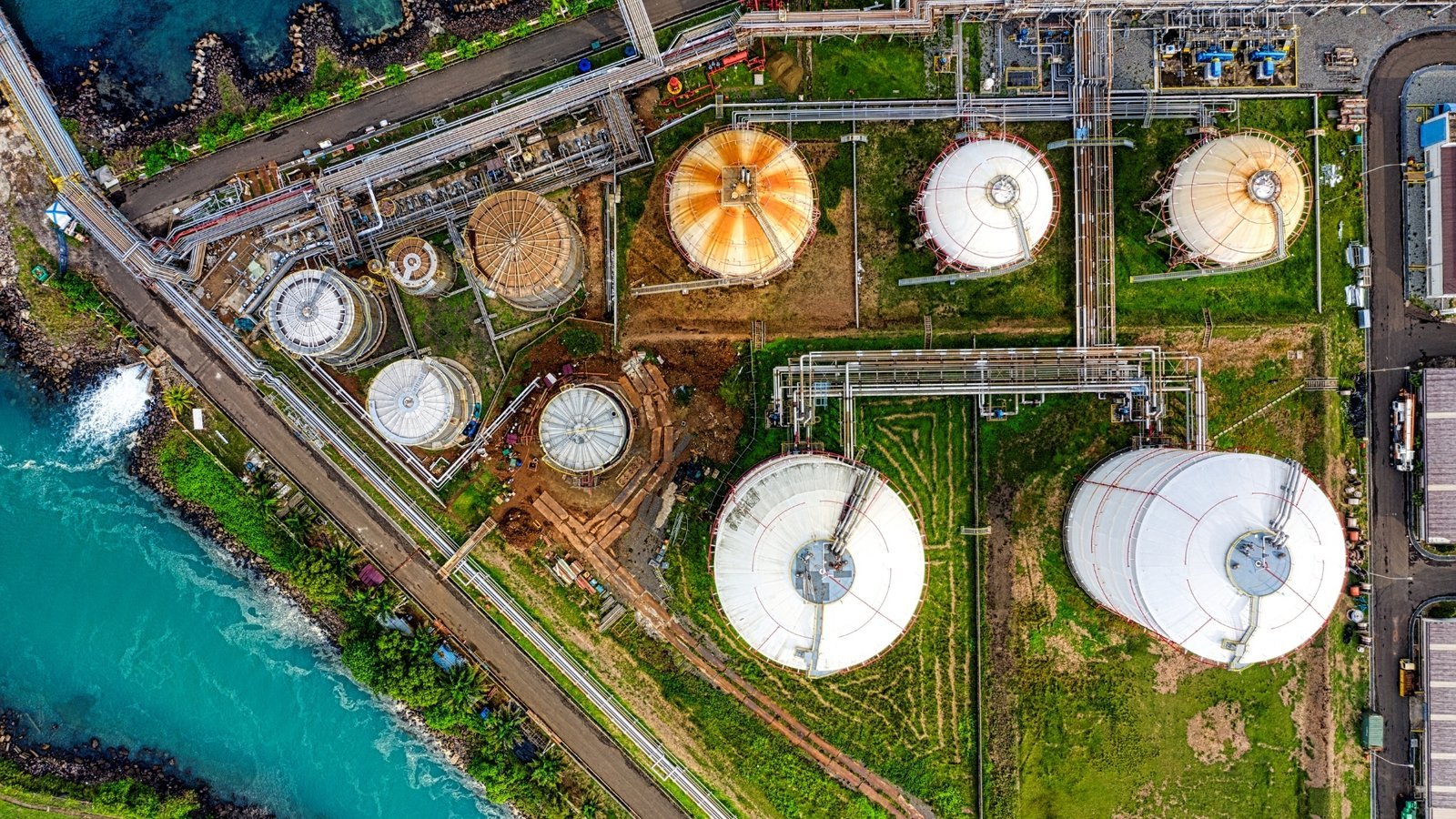 Project 54Strategic reserves are physical. The numbers describing China's are not.
It cannot. The obligation is a treaty obligation
The 90 day stockholding obligation flows from the 1974 Agreement on an International Energy Program, the treaty that created the IEA in the aftermath of the Arab oil embargo. It binds the parties to that treaty and nobody else. China is not a party.
The IEA's own membership criteria confirm the point. A candidate must hold crude oil or product reserves equivalent to 90 days of the previous year's net imports, to which the government has immediate access, must run a demand restraint programme capable of cutting oil use by up to 10 percent, must have emergency response legislation in place, must be able to compel oil companies to report information on request, and must be able to contribute its share of an IEA collective action. Those are the price of membership, not conditions of association.
Net oil exporters among the members are exempt from the stock minimum. China, a very large net importer, would face an enormous obligation if it ever joined. That is not a small detail. It is a structural reason why the current arrangement suits Beijing precisely as it is.
The practical consequence: when you read that China holds roughly 90 days of cover, or that it is approaching the IEA benchmark, understand that the benchmark is a yardstick being applied from outside, not a standard China has agreed to meet. We unpacked that yardstick in China and the IEA 90 Day Benchmark.
Domestic ones, and they hardened in 2025
The National Development and Reform Commission sets policy and approves the reserve build. The National Food and Strategic Reserves Administration, which sits under the NDRC following the 2018 reorganisation, implements it. The state reserve was approved in 2003 and built in phases from the mid 2000s, with the first phase of coastal sites operational by around 2009.
In 2007 Beijing formalised a two tier design: a government controlled strategic reserve, complemented by mandated commercial reserves held by refiners, who are required to carry operational stocks of roughly 15 days of forward cover. Phase volumes are reported rather than officially confirmed and sources disagree, so treat any specific phase number you see as an estimate.
China's first Energy Law took effect on 1 January 2025 and gives the whole arrangement statutory backing. It sets out a reserve system in which government reserves are combined with enterprise reserves, and physical reserves are coordinated with production capacity reserves. Since 2024, state oil companies have reportedly been directed to add emergency barrels into commercial stockpiles, which is why the US EIA now treats Chinese commercial inventories as functionally strategic.
None of this creates an external obligation. It creates an internal instrument. That distinction is what most analysis gets wrong.
Almost nothing, to almost nobody
IEA members report oil stock levels monthly to the agency and must be able to compel companies to report on request. Most major producers and consumers also submit monthly production, demand, trade and stock data to the Joint Organisations Data Initiative. China submits some oil data to JODI but does not report oil inventory or stock data, and Chinese stocks are a recognised coverage gap in that system.
The US Energy Information Administration puts it as plainly as an official body can. In its Today in Energy note of 20 April 2026 it wrote that China does not report data on its oil inventories, so it estimated China's inventories based on imports, exports, refining, and oil inventory data from third party and official sources.
The EIA's estimate is that China added roughly 1.1 million barrels per day to strategic inventories in 2025, reaching about 1.4 billion barrels by December 2025 across government and commercial stocks combined, with government held stocks alone averaging about 360 million barrels in December 2025 against a US Strategic Petroleum Reserve of roughly 414 million barrels. Every one of those numbers is an estimate.
The last meaningful official statement of reserve volume came from China's National Bureau of Statistics: 37.73 million tonnes, roughly 280.7 million barrels, as of mid 2017. There has been no comparable update since. Say it plainly, because almost nobody does: there is no authoritative public number for China's oil reserves. Every figure in circulation is a model. That is the subject of our companion piece on why every estimate disagrees and on why Beijing does not publish.
No. It acts alone, and 2026 proved it again
The IEA has taken six collective actions in its history. The most recent, agreed on 11 March 2026 and confirmed on 19 March 2026, was the largest ever: 426 million barrels, made up of public stocks, obligated industry stocks and production increases, contributed by 30 member countries after the effective closure of the Strait of Hormuz. The contribution table lists member countries only. China is not on it, and could not be, because it cannot be tasked.
China acted unilaterally instead. It began drawing on commercial stockpiles in May 2026, taking down roughly 25 million barrels in the month to 7 June 2026, cutting refinery runs and capping fuel exports. This mirrors the earlier pattern: China ran its first ever public state reserve crude auction in September 2021, and in November 2021 joined a United States led release that the IEA was explicitly not running, with its foreign ministry saying only that it would organise a release according to its own actual needs.
Coordination adjacent, never coordination bound. That is the accurate description, and it is the one to use in front of a client.
| Obligation or behaviour | IEA member | Association country | China in practice |
|---|---|---|---|
| Legal basis | Party to the 1974 IEP treaty, binding | Joint Declaration on Association, 2015, non binding | Domestic only: NDRC and NFSRA rules, Energy Law from 1 Jan 2025 |
| OECD membership required | Yes | No | Not an OECD member |
| 90 days of net import cover | Mandatory, immediate government access | Not applicable | No external obligation. Estimated about 1.4 billion barrels total at Dec 2025, unverifiable |
| Demand restraint programme | Mandatory, up to a 10 percent cut | Not required | Refinery run cuts and export quotas, ad hoc, at its own discretion |
| Contribute to collective releases | Bound to a share | No role | Absent from all six IEA collective actions |
| Compulsory company data reporting | Mandatory | Not required | No equivalent external reporting |
| Monthly stock reporting to IEA or JODI | Yes | Encouraged only | Does not report oil inventories |
| Public disclosure of reserve volume | Routine | Varies | Last official figure mid 2017: 37.73 Mt, about 280.7 million barrels |
| Who verifies the number | IEA Secretariat, statutory reporting | Not applicable | Nobody. EIA, Kpler, Vortexa, Kayrros and Argus all estimate |
The rulebook is being rewritten around the one country that has never been in it
On 2 July 2026 Nigeria became an IEA Association country, the first OPEC member ever to hold the status, taking the IEA family past 80 percent of global energy demand. At the February 2026 Ministerial, members agreed to begin Brazil's formal accession, Colombia was announced as becoming the 33rd member, and India was described as being in the final phase toward membership. India is not an OECD member.
None of that creates a new obligation for China. There is none to create. What it does is shift the norm. The reporting and emergency response club is becoming less OECD and more everyone who matters, which raises the diplomatic cost of Chinese opacity without changing its legal position by a comma.
If India is admitted through an amended framework, the OECD gate stops being the reason China is outside. At that point China's exclusion is no longer structural. It is a choice, and it will be read as one.
Every China demand number in your deck is a model
Chinese crude imports are not Chinese consumption, because an unpublished and highly variable slice goes into stock. In 2025 that slice averaged an estimated 1.1 million barrels per day. In 2026 the sign flipped and China drew down. If you forecast Chinese demand from import data, you can be a million barrels a day wrong in either direction, and buyers who have been burned by exactly that are unusually receptive to a supplier who leads with method and error bars rather than confidence.
Opacity is a demand driver if you sell data, tracking or analytics. The entire estimation industry exists because Beijing does not report. Positioning that says we replace the number Beijing will not publish is a defensible category, and the March 2026 Hormuz shock made every trading desk and refiner re litigate its China inventory assumptions.
Do not price China's reserve like the US SPR. The US SPR draws on legislated triggers and publishes weekly. China buys when crude is cheap and releases when it judges prices threaten domestic industry, on no schedule, with no announcement and with no obligation to anyone. Sellers into Chinese storage, tankage, terminal logistics and trading should model procurement waves tied to price windows and five year plan capacity targets, not to global emergency events.
Finally, this is a trust question, and trust is the sale. Being the supplier who states clearly, with citations, that China has no 90 day obligation, reports no stocks and joins no collective actions is a fast credibility win over competitors who blur China into the IEA world. Most sources get the status wrong, which is exactly why this page exists.
Listen & take it with you
Prefer audio, or need the deck for an internal review? The full briefing is available as a podcast episode and a downloadable slide presentation.
China holds no IEA obligation. What is the most useful way to treat its reserve in a commercial model?
Frequently asked
No. China has been an IEA Association country since 2015. Association gives it a seat in certain IEA working groups, joint programmes on energy security and data, and access to training, but no vote on the Governing Board and no binding obligations. IEA full membership is restricted in practice to OECD members, which China is not.
No. The 90 day emergency stock obligation flows from the 1974 Agreement on an International Energy Program, which binds the parties to that treaty. China is not a party. Association countries take on no stockholding obligation. When commentators compare China's cover to the 90 day benchmark, they are applying an external yardstick, not measuring compliance with a rule China has accepted.
No. China submits some oil data to JODI but does not report oil inventory or stock data to JODI or to the IEA. The US Energy Information Administration states that it estimates China's inventories from imports, exports, refining and third party data because China does not report them. The last official Chinese figure was 37.73 million tonnes, roughly 280.7 million barrels, as of mid 2017.
No. The IEA's collective action confirmed on 19 March 2026 released 426 million barrels contributed by 30 member countries. China is not a member and cannot be tasked, so it does not appear on the contribution table. China instead drew on its own commercial stocks from May 2026, taking down roughly 25 million barrels in the month to 7 June 2026.
Domestic ones. The National Development and Reform Commission sets policy and the National Food and Strategic Reserves Administration implements it. A two tier design formalised in 2007 pairs a government strategic reserve with mandated commercial stocks held by refiners, who carry roughly 15 days of forward cover. China's first Energy Law, in force from 1 January 2025, gives this statutory backing by combining government reserves with enterprise reserves.
Get the next intelligence drop
Join energy and industrial leaders getting our marketing, AI-growth and revenue-architecture intelligence, direct, no filler.
You're on the list
Welcome to The Energy Growth Brief, watch your inbox for the next dispatch.