


How Does China Compare to the IEA 90-Day Benchmark? Why the Comparison Is Harder Than It Looks
On paper China clears the International Energy Agency's 90-day emergency stockholding benchmark with room to spare, holding an estimated 110 to 180 days of import cover against a 90-day standard. But China is not an IEA member, it is bound by no obligation, and the two figures are not measured the same way. The IEA counts days against net imports, publishes audited monthly data, and enforces the rule on its members. Beijing publishes nothing, is often quoted against gross imports, and answers to no one. Here is what the 90-day benchmark actually is, why China technically sits outside it, and how to read the comparison without being misled by a number that looks cleaner than it is.
- The IEA 90-day benchmark is an obligation on member countries to hold emergency oil stocks equal to at least 90 days of the previous year's net imports. It is a binding rule for members, not a universal law of energy security.
- China is not an IEA member. It joined the IEA's Association programme in 2015 alongside India, Indonesia and Thailand, which involves cooperation and data sharing but carries no stockholding obligation.
- Measured on the IEA's own net-imports basis, China's estimated 1.2 to 1.47 billion barrels equate to roughly 110 to 180 days of cover, comfortably above 90 days on nearly every credible estimate.
- The comparison is muddied by methodology: the IEA counts net imports, but China's days figures are often quoted against gross imports or total demand, which are larger denominators that produce different day counts.
- For suppliers and strategists, the takeaway is not the headline number but the asymmetry: IEA members hold audited, coordinated, releasable stocks, while China holds an opaque buffer it controls unilaterally and has shown it will use tactically.
A binding rule for members, not a universal standard
The 90-day benchmark comes from the International Energy Agency's founding treaty, the 1974 International Energy Program agreement, drawn up in the aftermath of the 1973 oil embargo. Every IEA member country commits to holding emergency oil stocks equivalent to no less than 90 days of net imports. The calculation is deliberately precise: a member's obligation equals its average daily net imports in the previous calendar year, multiplied by 90. Because the rule is pegged to net imports, countries that are net exporters of oil carry no obligation at all. Three IEA members, Canada, Mexico and Norway, are exempt on exactly this basis.
The 90-day figure is not a soft target. It is enforced through monthly reporting, and the IEA measures each member's compliance in days of the prior year's net imports, published in the Oil Market Report. Members have flexibility in how they meet it: stocks can be held by government, by a dedicated stockholding agency, or by industry under a legal obligation, and can even be held abroad under bilateral tickets. What matters is that the barrels are identifiable, reservable for emergencies, and available to be released in a coordinated action when the IEA calls one.
The scale is substantial. Across all members, the IEA counts more than 1.2 billion barrels of public emergency reserves, alongside roughly 600 million barrels held by industry under government obligation. This is the machinery that let IEA members execute their largest ever coordinated stock release during the 2026 supply disruption. The 90-day benchmark, in other words, is not just a number on a chart. It is the entry ticket to a collective insurance system, and that is precisely the thing China sits outside.
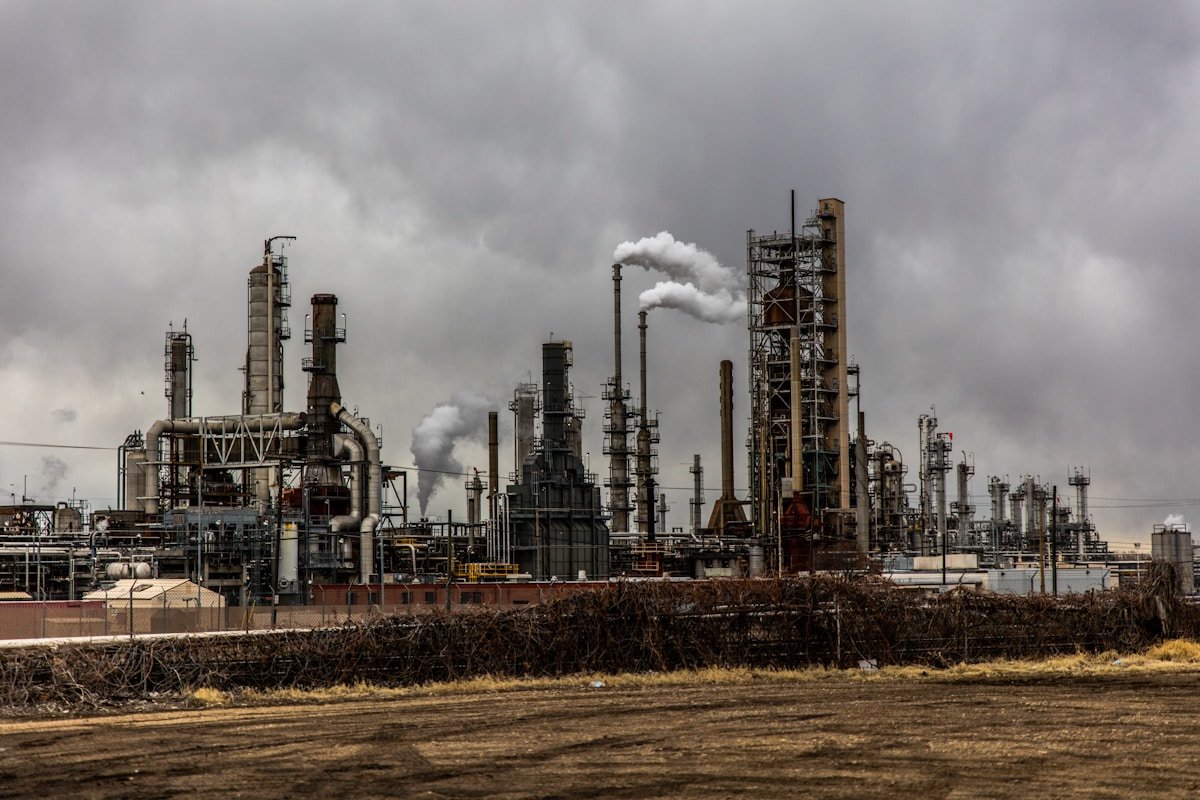 Project 54China's refining and storage complex underpins a buffer estimated at 110 to 180 days of import cover, well above the IEA's 90-day member benchmark.
No. China is an associate, not a member
China is not a member of the International Energy Agency and is therefore not bound by the 90-day stockholding obligation. IEA membership is restricted to member countries of the OECD, and China is not in the OECD. What China has instead is Association status, a partnership tier the IEA created to bring large non-member consumers into its orbit. China formally became an IEA Association country in 2015, together with India, Indonesia and Thailand, later joined by others.
Association is real cooperation, but it is not obligation. It involves joint analysis, data exchange, participation in IEA meetings and dialogue on emergency preparedness, and the IEA explicitly works with China, India, Indonesia and Thailand to promote the benefits of holding emergency stocks. What it does not include is any binding requirement to hold 90 days of cover, any audited compliance measurement, or any commitment to release stocks in an IEA-coordinated action. When the IEA calls a collective drawdown, China is under no treaty duty to take part.
This is why the phrase China exceeds the 90-day benchmark needs a footnote. China is not failing to meet an obligation, because it has no obligation. It is choosing to build a buffer that happens to be larger than the IEA minimum, for its own reasons, on its own timetable. Beijing did once frame an early SPR target around reaching roughly 90 days of net import cover by 2020, borrowing the IEA's own yardstick as a planning reference. But adopting a benchmark as a goal is not the same as being subject to it, and China's reserve policy has long since moved past that early framing.
Comfortably above 90, but the range is wide
On the most widely cited estimates, China holds between 110 and 180 days of import cover, built from a three-tier system of national strategic reserves, mandated enterprise reserves and commercial stocks totalling roughly 1.2 to 1.47 billion barrels by the end of 2025. Against a 90-day benchmark, that is a clear and consistent overshoot: even the low end of the range sits well above the IEA minimum, and the high end is roughly double it.
The width of that range is the real story. A figure that swings from 110 to 180 days is not a precise measurement; it is a spread of outside estimates that disagree because the inputs disagree. Analysts differ on how much crude is actually in storage, because Beijing publishes no official figure and observers reconstruct it from satellite imagery of tank farms, customs data and the gap between imports, refinery runs and apparent demand. They also differ on the denominator, and that second disagreement matters more than most readers realise.
This is where the comparison to the IEA number quietly breaks down. The IEA counts days against net imports, imports minus exports, of the previous calendar year. Many of the widely quoted China day counts are built against gross imports, or against total consumption, both of which are larger denominators than net imports. A larger denominator produces a smaller day count for the same barrels, so a headline that says China holds 90 days measured one way and 130 days measured another can both be describing the same stockpile. Comparing China's gross-import days to the IEA's net-import benchmark is not wrong so much as inexact, and it is the single most common way the comparison gets distorted.
Net versus gross is not a rounding error
For a country like China that both imports enormous volumes and re-exports refined product, the gap between gross and net imports is large, and so is the gap between the two ways of counting days. The IEA fixed on net imports for a reason: emergency stocks exist to cover the barrels a country cannot replace domestically, and re-exported product is not a claim on the national buffer. Measuring against net imports isolates the true dependency. Measuring against gross imports overstates the exposure and, mechanically, understates the days of cover.
There is a second, subtler mismatch. The IEA obligation is anchored to the previous calendar year's net imports, a backward-looking, audited figure. China's real cover in any given month depends on live import behaviour, which has been anything but steady. Through 2025 and into 2026 China ran a well-documented crude buying binge, lifting far more than it was refining and pushing barrels into storage. That means China's days-of-cover figure is a moving target that rises when it buys aggressively and would fall the moment it stopped, whereas the IEA metric is a stable annual benchmark. Comparing a volatile, self-reported-by-absence Chinese estimate to a fixed, audited IEA standard is comparing two different kinds of number.
None of this changes the headline conclusion that China holds more than 90 days. It changes how much weight the comparison can bear. If the point is a rough reassurance that China is well stocked, the benchmark comparison is fine. If the point is a precise claim that China holds, say, exactly 60 more days than the IEA requires, the comparison cannot support that, because the two figures are not measured on the same axis.
The asymmetry matters more than the number
For anyone selling into, competing with, or planning around China's energy system, the useful insight is not that China clears 90 days. It is the structural asymmetry between how China's buffer works and how the IEA's works. IEA members hold stocks that are audited, coordinated and releasable on a collective decision. The barrels are visible, the rules are known, and a release is a multilateral event that the market can anticipate. China's buffer is the opposite on every axis: opaque, unilateral and discretionary. No one outside Beijing knows the true level, no treaty governs its use, and a drawdown or a pause in buying is a sovereign decision that arrives without notice.
That asymmetry cuts two ways for the market. It makes China a source of demand volatility, because its stockpiling swings move seaborne crude flows in ways that are hard to forecast, as the 2025 buying binge showed. It also makes China a potential shock absorber that operates on its own logic rather than the IEA's, so in a genuine supply crisis you cannot assume China will release in concert with IEA members, or at all. The 2026 stress test, when IEA members drew down together, underlined the point: the coordinated response ran through the IEA system, and China was not part of that mechanism.
The practical takeaway for suppliers and marketers is to treat the 90-day comparison as a headline, not a plan. Use it to establish that China is deeply stocked and unlikely to be forced into panic buying by a short disruption. Do not use it to model China's behaviour as if it followed IEA rules, because it does not. The number tells you China has options. The asymmetry tells you China will exercise them on its own terms, and that is the fact worth building into any commercial or risk assessment that touches Chinese demand.
India is the clearest live test of the benchmark: about 9.5 days of cover against the IEA's 90. We track it in India builds its oil buffer, and the measurement problem in why every estimate disagrees. The benchmark binds IEA members. It does not bind China, and this dossier explains why.
Listen & take it with you
Prefer audio, or need the deck for an internal review? The full briefing is available as a podcast episode and a downloadable slide presentation.
China clears the IEA's 90-day benchmark but sits outside the system. How do you read that?
Frequently asked
No. The 90-day stockholding obligation applies only to members of the International Energy Agency, and China is not a member. China participates through the IEA's Association programme, which involves cooperation and data sharing but carries no binding requirement to hold any particular level of stocks. China's decision to build a large buffer is voluntary and set on its own terms. For the wider picture of China's stockpile, see our dossier on how many days of supply China holds.
On nearly every credible estimate, yes. China is thought to hold between 110 and 180 days of import cover, comfortably above the 90-day minimum the IEA sets for members. The caveat is that the two figures are not measured identically: the IEA counts days against net imports, while China's figures are often quoted against gross imports or total demand, so the size of the overshoot is less precise than it appears.
Three reasons. China is not bound by the IEA rule, so it clears a benchmark it was never required to meet. The IEA measures days against net imports of the previous year, whereas China's headline days are frequently calculated against a larger denominator, which changes the day count for the same barrels. And the IEA verifies members' stocks through audited monthly reporting, while China publishes no official figure, so its number is an outside estimate rather than a confirmed level.
Net imports are total imports minus exports; gross imports ignore the re-exported barrels. Emergency stocks exist to cover the oil a country genuinely cannot replace, which is the net figure, so the IEA counts days against net imports. Because China imports heavily and re-exports refined product, its gross and net figures diverge, and days counted against gross imports come out lower than days counted against net imports for the same stockpile.
There is no treaty requiring it to. When IEA members carried out their largest ever coordinated release during the 2026 disruption, that action ran through the IEA emergency system, of which China is not part. China may choose to draw down or slow its buying in a crisis, but it does so unilaterally and on its own logic, not in concert with an IEA-coordinated response. For how that emergency system works, see our briefing on the IEA's 2026 emergency oil release.
Get the next intelligence drop
Join energy and industrial leaders getting our marketing, AI-growth and revenue-architecture intelligence, direct, no filler.
You're on the list
Welcome to The Energy Growth Brief, watch your inbox for the next dispatch.