


OPEC+ 2027 Baselines: The Capacity Audit Explained
OPEC+ is replacing years of political horse-trading over quotas with an independent audit of what each member can actually pump, and the result will reset the supply map that every energy seller plans against.
- OPEC+ approved a mechanism in November 2025 to reassess every member's maximum sustainable capacity and use it as the reference for 2027 production baselines, the numbers quotas are set from.
- DeGolyer and MacNaughton, a Dallas-based petroleum consultancy, audits 19 of the 22 members; Russia and Venezuela use a non-US firm and Iran's baseline is the average of its August, September and October 2026 output.
- The assessment runs January to September 2026 and then repeats annually from each March, so baselines become a rolling, measured process rather than a one-off negotiation.
- The reform is a direct answer to years of baseline disputes, from the UAE's 2021 grievance to persistent overproduction by members whose negotiated quotas no longer matched their real capacity.
- For energy B2B sellers the audit sets off a race to prove capacity, which pulls upstream capex and oilfield-services demand toward members chasing a bigger baseline and tells you which producers will have real headroom to buy.
From negotiated numbers to an audited one
At its 30 November 2025 meeting OPEC+ held group output steady for 2026 and, more consequentially, agreed a mechanism to reassess the maximum sustainable production capacity of its members and use those figures as the baselines for 2027 quotas. As Argus and CNBC reported, one firm will assess the capacity of 19 of the 22 members, with separate treatment for the sanctioned producers. The change sounds technical, but it rewrites the foundation the whole quota system stands on.
Quotas are not set in a vacuum. Each member is allotted a share of production relative to a baseline, so the baseline is the single most valuable number a producer holds inside the group. For most of OPEC+ history those baselines were negotiated, which meant they reflected bargaining power and history as much as physical reality. The 2027 mechanism swaps that negotiation for an external measurement of what each country can actually sustain.
OPEC+ also plans to repeat the exercise every year, beginning each March, so 2028 baselines will be assessed from March 2027 onward. That cadence turns a rare, contentious event into a routine one, and it is the part most likely to change behaviour, because a member that lifts its measured capacity can argue for a larger share at the next review.
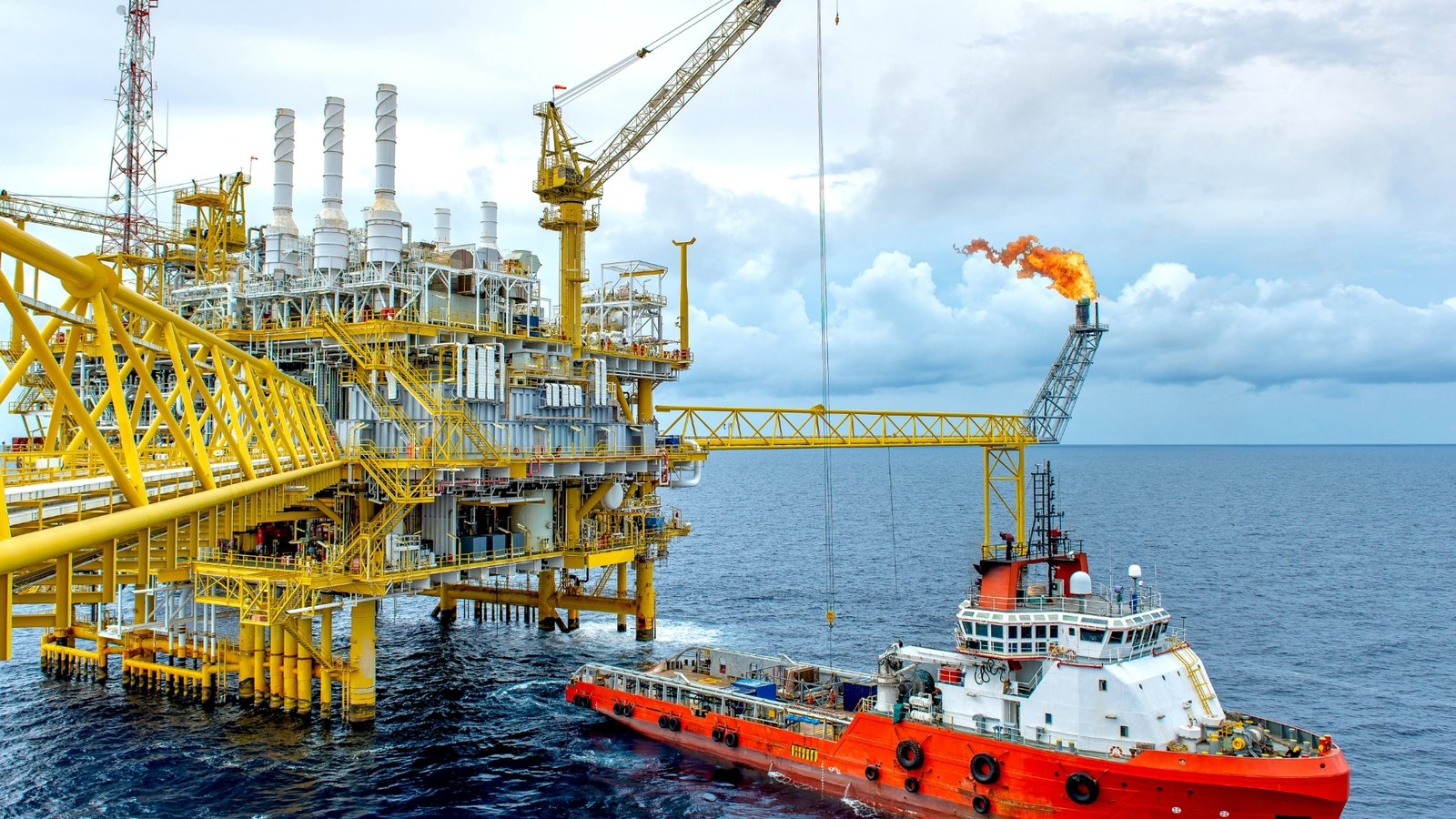 Project 54An offshore production platform flaring gas at sea, the upstream capacity that OPEC+ is now auditing to set each member's 2027 baseline.
| Element | Old approach | 2027 mechanism |
|---|---|---|
| Baseline source | Negotiated between members | Independent capacity audit |
| Who measures | Internal bargaining, secondary sources | DeGolyer and MacNaughton for 19 of 22 members |
| Sanctioned members | Same negotiated basis | Non-US firm for Russia and Venezuela; Iran on an output average |
| Cadence | Rare, disruptive resets | Annual review from each March |
The mechanics behind the number
The reference figure is maximum sustainable capacity, or MSC. OPEC typically defines it as the average maximum crude production that can be brought online within 90 days and then held for a full year, including planned maintenance. That definition matters commercially: it rewards durable, deliverable capacity, not a one-week peak, so members are being scored on capacity they can actually stand behind.
The assessments run between January and September 2026, according to Argus and IndexBox. DeGolyer and MacNaughton, a Dallas-based petroleum consultancy, handles 19 of the 22 members. Sanctions and data-sharing constraints force the carve-outs: Russia and Venezuela are assessed by a non-US firm, and Iran's 2027 baseline is set as the average of its production across August, September and October 2026 as read by secondary sources.
Using a single external auditor for most of the group is the point. It creates one consistent yardstick applied the same way to Saudi Arabia, Iraq, the UAE, Kazakhstan and the rest, which is far harder to argue with than a number each capital sets for itself. The carve-outs also show the limit of the reform: where sanctions block access, OPEC+ falls back on proxies, and those proxies will be the most disputed baselines in the set.
The reform is a fix for a decade of baseline fights
The audit did not appear from nowhere. It is the response to a structural flaw that has strained the group for years: negotiated baselines drift away from physical reality, and once they do, every quota built on them becomes contestable. When a member believes its baseline understates what it can produce, compliance erodes and trust follows.
The clearest precedent is the UAE, which in 2021 pushed hard for a higher baseline and signalled it could leave the group rather than accept a number it saw as outdated, a standoff Project 54 covered in its analysis of the UAE and the baseline mechanism. The same logic drove repeated overproduction by members whose real output ran ahead of quotas that assumed a smaller machine, a pattern visible in Kazakhstan's persistent breaches. An audited baseline is designed to defuse exactly these fights before they start.
Baseline drift
Negotiated baselines were fixed years ago and stopped matching real capacity as fields, investment and infrastructure changed. The gap between the paper number and the physical one is what generates disputes.
Compliance erosion
A member that feels short-changed by its baseline quietly overproduces. Kazakhstan and Iraq have run above quota for extended stretches, weakening the cartel's control of supply and the credibility of its cuts.
The credibility problem
Markets discount quotas they do not believe. If baselines look political, the group's guidance loses signalling power. An independent number is meant to restore that authority with lenders, ministries and traders.
A transition-era hedge
With demand forecasts split and the long-run outlook contested, OPEC+ wants a defensible, repeatable process rather than a permanent negotiation. A rolling annual audit is a way to keep the group governable through an uncertain decade.
It starts a race to prove capacity
Tie a country's future quota to its measured capacity and you hand every member a reason to lift that measurement. Reporting from Bloomberg and OilPrice framed the reform bluntly as setting off a global race for spare capacity, because a bigger audited MSC now converts directly into a bigger claim on future production and revenue.
That race is not free. Demonstrating higher sustainable capacity means spending on wells, workovers, debottlenecking and surface infrastructure, then keeping it deliverable through a maintenance cycle. The members with balance-sheet room, chiefly the Gulf producers, can play this game hardest, while those with limited spare capacity have less to show. Helima Croft of RBC has repeatedly flagged how little genuine spare capacity sits outside Saudi Arabia, which is exactly the asymmetry the audit will expose.
The near-term policy backdrop cuts the other way, and the tension is real. Jorge Leon, a former OPEC official now head of geopolitical analysis at Rystad Energy, read the November stance as one where, in his words, "stability outweighs ambition at a time when the market outlook is deteriorating rapidly." So members are being asked to invest in provable capacity for a 2027 baseline while the group holds output flat and a soft market discourages spending. That gap between long-term incentive and short-term caution is where the next round of internal friction will sit.
The audit lands as the cuts finish unwinding
The mechanism is not happening in isolation. In August 2026 OPEC+ agreed a September increase of 188,000 barrels a day, its sixth consecutive monthly rise, which completed the phased rollback of the 1.65 million barrel a day voluntary cut the core group first agreed in 2023. Eight members had already fully unwound a separate 2.2 million barrel a day layer between April and September, as CNBC reported.
That leaves roughly 2 million barrels a day of older cuts, dating to 2022, still in place and scheduled to run to the end of 2026, with sources pointing to a likely pause on further increases for the fourth quarter even though the group's statement stayed silent on it. Project 54 traced this rollback in its piece on how OPEC completed its unwind and market-share strategy.
Put the two together and the strategic picture sharpens. The group has spent 2026 returning barrels to the market and defending share, and it is simultaneously rebuilding the rulebook that will govern the next phase. The unwind decides supply this year; the audit decides who has the right to supply from 2027. For anyone selling into the sector, the second question is the more durable one.
Read the baseline map, then sell to it
Treat the audit as a demand signal, not a policy footnote. Members racing to prove a higher MSC will spend on upstream work, and that spending is oilfield-services, equipment and engineering demand. If your buyers sit in that supply chain, the producers with the most to gain from a larger baseline, principally the Gulf NOCs, are where the capex intent concentrates over the audit window.
Use the baseline map to qualify accounts. A producer with clear headroom to grow its baseline has both the appetite and the budget to buy; a capped or sanctioned producer does not, however large it looks on paper. Knowing which side of that line an account sits on is worth more than a generic view of the oil price, and it changes how you prioritise and message.
Anchor the pitch to the mechanism, not the rumour. In a market thick with quota speculation, a seller who can explain what MSC means, when the audit reports, and how a baseline translates into buying power sounds like a partner who understands the customer's world. Cite the dated OPEC+ decision, name DeGolyer and MacNaughton as the auditor, and show you can tell a member's structural position from a monthly headline. That is how you earn trust with a technical buyer in a politically charged market.
Listen & take it with you
Prefer audio, or need the deck for an internal review? The full briefing is available as a podcast episode and a downloadable slide presentation.
For your energy B2B planning, which part of the OPEC+ baseline reform matters most?
Frequently asked
It is a system, approved by OPEC+ in November 2025, that uses independent audits of each member's maximum sustainable production capacity to set the baselines from which 2027 quotas are calculated. It replaces baselines that were previously negotiated between members with a measured, externally assessed number.
DeGolyer and MacNaughton, a Dallas-based petroleum consultancy, is assessing 19 of the 22 OPEC+ members. Because of sanctions, Russia and Venezuela are assessed by a non-US firm, and Iran's 2027 baseline is set as the average of its production in August, September and October 2026 as read by secondary sources.
MSC is OPEC's reference for capacity: the average maximum crude production that can be brought online within 90 days and then sustained for a full year, including planned maintenance. It measures durable, deliverable capacity rather than a short-lived production peak.
Negotiated baselines had drifted away from members' real capacity, which fuelled disputes such as the UAE's 2021 grievance and persistent overproduction by members including Kazakhstan. An independent, repeatable audit is designed to make baselines defensible, restore compliance, and give the group's guidance more credibility.
Baselines set the ceiling on each member's legitimate output for years, so the audit steers where upstream capital and oilfield-services demand flow and shows which producers have genuine headroom to grow and buy. Sellers can use the baseline map to qualify accounts and to anchor their messaging to a measured mechanism rather than quota rumour.
Get the next intelligence drop
Join energy and industrial leaders getting our marketing, AI-growth and revenue-architecture intelligence, direct, no filler.
You're on the list
Welcome to The Energy Growth Brief, watch your inbox for the next dispatch.