


ما هي الطاقة الفائضة لمنظمة أوبك+، ولماذا هي مهمة في عام 2026؟
Updated 27 October 2026. The cushion did not just shrink, it effectively disappeared. The EIA's September outlook put OPEC surplus production capacity at about 0.02 million barrels a day, the UAE left OPEC on 1 May 2026, and Brent averaged 114 dollars in September. Here is what spare capacity means, who actually holds it now, and why a buffer this thin changes how the price behaves.
- Spare capacity is production available within about 30 days and sustainable for about 90, without new investment. It is a deliverability measure, not a reserves measure.
- The EIA's September 2026 outlook forecast OPEC surplus crude oil production capacity at about 0.02 million barrels a day, effectively nil, recovering toward about 2.3 million only in 2027.
- The UAE left OPEC on 1 May 2026 after 59 years, taking about 4.2 million barrels a day of effective capacity outside the group. OPEC's share of world crude production fell from 35 per cent to 31 per cent.
- Crude shut-ins averaged 4.8 million barrels a day in September 2026, down from a May peak of 10.9 million, and the EIA assumes 4.5 million through the fourth quarter.
- Capacity that cannot reach a buyer is not spare capacity. Attacks on the East-West pipeline, which had been moving over 5 million barrels a day of exports via Yanbu, showed that routes bind before reservoirs do.
- Brent averaged 114 US dollars a barrel in September 2026 and peaked at 131 on 15 September. The EIA forecasts 105 dollars for the fourth quarter and 84 dollars on average across 2027.
- A thin buffer does not only raise the price, it changes its behaviour: without a credible backstop, every supply headline has to be absorbed through price instead of through barrels.
- For suppliers, this is the difference between selling on cost and selling on security of supply. When the cushion is gone, buyers pay for certainty.
A deliverability measure, not a reserves measure
Spare capacity is production a country could bring online quickly, conventionally within about 30 days, and hold for around 90 days, without drilling new wells or sanctioning new projects. It is not reserves in the ground, and it is not shut-in production that is offline because it cannot reach a buyer. Those three things get conflated constantly, and in 2026 the difference between them is the whole story.
The distinction matters more than usual right now because the definition itself has become contested. Till and Considine, Commodity Insights Digest argue that the headline figure blends three separate things: genuine physical disruption to Middle East output, the reclassification of inaccessible barrels as shut-in production, and the UAE's departure from OPEC. Their conclusion is that the Gulf's productive capability has not evaporated, but that some of it has moved outside OPEC and some of it cannot currently reach market. They propose separating geological capacity from deliverable capacity.
That is the practical test to apply to any spare capacity number you read. Ask whether the barrels exist, then ask whether they can be produced within 30 days, then ask whether they can physically reach a buyer. A figure that passes the first two tests and fails the third is not a cushion. It is an asset that is temporarily stranded.
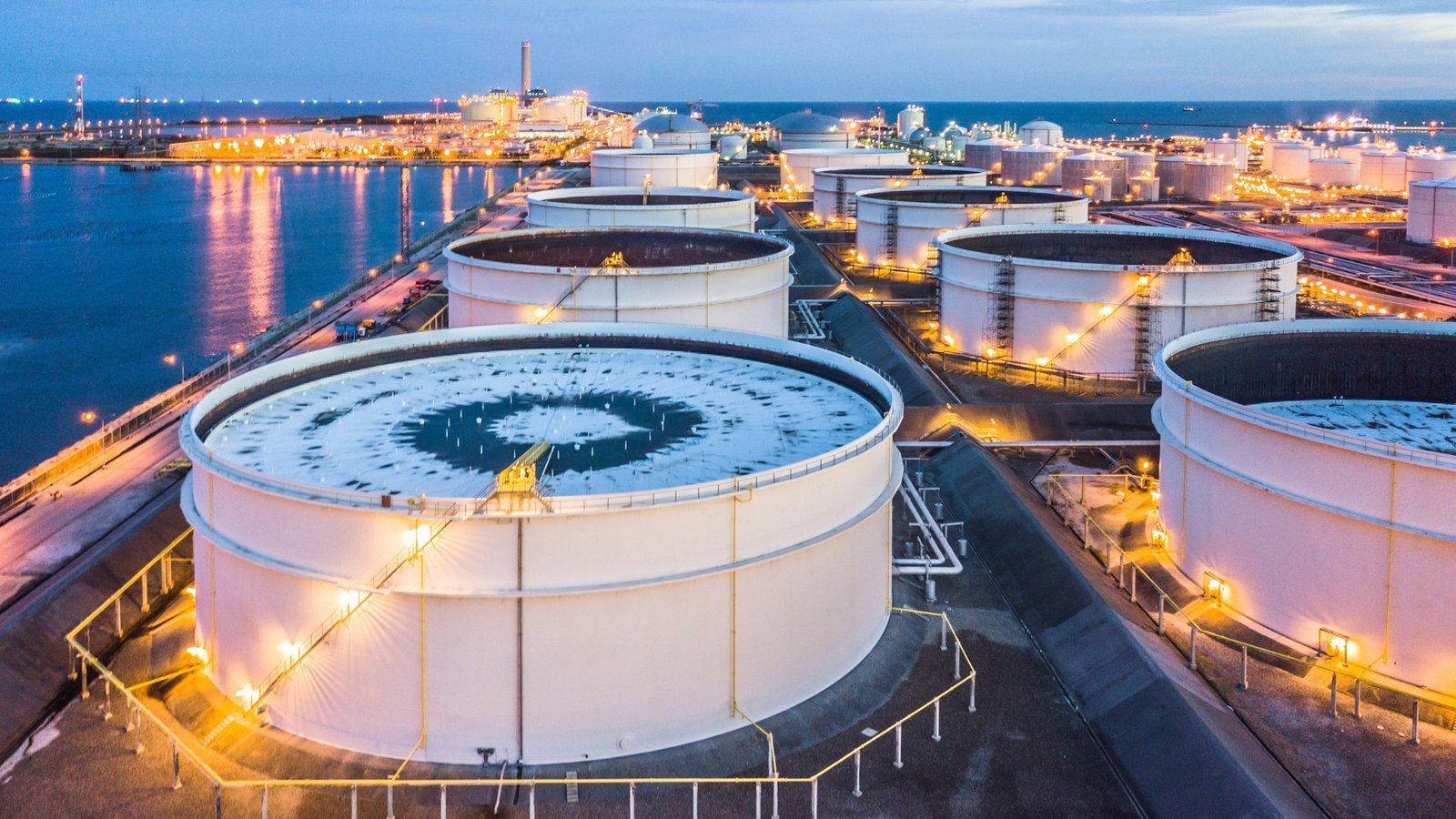 المشروع 54Spare capacity is production held in reserve and deliverable within about 30 days. In 2026 the OPEC cushion fell to roughly nothing, and routes bound before reservoirs did.
Saudi Arabia, and much less of it than a year ago
The single most important change is structural rather than geological. The UAE left OPEC with effect from 1 May 2026, after 59 years of membership, per the UAE's official announcement. According to إدارة معلومات الطاقة, it had been producing about 3.4 million barrels a day against effective production capacity of about 4.2 million, which made it the third largest capacity holder in the group behind Saudi Arabia and Iraq.
The arithmetic consequence is immediate. OPEC's share of world crude oil production fell from about 35 per cent to about 31 per cent, and OPEC+'s share from about 46 per cent to about 42 per cent, on 2025 figures. Any analysis that still counts roughly a million barrels a day of Emirati spare capacity inside an OPEC total is overstating the group's cushion by that amount. This is the most common error in current commentary, and it is worth checking in anything you read, including older analysis on this site.
That leaves Saudi Arabia as the overwhelming holder of what discretionary capacity OPEC still has. On EIA 2025 figures the kingdom held about 11.6 million barrels a day of capacity against about 9.3 million of production. The concentration is the risk: a buffer held almost entirely by one country is only as reliable as that country's own export routes, which is precisely what 2026 tested.
| حامل | Status in 2026 | Capacity position | What it means for the cushion |
|---|---|---|---|
| المملكة العربية السعودية | In OPEC | About 11.6 mn b/d capacity against about 9.3 mn b/d production, 2025 | Effectively the whole of OPEC's discretionary buffer |
| الإمارات العربية المتحدة | LEFT OPEC on 1 May 2026 | About 4.2 mn b/d effective capacity, about 3.4 mn b/d production, 2025 | No longer counts toward an OPEC total, though the barrels still exist |
| العراق | In OPEC | Second largest capacity holder after Saudi Arabia | Limited genuine spare capacity above quota |
| Rest of OPEC | In OPEC | Marginal individually | Rounding error against a 4 to 5 mn b/d disruption |
| OPEC total, EIA | September 2026 forecast | About 0.02 mn b/d surplus capacity | Effectively no cushion at all |
| OPEC total, EIA | 2027 forecast | Recovering toward about 2.3 mn b/d | Assumes trade routes and production normalise |
A reclassification, not a disappearance
The UAE announced on 28 April 2026 that it would leave OPEC with effect from 1 May, ending 59 years of membership. إدارة معلومات الطاقة records its 2025 position as about 3.4 million barrels a day of crude production against about 4.2 million barrels a day of effective capacity, third in the group behind Saudi Arabia and Iraq.
The important point is what did and did not change. The barrels did not vanish. Emirati capacity still exists, is still deliverable, and still reaches the market. What changed is that it is no longer governed by OPEC quotas and no longer counts inside an OPEC spare capacity series. So headline figures showing OPEC's cushion collapsing overstate the loss of usable capacity in the world, while understating the loss of coordinated, quota-governed capacity.
Till and Considine, Commodity Insights Digest make exactly this argument and propose four separate categories rather than one: OPEC spare capacity, non-OPEC Emirati surplus capacity, disrupted capacity, and genuinely deliverable spare capacity. For a commercial reader the practical takeaway is that OPEC's ability to coordinate a response has fallen further than the world's physical ability to produce. Those are different risks and they call for different hedges.
On the 2026 numbers, no
This is the question the market has actually been asking, and the honest answer in late 2026 is no, not from OPEC spare capacity alone. With the EIA's September outlook putting OPEC surplus capacity at about 0.02 million barrels a day, there is effectively nothing to deploy. Even the 2027 recovery toward roughly 2.3 million barrels a day would not cover a disruption of the scale already seen this year.
The scale is the point. Per the EIA Short-Term Energy Outlook, 6 October 2026, crude oil production shut-ins averaged 4.8 million barrels a day in September 2026, down from 5.8 million in August and a peak of 10.9 million in May. The EIA assumes 4.5 million a day through the fourth quarter. A 2.3 million barrel cushion, which does not yet exist, would cover roughly half of the disruption the system is already absorbing.
Routes compound it. Attacks on Saudi Arabia's East-West pipeline temporarily halted flows on the main bypass around the Strait of Hormuz, a route that had been moving over 5 million barrels a day of exports via Yanbu, with flows only partially resuming by 22 September, per the EIA Short-Term Energy Outlook, 6 October 2026. A cushion that can only be delivered through a contested chokepoint is not insurance against a disruption at that chokepoint.
Which is why the response in 2026 came from inventories rather than from production. Emergency stock releases, not spare capacity, did the stabilising work. That is a meaningfully different instrument: stocks are finite, have to be repaid, and the repayment itself becomes future demand.
It is priced as insurance, and the insurance has lapsed
A buyer of crude is purchasing two things at once: the barrels, and the assurance of receiving barrels on schedule. Those are separable goods and they are priced separately. Spare capacity is what makes the second one cheap. When a large, fast, credible reserve exists, a refiner does not need to bid aggressively for physical cargoes, hold expensive precautionary stock, or pay up for forward cover, because a shortfall can be covered within days.
Remove the buffer and that entire function has to be performed by price instead. This is why a thin cushion does not simply shift the price up by a fixed amount, it changes the price's behaviour: every supply headline now has to be absorbed through the market rather than through barrels, so volatility rises alongside the level.
The 2026 numbers show it. Per the EIA Short-Term Energy Outlook, 6 October 2026, Brent averaged 114 US dollars a barrel in September and peaked at 131 on 15 September. Global liquid fuels production for 2026 is put at 101.1 million barrels a day against consumption of 102.4 million, and inventories fell by an average of 1.9 million barrels a day in the third quarter with a further 0.7 million forecast for the fourth. A market drawing down stocks with no production cushion behind it has no shock absorber left except price.
The forward path depends on the buffer returning rather than on demand falling. The EIA forecasts Brent at 105 dollars for the fourth quarter of 2026, a 2026 average of 96 dollars, and an average of 84 dollars across 2027, easing to 74 dollars by the fourth quarter of 2027. That decline is essentially a forecast that capacity and routes normalise.
Security of supply has become the thing being bought
For anyone selling into the energy supply chain, the commercial consequence of a vanished cushion is that the buyer's priority order changes. When the market has a credible backstop, procurement optimises for cost. When it does not, procurement optimises for certainty, and it will pay for it. Availability, lead time, route redundancy and contractual firmness stop being hygiene factors and become the differentiators.
That shift is visible in what buyers now ask for. Questions about delivery guarantees, alternative routing, buffer stock and force majeure terms arrive earlier in the process and carry more weight against unit price than they did in a well-supplied market. A supplier still leading with cost per unit in this environment is answering a question the buyer has stopped asking first.
The timing matters too. The EIA expects most regional production to return to pre-conflict levels by the end of the second quarter of 2027 and forecasts a materially lower Brent across 2027. If that is right, the current willingness to pay for certainty is a window rather than a permanent change, and it closes as the buffer rebuilds. Commercial positioning built on scarcity should be planned with that expiry in mind.
استمع وخذها معك
هل تفضل الاستماع إلى التسجيل الصوتي، أم تحتاج إلى العرض التقديمي للمراجعة الداخلية؟ يتوفر العرض التقديمي الكامل كحلقة بودكاست وعرض شرائح قابل للتنزيل.
OPEC's cushion is effectively gone and the EIA expects it back only in 2027. What should a supplier actually change?
الأسئلة المتكررة
Effectively nil on the official measure. The EIA's September 2026 Short-Term Energy Outlook forecast OPEC surplus crude oil production capacity falling to about 0.02 million barrels a day, against a long-run norm of several million, with a recovery toward roughly 2.3 million barrels a day only in 2027. Two things caused it: Middle East supply disruption that shut in an average of 4.8 million barrels a day in September 2026, and the UAE's exit from OPEC on 1 May 2026, which moved about 4.2 million barrels a day of effective capacity outside the group.
Reserves are oil in the ground that is economically recoverable over years or decades. Spare capacity is production that can be started within about 30 days and sustained for about 90 without new investment. A country can hold enormous reserves and almost no spare capacity. Spare capacity is a measure of deliverability on a short timescale, which is why it moves the price and reserves generally do not.
Because it is priced as insurance rather than as supply. A large, fast, credible buffer means buyers do not need to bid up physical cargoes or hold costly precautionary stock to protect against a disruption, which caps the security premium. When the buffer is thin, that protection has to be bought through price instead, so both the level and the volatility of the price rise. The barrels themselves are often never produced.
Saudi Arabia, by a wide margin, and more dominantly than before. On EIA 2025 figures it held about 11.6 million barrels a day of capacity against about 9.3 million of production. The UAE was the third largest capacity holder in OPEC at about 4.2 million barrels a day of effective capacity, but it left the organisation on 1 May 2026, so that capacity no longer sits inside an OPEC total even though the barrels still exist.
No. It reduced OPEC's spare capacity, which is a different thing. The UAE's roughly 4.2 million barrels a day of effective capacity still exists and still reaches the market, it is simply no longer governed by OPEC quotas or counted in OPEC series. The practical effect is that OPEC's ability to coordinate a supply response fell further than the world's physical ability to produce. OPEC's share of world crude production fell from about 35 per cent to about 31 per cent.
It carries Saudi crude from the Eastern Province to Red Sea loading at Yanbu, bypassing the Strait of Hormuz. Spare capacity only calms prices if the barrels can reach buyers, so when Hormuz transit is disrupted the pipeline's capacity becomes the practical ceiling on how much Saudi spare capacity is actually usable.
احصل على التالي إسقاط معلومات استخباراتية
انضم إلى قادة الطاقة والصناعة واحصل على معلوماتنا التسويقية، ونمو الذكاء الاصطناعي، وهيكلة الإيرادات، مباشرة وبدون حشو.
اسمك مدرج في القائمة
أهلاً بكم في موجز نمو الطاقة، تابعوا بريدكم الوارد للاطلاع على النشرة القادمة.