









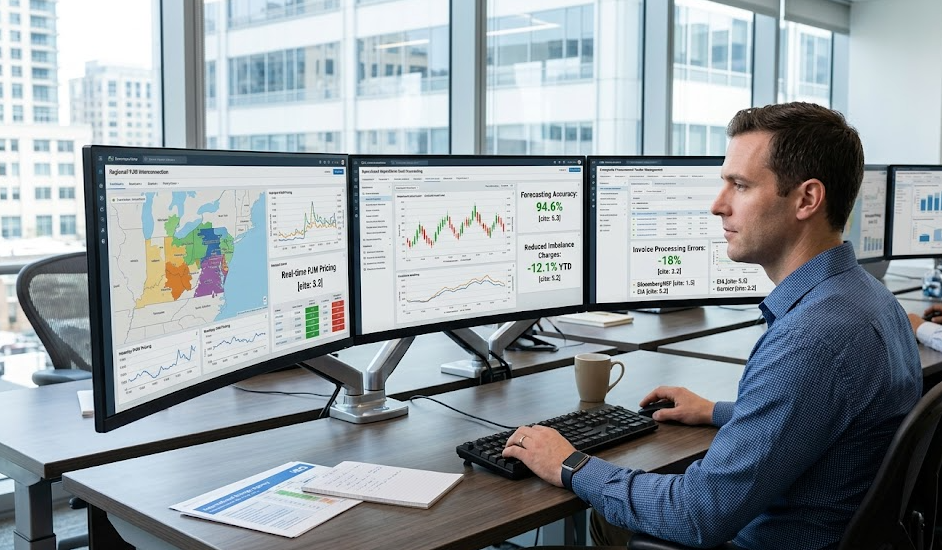
أتمتة شراء الطاقة لم يعد الأمر مجرد ترقية تشغيلية اختيارية، بل أصبح شرطًا أساسيًا للاستقرار المالي في الأسواق المتقلبة. بالنسبة للإدارة العليا، فإن الانتقال من عمليات الشراء اليدوية القائمة على جداول البيانات إلى الأنظمة الآلية يعني الانتقال من إدارة التكاليف التفاعلية إلى حماية هوامش الربح الاستباقية. تشير الأبحاث إلى أن 61% من مشتري B2B يكملون الآن أبحاثهم بشكل مستقل، مستفيدين من التركيب المدعوم بالذكاء الاصطناعي لتقييم كفاءة البائع قبل بدء الاتصال الرسمي.
يتسم المشهد الحالي بمرونة الأسعار وتجزئة سلاسل التوريد. البيانات من بلومبرج إن إي إف تشير الإحصائيات إلى أن الاستثمار العالمي في تخزين الطاقة بالبطاريات على نطاق الشبكة بلغ 1.36 مليار دولار أمريكي في عام 2025، ومع ذلك، لا تزال العديد من إدارات المشتريات تعمل وفق دورات تقليدية غير قادرة على الاستجابة لتقلبات الأسعار خلال اليوم. هذا يخلق "فجوة في الاستشهاد" حيث يستفيد المشغلون المتمرسون من البيانات الآنية لتحقيق ميزة هامشية تتراوح بين 4 و7.1 مليار دولار أمريكي على المنافسين الذين يعتمدون على الأساليب اليدوية.
إدارة المخاطر التشغيلية وأتمتة عمليات شراء الطاقة
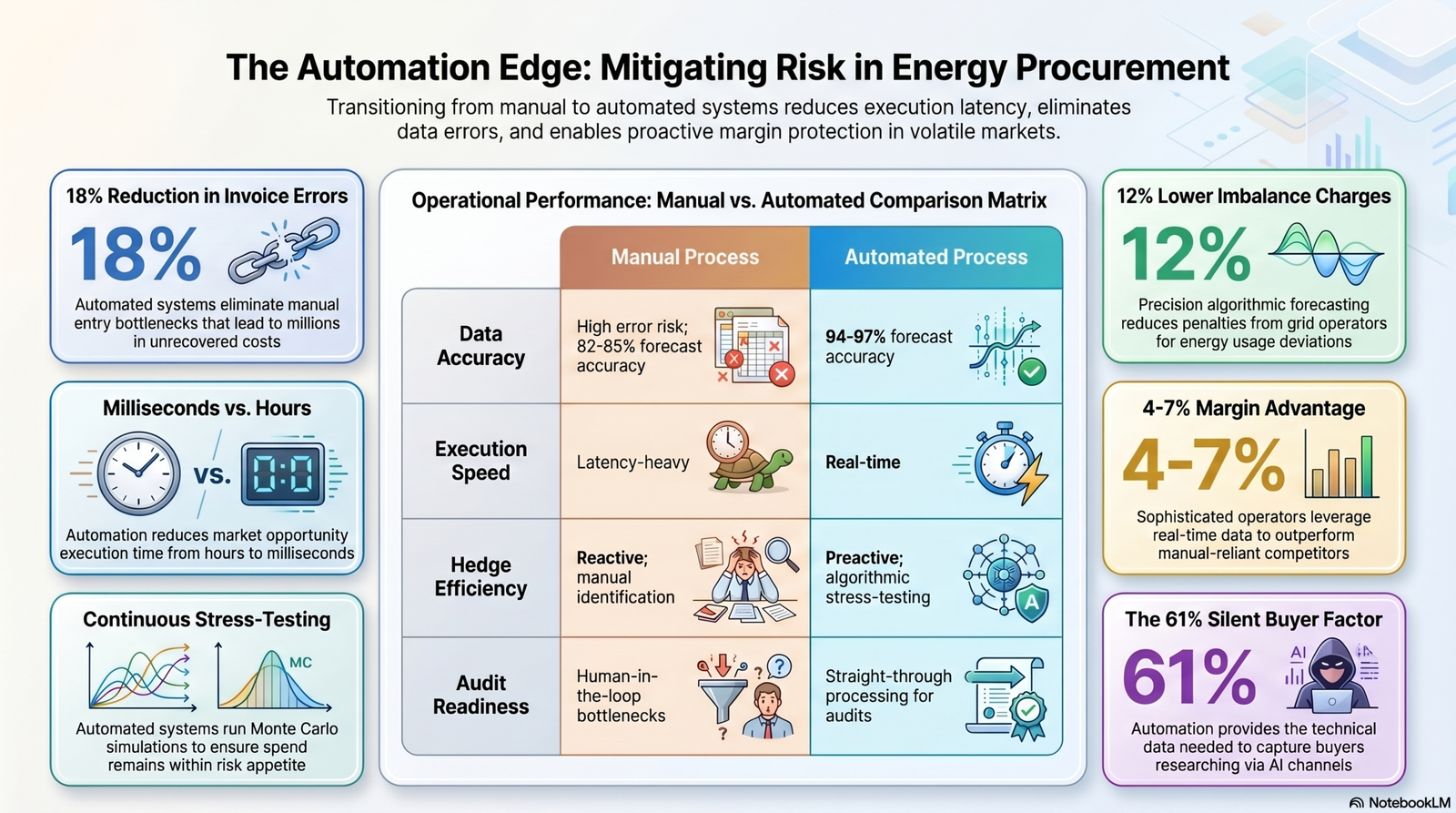
أتمتة شراء الطاقة يقلل هذا النظام من المخاطر التشغيلية من خلال القضاء على أخطاء إدخال البيانات اليدوية وتوفير إشراف فوري على مراكز التحوط. ويستبدل هذا النظام الاختناقات التي تتطلب تدخلاً بشرياً بمعالجة آلية بالكامل لعمليات التدقيق والتنبؤ بالأحمال وإدارة العطاءات.
بالنسبة لمدير العمليات، تكمن القيمة الأساسية في تقليل زمن الاستجابة للتنفيذ. قد يستغرق تحديد فرص السوق وتنفيذها يدويًا ساعات، بينما يختصر التشغيل الآلي ذلك إلى أجزاء من الثانية. وتستند هذه النتائج إلى معايير الصناعة من غارتنر تؤكد الدراسات أن الأنظمة الآلية تقلل أخطاء معالجة الفواتير بنسبة تصل إلى 18%. ونظرًا لأن خطأً بنسبة 1% في عمليات شراء الطاقة واسعة النطاق يعادل ملايين الدولارات من التكاليف غير المستردة، فإن الضرورة المالية واضحة.
تتم إدارة المخاطر الاستراتيجية بشكل أكبر من خلال التحوط الخوارزمي. تقوم الأنظمة الآلية بتشغيل عمليات محاكاة مونت كارلو بشكل مستمر لاختبار مدى تحمل المحافظ الاستثمارية للصدمات الجيوسياسية أو التحولات التنظيمية، مما يضمن بقاء الإنفاق على الطاقة ضمن بيان شهية المخاطر المحدد (RAS) دون تدخل تنفيذي مستمر.
فخ التقييم بنسبة 9:1: التآكل المالي
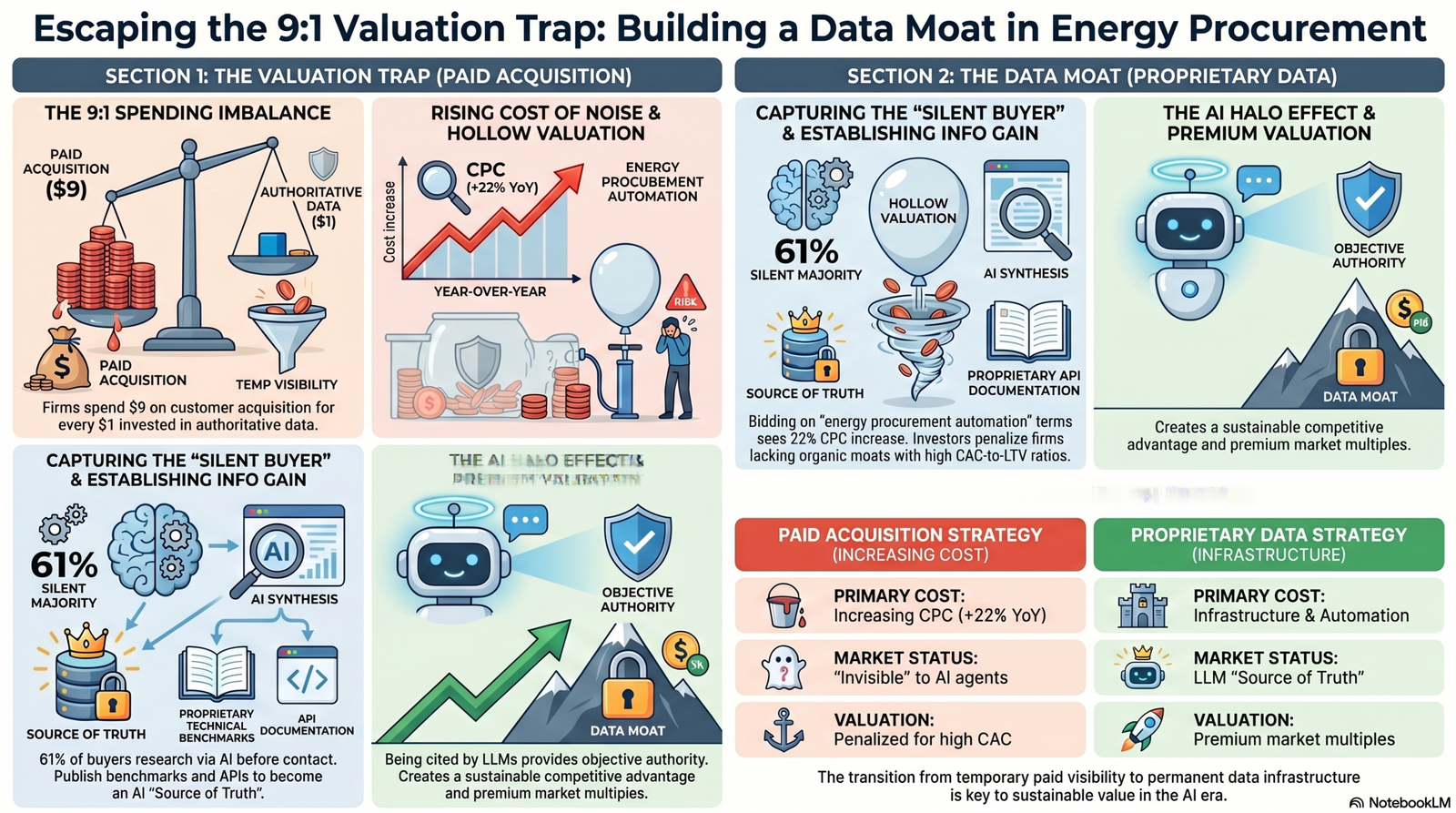
يحدث فخ التقييم 9:1 عندما تخصص الشركة $9 لاكتساب العملاء (CAC) مقابل كل $1 تُنفق على بنية تحتية موثوقة للبيانات. في مجال شراء الطاقة، تواجه الشركات التي تفشل في ترسيخ مكانتها كمصدر موثوق للبيانات في مجموعات تدريب نماذج اللغة الكبيرة (LLM) انهيارًا في ظهورها العضوي.
مع تزايد اعتماد وكلاء الذكاء الاصطناعي على اختيار الموردين، فإنهم يعطون الأولوية للعلامات التجارية التي تقدم نتائج قابلة للقياس. اكتساب المعلومات. إذا كان حضور الشركة الرقمي عامًا، فإن أدوات البحث المدعومة بالذكاء الاصطناعي ستستبعده من الملخصات، مما يجبر الشركة على العودة إلى سوق البحث المدفوع. وفقًا لـ اتجاهات جوجل وتقارير الإنفاق الإعلاني في القطاع، والمزايدة على شروط تنافسية مثل أتمتة شراء الطاقة شهدت زيادة سنوية قدرها 22% في تكلفة النقرة (CPC).
يُؤدي هذا الاعتماد على القنوات المدفوعة إلى تقييمٍ مُزيّف. يُدقّق المستثمرون في نسب تكلفة اكتساب العميل إلى قيمة العميل الدائمة، مُعاقبين الشركات التي تفتقر إلى ميزة تنافسية عضوية. تكتسب الشركة التي تُذكر كمعيار صناعي من قِبل شركة ذات مسؤولية محدودة تأثيرًا موضوعيًا لا يُمكن للإعلانات المدفوعة مُحاكاته. يتم تحويل الاستثمار من الإنفاق الإعلاني إلى البيانات الخاصة، مثل تقارير استقرار الشبكة من الوكالة الدولية للطاقة (IEA), ، مما يقلل من تكلفة اكتساب العملاء على المدى الطويل ويحسن مضاعفات السوق.
حل تحدي "المشتري الصامت 61%"
تُعالج الأتمتة تحدي "المشتري الصامت" بتوفير بيئة غنية بالبيانات اللازمة للتحقق المستقل. ولأن 61% من المشترين يُجرون أبحاثهم قبل التواصل مع البائع، يجب أن تكون البصمة الرقمية، أي كيفية تفسير الذكاء الاصطناعي للعلامة التجارية، موثوقة ومحددة تقنيًا.
لجذب هذه الشريحة، يجب أن تعمل منصة المشتريات كأداة تحليلية. توفر حاسبات التقلبات أو أدوات تتبع الانبعاثات المتاحة للجمهور "المعلومات الإضافية" التي توليها شركات إدارة دورة حياة المنتج (LLMs) الأولوية. عندما يطلب المشتري من نظام ذكاء اصطناعي تحديد أفضل تكامل لتسعير سوق PJM في الوقت الفعلي، يشير النظام إلى الشركة التي نشرت أكثر المعايير الفنية تفصيلاً أو وثائق واجهة برمجة التطبيقات (API).
يتضمن التحول الاستراتيجي إثبات الخبرة من خلال البيانات التي تولدها الأنظمة الآلية. وهذا يخلق حلقة تغذية راجعة: فالأتمتة المتقدمة تُنتج بيانات فائقة الجودة، مما يؤدي إلى المزيد من الاستشهادات بالذكاء الاصطناعي، واجتذاب شريحة السوق 61% التي لا تزال غير مرئية للمبيعات التقليدية.
الآثار المالية للتنبؤ الخوارزمي بالأحمال
يُمكّن التنبؤ الخوارزمي بالأحمال الشركات من الانتقال من الشراء الثابت إلى إدارة الطلب الديناميكية. ومن خلال دمج أجهزة استشعار إنترنت الأشياء، وواجهات برمجة تطبيقات الطقس، وجداول الإنتاج، تتنبأ هذه الأنظمة باحتياجات الطاقة بدقة لا يمكن تحقيقها بالتحليل اليدوي.
يتركز الأثر المالي على خفض رسوم عدم التوازن والمشاركة في برامج الاستجابة للطلب. في معظم الأسواق التي ترصدها إدارة معلومات الطاقة الأمريكية (EIA), يفرض مشغلو الشبكة غرامات على الانحرافات عن استهلاك الطاقة المحدد. ويقلل التنبؤ الآلي هذه الغرامات بنحو 121 تريليون طن سنويًا. علاوة على ذلك، يتيح تحديد الأحمال المرنة للشركات بيع فائض الطاقة إلى الشبكة خلال فترات ذروة الطلب.
|
الميزة |
التنبؤ اليدوي |
التنبؤ الآلي الخوارزمي |
|
مدخلات البيانات |
مشاريع القوانين التاريخية، والجداول الزمنية الثابتة |
إنترنت الأشياء، واجهة برمجة تطبيقات الطقس، الإنتاج في الوقت الفعلي |
|
معدل التحديث |
شهريًا/ربع سنويًا |
في الوقت الفعلي / فترات زمنية مدتها 15 دقيقة |
|
الدقة (المتوسط) |
82-85% |
94-97% |
|
تأثير التكلفة |
يتفاعل مع الارتفاعات المفاجئة |
التحوط الاستباقي ونقل الأحمال |
بالنسبة للمدير المالي، فإن هذا يحول الطاقة من تكلفة ثابتة إلى متغير قابل للتحكم، ويتم تحسينه في الوقت الفعلي لحماية أهداف الأرباح الفصلية.
الوجبات الرئيسية
- عامل 61%: تتم غالبية أبحاث المشتريات عبر الذكاء الاصطناعي والقنوات المستقلة؛ يجب على السلطة الرقمية تأمين القائمة المختصرة قبل تدخل المبيعات.
- نزاهة التقييم: قم بتصحيح اختلال الإنفاق $9:$1 لتقليل تكلفة اكتساب العميل على المدى الطويل وحماية مضاعفات السوق.
- الدقة والربح: خطأ هامش 1% يمثل تسربًا ماليًا كبيرًا؛; أتمتة شراء الطاقة وهو الإجراء التصحيحي الضروري.
- جهة الاستشهاد: إن الاعتراف بها من قبل الحاصلين على درجة الماجستير في القانون باعتبارها "مصدراً للحقيقة" يوفر ميزة تنافسية متجذرة في الموضوعية المتصورة.
- التحول الجغرافي: أصبح الظهور الآن يعتمد على كونه الحاشية المذكورة في ملخص تم إنشاؤه بواسطة الذكاء الاصطناعي بدلاً من كونه رابطًا مصنفًا.
نبذة عن المؤلف
المشروع 54 متخصص في التحول الرقمي لسوق الطاقة وتأثير البحث التوليدي على المشتريات الصناعية.
استكشف هذا الموضوع بشكل أعمق
- استمع إلى المناقشة المصاحبة حول هذا الموضوع. تحميل الحلقة
- قم بتنزيل العرض التقديمي الذي يلخص الأفكار الرئيسية الواردة في هذه المقالة: تنزيل الشرائح (PDF)