



Selling Through EPC Contractors: The Two Tier Project Sell
On a major energy project the operator writes the specification and the EPC contractor places the purchase order. They are different buyers, with different gates, different evidence standards and different calendars. Most supplier marketing programmes are built for one of them and then surprised by the other. Technip Energies blocks a purchase order to any supplier not on its Global Qualified Supplier List at ERP level. Saudi Aramco states plainly that registering and qualifying does not guarantee future business. Both statements are true at the same time, and the gap between them is where energy suppliers lose work they had already won on merit.
- The two gates are independent and both are mandatory. Saudi Aramco requires all companies supplying goods and services to be registered, and states that registering and then qualifying as an Aramco supplier does not guarantee you future business. Technip Energies requires qualification on its Global Qualified Supplier List and enforces it in software: there is no way to place a purchase order to an unqualified supplier, an ERP block. Clearing one gate tells you nothing about the other.
- Specification freezes before the buyer is appointed. Independent Project Analysis defines FEL 2 as the stage that narrows alternatives to a single selected option and FEL 3 as detailed scope and control grade estimates before funds authorisation. IPA also reports that more than 30 per cent of all projects proceed through that gate with incomplete FEL 2. Technical persuasion that arrives after the EPC award is arriving after the decision it was meant to influence.
- The contractor tier scores you on two things. Technip Energies' published Supplier Performance Indicator is the average of per cent on time delivery and per cent quality performance. Nothing in the published handbook scores innovation, lifecycle cost or technical differentiation. Those arguments belong at the operator tier, and a supplier whose entire proof library is performance and innovation is optimised for only half the sale.
- Standards conformance is the one asset that works on both tiers at once. IOGP's JIP33 programme has published 60 standardised equipment specifications, sponsored by 12 operators including Aramco, Shell, bp, TotalEnergies, Equinor, ExxonMobil, PETRONAS, Chevron, ConocoPhillips, Eni, Petrobras and Woodside, and in 2025 removed all remaining company specific requirements. PETRONAS reports adoption worth at least MYR 250 million with estimated cost optimisation of 10 to 15 per cent. Against the pre standardisation baseline IOGP measured in 2013, over 8,000 referenced standards from more than 180 organisations, a named JIP33 specification number is a procurement shortcut rather than a marketing claim.
- The contractor tier has consolidated hard and that is a counterparty risk, not just news. Petrofac entered administration on 27 October 2025 and was delisted the following day. Wood was acquired by Sidara, completing 10 March 2026 at GBP 240 million, against an approach valuing it at GBP 1.32 billion in May 2024. Saipem and Subsea7 signed their merger agreement on 24 July 2025 to form an entity with a combined backlog stated at EUR 43 billion. A supplier relationship held with three named individuals at one contractor is now a concentration exposure.
- Contractors are selective and that changes the negotiation. Paul Hastings' February 2026 analysis of GCC market conditions finds top tier contractors cherry picking opportunities and prioritising strategic partnerships, producing upward pressure on prices, fewer bids per tender, longer lead times and increased contractor selectivity and bargaining power. Fluor's backlog at 31 December 2025 was 81 per cent reimbursable and its 2025 new awards 87 per cent reimbursable. Risk is moving back toward the owner, and with it the leverage.
Because the party that approved you is not the party that buys
The structural fact sits in the contract form. Damian McNair, a partner in PwC's legal practice in Australia, states it cleanly in PwC's guidance on EPC contracts in the oil and gas sector: the contractor is responsible for all design, engineering, procurement, construction, commissioning and testing activities. And, critically for suppliers: unlike a traditional construction contract, an EPC contract usually contains a performance specification, which details the performance criteria that the contractor must meet but does not dictate how they must be met.
Read that as a commercial instruction and it says something uncomfortable. The operator has bought a result. Within the envelope of that result, the contractor chooses how to deliver it, and that choice includes which supplier's equipment goes into the plant. The supplier who has spent eighteen months persuading the operator's engineering team has persuaded the party that will not issue the purchase order.
The reverse failure is just as common and less often noticed. A supplier with an excellent relationship at the contractor, fully qualified, audited and on the vendor list, arrives at the bid stage to find the specification already written around a competitor's architecture. There is nothing the procurement manager can do about that. By then the choice has been narrowed to who can supply the thing that was specified, at what price, by when.
The practical diagnostic is a single question, and most commercial teams cannot answer it: for your top ten target projects, what is your qualification status at the operator tier and at the contractor tier, separately? A customer relationship management system that logs a project as one opportunity against one account is structurally incapable of showing which of the two gates is shut.
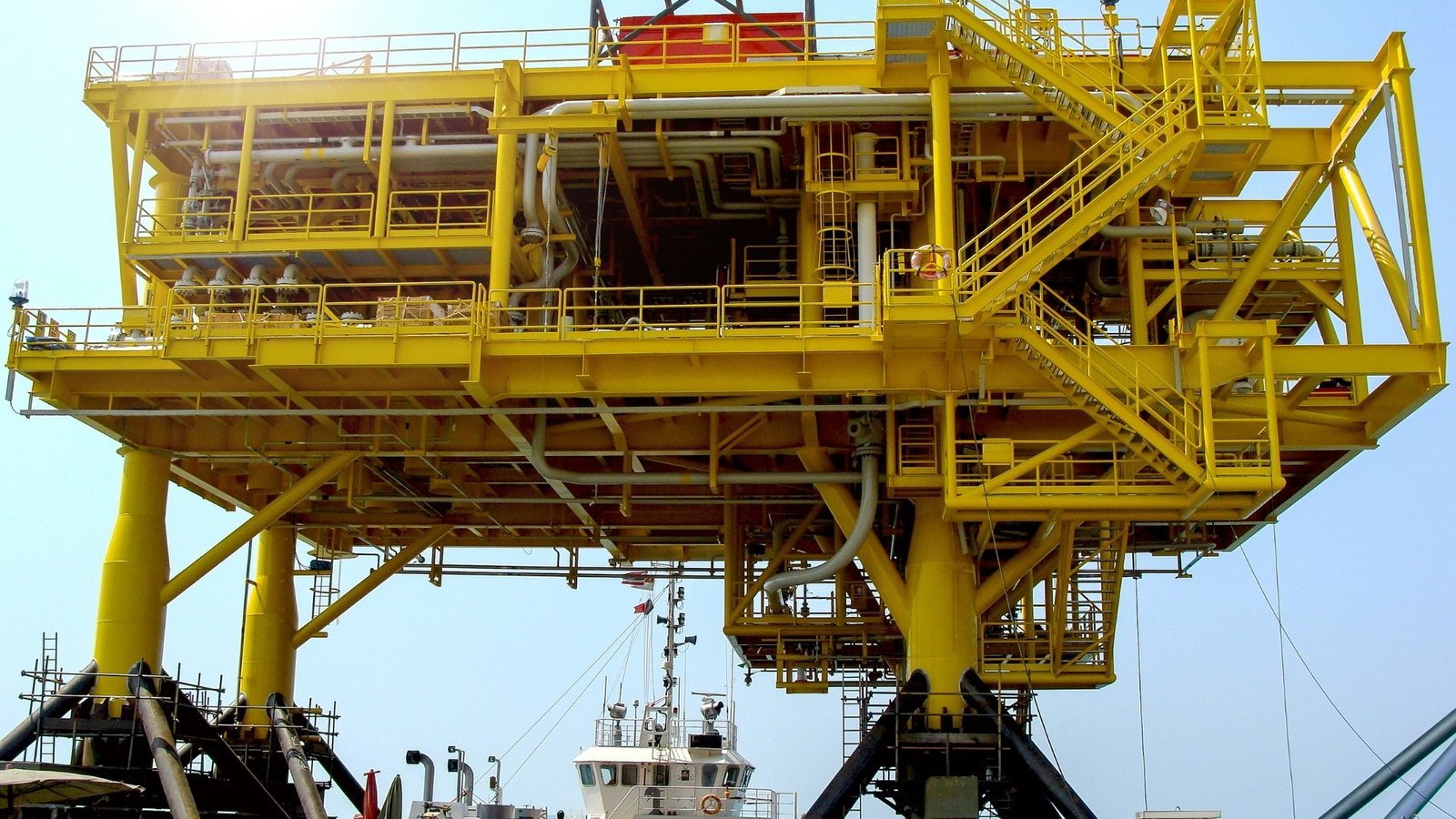 المشروع 54The module is fabricated to a specification the operator wrote and installed under a contract the EPC holds. Two buyers, one steel package.
In front end loading, before the contractor is on the project
Independent Project Analysis, the benchmarking body most operators use for front end definition, describes the sequence in three stages. FEL 1, business planning, confirms the opportunity is worth a team. FEL 2, scope development, narrows alternatives to a single selected option with initial scope definition and formal business approval. FEL 3, project definition, produces detailed scope, execution plans and control grade cost estimates before full funds authorisation, which is to say before final investment decision.
FEL 2 and FEL 3 are where the operator's engineering team writes the technical specification and, in practice, fixes the equipment class and frequently the acceptable vendor set. This happens before the EPC contract is awarded. The window for changing what gets specified closes at a point when there is no contractor to talk to.
The value of getting this right is quantified, though the best source is old and should be read as such. The Construction Industry Institute's research summary RS213-1, published 1 November 2006, found that effective front end planning improves capital costs by 10 per cent, reduces schedule by 7 per cent and reduces change orders by 5 per cent, and that sample projects with better aligned teams during front end planning performed almost 10 per cent better on cost and over 16 per cent better on schedule. IPA's own figure is the warning rather than the prize: more than 30 per cent of all projects proceed through the gate with incomplete FEL 2, which leads to underestimated capital costs.
For a supplier the implication is a calendar, not a tactic. Operator tier content, technical papers, reliability data, total cost of ownership arguments and peer reference installations, has to be in front of the engineering authority during front end loading. Our note on specification selling in FEED covers how that work is structured. After the EPC award the content job has changed entirely: it is no longer why this technology, it is why this supplier can deliver to this specification on this date.
One is a registration, the other is an audit with a software lock
At the operator tier, Saudi Aramco is the clearest published example. All companies supplying goods and services to Aramco are required to be registered, through the e-Marketplace Platform, and the documentary requirements are substantial: commercial registration, industrial licence, VAT and GOSI certificates, civil defense licence, chamber of commerce membership, acknowledgement of the suppliers code of conduct and a cybersecurity compliance certificate, alongside the In Kingdom Total Value Add localisation programme. And then Aramco says the quiet part in writing: registering and then qualifying as an Aramco supplier does not guarantee you future business with Aramco. It is a licence to be considered, not a pipeline.
At the contractor tier the gate is harder and more mechanical. Technip Energies' supplier handbook requires all suppliers to be qualified on the Global Qualified Supplier List, and enforces it in the enterprise system: there is no way to place a purchase order to an unqualified supplier, an ERP block. Qualification runs through a monthly Supplier Review Board. Before presentation to the board a supplier needs a completed questionnaire, a financial health assessment and a signed non disclosure agreement, and the handbook is explicit that if the supplier has not signed the NDA, he cannot be presented to the SRB. After the board, qualification requires an onboarding close out meeting, a quality and HSE audit onsite, desktop or by certification record, a technical audit where needed, a first purchase order inspection report and a first article inspection report where applicable. Outcomes are qualified, restricted for a limited period, or blocked. Special processes including welding, non destructive examination, heat treatment and coatings must be formally qualified by named subject matter experts before they can be performed at all.
Engineers India Limited publishes the rare thing, live enlistment statistics, which show the shape of a contractor tier vendor list from the inside. EIL lists 2,699 enlisted suppliers, 1,702 Indian and 996 foreign, with 1,370 holding ISO 45001. Enlistment runs in three stages: document review covering company profile, incorporation documents, ISO certifications, three years of audited financials, organogram, technical credentials and proven track record within the past 10 years; a physical shop survey assessing manufacturing facilities, quality systems and testing capability; then final approval. The published application fee for a foreign supplier is USD 3,500.
Note what the contractor tier is not asking for. There is no request for a technology roadmap, a sustainability narrative or a differentiation story. It is asking for audited evidence that you exist, are solvent, make things to a controlled process and have done so before. Marketing departments rarely own that evidence and rarely treat producing it as marketing work. It is.
| الأبعاد | Operator tier | EPC contractor tier |
|---|---|---|
| Who decides | Project engineering and technical authority during FEL 2 and FEL 3, plus corporate supplier registration | Global sourcing and procurement, category managers and a supplier review board. Technip Energies' SRB meets monthly |
| What they optimise for | Lifecycle cost, production assurance, standardisation and schedule certainty on the asset. PETRONAS cites 10 to 15 per cent cost optimisation from JIP33 adoption | Qualification compliance, on time delivery and defect free supply. Technip Energies scores suppliers on exactly two metrics: per cent on time delivery and per cent quality performance |
| Evidence that persuades | Technical papers, named standard conformance, field reliability data, total cost of ownership, operator peer references | Three years of audited financials, ISO and QMS or HSE certificates or audit reports, shop survey, proven track record within 10 years, first article and first PO inspection reports |
| The gate | Corporate registration. Mandatory but non committal: registering and qualifying does not guarantee you future business (Aramco) | Enlistment on the contractor vendor list. Absolute: there is no way to place a purchase order to an unqualified supplier, an ERP block (Technip Energies) |
| توقيت | Pre FID, during FEL 2 and FEL 3, when alternatives narrow to one option and the specification is written | Post FID and post EPC award, when the contractor places purchase orders against the specification |
| What they will not do | Place a purchase order, or override the contractor's qualification status | Reopen a technical specification you failed to influence before FID, or pay for lifecycle benefit that lands on the operator's profit and loss |
| Failure mode for the supplier | Winning the technical argument after the specification has frozen | Qualified but undifferentiated: on the list, compliant, competing only on price and delivery slot |
Yes, and it moved in the contractor's favour
The lump sum turnkey model is in retreat and the evidence is in the contractors' own books. Fluor reported backlog of USD 25.5 billion at 31 December 2025, of which 81 per cent was reimbursable, and 2025 new awards of USD 12.0 billion of which 87 per cent was reimbursable. Saipem's chief executive Alessandro Puliti told the FY2025 results call on 25 February 2026 that the company is much more disciplined now in the new acquisitions onshore, especially in terms of de risking of the projects, and that the portion of the contracts that are protected in terms of pricing, in terms of cost increase, are bringing us to a much more reimbursable portion rather than a pure EPC portion.
Law firm analysis says the same from the owner's side. Troy Edwards and Peter Tolson of A and O Shearman, writing in August 2025, attribute the shift to inflation, commodity price volatility, supply chain disruptions, increased demand and geopolitical instability, and note the reversal of an old assumption: historically, lump sum turnkey contracts have been favored for their perceived bankability. Ibaad Hakim, Habeeb Rahman and Elliott Hunt of Paul Hastings, writing on GCC conditions on 5 February 2026, put the consequence in one line that every supplier should read twice. Top tier contractors, they write, cherry pick opportunities and prioritize strategic partnerships, producing upward pressure on prices, fewer bids per tender, longer lead times and increased contractor selectivity and bargaining power. The same analysis records Red Sea rerouting increasing regional freight costs by 400 per cent in certain instances, with shipping delays averaging 20 days.
The supply side has also thinned. Petrofac entered administration on 27 October 2025 following the collapse of a restructuring plan that had targeted conversion of over USD 3.9 billion of liabilities, triggered in part by TenneT's termination of its 2 GW offshore wind programme, and was delisted from the London Stock Exchange the next day. Wood was acquired by Sidara, completing on 10 March 2026 at GBP 240 million, having been approached at GBP 1.32 billion in May 2024 before reporting a loss of nearly USD 1 billion at its 2024 half year. Saipem and Subsea7 signed their merger agreement on 24 July 2025, creating an entity whose combined backlog was stated at EUR 43 billion as at 31 March 2025. Our analysis of what the Saipem7 merger means for suppliers sets out the account level consequences.
Against that, the demand is real. The IEA's World Energy Investment 2026, published 28 May 2026, puts total global energy investment at USD 3.4 trillion, with natural gas investment at USD 330 billion, a rise of more than 10 per cent and the highest in ten years, driven largely by United States LNG projects, while upstream oil investment falls below USD 500 billion for a third consecutive year. The International Gas Union's World LNG Report 2026, published 7 July 2026, records 68.4 mtpa of LNG final investment decisions taken in 2025 against end 2025 liquefaction capacity of 524.5 mtpa. The money is arriving and the contractors who will spend it are fewer and choosier than they were two years ago.
Two audiences, two evidence libraries, one standards argument
Start by splitting the account. Run an operator tier programme aimed at engineering and technical authority, timed to front end loading, carrying technical papers, reliability data, lifecycle cost analysis and peer installation references. Run a separate contractor tier programme aimed at category management and supplier quality, timed to the award cycle, carrying audited financials, certification records, delivery performance data and inspection history. Measure them separately. A single pipeline number hides which gate is closed.
Then build the one asset that works on both at once. JIP33 has published 60 standardised equipment specifications and in 2025 stripped out all remaining company specific requirements, with 12 sponsoring operators. The reported benefits come from both sides of the table: Mazri Mohamed Ali, head of group technical solutions at PETRONAS, says the company has adopted JIP33 in equipment procurement to the tune of at least MYR 250 million with estimated cost optimisation of about 10 to 15 per cent and improvement in equipment delivery times; Richard Mortimer, vice president of global projects and quality at bp, describes harmonising the quality requirements for subsea trees as a big success with massive reduction in the lead time it takes to buy trees for subsea equipment; Alistair Hope, senior vice president for global engineering and projects capability at Shell, says JIP33 is already delivering benefits and we are tracking it, with better lead times on key items of equipment and cost benefits as well. Conformance to a named specification number is simultaneously a technical argument to the operator and a risk reduction to the contractor.
Lead on lead time, not price. In a market with record equipment backlogs, Baker Hughes reported Industrial and Energy Technology remaining performance obligations of USD 32.4 billion at the end of 2025 and Siemens Energy reported an order backlog of EUR 138 billion for its year to 30 September 2025, the scarce good is a delivery slot. Both tiers buy schedule certainty, for different reasons: the operator because schedule drives project economics, the contractor because liquidated damages sit on its own balance sheet.
Finally, treat framework and alliance agreements as a separate motion rather than a large deal. Shell signed a three year enterprise framework agreement with McDermott in March 2025, with two optional one year extensions, covering engineering and procurement services and integrated project management across low carbon solutions, offshore Middle East and subsea and floating facilities. Technip Energies describes the aim of its Shell global alliance, in Arnaud Pieton's words, as to offer more value creation by standardization and replication. Being designed into a replication template is worth more than winning a single bid, and it is sold earlier, to a different buyer, with different proof. The mechanics of that are closer to channel partner marketing than to tender response.
استمع وخذها معك
هل تفضل الاستماع إلى التسجيل الصوتي، أم تحتاج إلى العرض التقديمي للمراجعة الداخلية؟ يتوفر العرض التقديمي الكامل كحلقة بودكاست وعرض شرائح قابل للتنزيل.
For your top target projects, can you state your qualification status at both tiers?
الأسئلة المتكررة
They are separate registers maintained by different organisations for different purposes, and a supplier generally needs both. The operator list governs who may supply goods and services to that operator and is tied to corporate registration, compliance and often local content requirements. Saudi Aramco requires all companies supplying goods and services to be registered and states that registering and then qualifying does not guarantee you future business. The EPC contractor list governs who the contractor may issue a purchase order to on any project. Technip Energies requires qualification on its Global Qualified Supplier List and states there is no way to place a purchase order to an unqualified supplier because the ERP blocks it. The operator list makes you eligible to be specified; the contractor list makes you purchasable.
During front end loading, specifically FEL 2 and FEL 3 as Independent Project Analysis defines them. FEL 2 narrows alternatives to a single selected option and FEL 3 produces detailed scope and control grade estimates before funds are authorised at final investment decision. That is when the technical specification is written and the equipment class, and often the acceptable vendor set, is fixed. Approaching after the EPC contract is awarded means approaching after the technical decision has been made, because the contractor procures against a specification it did not write.
Documentary and audit evidence rather than persuasion. Technip Energies' published process requires a supplier questionnaire, a financial health assessment and a signed non disclosure agreement before presentation to a monthly Supplier Review Board, then an onboarding close out meeting, a quality management and HSE audit onsite, desktop or by certification record, a technical audit where needed, a first purchase order inspection report and a first article inspection report where applicable. Special processes such as welding, non destructive examination, heat treatment and coatings require separate formal qualification by subject matter experts. Engineers India Limited adds a physical shop survey of the supplier's works and requires three years of audited financials and a proven track record within the past 10 years.
Because the operators have acted collectively to remove specification variance, which converts conformance from a claim into a shortcut. IOGP's 2013 survey found over 8,000 referenced standards from more than 180 organisations inside operating companies' specifications, with the same equipment facing different inspection and test requirements project by project. JIP33 now has 60 published specifications with 12 sponsoring operators, and in 2025 removed all remaining company specific requirements. PETRONAS reports adoption worth at least MYR 250 million with 10 to 15 per cent estimated cost optimisation, and bp reports a large reduction in subsea tree lead times. Quoting a named JIP33 specification number is one of the few claims that is read the same way by an operator engineer and an EPC category manager.
More than most account plans assume. Inside eighteen months Petrofac entered administration on 27 October 2025 and was delisted the next day, Wood was acquired by Sidara completing 10 March 2026 at GBP 240 million against a GBP 1.32 billion approach in May 2024, and Saipem and Subsea7 signed a merger agreement on 24 July 2025 to combine backlogs stated at EUR 43 billion. Qualification records, relationships and framework positions do not automatically survive a change of ownership or an administration. Spreading recognition across the contractor tier, including Korean and regional players winning Middle East work such as Hyundai Engineering and Construction and Samsung E and A, is a resilience measure rather than a growth tactic.
احصل على التالي إسقاط معلومات استخباراتية
انضم إلى قادة الطاقة والصناعة واحصل على معلوماتنا التسويقية، ونمو الذكاء الاصطناعي، وهيكلة الإيرادات، مباشرة وبدون حشو.
اسمك مدرج في القائمة
أهلاً بكم في موجز نمو الطاقة، تابعوا بريدكم الوارد للاطلاع على النشرة القادمة.