



Technip Energies: Record Backlog, Broken Margin
Technip Energies booked EUR 12.7 billion of orders in six months and lifted its backlog 57 per cent to EUR 25.0 billion, the largest in its history. In the same reporting period its Project Delivery margin fell from 6.9 per cent to 3.0 per cent and it cut full year guidance for that segment from 6.5 to 7.5 per cent down to above 5.0 per cent. Both numbers are real and both matter to suppliers, because only EUR 3.7 billion of that record backlog converts in the second half of 2026 while EUR 14.4 billion lands in 2028 and beyond.
- The backlog is a record and the margin is the worst in the company's short history, in the same six months. Backlog EUR 25,035.0 million at 30 June 2026, up 57 per cent in six months. Project Delivery adjusted recurring EBIT margin 3.0 per cent, against 6.9 per cent in the first half of 2025. Group adjusted net profit halved to EUR 94.0 million from EUR 196.6 million.
- The backlog is back loaded and the headline number misleads on timing. Phasing disclosed at 30 June 2026: EUR 3,731.0 million in the second half of 2026, EUR 6,890.7 million in 2027 and EUR 14,413.3 million in 2028 and beyond. That is 58 per cent of a record backlog landing after 2027. Any supplier capacity plan built off the EUR 25 billion headline is roughly two years early.
- The cause is disclosed and it is geographic. Pieton's statement with the first half results on 30 July 2026: EBITDA margins were impacted by operational and contractual challenges linked to the situation in the Middle East. The company's affected sites are QatarEnergy North Field East and North Field South, Marsa LNG in Oman and Ruwais LNG in the UAE. It disclosed no project specific charge amounts, only segment level impact, plus EUR 500 to 600 million of revenue deferred beyond 2026.
- Recovery of costs is a commercial judgement, not a mechanical entitlement. Management points to strong contractual protections while saying extent and timing remain uncertain. Pieton on the results call: we are being extremely careful to make sure that through the cost recovery, we don't appear as wanting to take advantage of a situation. That is a decision to protect a client relationship at the expense of near term margin, and it is worth reading as a signal about how this contractor behaves under stress.
- The strategic response is productisation, and it changes how suppliers get in. SnapLNG 1.5, launched 17 September 2026 with Honeywell Technologies and Siemens Energy, is a standardised, fully modular, electrified 1.5 mtpa train claimed to cut schedule by up to two years. Commonwealth LNG is six identical trains. The Ecovyst Advanced Materials and Catalysts business was acquired for USD 556 million, completing 3 January 2026. On a productised platform, technology selection happens once, not per project.
- The qualification gate is hard and the window is now. Technip Energies' published supplier process gates entry through a monthly Supplier Review Board onto a Global Qualified Supplier List, with no way to place a purchase order to an unqualified supplier because the ERP blocks it. With the backlog converting in 2028 and beyond, a supplier that starts qualifying when the award is announced is years too late.
The best order book and the worst margin, together
Technip Energies reported first half 2026 results on 30 July 2026. Adjusted revenue was essentially flat at EUR 3,653.0 million against EUR 3,646.4 million a year earlier. Below that line almost everything deteriorated. Project Delivery adjusted recurring EBIT fell to EUR 84.3 million, a 3.0 per cent margin, from EUR 187.5 million and 6.9 per cent. Technology, Products and Services held up far better at EUR 95.1 million and 10.7 per cent, against 11.3 per cent. Group adjusted recurring EBITDA fell to EUR 212.3 million, 5.8 per cent, from EUR 319.0 million and 8.7 per cent. Adjusted net profit halved to EUR 94.0 million and diluted adjusted earnings per share fell from EUR 1.07 to EUR 0.54.
The order book went the other way, spectacularly. Order intake was EUR 12,728.9 million against EUR 2,653.8 million in the first half of 2025, a book to bill of 3.5 times. Backlog at 30 June 2026 reached EUR 25,035.0 million, up 57 per cent from EUR 15,955.4 million at 31 December 2025, split EUR 23,529 million in Project Delivery and EUR 1,505 million in TPS. The balance sheet is strong: gross cash of EUR 4.8 billion, a record, gross debt of EUR 1.4 billion and total liquidity of EUR 5.6 billion. Free cash flow was EUR 957.0 million, or EUR 183.0 million excluding working capital movements.
Guidance was cut where the damage is. Project Delivery EBITDA margin guidance for 2026 fell to above 5.0 per cent from 6.5 to 7.5 per cent, itself already reduced at the first quarter from around 8 per cent. Corporate costs rose to EUR 65 to 75 million from EUR 50 to 60 million, driven mainly by a non cash employee share plan charge of around EUR 16 million, and the effective tax rate guidance rose to 30 to 32 per cent. TPS guidance moved the other way, to around 15 per cent EBITDA margin from around 14.5 per cent. Revenue guidance was unchanged.
For context on the prior year: FY2025 adjusted revenue was EUR 7,186.5 million with adjusted recurring EBIT of EUR 514.6 million, a 7.2 per cent margin, and adjusted net profit of EUR 367.1 million. The company proposed a dividend of EUR 1.00 per share, up 18 per cent, and ran a EUR 150 million buyback in 2026, completed at an average price of EUR 36.64.
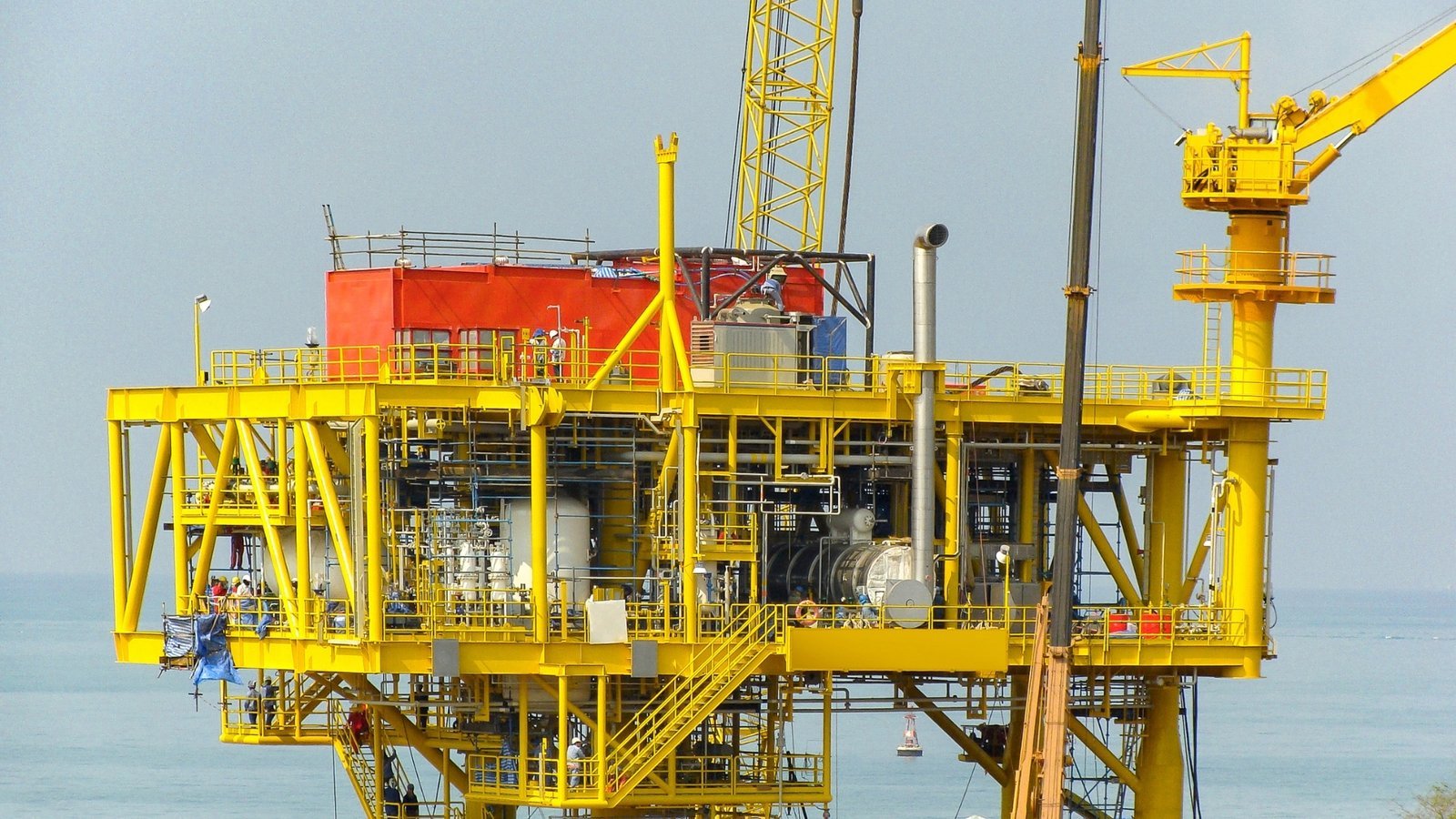 المشروع 54Four of the company's largest live scopes sit in one region. That concentration is what turned a record order book into a three per cent margin.
| متري | Value | Period or date | مصدر |
|---|---|---|---|
| Backlog | EUR 25,035.0 million, about 3.5x FY2025 revenue | 30 يونيو 2026 | H1 2026 results, 30 July 2026 |
| Order intake, book to bill 3.5x | EUR 12,728.9 million | H1 2026 | H1 2026 results, 30 July 2026 |
| Adjusted revenue | EUR 3,653.0 million, versus EUR 3,646.4 million | H1 2026 | H1 2026 results, 30 July 2026 |
| Project Delivery adjusted recurring EBIT margin | 3.0 per cent, versus 6.9 per cent | H1 2026 | H1 2026 results, 30 July 2026 |
| TPS adjusted recurring EBIT margin | 10.7 per cent, versus 11.3 per cent | H1 2026 | H1 2026 results, 30 July 2026 |
| Backlog converting 2028 and beyond | EUR 14,413.3 million of EUR 25,035.0 million, 58 per cent | at 30 June 2026 | H1 2026 results, 30 July 2026 |
| Gross cash and total liquidity | EUR 4.8 billion and EUR 5.6 billion | 30 يونيو 2026 | H1 2026 results, 30 July 2026 |
| 2026 Project Delivery EBITDA margin guidance | Above 5.0 per cent, cut from 6.5 to 7.5 per cent | issued 30 July 2026 | H1 2026 results, 30 July 2026 |
Gulf execution, and a deliberate choice not to press the claim hard
The company is specific about where the damage sits. Its first half disclosure names the affected sites: QatarEnergy North Field East, where the first process train is in commissioning and the second in completion, QatarEnergy North Field South, where engineering is substantially complete and piping installation is ongoing, Marsa LNG in Oman, where piping erection has started, and Ruwais LNG in the UAE, where civil works are well advanced. Those are four of its largest live scopes and they sit in one region.
The regional backdrop is severe and independently reported. Qatar has been issuing monthly force majeure extensions on LNG cargoes, with cancellations extended through November and early December 2026 as reported on 28 September 2026, following damage to export infrastructure earlier in the year, and Strait of Hormuz flows remain well below pre conflict levels. For a contractor with mobilised sites and a global logistics chain running through that geography, the cost appears as delay, rerouting, security and business continuity rather than as a single event.
Pieton's framing at the results was measured: T.EN's first half performance reflected a particularly complex operating environment. While we delivered stable year over year revenues, EBITDA margins were impacted by operational and contractual challenges linked to the situation in the Middle East. He added that all personnel are safe and well and projects remain fully mobilized, with activity stabilizing through the second quarter, and that the company had taken a prudent assessment reflecting the continuation of the conflict and its associated disruption and secondary cost impacts.
The most commercially revealing line came on the call. Asked about cost recovery, Pieton said the company is being extremely careful to make sure that through the cost recovery, we don't appear as wanting to take advantage of a situation. Management points to strong contractual protections while stating that extent and timing remain uncertain. Read plainly, that is a contractor choosing to absorb near term margin rather than press claims aggressively against a client, QatarEnergy, that has awarded it North Field East, North Field South and North Field West. It is a defensible long term judgement and an expensive short term one, and suppliers negotiating variation claims down the chain should expect the same discipline applied to them.
An LNG award record no other contractor matched in 2026
The order intake is concentrated in three large LNG awards. On 25 February 2026 QatarEnergy awarded the North Field West EPCC contract, 16 mtpa across two mega trains of 8 mtpa each, to a consortium led by Technip Energies with Consolidated Contractors Company and Gulf Asia Contracting. Saad Sherida Al Kaabi, Qatar's minister of state for energy affairs and QatarEnergy president and chief executive, described it as an important addition to the world's largest LNG expansion project. On 15 May 2026 Commonwealth LNG issued full notice to proceed on a major EPC contract for 9.5 mtpa across six identical liquefaction trains in Cameron Parish, Louisiana, using the SnapLNG by T.EN productised solution. On 8 June 2026 the Eni led Mozambique Rovuma Venture awarded an EPCIC contract for Coral Norte, a floating LNG unit of roughly 3.6 mtpa, to a consortium of Technip Energies, JGC and Samsung Heavy Industries.
Note the structure. Every one of these is a consortium. Technip Energies leads and integrates rather than self performing everything, and its partners, Chiyoda on North Field East, JGC and Samsung Heavy Industries on Coral Norte, are also its competitors on other bids. Pieton was explicit about the competitive environment on the results call: it is competitive, it is certainly not sole source, and pace will be a differentiator.
Outside LNG the pattern is broader than the headline suggests. In January 2026 BPCL awarded two contracts in India, a polypropylene EPCC at Bina and engineering and procurement services management for India's first 3 mmtpa petro resid fluid catalytic cracking unit at Mumbai. On 27 July 2026 the company signed a strategic framework agreement with EDF to support delivery of France's EPR2 nuclear new build programme, a new vertical. On 9 June 2026 it announced the Rebound joint venture with Airbus, Safran and Tereos for around 160,000 tonnes a year of sustainable aviation fuel at the Port of Dunkirk, with final investment decision following engineering studies. On 29 September 2026 Petkim awarded licensing, process design package and front end engineering for a world scale mixed feed ethylene cracker in Turkiye.
One award is worth a supplier's attention for what it says about the shape of the business. On 26 August 2026 Larsen and Toubro Energy Hydrocarbon appointed Technip Energies to provide detailed engineering services for a major ADNOC Offshore project. That is Technip Energies working as engineering subcontractor to an Indian EPC lead. With 16 of its offices in Asia, a supplier strategy anchored only on Paris and Houston is aimed at the wrong buildings.
Earn more with less balance sheet risk, through products and licences
The financial framework has not changed. At its capital markets day on 21 November 2024 the company set 2028 targets of Project Delivery revenue above EUR 6.0 billion at around 8.5 per cent EBITDA margin, TPS revenue above EUR 2.6 billion at around 14.5 per cent, free cash flow conversion of 70 to 85 per cent of EBITDA excluding working capital, and cumulative 2024 to 2028 free cash flow of EUR 2.2 to 2.6 billion, with a dividend policy of 25 to 35 per cent of free cash flow. Management reaffirmed the implied target after the downgrade. Pieton on the first half call: we expect meaningful Project Delivery margin recovery in 2027, and our portfolio remains compatible with an 800 million euro EBITDA target for 2028. He immediately qualified it: it's probably a little bit wise for the time being to exercise caution on our margin assumptions for 2027.
What has changed is the shape of the 2026 move set, and it is consistent to the point of being a statement. Ecovyst Advanced Materials and Catalysts, acquired for USD 556 million and completed on 3 January 2026, brings advanced silicas and the Zeolyst International joint venture into TPS. SnapLNG 1.5, launched on 17 September 2026 with Honeywell Technologies and Siemens Energy, is a standardised, fully modular, electrified 1.5 mtpa LNG train with extensive offsite fabrication, claimed to shorten schedule by up to two years. Nerea is a standardised modular plastic chemical recycling solution developed with Alterra and Neste. On 21 September 2026 the company signed a licensing collaboration agreement with SABIC to become worldwide licensor of SABIC's CTR LDPE technology. The EDF agreement embeds Technip Energies people into EDF project and construction management roles rather than taking lump sum construction risk.
Every one of those is a way to earn money without adding lump sum EPC exposure. Set against a half year in which lump sum exposure is precisely what cost the company its margin, that is not a coincidence. Loic Chapuis, president of project delivery and services, framed the SnapLNG proposition in owner terms: SnapLNG 1.5 gives project owners a faster, more predictable route to new LNG capacity. The unstated corollary is that it gives the contractor a more predictable cost base too.
The company does not disclose LNG as a share of backlog or revenue, so the concentration should be described rather than quantified. Its own counter metric is geographic: more than 75 per cent of new awards over the last 24 months originated outside the Middle East. That answers a question about geography, not about commodity, and the 2026 award record is overwhelmingly LNG. Third party views are more cautious than management's. J.P. Morgan downgraded the stock from overweight to neutral on 6 August 2026, cutting its price target from EUR 44 to EUR 35, citing margin recovery now weighted increasingly toward 2028 and lower near term earnings visibility rather than a deterioration in the underlying franchise. Those are analyst estimates, not company guidance, and should be read as such.
Qualify now, sell to the platform, and plan capacity for 2028
Start with the timing, because it is the most common error. The record backlog is a 2028 to 2030 revenue story. EUR 3,731.0 million converts in the second half of 2026, EUR 6,890.7 million in 2027 and EUR 14,413.3 million in 2028 and beyond. Pieton's own pipeline comment points the same way: he describes increased front end engagement and demand for fast track projects, with an accelerated number of front end studies that will naturally convert into contract awards into late 2027 or 2028. Build the capacity plan to that curve, not to the headline.
Then change where you aim. The single most consequential shift for vendors is productisation. SnapLNG 1.5 has Honeywell Technologies pretreatment, liquefaction and automation technology and Siemens Energy electrified turbomachinery and compression designed into it. The Djewels green hydrogen project used a standardised plant with John Cockerill electrolysis. Nerea was built with Alterra and Neste. On a replicable platform, technology selection happens once, at platform level, and then repeats across every project that uses it. Being specified into the platform is worth many awards. Missing the platform window can mean being locked out of all of them. That is a different sale, made earlier, to technology and product management rather than to project procurement, and it looks much more like the two tier project sell than like tender response.
Modularisation moves the money as well as the decision. Commonwealth LNG is six identical trains, SnapLNG emphasises extensive offsite fabrication, and the Blue Point Number One low carbon ammonia scope for CF Industries, JERA and Mitsui includes equipment and module fabrication. Fabrication yard access, module logistics and yard qualification matter more than site presence in that model.
Finally, treat qualification as a lead time, not a formality. The company's published supplier process gates entry through a monthly Supplier Review Board onto a Global Qualified Supplier List, backed by a financial health assessment, a signed non disclosure agreement, quality and HSE audit, technical audit where needed and first article inspection, with special processes such as welding, non destructive examination, heat treatment and coatings requiring separate formal qualification. Suppliers are then measured on an annual Supplier Performance Indicator averaging on time delivery and quality performance. One caveat worth stating: the public supplier handbook identifies itself as applying to Technip Energies Loading Systems, so treat it as indicative of how the group handles product and equipment suppliers rather than as group policy. The company also runs sustainability councils for suppliers and subcontractors, reported in its 2025 annual report as covering 72 companies, and is a member of Building Responsibly. Its sourcing and procurement organisation numbers around 1,000 people globally, and it names EPC Business and the Ariba Network as its vendor systems. None of that is navigable in the weeks after an award announcement.
استمع وخذها معك
هل تفضل الاستماع إلى التسجيل الصوتي، أم تحتاج إلى العرض التقديمي للمراجعة الداخلية؟ يتوفر العرض التقديمي الكامل كحلقة بودكاست وعرض شرائح قابل للتنزيل.
If a contractor's backlog triples but converts in 2028, what do you do first?
الأسئلة المتكررة
Backlog was EUR 25,035.0 million at 30 June 2026, up 57 per cent from EUR 15,955.4 million at 31 December 2025 and equal to about 3.5 times FY2025 revenue, which the company describes as roughly three years of revenue. The disclosed phasing is EUR 3,731.0 million in the second half of 2026, EUR 6,890.7 million in 2027 and EUR 14,413.3 million in 2028 and beyond. That means 58 per cent of the record backlog converts after 2027, which is the single most important qualifier on the headline figure for anyone planning supply capacity against it.
Because of execution disruption on its Gulf sites. The company cut Project Delivery EBITDA margin guidance for 2026 to above 5.0 per cent, from 6.5 to 7.5 per cent at the first quarter and around 8 per cent before that. Chief executive Arnaud Pieton attributed the first half margin decline to operational and contractual challenges linked to the situation in the Middle East. The affected scopes named in its disclosure are QatarEnergy North Field East and North Field South, Marsa LNG in Oman and Ruwais LNG in the UAE. The company also disclosed EUR 500 to 600 million of revenue deferred beyond 2026 and incremental logistics, safety and business continuity costs, but no project specific charge amounts.
SnapLNG is Technip Energies' productised, standardised LNG offering. The SnapLNG 1.5 version was launched on 17 September 2026 with Honeywell Technologies and Siemens Energy and is a fully modular, electrified 1.5 mtpa standard train, replicable for larger developments, with extensive offsite fabrication and a claimed schedule reduction of up to two years. It matters to suppliers because technology selection on a productised platform happens once, at platform level, rather than on each project. Honeywell Technologies supplies gas pretreatment, liquefaction and automation; Siemens Energy supplies electrified turbomachinery and compression. Commonwealth LNG, six identical trains, uses the SnapLNG approach. A vendor designed into the platform is designed into every project built from it.
Through a gated process ending in a Global Qualified Supplier List, with the published handbook stating there is no way to place a purchase order to an unqualified supplier because the ERP blocks it. Entry runs through a monthly Supplier Review Board, with a supplier questionnaire, financial health assessment and signed non disclosure agreement required beforehand, and quality management and HSE audit, technical audit where needed, first purchase order inspection and first article inspection afterwards. Special processes including welding, non destructive examination, heat treatment and coatings must be separately qualified by subject matter experts. Suppliers are scored annually on a Supplier Performance Indicator averaging on time delivery and quality performance. The published handbook identifies itself as applying to Technip Energies Loading Systems, so it is best read as indicative of the group's approach to product and equipment suppliers rather than as group wide policy.
The company does not disclose LNG as a share of backlog or revenue, so the honest answer is that the concentration is visible in the award record but not quantifiable from public reporting. Its three largest 2026 awards, North Field West at 16 mtpa, Commonwealth LNG at 9.5 mtpa and Coral Norte at about 3.6 mtpa, are all LNG. Management's published counter metric is geographic rather than sectoral: more than 75 per cent of new awards over the last 24 months originated outside the Middle East. The 2026 diversification moves are real but early, covering nuclear services with EDF, sustainable aviation fuel through the Rebound joint venture, chemical recycling through Nerea and catalysts through the Ecovyst acquisition, and several remain pre final investment decision.
They are defined bands of revenue to Technip Energies, not project capital cost, and the distinction causes frequent misreading. Per the company's own press release footnotes, significant means EUR 50 million to EUR 250 million, large means EUR 250 million to EUR 500 million, substantial means EUR 500 million to EUR 1 billion, and major means above EUR 1 billion. A supplier sizing an opportunity from a major contract announcement is reading the contractor's revenue share, which on a consortium award may be a fraction of the facility's total cost.
احصل على التالي إسقاط معلومات استخباراتية
انضم إلى قادة الطاقة والصناعة واحصل على معلوماتنا التسويقية، ونمو الذكاء الاصطناعي، وهيكلة الإيرادات، مباشرة وبدون حشو.
اسمك مدرج في القائمة
أهلاً بكم في موجز نمو الطاقة، تابعوا بريدكم الوارد للاطلاع على النشرة القادمة.