



Email Marketing and Lead Nurture for Energy B2B: The Long-Cycle Nurture Playbook
In energy B2B the buying committee spends most of the cycle invisible and rep-free. Nurture is the system that stays in the room when sales cannot. Here is how to engineer it for a 12 to 24 month sale.
- Energy purchases are long and rep-free. Gartner finds buyers spend only about 17 percent of the cycle with suppliers and assemble buying groups of 6 to 10 people, so a nurture system, not a sales cadence, carries most of the relationship.
- Nurture pays back. Forrester finds that excellent nurturing yields 50 percent more sales-ready leads at 33 percent lower cost, and nurtured leads make roughly 47 percent larger purchases, a figure attributed to the Annuitas Group.
- Time-based drip is the wrong model for a 24 month cycle. Trigger-based nurture, keyed to buying signals and committee roles, stays relevant when the calendar cannot.
- Open rate is dead as a metric. Apple Mail Privacy Protection inflates reported opens by 15 to 35 percent, so measure clicks, replies and influenced pipeline instead.
- Nurture is a shared asset, not a marketing silo. It only compounds when wired to intent data, the buying committee map, and revenue operations.
The rep-free, committee-driven, two-year purchase
Energy is the hardest place in B2B to stay in front of a buyer, and the easiest place to be quietly forgotten. Gartner finds that across a complex B2B purchase, buyers spend only about 17 percent of the cycle meeting any potential supplier, and when that time is split across a shortlist a single vendor may see 5 to 6 percent of it. Gartner also finds the typical buying group runs to 6 to 10 decision makers, each arriving with four or five pieces of information they gathered on their own, and that 67 percent of buyers now prefer a rep-free experience. In energy those pressures are amplified by capital intensity, procurement and prequalification gates, and safety and compliance scrutiny.
The consequence is simple. For the roughly 83 percent of the cycle when no supplier is in the room, the only thing representing you is the material you have already put in front of the committee. Nurture is that material, sequenced. It is the memory system that keeps a supplier credible and specified while the requirement is still forming. A P54 analysis of the energy sales cycle puts that window at 12 to 24 months, and often longer for capital projects, which is why nurture, not the sales cadence, carries most of the relationship.
The mistake is to run energy nurture on assumptions imported from short-cycle B2B. The table below sets the standard assumption against the energy reality.
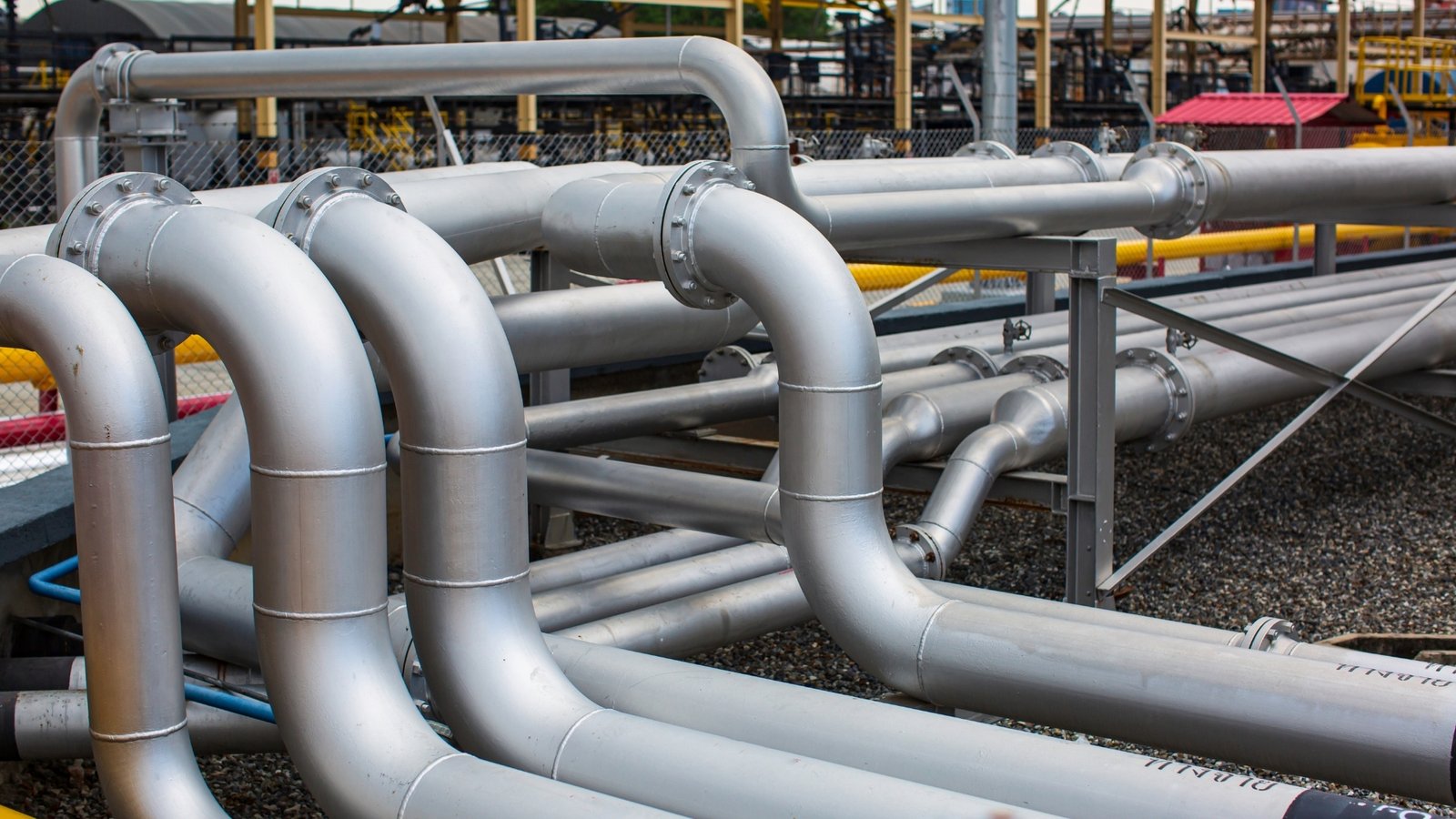 Project 54Interwoven pipe runs at a processing facility, the engineered, routed flows that a long-cycle nurture system mirrors: many paths, one destination, sustained over time.
| Dimension | Standard B2B assumption | Energy B2B reality |
|---|---|---|
| Cycle length | Weeks to a few months | 12 to 24 months, longer for capital projects |
| Decision unit | 1 to 3 people | 6 to 10 across engineering, commercial, HSE and procurement |
| Supplier contact | Frequent and direct | About 17 percent of buyer time, mostly late in the cycle |
| What moves the buyer | Campaign timing | Turnarounds, tender windows, budget cycles, incidents |
| Primary risk | Being forgotten | Being screened out before the shortlist even forms |
Three layers, and most teams build only the first
A long-cycle nurture system has three layers, and most programs build only the first. There is orientation, the welcome that sets expectations and frames who you are. There is the long middle, twenty months or more of staying useful while nothing appears to happen. And there is the handoff, the moment a signal says the committee is moving and the sequence hands a warm, context-rich contact to sales. Teams over-invest in orientation because it is easy to write, then fall silent through the middle, which is exactly where a 24 month deal is won or lost.
The content spine that fills the middle should teach the buying committee, not sell the product. Each role on the committee asks a different question, and nurture earns attention by answering it. The engineer wants reliability and specification. Procurement wants local content and how you score against IKTVA or ICV rules. The commercial lead wants total cost over the asset life. HSE wants proof of compliance. A nurture program that speaks to all four, in sequence, stays relevant to a committee that a single product pitch would lose. This is the same power table a P54 piece maps for the energy buying committee.
Structured across the cycle, the architecture looks like this.
Orientation
The first few weeks. Set expectations, establish credibility, and segment by role and account so later touches can be routed. Short, and never the bulk of the program.
The long middle
Twenty months or more of role-specific, genuinely useful material paced to relevance, not to a calendar. This is the hard, decisive layer, and the one most programs abandon.
Handoff and re-entry
When a buying signal fires, hand a context-rich contact to sales. If a deal stalls, route the contact back into the middle rather than dropping it. Nothing is ever simply closed and lost.
Stop-start buyers need signals, not a calendar
Time-based drip, the same emails to everyone on a fixed schedule, assumes a buyer who moves steadily from awareness to decision. Energy buyers do not move that way. They sit still for months, then move fast when an external event forces the issue: a tender is published, a turnaround is scheduled, a budget is approved, an incident reshapes priorities, or a new technical lead arrives with different preferences.
Trigger-based nurture listens for those events and sends the relevant next touch when they happen. The signals worth wiring in energy include tender and prequalification notices, clusters of site visits from one account, plant turnaround calendars, leadership changes, and third-party intent spikes. A P54 analysis of intent data sets out how to build that signal layer. The strongest programs are not purely one or the other: they run a slow time-based backbone of one to two useful touches a month, with trigger overlays that jump the queue when a signal warrants it.
Deliverability is a commercial risk, not a footnote
Energy ABM lists are small, senior, and irreplaceable, which makes deliverability a commercial risk, not a technical footnote. The domain that carries your nurture is usually the same domain that carries your tender submissions and contract correspondence. One careless blast into an unengaged list, one spam-trap hit, and you can damage the sending reputation your commercial email depends on.
Protecting it is straightforward but non-negotiable. Authenticate the domain with SPF, DKIM and DMARC. Keep the list clean and send based on engagement, suppressing contacts who have gone cold rather than emailing them harder. Warm new domains gradually. And treat consent seriously: B2B nurture in the UK and EU typically relies on legitimate interest under GDPR and the rules in PECR, which means relevance and an easy opt-out, not blanket blasting. Restraint here is what keeps a high-value list usable for years.
Clicks, replies and pipeline over a two-year window
The metric most teams still report, open rate, no longer means what they think. Apple Mail Privacy Protection, live since 2021 and tightened in April 2024, pre-loads images so an email counts as opened whether or not anyone read it. A 2024 Validity study found senders with Apple-dominant audiences seeing reported opens 15 to 35 percentage points above verified engagement. Judging energy nurture by opens now overstates it, and worse, it hides which touches actually work.
Measure what survives privacy changes and what matches the length of the sale: clicks to content, replies and inbound questions, meetings booked, and influenced or sourced pipeline tracked across the full 12 to 24 month window. That last measure forces the same long-horizon attribution the energy sale already demands, which a separate P54 analysis covers in depth. For reference, current B2B benchmarks put open rates at 18 to 25 percent, now noisy, and click-through at 2.5 to 4 percent, with strong programs at 5 to 7 percent. Email is often quoted at 36 dollars returned per dollar spent, a figure from the DMA and Litmus, though that usually counts only tool cost; a realistic all-in return is closer to 15 to 25 dollars, which is still among the best in B2B.
The point of better measurement is not a tidier dashboard, it is survival. Forrester found that firms which excel at nurturing generate 50 percent more sales-ready leads at 33 percent lower cost, and that nurtured leads make roughly 47 percent larger purchases, a figure attributed to the Annuitas Group. A program that cannot prove those effects is the first line cut when budgets tighten, so the measurement is what keeps the nurture funded.
Signal-based and AI-assisted, but still engineered
The direction of travel is signal-based and AI-assisted. Instead of batching everyone into a campaign, models draft the next-best touch for each account from its intent history and the committee context, and nurture becomes continuous and per-account rather than scheduled and generic. The plumbing for this already exists in the lead-enrichment and workflow automation a P54 playbook describes, and it maps naturally onto the trigger model above.
The constraint, though, stays human. AI writes the next email faster, but it does not decide what is worth sending, and a senior energy audience is quick to punish volume dressed up as relevance. The strategy still has to be engineered, not assumed: the judgment about which signal matters, which role to speak to, and when silence is the better move. The tools change the speed of nurture. They do not change the discipline that makes it work.
Listen & take it with you
Prefer audio, or need the deck for an internal review? The full briefing is available as a podcast episode and a downloadable slide presentation.
What is the weakest link in your energy B2B nurture right now?
Frequently asked
Lead generation creates a new contact; lead nurturing keeps that contact engaged and educated until they are ready to buy. In energy B2B the gap between the two can be two years, so nurturing, not generation, is where most pipeline is won or lost.
There is no fixed cadence. A trigger-based model sends when a signal warrants it, backed by a slow time-based backbone of roughly one to two genuinely useful touches a month. Frequency should follow relevance and engagement, not a calendar quota, because a senior energy audience punishes noise fast.
No. Apple Mail Privacy Protection inflates reported open rates by 15 to 35 percent, so opens overstate engagement. Click-to-content, replies, meetings booked and influenced pipeline are the reliable measures.
Yes, though the headline figures are optimistic. Email is widely cited at around 36 dollars returned per dollar spent, from the DMA and Litmus, but that usually counts only tool cost; a realistic all-in figure is closer to 15 to 25 dollars. It remains one of the most efficient B2B channels, especially for long nurture.
Trigger-based nurturing sends the next touch in response to a buyer signal, such as a tender publication, a cluster of site visits, a plant turnaround or an intent spike, rather than on a fixed schedule. It fits the stop-start buying rhythm of energy far better than a timed drip.
Get the next intelligence drop
Join energy and industrial leaders getting our marketing, AI-growth and revenue-architecture intelligence, direct, no filler.
You're on the list
Welcome to The Energy Growth Brief, watch your inbox for the next dispatch.