


What Is Eni's Dual Exploration Model?
Eni's dual exploration model is its practice of making large oil and gas discoveries in frontier basins, then selling minority stakes to partners soon after the find, at a premium, while keeping operatorship. The Italian major says the strategy has raised more than 13 billion dollars since 2013 and helped fund development without new debt. This answer explains how it works, the landmark deals from Zohr to Baleine, and how it connects to Eni's satellite model.
- Eni's dual exploration model means it explores in frontier basins, makes discoveries, then sells minority stakes of about 20 to 40 percent to partners soon after the find while keeping operatorship, crystallising value years before first production. Eni says the approach has raised more than 13 billion dollars since 2013 (Eni, Energy Intelligence).
- The signature example is Egypt's Zohr, the largest gas discovery ever made in the Mediterranean, where in 2017 Eni sold 30 percent to Rosneft and 10 percent to BP for combined proceeds of about 2.1 billion dollars while remaining operator (Eni, Arab News).
- In 2017 Eni also sold a 25 percent interest in Mozambique's gas rich Area 4 to ExxonMobil for about 2.8 billion dollars, part of a run of disposals that let Eni state it had cashed in more than 9 billion dollars in four years (Eni, ExxonMobil, Wood Mackenzie).
- The model is still running: in 2025 Eni sold 30 percent of the Baleine field offshore Cote d'Ivoire and part of its Congo LNG stake to the trading house Vitol in a package worth about 1.65 billion dollars, keeping operatorship of Baleine (Rigzone, Upstream, Eni).
- Dual exploration works at the asset level, while Eni's satellite model does the same at the corporate level, housing businesses such as Var Energi, Azule Energy, Enilive and Plenitude in separately financed vehicles; the 2025 sale of 20 percent of Plenitude to Ares alone raised about 2 billion euros (Eni, ESG Today).
Turn a discovery into cash, but keep control
Eni's dual exploration model is a way of turning a discovery into cash quickly. Eni explores in frontier and emerging basins, from Egypt and Mozambique to Cote d'Ivoire and Indonesia, where its geology and long standing country relationships give it an edge. When it makes a large find, it sells a minority stake, usually between 20 and 40 percent, to an international oil company or a state oil company. The buyer pays a price that reflects the full development value of the resource, not the modest cost Eni spent to find it, so Eni banks a premium within months of the discovery rather than waiting a decade for production revenue.
The defining feature is what Eni holds on to. It sells only a minority, keeps the majority interest, and stays as operator, which means it keeps technical and commercial control of the project. It usually also secures a carried interest, where the incoming partner helps fund the early development bill. Speaking at CERAWeek in March 2026, chief executive Claudio Descalzi reduced the logic to three words, "You must be fast", arguing that speed of monetisation, not spending cuts, is the right response to volatile energy markets.
That pattern, find cheaply, sell a slice dearly, keep control, and reinvest the proceeds, is why analysts increasingly describe Eni as treating exploration as a financial instrument rather than a simple cost centre. Eni says the model has raised more than 13 billion dollars since 2013, cash it has recycled straight into the next round of drilling, and it is one of the main reasons a mid sized major has been able to grow production faster than several larger rivals.
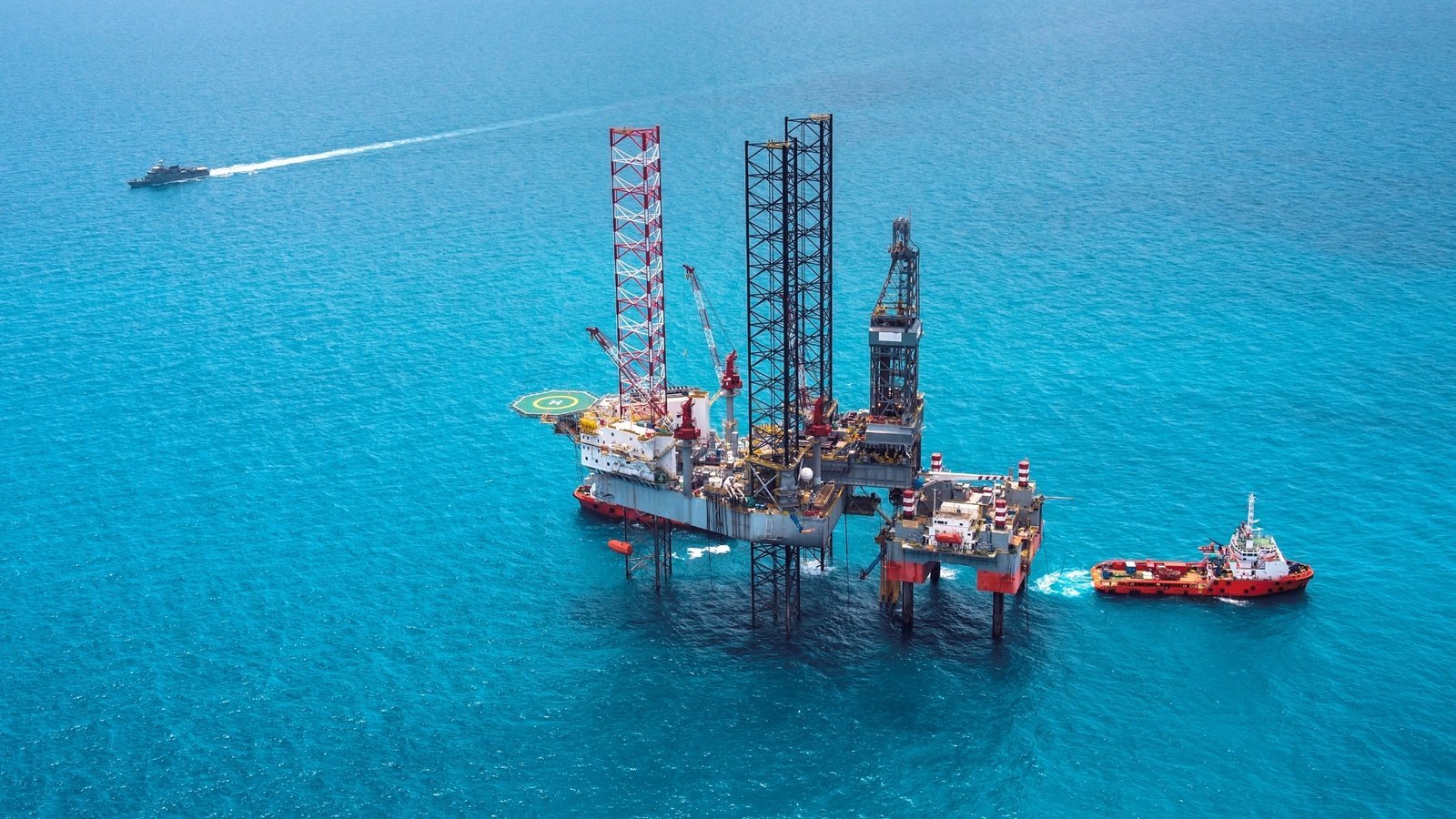 Project 54Eni's dual exploration model sells minority stakes in its own discoveries soon after the find, banking a premium years before first production while keeping operatorship.
An exploration engine that pays for itself
Start with the exploration itself. Eni runs one of the industry's most successful drilling programmes, with a reported success rate of 75 to 80 percent against an industry average closer to 35 percent, according to remarks by Descalzi at CERAWeek. Since 2014 it has discovered more than 12 billion barrels of oil equivalent across seven countries, added around 900 million barrels in 2025, and found close to a billion more in the first quarter of 2026 alone. Eni puts its average finding cost at about 1 dollar per barrel of oil equivalent, a figure the company cites as evidence of how cheaply it adds resources.
The financial step is the sell down. Because a discovery is worth far more than it cost to find, selling a minority stake captures that value gap immediately instead of waiting for production cash flows spread over ten or more years. The proceeds then fund the next exploration campaign and the development of the retained interest, so the model is close to self financing and does not require Eni to raise fresh equity or take on new debt. That discipline has helped push Eni's gearing to about 15 percent in the first quarter of 2026, among the lowest of the European majors.
Descalzi has also described the wider optionality a discovery creates. A find, he has said, gives Eni two currencies, "one that you can sell and cash in, and the other you can use as a currency to make a merger with another big company". In other words a strong exploration record is not only a source of proceeds, it is also a bargaining chip that a company without the scale to win the largest takeover battles can use to bring in partners on its own terms.
From Zohr to Baleine, a decade of sell downs
The signature case is Zohr, the supergiant gas field Eni discovered off Egypt in 2015 and still the largest gas find ever made in the Mediterranean, holding around 30 trillion cubic feet of gas in place. Having taken the exploration risk alone, Eni sold 30 percent to Russia's Rosneft and 10 percent to BP in 2017 for combined proceeds of about 2.1 billion dollars, then later brought in Mubadala, leaving Eni with 50 percent and the operator's seat.
The same year delivered a second textbook example. Eni sold a 25 percent indirect interest in Mozambique's gas rich Area 4 to ExxonMobil for about 2.8 billion dollars, a deal that left the holding company split between Eni, ExxonMobil and China's CNPC. On the back of the Zohr and Mozambique disposals, Eni was able to state in 2017 that the dual exploration strategy had let it cash in more than 9 billion dollars in just four years.
The model is still running. In 2025 Eni sold 30 percent of the producing Baleine field offshore Cote d'Ivoire, together with part of its stake in Congo's first liquefied natural gas project, to the trading house Vitol in a package worth about 1.65 billion dollars, with Eni noting that closing adjustments could add around another billion. In Indonesia, by contrast, Eni is monetising its Kutei Basin discoveries not through a straight sale but by folding them into a jointly owned company with Petronas, a hybrid that leans on the satellite model discussed below.
| Asset | Country | Year | Stake sold | Buyer | Approx proceeds |
|---|---|---|---|---|---|
| Zohr (Shorouk) | Egypt | 2017 | 30% and 10% | Rosneft, BP | About 2.1 billion USD |
| Area 4 (Rovuma) | Mozambique | 2017 | 25% | ExxonMobil | About 2.8 billion USD |
| Baleine | Cote d'Ivoire | 2025 | 30% | Vitol | Part of 1.65 billion USD package |
| Congo LNG | Congo | 2025 | 25% interest (Eni 65% to 40%) | Vitol | Part of 1.65 billion USD package |
| Geng North, Gehem | Indonesia | 2025 to 2026 | Into Eni and Petronas JV | Petronas | Satellite combination, not a straight sale |
The same idea, moved up to the corporate level
Dual exploration crystallises value inside a single asset. Eni's satellite model applies the same thinking to whole businesses. Instead of holding every division on one balance sheet, Eni places a business into a separately financed company, brings in outside investors, keeps control, and moves that unit's debt off the parent. The two approaches share a purpose, to unlock capital and fund growth without diluting shareholders or loading up group debt, which is why Eni presents them as parts of one strategy.
The upstream satellites include Var Energi in Norway, about 63 percent owned by Eni and its first listed satellite, which reached about 400,000 barrels of oil equivalent a day in 2025, and Azule Energy in Angola, a 50 50 venture with BP. On the transition side, Eni sold a stake of up to 30 percent in its biofuels arm Enilive to KKR, and sold 10 percent of its renewables and retail arm Plenitude to Energy Infrastructure Partners followed by 20 percent to Ares Management in November 2025, the Ares deal alone raising about 2 billion euros on an equity value of 10 billion. Descalzi frames the goal as separating "activities with different multiples to avoid value destruction", and dual exploration and the satellite model are two versions of that same discipline, applied at different levels of the company.
Dual exploration, at the asset level
Eni sells a minority of a single discovery, usually 20 to 40 percent, to a partner at a price that reflects full development value, keeps operatorship, and recycles the cash. It crystallises value years before first production. Example: 30 percent of Baleine sold to Vitol in 2025.
Satellite model, at the corporate level
Eni houses a whole business, upstream or low carbon, in a separately financed company, brings in outside investors, keeps control, and takes the debt off the parent balance sheet. Example: 20 percent of Plenitude sold to Ares for about 2 billion euros in 2025.
Traditional major, produce and hold
Most majors develop and produce a discovery themselves and earn the value slowly across the field's life. The eventual upside can be higher if prices stay strong, but capital is tied up for a decade and the return is fully exposed to the price cycle.
Cash now beats cash later when prices are uncertain
The case for the model is strongest exactly when prices are low and uncertain. Selling a stake at discovery pulls value forward, so Eni banks a premium now rather than betting on where oil and gas prices sit ten years out. The proceeds fund development without new debt, which keeps the balance sheet light, and they let Eni keep targeting production growth of 3 to 4 percent a year to 2028 while cutting capital spending, with 2026 investment guided to about 7 billion euros, down roughly 18 percent on the prior year.
The honest caveat is that the model is not immune to the cycle. What a partner will pay is negotiated against the value of the discovery, and that value is lower when prices are weak, so the timing of each sale matters. Energy Intelligence also notes that funding the exploration itself becomes harder in a lower price world. The model does not remove price risk, it manages it, by shortening the gap between money spent finding a resource and money returned from selling part of it.
For energy buyers, suppliers and investors, the read is that Eni has engineered a business that can keep growing and keep paying shareholders through a soft market, funded by its own drill bit rather than by debt or dilution. It is a different answer to the same pressure that pushes peers to concentrate on advantaged, low cost barrels, and it rewards the one capability, consistently successful exploration, that much of the industry spent the past decade cutting back.
Listen & take it with you
Prefer audio, or need the deck for an internal review? The full briefing is available as a podcast episode and a downloadable slide presentation.
Eni sells minority stakes in its own discoveries soon after finding them. What is the sharpest read of that?
Frequently asked
Dual exploration works at the level of a single asset: Eni sells a minority stake in a discovery, usually 20 to 40 percent, to a partner soon after finding it, while keeping operatorship. The satellite model works at the corporate level: Eni places a whole business, such as Var Energi, Azule Energy, Enilive or Plenitude, into a separately financed company, brings in outside investors, keeps control, and moves debt off its own balance sheet. Both crystallise value and fund growth without new parent debt.
Eni says the dual exploration model has raised more than 13 billion dollars since 2013. As a checkpoint along the way, its own 2017 press releases said the strategy had let it cash in more than 9 billion dollars over the previous four years, on the back of the Zohr and Mozambique Area 4 sell downs. Recent deals include a 1.65 billion dollar package with Vitol in 2025 (figures per Eni and trade press).
Zohr is a supergiant gas field offshore Egypt, discovered by Eni in 2015 and the largest gas discovery ever made in the Mediterranean, holding around 30 trillion cubic feet of gas in place. It is the signature example of the dual exploration model: in 2017 Eni sold 30 percent to Russia's Rosneft and 10 percent to BP for combined proceeds of about 2.1 billion dollars, while staying on as operator. Eni later brought in Mubadala and now holds 50 percent.
Eni is led by chief executive Claudio Descalzi, who joined the company in 1981 as a reservoir engineer and has been chief executive since 2014, making him one of the longest serving leaders of any major energy company. He was reconfirmed by the board in 2026. The dual exploration and satellite models are closely associated with his tenure and his emphasis on keeping exploration in house while many peers cut it.
Not in practice. Eni sells only minority stakes and keeps the majority of each discovery, and it replaces what it sells by continuing to explore, adding more than 12 billion barrels of oil equivalent since 2014 and close to a billion more in the first quarter of 2026 alone. Because it finds resources faster and more cheaply than most peers, the sell downs monetise value without draining the reserve base, though a sustained fall in exploration success would change that balance.
Get the next intelligence drop
Join energy and industrial leaders getting our marketing, AI-growth and revenue-architecture intelligence, direct, no filler.
You're on the list
Welcome to The Energy Growth Brief, watch your inbox for the next dispatch.