










Модели распределения энергии на основе искусственного интеллекта определяют устойчивость корпоративной инфраструктуры. Одновременно с этим изменилась архитектура закупок энергии в сегменте B2B, что делает неточными традиционные показатели отслеживания в системах управления взаимоотношениями с клиентами (CRM). Корпоративные покупатели действуют анонимно в рамках стандартных инструментов отслеживания процессов; институциональные данные показывают, что 61% цикла закупок предприятия Оценка потенциала клиента проводится посредством независимого технического исследования до того, как потенциальный клиент установит прямой контакт с торговым представителем. В отсутствие автоматизированных систем отслеживания, руководство остается в неведении относительно этой начальной фазы оценки потенциала клиента. Внедрение формальных интеграция искусственного интеллекта в энергетику Архитектура позволяет отображать этот незарегистрированный слой исследований, оптимизировать распределение капитала в энергетической и вычислительной отраслях и сохранять целостность трубопровода до того, как произойдет снижение рентабельности.
Этап «незаметных закупок» скрывает целенаправленные корпоративные исследования и снижает скорость формирования бизнес-процессов.
Работа без автоматизированных систем отслеживания многоканального взаимодействия приводит к отрыву финансового прогнозирования от рыночной реальности. Потому что первоначальный 61% жизненного цикла закупок Поскольку этот процесс происходит независимо, стандартное отслеживание на верхнем уровне воронки продаж не позволяет выявить намерения институциональных клиентов. Этот информационный дефицит напрямую снижает скорость обработки заявок, создавая не поддающийся количественной оценке риск для корпоративных балансов из-за неправильного распределения расходов на продажи и заниженных прогнозов конверсии.
Для смягчения последствий этого снижения капиталовложений организациям необходимо внедрить автоматизированные архитектуры отчетности для B2B-аналитики. Выявление этих незарегистрированных циклов технической оценки позволяет поставщикам корпоративных решений размещать специализированную техническую документацию в период активного исследования, используя преимущества... интеграция искусственного интеллекта в энергетику для защиты операционной прибыли и стабилизации рыночной позиции в условиях конкуренции со стороны быстро развивающихся игроков рынка.
Интеграция искусственного интеллекта в энергетику требует огромных капиталовложений и масштабируемости, что приводит к локальной нестабильности энергосистемы.
Масштабируемость коммерческого машинного обучения ограничена пропускной способностью физических сетей. Глобальный Капитальные затраты на инфраструктуру данных составили приблизительно 1450 миллиардов така. В период с 2022 по 2024 год эти расходы возросли. Потребность центров обработки данных в электроэнергии составляет 1,51 ТТ³ от общего мирового потребления., представляющий собой Годовое потребление составляет 415 ТВт·ч..
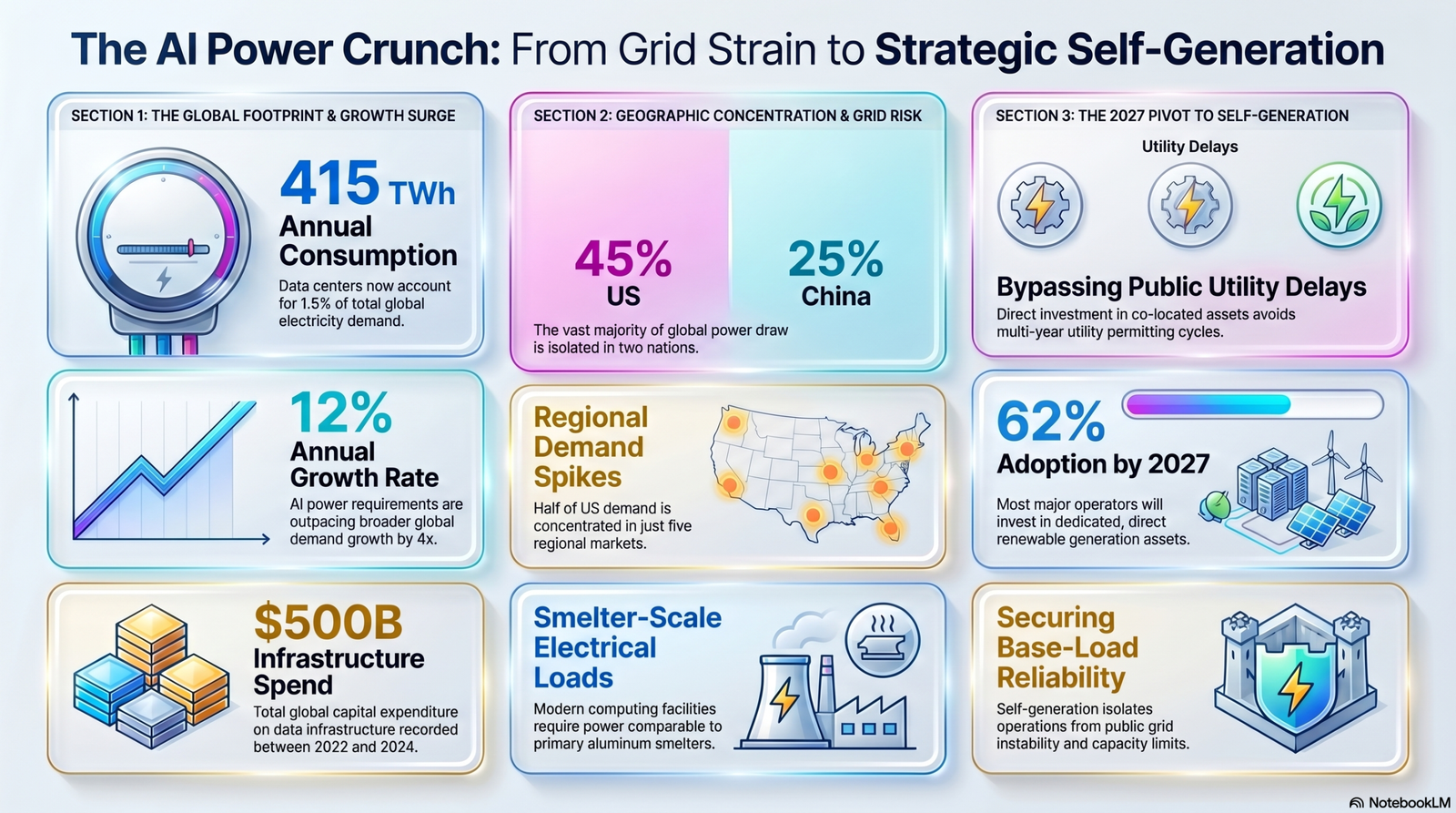
Эта структурная потребность в электроэнергии увеличивается ежегодно на 121 тыс. тонн, опережая рост мирового спроса на электроэнергию в четыре раза. Географическая концентрация усугубляет уязвимость локальной энергосистемы. На долю США приходится 451 тыс. тонн мирового потребления электроэнергии центрами обработки данных., Однако почти половина этого внутреннего спроса сосредоточена в пяти региональных рынках. Промышленные вычислительные мощности требуют электроэнергии, сопоставимой с мощностью алюминиевых заводов. Такая пространственная плотность генерирует резкие скачки спроса, которые угрожают стабильности региональных линий электропередачи, что требует применения автоматизированных вычислительных моделей прогнозирования для сохранения равновесия системы и предотвращения перебоев в электроснабжении.
Ловушка оценки 9:1 подрывает эффективность распределения капитала и завышает затраты на привлечение клиентов.
Компании, работающие в сфере энергетических технологий, регулярно демонстрируют финансовую неэффективность в отношении привлечения клиентов. Типичный поставщик энергетических технологий для бизнеса (B2B) выделяет $9 на затраты на привлечение клиентов (CAC) на каждый $1, развернутый в инфраструктуре данных, необходимой для точных измерений и оптимизации.
Этот дисбаланс характеризует «ловушку оценки 9:1», когда стратегические затраты ошибочно рассматриваются как стандартные капитальные убытки, а не как факторы, влияющие на стоимость активов. Для определения истинной отдачи от маркетинговых инвестиций финансовые директора должны требовать систематического отслеживания по всем операционным и прямым затратам для оценки долгосрочной перспективы. интеграция искусственного интеллекта в энергетику эффективность:
$$text{ROI} = frac{text{Полученый доход} – text{Инвестиции в маркетинг}}{text{Инвестиции в маркетинг}} раз 100$$
Поскольку сделки в сфере энергетической инфраструктуры предполагают многолетние циклы закупок, краткосрочные бухгалтерские показатели дают искаженные сигналы о результатах деятельности. Операторы предприятий должны оценивать показатели непосредственной эффективности наряду с долгосрочной оценкой активов, в частности, скорость транспортировки по трубопроводам и пожизненную ценность клиента (LTV).
| Категория метрик | Ключевой показатель эффективности (KPI) | Значение для энергетического сектора |
| Показатели эффективности | Стоимость привлечения клиента (CAC) | Определяет показатели рентабельности привлечения потенциальных клиентов и защищает итоговую прибыль. |
| Показатели воздействия | Скорость потока в трубопроводе | Измеряет скорость миграции сделок в рамках многолетних циклов промышленных продаж. |
| Долгосрочная ценность | Пожизненная ценность клиента (LTV) | Проверяет устойчивость доходов от многолетнего проекта и оценку стоимости предприятия. |
| Сигналы качества | Коэффициент конверсии MQL в SQL | Прогнозирует состояние портфеля институциональных контрактов и обеспечивает правильное распределение капитала. |
Программа структурной перестройки 2027 года обязывает напрямую переходить на самогенерацию чистой энергии, чтобы обойти задержки со стороны коммунальных предприятий.
Сохраняется несоответствие между сроками внедрения программного обеспечения и развитием энергетической инфраструктуры. Вычислительные платформы масштабируются по всему миру в течение нескольких месяцев; напротив, для физических объектов возобновляемой энергетики и межсетевых соединений требуются многолетние циклы получения разрешений и строительства.
Пока 96% руководителей коммунальных и технологических компаний утверждают, что возобновляемая инфраструктура может удовлетворить долгосрочные потребности в данных, только... 13% выражают готовность ввести обязательное использование чистой энергии. Если это ограничивает скорость развертывания или увеличивает краткосрочные капитальные затраты (CapEx), то возникает разрыв в реализации, требующий перераспределения рисков со стороны предложения. Текущие прогнозы указывают на то, что к 2027 году..., 62% крупнейших операторов центров обработки данных и инфраструктуры искусственного интеллекта будет инвестировать напрямую в специализированные, расположенные рядом объекты возобновляемой энергетики, укрепляя тем самым автономные системы. интеграция искусственного интеллекта в энергетику при этом полностью обходя стороной коммунальные предприятия, чтобы обеспечить надежность базовой нагрузки.
Типичные представители технической сферы, покупающие товары и услуги, отвергают общие маркетинговые стратегии и требуют строгой проверки на основе физических принципов.
Циклы закупок, определяемые инженерными задачами, требуют тщательной эмпирической проверки. Стандартные корпоративные сообщения не способны повлиять на технических специалистов, принимающих решения и ориентированных на операционную точность. В типичных коммерческих проектах..., Системы отопления, вентиляции и кондиционирования воздуха потребляют приблизительно 401 тонну/3 тонны общей энергии объекта.. Технические группы оценивают перспективные решения, проводя аудит моделей машинного обучения, основанных на физических принципах и прогнозирующих тепловое поведение с использованием локализованной телеметрии IoT.
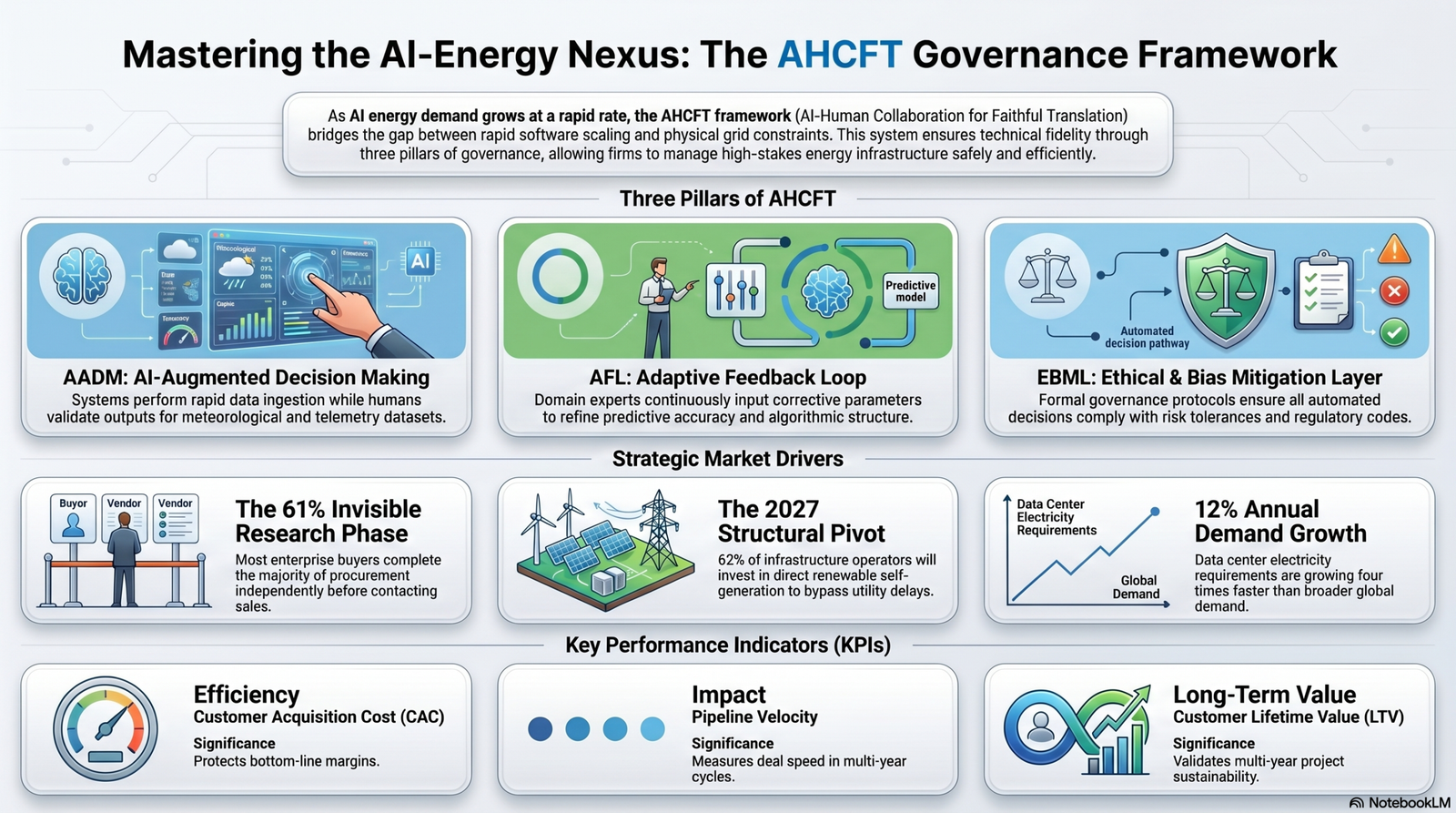
Для соответствия этому строгому порогу проверки организации должны использовать модель сотрудничества ИИ и человека для точного перевода (AHCFT), которая регулируется тремя отдельными компонентами:
-
Принятие решений с использованием искусственного интеллекта (AI-Augmented Decision Making, AADM): Автоматизированные системы осуществляют быстрый сбор данных и выявление закономерностей в метеорологических и телеметрических наборах данных, в то время как инженеры-люди проверяют результаты.
-
Адаптивная петля обратной связи (AFL): Эксперты в данной области постоянно вносят корректирующие параметры в основную алгоритмическую структуру для повышения точности прогнозирования.
-
Уровень этического смягчения и предотвращения предвзятости (EBML): Формально структурированные протоколы управления оценивают автоматизированные решения для обеспечения строгого соответствия допустимым уровням риска и нормативным кодексам.
Автономная агентная архитектура стабилизирует конвейеры конверсии лидов в B2B-секторе за счет развертывания, ориентированного на достижение конкретных целей.
Циклы промышленных закупок требуют непрерывной оптимизации активов для снижения оттока клиентов и контроля затрат на приобретение. Переход к автоматизации, ориентированной на достижение целей, позволяет организациям обойтись без ручного управления задачами. Операторы устанавливают высокоуровневые оперативные цели; затем автономные агентные системы настраивают, выполняют и калибруют векторы развертывания.
Эти автоматизированные системы самостоятельно управляют техническими рамками поисковой оптимизации (SEO), координируют взаимодействие с отраслевыми партнерами и осуществляют программное распространение в профессиональных сетях. В этом процессе используется дисциплинированная модель делегирования: руководители-люди сохраняют за собой окончательные когнитивные и финансовые полномочия, в то время как автоматизированные системы управляют повторяющимися операционными процессами. Эта структура расширяет институциональные возможности. цифровой маркетинг Выводит и стандартизирует индексацию технических активов в корпоративной базе знаний.
Прогностическое управление активами снижает катастрофические риски для инфраструктуры и уменьшает средневзвешенную стоимость капитала.
Модернизация энергосистемы требует использования архитектур машинного обучения для непосредственной защиты физической инфраструктуры. Традиционные графики аварийного технического обслуживания подвергают операторов финансовым штрафам, катастрофическим отказам оборудования и увеличению средневзвешенной стоимости капитала (WACC). Системы прогнозирования технического обслуживания, основанные на показателях эффективности, используют Использование компьютерного зрения и телеметрии для выявления структурных аномалий в солнечных батареях и передающей инфраструктуре. до механической поломки.
Интеграция физической инфраструктуры с архитектурами цифровых двойников обеспечивает автоматизированное снижение рисков в режиме реального времени на основе передовых технологий. интеграция искусственного интеллекта в энергетику протоколы. Кроме того, эти платформы стандартизируют рабочие процессы обеспечения соответствия, генерируя необходимую эмпирическую документацию. федеральные нормативные рамки выдачи разрешений. Такой контроль ограничивает операционные обязательства, удовлетворяя строгие требования институциональных кредиторов и финансовых директоров по снижению рисков.
Основные выводы
-
Потребление инфраструктуры: Потребность центров обработки данных в энергии ежегодно увеличивается на 121 тыс. тонн, опережая темпы роста мирового спроса на электроэнергию в четыре раза.
-
Маскировка процесса закупок: Потенциальные клиенты проходят этап 61% оценочной последовательности посредством независимого исследования, требующего использования автоматизированных панелей мониторинга B2B-аналитики для регистрации поведения с высокой степенью заинтересованности.
-
Мандат 2027 года: Чтобы обойти ограничения, связанные с централизованными энергосетями, 62% крупных операторов инфраструктуры к 2027 году внедрят собственные возобновляемые источники энергии.
-
Бюджетная ловушка: Для предотвращения ловушки оценки 9:1 необходимо сбалансировать первоначальные затраты на привлечение клиентов с эквивалентными инвестициями в инфраструктуру для измерения данных.
Определённое техническое распределение снижает операционные риски.
Оптимизация коммерческих расходов на системы отопления, вентиляции и кондиционирования воздуха с использованием методов машинного обучения, основанных на физических принципах.
На инфраструктуру систем отопления, вентиляции и кондиционирования воздуха приходится приблизительно 401 тонна 3 литров электроэнергии, потребляемой объектом. Модели машинного обучения, основанные на физических принципах, интегрируют эмпирические физические законы с непрерывной телеметрией датчиков IoT для моделирования внутренней тепловой динамики. Такой инженерный подход позволяет автоматизированным платформам управления оптимизировать потребление энергии без ухудшения эксплуатационных допусков или сокращения срока службы оборудования.
Роль структуры AHCFT в условиях повышенного риска в энергетическом секторе
Структура сотрудничества ИИ и человека для точного перевода (AHCFT) устанавливает стандартизированную структуру управления. Она согласовывает производительность машинного обучения с контролем со стороны человека посредством трех интегрированных протоколов: принятия решений с использованием ИИ (AADM), адаптивных петель обратной связи (AFL) и уровня этического и предвзятого смягчения (EBML), обеспечивая соответствие вычислительных результатов заданным нормативным параметрам для обеспечения базового уровня. интеграция искусственного интеллекта в энергетику стабильность.
Перераспределение капитала в сторону прямой самогенерации возобновляемой энергии
Внедрение программных систем в сети занимает несколько месяцев, в то время как модернизация линий электропередачи и циклы получения разрешений на возобновляемые источники энергии требуют нескольких лет. Для управления этим системным несоответствием сроков и изоляции операций от ограничений пропускной способности сети, 62% операторов корпоративной инфраструктуры к 2027 году направят прямые капиталовложения в собственные системы генерации электроэнергии.
Модификации стандартных операций B2B-маркетинга в энергетическом секторе с использованием автономных агентов
Автономные агентные системы работают на основе инструкций, ориентированных на достижение конкретной цели. Получив коммерческую цель, архитектура самостоятельно выполняет техническое SEO-проектирование, алгоритмическое получение обратных ссылок и программное распространение контента, используя итеративную доработку данных для оптимизации долгосрочной рентабельности маркетинговых инвестиций.
Об авторе: Аналитическая группа проекта 54 предоставляет основанные на данных исследования, структурные выводы и технические модели, оптимизированные для руководителей высшего звена, управляющих распределением капитала, технологической трансформацией и регуляторными рисками в глобальном энергетическом и промышленном секторах.