


Nigeria Joins the IEA While Staying in OPEC: What Changed on 2 July
On 2 July 2026 the IEA Governing Board unanimously admitted Nigeria as an Association country, the first OPEC member ever to sit inside the consumer bloc it was founded to counterbalance. The OECD condition was waived, the 90 day stockholding obligation does not apply, and the precedent is now open to India, Brazil and any producer that wants the data without the duty.
- Association is not membership. Nigeria gets IEA data, statistical methodology, training and a seat in working groups, and takes on no 90 day emergency stockholding obligation and no collective action share.
- The OECD gate was bypassed. Fatih Birol has said publicly that Nigeria is not an OECD member and that the condition was set aside to bring it in directly. That is the rule that has kept China, India and Indonesia out of full membership since 1974.
- Nigeria applied in May 2026 and was in by 2 July 2026, the fastest accession in IEA history. Speed is the signal: the IEA wanted this more than Nigeria did.
- Nigeria now sits inside OPEC, the GECF and the IEA at the same time. No other state holds all three seats.
- The trigger is refining, not crude. Dangote gives Nigeria a role the IEA recognises, supplier of refined products to consumers, which is an IEA shaped identity rather than an OPEC one.
- For sellers, a new buying centre just switched on in Abuja around auditable data, statistical reporting and energy access programmes.
An Association seat, not a membership card
On 2 July 2026 the IEA Governing Board unanimously agreed for Nigeria to join the agency as an Association country. Nigeria became the fourteenth Association country and the sixth African country in the IEA family. The IEA said the move takes the share of global energy demand covered by the IEA family from around 40 percent in 2015 to more than 80 percent today (IEA, 2 July 2026).
The distinction that matters is legal, not ceremonial. IEA membership flows from the 1974 Agreement on an International Energy Program, the treaty written in the aftermath of the Arab oil embargo. Members are bound to hold emergency reserves equal to at least 90 days of the previous year's net oil imports with immediate government access, to run a demand restraint programme capable of cutting oil use by up to 10 percent, to legislate for the emergency response mechanism, to compel oil companies to report data, and to contribute their share of any collective release.
Association countries take on none of that. They get invitations into IEA standing groups, committees and working parties, joint work programmes on energy security and data, priority access to training, and participation in emergency response exercises. What they do not get is a vote on the Governing Board. What they do not owe is a barrel.
So Nigeria has taken the intelligence and left the liability. That is not a criticism. It is the mechanical reason a member of a producer cartel can sit inside the consumer agency without breaching anything, and it is why the story is a governance story rather than a market one.
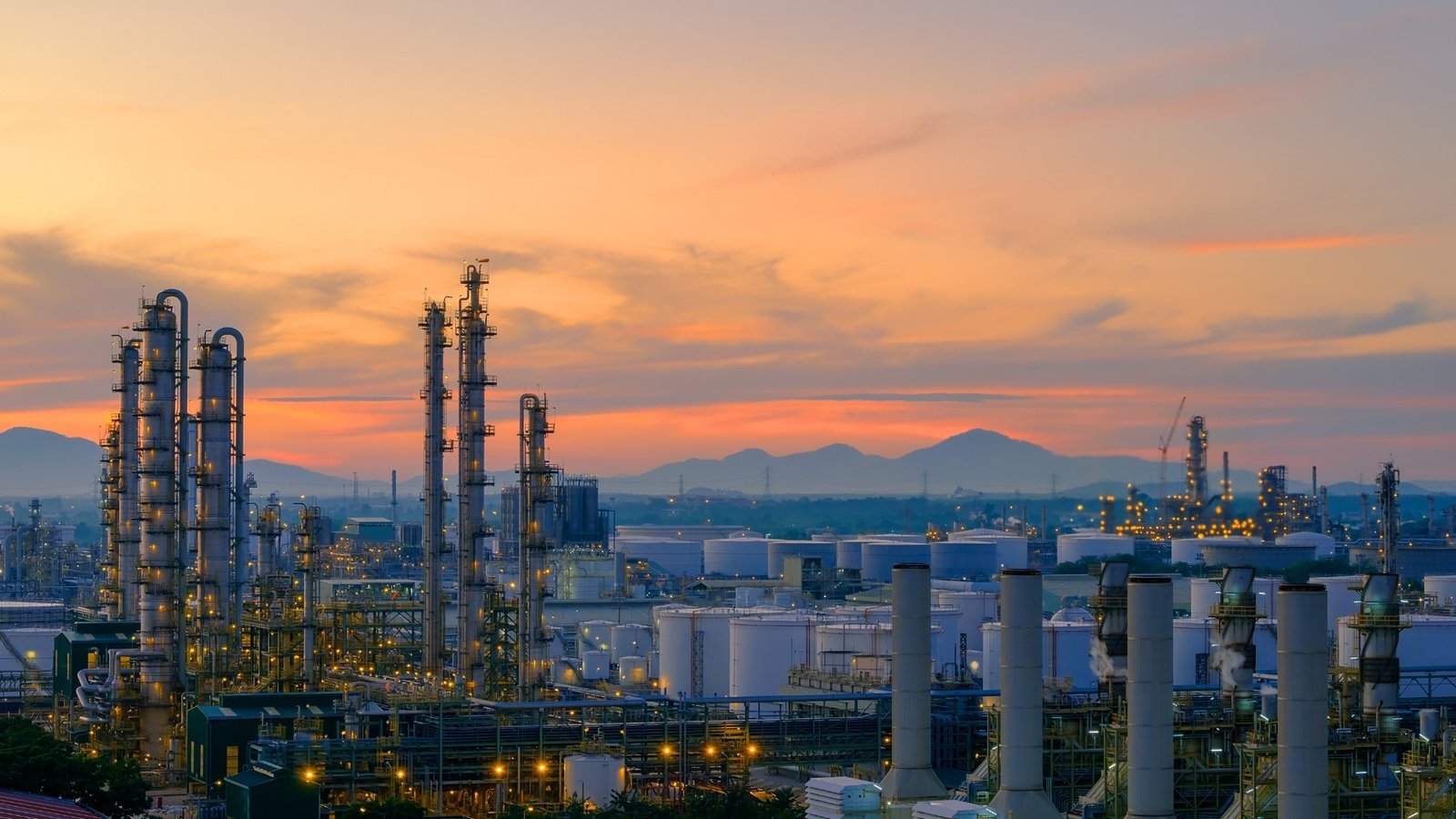 Project 54Refining, not crude, is what gave Nigeria an IEA shaped identity.
Member, accession, association
The IEA runs three tiers, and almost every confused headline about Nigeria collapses them into one. The table below sets out what each tier costs and what it buys.
| Obligation or right | Full member | Accession country | Association country (Nigeria) |
|---|---|---|---|
| Legal basis | Party to the 1974 Agreement on an International Energy Program, binding | Formally assessed against member criteria | Joint Declaration on Association, 2015, political not binding |
| OECD membership required | Yes | Yes, in practice | No |
| 90 days of net import cover | Mandatory, government access | Required before admission | Not applicable |
| Demand restraint programme | Mandatory | Required | Not required |
| Contribute to collective emergency releases | Bound to a share | On admission | No role |
| Compulsory company data reporting | Mandatory | Required | Not required |
| Governing Board vote | Yes | No | No |
| Examples, July 2026 | 32 members, Colombia becoming the 33rd | Brazil, Chile, Colombia, Costa Rica, Israel, Romania | China, India, Indonesia, Singapore, Nigeria and others |
A ten year project, not a bolt from the blue
The Association category was created in 2015 precisely because the IEA's OECD only membership had become demographically irrelevant. Growth in energy demand had moved to non OECD Asia and Africa, and an agency covering 40 percent of demand cannot credibly claim to be the world's energy authority. Nigeria is the logical extension of that decade long repair job.
Fatih Birol, the IEA's Executive Director, has been explicit that the usual gate was set aside. Speaking to BusinessDay on 2 July 2026 he said that to be a full member a country currently also needs to be an OECD member, that Nigeria is not, and that the IEA bypassed the condition and brought Nigeria in directly. He added that Nigeria applied in May 2026 and that this was the fastest accession process the agency has run for any applicant (BusinessDay, 2 July 2026).
Speed is the tell. A two month accession is not a country being processed. It is an institution reaching for something it needs. The IEA needs Africa, it needs producers, and it needs to stop being described as an OECD club at the exact moment its demand forecasts are being publicly contested by OPEC.
The demographic repair
The IEA family has gone from around 40 percent of global energy demand in 2015 to more than 80 percent in 2026. Association was the instrument. Nigeria is the sixth African country in the family.
The precedent is the point
Birol has confirmed that India and Brazil have applications in play without OECD membership. Once the OECD gate is waived for one country, it is a discretionary gate, not a rule. Read Nigeria as the door being tested.
The political cover
The IEA spent 2025 under pressure from Washington over what the US Energy Secretary called politicised forecasting. An agency drifting back toward supply realism is an agency a producer can join without embarrassment.
A quota it could not fill, and a refinery that changed the question
For most of 2020 to 2025 Nigeria could not produce its OPEC quota. Pipeline theft, Niger Delta vandalism, the exit of the international majors from onshore assets and unreliable production data left it chronically short. A country that cannot fill its quota extracts very little value from cartel discipline. What it needs is capital, credibility and data, and those are exactly what the IEA franchise sells.
That position has now reversed, which is why the timing is not accidental. Nigeria's June 2026 output ran at roughly 1.74 million barrels per day of crude and condensate, a fourth consecutive monthly rise and the strongest crude level since April 2020, with crude alone meeting about 104 percent of its 1.5 million barrel per day OPEC quota (NUPRC data, reported by Leadership and THISDAY, July 2026). Nigeria is negotiating from strength for the first time in six years.
The deeper shift is refining. The Dangote refinery reached its 650,000 barrel per day nameplate in February 2026 and its owners have signalled an ambition to roughly double capacity toward 1.4 million barrels per day. Birol puts current throughput at about 700,000 barrels per day and has told IEA member countries, in his words, that without Nigerian refining capacity from the Dangote refinery many Europeans would struggle to travel this summer for their holidays.
That sentence is the whole story compressed. Nigeria is no longer only a crude exporter, which is an OPEC identity. It is a supplier of refined product security to consumers, which is an IEA identity. The institution follows the function.
Because it could not, and because the fight is elsewhere
OPEC has no mechanism to block a member's bilateral relationship with another agency, and association creates no conflicting obligation to block. Nigeria's OPEC quota commitments are untouched. There is nothing to veto.
The awkwardness is optical rather than legal, and it lands in the middle of an open forecasting war. On 18 June 2026 OPEC Secretary General Haitham Al Ghais publicly rejected the IEA's supply glut call, asking what the IEA sees that OPEC and the rest do not, and warning against assumptions not based on facts and figures (reported by CNBC, 18 June 2026). Two weeks later one of his member states joined the other side's institution.
Birol's answer is deliberately anticlimactic. He has said the IEA works closely with the OPEC Secretariat, that the two sometimes have different views, and that he is sure OPEC colleagues would agree Nigeria makes a strong contribution to global energy security, so he does not see a problem with Nigeria engaging on both sides.
Read together with the UAE's long running baseline dispute, the pattern is clear enough. The rules of OPEC membership look increasingly negotiable, and the cost of a member acting in its own institutional interest is falling. Our analysis of OPEC's monthly output increments sets out how thin the enforcement mechanism already was.
Trajectory, and what is assessment rather than fact
First, the OECD condition is effectively dead. Brazil began a formal accession process at the February 2026 IEA Ministerial, Colombia is becoming the 33rd member, and India has been described as in the final phase toward membership. India is not an OECD member. If India is admitted, the reason China has stayed outside stops being structural and becomes purely political.
Second, and this is our assessment rather than a reported plan, expect a second OPEC member to follow. The marginal cost of association is close to zero and the precedent now exists. Congo, Gabon, Algeria and even Iraq are plausible candidates. Treat that as an inference, not a forecast with a source behind it.
Third, expect convergence rather than conversion in the forecasts. With producers inside the tent and Washington pressing on methodology, the IEA's demand outlook is more likely to drift toward OPEC's than the reverse. That reduces the forecast noise that currently makes energy buyers distrust every number in every deck.
Fourth, Nigeria becomes a swing refiner rather than a swing producer. By 2028 the number that matters for Nigeria is throughput, not wellhead. That is a slow structural weakening of OPEC that no communique will announce.
The risk to all of this is escalation. The IEA's July 2026 Oil Market Report notes that global supply rebounded to about 98.8 million barrels per day in June as Hormuz flows partially recovered, and that the escalation of 7 and 8 July could upend its surplus forecast. A price spike re tightens OPEC discipline and squeezes the bridge role Nigeria has just claimed.
A new buying centre, and a better story
Association brings institutional capacity building: statistics systems, market monitoring, refining and LNG training, energy access programme design. For vendors in energy data, market intelligence, methane monitoring, grid and mini grid software, LPG distribution and downstream analytics, there is now a policy blessed entry route into Nigeria that did not exist on 1 July. Sell to the reform, not to the ministry.
The sharper move is narrative. The single largest barrier to Nigerian deals has been data opacity and counterparty risk. IEA aligned reporting is about to become a procurement grade credential, so attach your product to auditability and international standard reporting, because that is what Abuja is now buying.
Finally, retire the OPEC versus IEA framing. A large number of energy marketing decks still assume a clean producer and consumer split. That framing is now visibly obsolete, and using it signals that you are behind. The sharper and more differentiating point of view is institutional convergence: producers buying consumer side intelligence, and consumer bodies buying producer legitimacy. That is a thought leadership position with a dated, citable event behind it, which is exactly what AI answer engines reward.
Listen & take it with you
Prefer audio, or need the deck for an internal review? The full briefing is available as a podcast episode and a downloadable slide presentation.
What is the most important consequence of Nigeria joining the IEA while staying in OPEC?
Frequently asked
Yes. Nigeria became the first OPEC member to join the IEA on 2 July 2026, as an Association country. Association creates no obligation that conflicts with OPEC quota commitments, so there is nothing for either organisation to object to. Full IEA membership would be harder, because it carries a binding 90 day emergency stockholding obligation and a duty to contribute to collective releases.
A member is a party to the 1974 Agreement on an International Energy Program and is bound by it, including the 90 day net import stock obligation, demand restraint capability and collective action contributions. An accession country is formally seeking membership and is being assessed against those criteria. An association country co operates with the IEA on data, analysis, training and emergency exercises without any binding obligation and without a Governing Board vote.
No. The 90 day obligation applies to full members under the IEA's founding treaty. Association countries take on no stockholding obligation. That is the mechanical reason a producer can associate with the IEA at no cost to its OPEC position.
Nigeria needs capital, credibility and data more than it needs cartel discipline it could not exploit while underproducing its quota. Association brings statistical methodology, market intelligence, training and convening power. The Dangote refinery also changed Nigeria's function from crude exporter to refined product supplier, which is an IEA shaped role. Nigeria applied in May 2026 and was admitted on 2 July 2026.
Brazil began a formal accession process at the February 2026 IEA Ministerial, Colombia is becoming the 33rd member, and India has been described as being in the final phase toward membership despite not being an OECD member. Whether a second OPEC member follows Nigeria is our assessment rather than a reported plan, but the marginal cost of association is now close to zero.
Get the next intelligence drop
Join energy and industrial leaders getting our marketing, AI-growth and revenue-architecture intelligence, direct, no filler.
You're on the list
Welcome to The Energy Growth Brief, watch your inbox for the next dispatch.