



India Builds Its Oil Buffer: Why ONGC Is Now Funding the Strategic Petroleum Reserve
India holds about 9.5 days of strategic crude cover against an IEA benchmark of 90. On 9 July 2026 its largest state producer was told to fund a new reserve itself. This dossier traces the root cause, from a decade of underspent budgets to a war in the Strait of Hormuz, and reads the five project buildout that follows as a commercial map.
- The gap is the story. About 9.5 days of strategic cover against a 90 day IEA benchmark, with China estimated near 90 days and Japan near 200, on an import dependence of roughly 88 percent.
- The financing model changed, not just the capacity target. Directing ONGC to fund the reserve moves the cost off a budget line that was cut from 5,876 crore rupees in FY26 (of which only 1,039 crore was used) to 200 crore in FY27.
- The war was the trigger, not the cause. The cause is a decade of deferred Phase II expansion while import dependence climbed.
- Storage is becoming a business, not a cost. ONGC's board explicitly asked management to broaden commercial utilisation, following the template in which ADNOC already leases about 0.75 million tonnes of the existing Mangaluru cavern.
- Five projects are now live: Mangaluru extension, Padur, Chandikhol, Bina and Bikaner. That is a multi year capital programme with five distinct owners, not one buyer.
A board approval that changes who pays
On 9 July 2026, ONGC filed an exchange notice confirming that its board had given in principle approval for the development of a 1.75 million tonne strategic petroleum reserve at Mangaluru, described as a project of national importance and a Phase I extension of the existing cavern (Business Standard, 10 July 2026). The market read it immediately as a commercial event rather than a policy footnote: shares in MRPL, ONGC's Mangalore refining subsidiary, rose as much as 9 percent intraday on 10 July.
This sits days after Prime Minister Modi inaugurated the 79,459 crore rupee HPCL Rajasthan Refinery at Pachpadra in Barmer on 4 July 2026, India's first greenfield refinery in a decade, with 9 million tonnes per annum of crude capacity and 2.4 million tonnes of integrated petrochemical capacity (ThePrint, 4 July 2026).
Read together, the two events describe a single posture. India is buying resilience at both ends of the barrel: more crude held in the ground, and more capacity to turn whatever crude it can source into product.
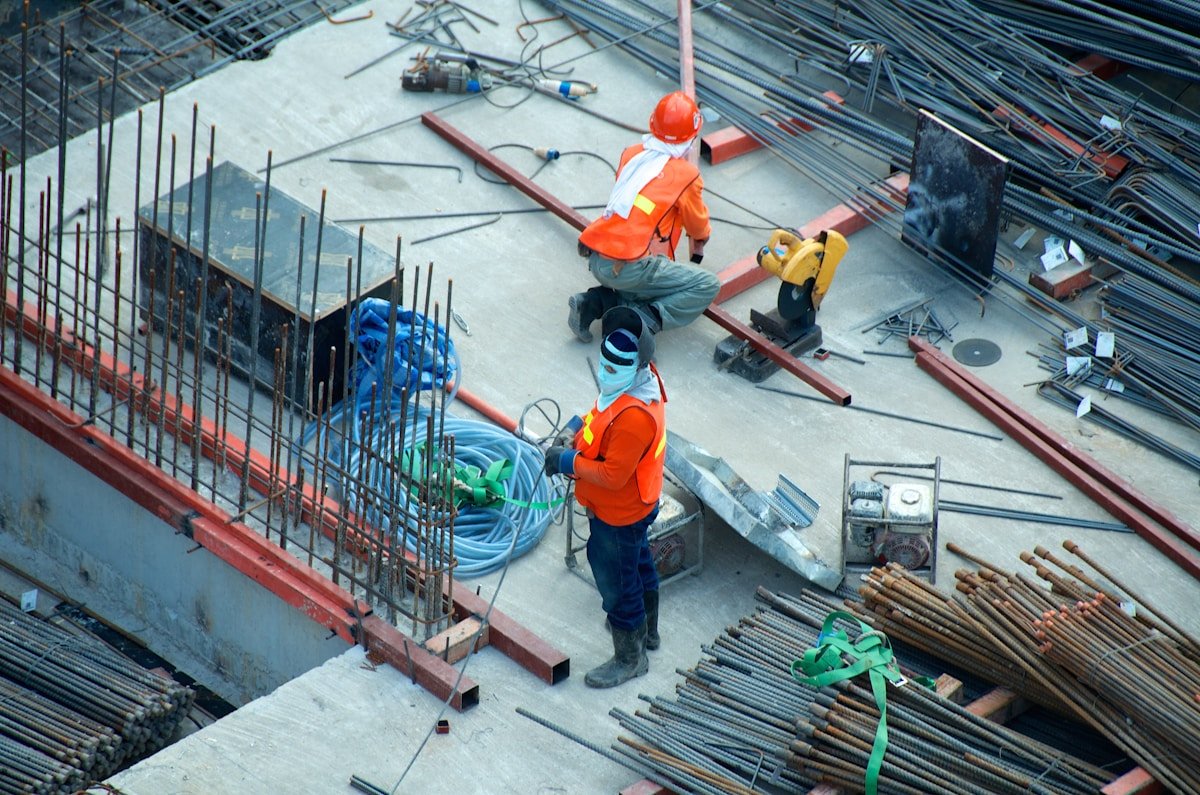 Project 54Five projects, five owners: India's reserve buildout is a construction programme before it is an energy security policy.
Root cause: a decade of deferral, not a sudden failure
India built its first strategic caverns in the 2010s at Visakhapatnam (1.33 million tonnes), Mangaluru (1.5 million tonnes) and Padur (2.5 million tonnes), a first phase always intended to be followed by larger expansions. The expansion stalled. The reason is visible in the budget lines rather than in any policy document: the FY26 Union Budget allocated 5,876 crore rupees for strategic reserve infrastructure and only 1,039 crore was actually used, after which the FY27 allocation was cut to 200 crore.
Meanwhile the exposure grew. Import dependence climbed toward 88 percent as domestic production stagnated, and demand is projected to rise from 5.64 million barrels per day in 2024 to 6.66 million by 2030 (an industry projection, treated here as an estimate). A buffer that was thin in absolute terms was getting thinner in relative terms every year that it was not expanded.
This is the root cause worth naming, because it is the one that repeats. Strategic reserves are a classic under provided public good: the cost is immediate and visible, the benefit is contingent and invisible, and every year the cheque is deferred the cheque gets larger. The war did not create the vulnerability. It priced it.
The trigger: a chokepoint that stopped being theoretical
The escalation between the United States, Israel and Iran that began around 28 February 2026 produced repeated disruption in the Strait of Hormuz through the spring, at one point halting an International Maritime Organization evacuation plan for stranded vessels. Roughly 20 percent of India's crude imports and about 7 percent of its LPG supply move through that strait, according to petroleum minister Hardeep Singh Puri (IANS, 10 June 2026).
Puri's own framing on 10 June was notably conditional: "Our constant effort has been, and will continue to be, to manage the situation in the same way we have managed it over the last 100 days. We will try to handle the next 30 or 60 days in the same manner. But if the international situation changes and prices rise sharply, then the issue will have to be revisited." That is a minister describing a policy of managed exposure, not of structural safety, and the reserve programme is the correction.
India's other response was sourcing. Puri says the country has diversified its crude sourcing from 27 countries before the war to 41, adding Argentina among others, while Venezuelan volumes rose from an average of 64,027 tonnes a month in FY2025-26 to 1,047,148 tonnes a month in April and May of FY2026-27. The paradox is that diversification did not reduce concentration: Russia's share of India's crude imports hit a record 52.5 percent in the first 22 days of June 2026, up from 41.7 percent in May, because discounted barrels beat diversified ones on price.
The numbers, side by side
The table sets the gap out plainly. The comparison that matters is not India against the benchmark, it is India against the countries it competes with for cargoes in a crisis.
| Facility or metric | Detail | Figure | Status, July 2026 |
|---|---|---|---|
| Visakhapatnam SPR | Andhra Pradesh | 1.33 million tonnes | Operational |
| Mangaluru SPR | Karnataka, incl. 0.75 Mt leased to ADNOC | 1.5 million tonnes | Operational |
| Padur SPR | Karnataka | 2.5 million tonnes | Operational |
| Mangaluru Phase I extension | ONGC funded | 1.75 million tonnes | Board approval, 9 Jul 2026 |
| Chandikhol SPR (estimate) | Odisha | approx. 4 million tonnes | Planned, award targeted by end FY27 |
| Strategic cover | India | approx. 9.5 days of net imports | Against IEA benchmark of 90 days |
| HPCL Rajasthan Refinery | Barmer, 79,459 crore rupees | 9 Mtpa crude, 2.4 Mtpa petchem | Inaugurated 4 Jul 2026 |
The mechanism, not the megatonnes
The capacity headline is the least interesting part of this story. The mechanism is the story.
Balance sheet, not budget
A state producer funds strategic storage from its own capital, sidestepping a sovereign allocation that has been chronically underspent and was then cut to 200 crore rupees for FY27.
Storage as a revenue asset
ONGC's board directed management to broaden commercial utilisation. The ADNOC lease at Mangaluru is the proof of concept: a foreign NOC pays for storage near its export market, India keeps an emergency call option on the crude.
Five owners, not one
Mangaluru, Padur, Chandikhol, Bina and Bikaner sit with different sponsors and state governments. Anyone selling into this treats it as five accounts, not one national programme.
The commercial read
The practical consequence for suppliers is that the buyer list just expanded. ONGC, ISPRL, MRPL, HPCL and the state governments of Odisha, Madhya Pradesh and Rajasthan are all now live capital owners on projects with defined timelines, alongside the traditional petroleum ministry line. Treating India's reserve programme as a single procurement is the fastest way to miss it.
The buying criteria are shifting too. Because ONGC has been told to pursue commercial utilisation, a pure civil engineering bid is now an incomplete bid. Storage leasing management, quality segregation and blending capability, and revenue models built on the ADNOC template all carry weight that they did not carry when the reserve was purely a sovereign insurance policy. Cavern and tankage engineering, corrosion protection, instrumentation, metering and EPC firms should expect the tender documents to ask commercial questions, not just technical ones.
There is a broader pattern here that we have tracked across our reserve coverage. Every major consuming state is now re pricing energy security as a live capital allocation question rather than a compliance footnote, which is the same shift we documented in China's approach to the IEA 90 day benchmark and in how Beijing responded to the Hormuz crisis. India's version is distinctive in one respect: it is the first to solve the funding problem by handing the bill to a listed national producer, and the market rewarded the producer for taking it. The IEA family widened again on 2 July 2026 when Nigeria joined as an Association country.
Listen & take it with you
Prefer audio, or need the deck for an internal review? The full briefing is available as a podcast episode and a downloadable slide presentation.
India holds about 9.5 days of strategic cover. What is the most likely binding constraint on closing the gap?
Frequently asked
India's dedicated strategic petroleum reserves cover about 9.5 days of net crude imports, well short of the International Energy Agency's recommended 90 days. Including commercial stocks held by refiners, total cover is reported closer to 70 to 75 days, but the government controlled strategic buffer itself remains thin, which is the gap the current buildout addresses.
For the first time, a state owned oil producer has been directed to fund and build a strategic reserve on its own balance sheet rather than relying on a central budget allocation. The FY26 allocation of 5,876 crore rupees was largely unspent and the FY27 line was cut to 200 crore, so shifting the cost to ONGC unlocks capital, and it opens the door to commercial leasing arrangements that can generate revenue while the crude stays available for emergency use.
No. India is an association country with the IEA rather than a full member, and full membership has historically been tied to OECD status, so the 90 day obligation does not bind it. India has been discussing a longer term roadmap toward that benchmark as its reserve capacity grows. For the mechanics of the benchmark itself, see our dossier on the IEA 90 day standard.
Roughly 20 percent of India's crude imports and about 7 percent of its LPG supply transit the Strait of Hormuz. The escalation that began in late February 2026 disrupted shipping through the strait repeatedly during the spring, which exposed the mismatch between India's exposure and its 9.5 days of strategic cover and moved reserve expansion up the policy agenda.
India has widened its supplier base from 27 to 41 countries and sharply increased Venezuelan volumes, but concentration has not fallen. Russia's share of India's crude imports reached a record 52.5 percent in the first 22 days of June 2026, driven by discounted pricing rather than by a deliberate geopolitical rebalancing.
Get the next intelligence drop
Join energy and industrial leaders getting our marketing, AI-growth and revenue-architecture intelligence, direct, no filler.
You're on the list
Welcome to The Energy Growth Brief, watch your inbox for the next dispatch.