



EU Methane Regulation: The 2027 Import Compliance Gate for Oil and Gas
The EU Methane Regulation turns the methane footprint of imported oil and gas into a condition of market access. From January 2027 importers must prove their suppliers monitor and report methane to an EU-equivalent standard, from August 2028 they must report the methane intensity of what they import, and from August 2030 maximum intensity values apply at the producer level. This is what the rule does, why the EU built it, and what it now means commercially for every producer and supplier that wants to keep selling into Europe. Share and coverage figures are marked as estimates.
- The regulation makes the methane footprint of imported oil and gas a market-access condition, not a voluntary disclosure. Europe imports the overwhelming majority of the oil and gas it burns, so the import gate is the only real lever it has over that footprint.
- The compliance calendar is already live: a rapid-reaction mechanism and monitoring tool due in early 2026, a methane transparency database launching September 2026, MRV equivalence for importers from January 2027, annual methane-intensity reporting from August 2028, and maximum intensity values from August 2030.
- Equivalence effectively means OGMP 2.0 Level 5 reporting. An estimated 7 percent of global oil and gas production met that bar in 2024, with forecasts around 26 percent by 2027, so the gate closes faster than most exporters can clear it.
- The largest suppliers to Europe, including Qatar, the United States, Algeria and Nigeria, have jointly warned there is no viable path to compliance on the current timeline and that supply and price impacts are a certainty.
- For suppliers, methane MRV is becoming a commercial instrument. The producer that can hand a European buyer verified, certified methane data removes a legal and financing risk from the deal, and wins share as less-prepared competitors are gated out.
A Rule Written for the Molecules Europe Imports, Not the Ones It Emits
The EU Methane Regulation, formally Regulation (EU) 2024/1787, entered into force on 4 August 2024. Its domestic provisions oblige EU oil, gas and coal operators to measure, report and verify methane emissions, to find and fix leaks, and to end most routine venting and flaring. That part of the law is significant but familiar. The part that reshapes global trade is the import chapter, which for the first time attaches methane conditions to fossil energy produced anywhere in the world if it is sold into the EU.
The mechanism is staged. From 1 January 2027, importers must demonstrate to a member-state authority that any supply contract concluded or renewed on or after 4 August 2024 covers product from producers operating monitoring, reporting and verification measures equivalent to the EU's. From 5 August 2028, importers must report the methane intensity of their imports each year. From 5 August 2030, the Commission is required to adopt delegated acts setting maximum methane intensity values that in-scope products must meet at the level of the producer. The European Commission's own methane pages describe this as building the data first and the hard limits second.
The design matters. The EU is not, at first, telling producers how much methane they may emit. It is telling importers that they cannot buy from producers who cannot prove what they emit. The obligation lands on the European buyer, but the buyer can only satisfy it by pulling verifiable data out of the supplier. That is how a rule aimed at Europe's own consumption becomes a standard exported to every basin that wants European demand.
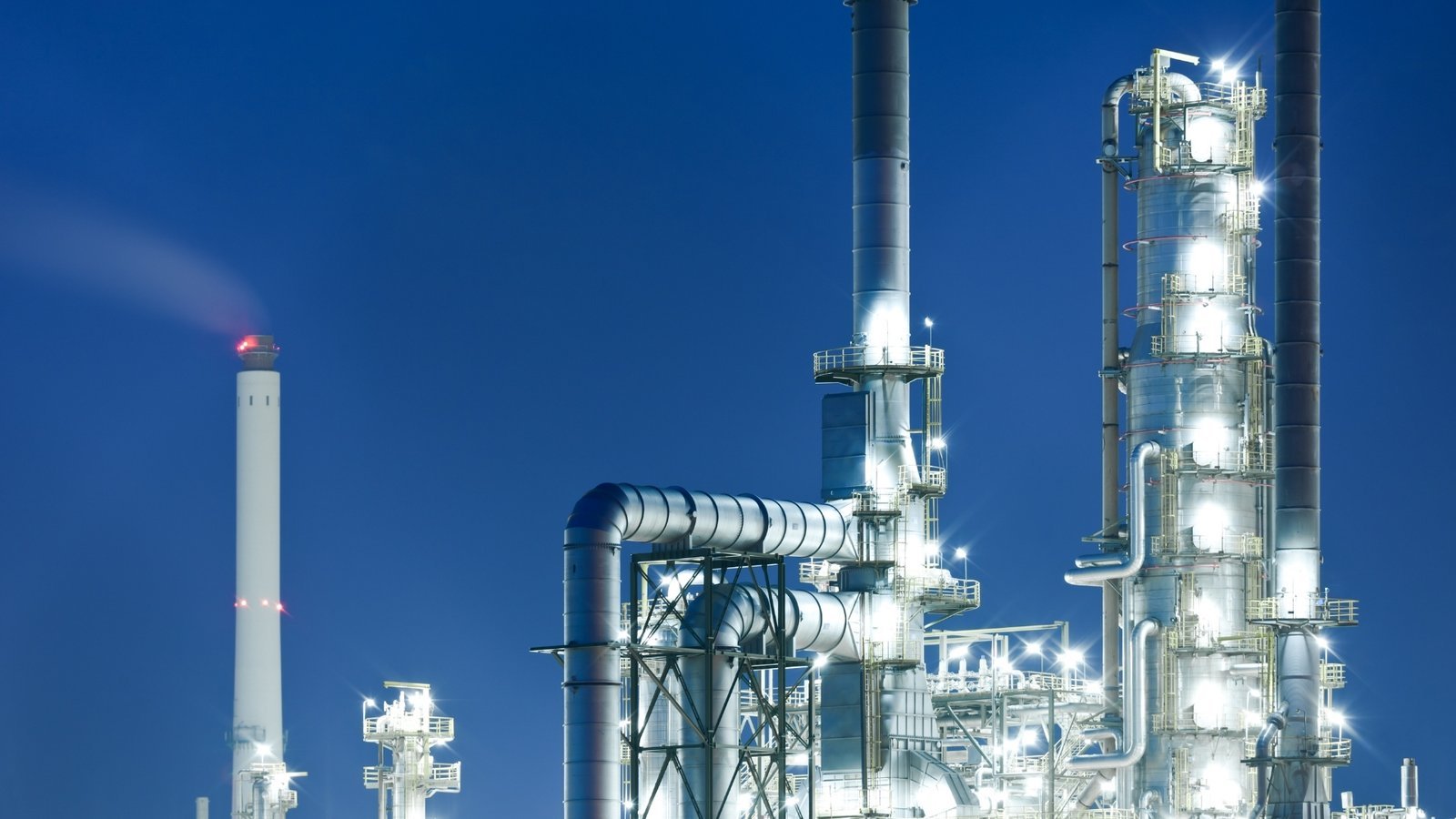 Project 54A gas processing plant flare, the visible edge of the methane intensity Europe now prices into market access.
Methane Is the Fastest Lever, and Imports Are the Only Reachable Handle
Methane is a short-lived but extremely potent greenhouse gas, responsible for a large share of the warming experienced to date and far more powerful than carbon dioxide over a twenty-year horizon. Because it clears the atmosphere in roughly a decade, cutting it buys near-term climate results that carbon dioxide cuts cannot. For a bloc that has committed to steep 2030 targets, methane is the single fastest lever available.
The problem for Brussels is geography. The EU produces very little of its own oil and gas and imports the overwhelming majority of what it consumes. Regulating only domestic operators would touch a small fraction of the methane actually associated with European energy use. The emissions that matter happen upstream, in the fields and pipelines of exporting countries. The only place the EU can reach them is at the border, through the buyers who write the cheques.
This is the same logic that produced the Carbon Border Adjustment Mechanism and the sustainability duties in CSRD and CSDDD. Europe has decided that if it cannot legislate the behaviour of foreign producers directly, it can condition access to its market on that behaviour. The methane regulation is the sharpest version of that strategy yet, because unlike a carbon price it can, from 2030, simply refuse product that fails a threshold.
The Compliance Calendar Is Already Running
The regulation is not a distant threat. Several of its machinery pieces are due before importers face their first hard deadline, and the sequencing is deliberate: transparency tools first, market-access conditions next, hard limits last.
| Date | Obligation | Who it lands on |
|---|---|---|
| 4 Aug 2024 | Regulation in force; domestic MRV, leak detection and repair, venting and flaring limits begin phasing in | EU operators |
| 5 Feb 2026 | Commission to establish a super-emitter rapid-reaction mechanism and a global methane monitoring tool | European Commission |
| Sep 2026 (est) | Methane transparency database launches, publishing importer, country and volume data | Commission and importers |
| 1 Jan 2027 | Importers must show new or renewed contracts cover producers under EU-equivalent MRV | EU importers |
| 5 Aug 2028 | Annual reporting of the methane intensity of imports begins | EU importers |
| 5 Aug 2030 | Maximum methane intensity values apply at producer level (delegated acts, not yet set) | Producers selling into the EU |
The Equivalence Bar Is Set Where Almost No One Stands Yet
The practical benchmark for equivalence is the Oil and Gas Methane Partnership 2.0 (OGMP 2.0) reporting standard at its highest tier, Level 5, which requires site-level, measurement-based reporting rather than generic emission factors. According to analysis summarised by the Center for Strategic and International Studies, only an estimated 7 percent of global oil and gas production had reached that level in 2024, with forecasts placing it near 26 percent by 2027. The gate, in other words, is designed to close well ahead of the supply base's ability to clear it.
That gap has produced an unusually direct diplomatic pushback. In a joint letter reported by the Financial Times and echoed by the US Department of Energy, QatarEnergy's chief executive and Qatar's energy minister Saad al-Kaabi, alongside officials from the United States, Algeria and Nigeria, warned that critical technical elements of the rule remain undefined so close to the 2027 deadline. "There is no viable path to compliance with the regulation," the signatories wrote, adding that because "legal compliance remains paramount, exporters and importers alike are unwilling to enter into contractual agreements that knowingly violate EU law," and that "significant supply and price impacts are a certainty."
The warning is not only rhetorical. European buyers are already contracting oil and gas for 2027 delivery into a rulebook whose equivalence criteria are not finalised, which means either the timeline slips, the equivalence test is written loosely enough to admit most current suppliers, or a meaningful share of Europe's imports becomes non-compliant on day one. Each of those outcomes has a different commercial consequence, and none of them is settled.
Methane Data Becomes a Revenue Instrument, Not a Reporting Chore
Strip away the diplomacy and the regulation resolves into a single commercial fact: from 2027, the ability to prove a low and verified methane footprint becomes part of the product a European buyer is allowed to purchase. The producer that can hand a buyer audited, site-level methane data removes a legal and financing risk from the transaction. The producer that cannot forces the buyer to carry that risk, or to look elsewhere. That asymmetry is where market share moves.
Certify before you are asked
OGMP 2.0 Level 5 reporting and independent certification schemes such as MiQ are becoming the currency of equivalence. Producers that reach measurement-based reporting early can market it as a differentiator while competitors are still assembling estimates.
Sell the data with the molecule
A verified methane-intensity figure is fast becoming a line item in the commercial offer, in the same way a verified Scope 3 carbon figure already gates who sells to the majors. Package the data as a sales asset, not a compliance afterthought.
Read equivalence as a moving target
The maximum intensity values arriving in 2030 have not been set. Suppliers who build measurement infrastructure now can shape and survive whatever threshold lands, rather than scrambling once a number exists that their assets already breach.
Treat access as the prize
As with Gulf local-content rules and sustainable procurement applications, the compliance-ready supplier does not just avoid penalties, it inherits the share vacated by suppliers who are gated out. The gate cuts both ways.
Listen & take it with you
Prefer audio, or need the deck for an internal review? The full briefing is available as a podcast episode and a downloadable slide presentation.
What is the smartest response for an energy producer to the EU methane rules?
Frequently asked
It is Regulation (EU) 2024/1787, in force since 4 August 2024, the EU's first dedicated law to cut methane emissions in the energy sector. It requires EU oil, gas and coal operators to measure, report and verify methane, detect and repair leaks, and limit venting and flaring, and it extends methane conditions to imported fossil energy through a staged set of importer obligations.
From 1 January 2027, importers must show that supply contracts concluded or renewed on or after 4 August 2024 cover producers under monitoring, reporting and verification equivalent to EU rules. From 5 August 2028 importers must report the methane intensity of imports annually. From 5 August 2030 maximum methane intensity values, set by Commission delegated acts, apply at producer level.
OGMP 2.0 is the UN-backed Oil and Gas Methane Partnership reporting framework. Level 5 is its highest tier, requiring site-level, measurement-based reporting rather than generic emission factors. It functions as the practical benchmark for EU equivalence, and only an estimated 7 percent of global oil and gas production had reached it in 2024, which is why exporters call the timeline unworkable.
Not yet. The regulation requires the Commission to adopt delegated acts setting maximum methane intensity values that in-scope products must meet at the level of the producer, applying from 5 August 2030. Those threshold numbers have not been published, so the hard limit exists in law but its level is still undefined.
Build measurement-based methane reporting toward OGMP 2.0 Level 5 now, because that requirement is common to every version of the rule. Pursue independent certification such as MiQ to make the performance verifiable to buyers, and package verified methane-intensity data as part of the commercial offer. Suppliers that do this early can win the EU share vacated by competitors who cannot clear the gate.
Get the next intelligence drop
Join energy and industrial leaders getting our marketing, AI-growth and revenue-architecture intelligence, direct, no filler.
You're on the list
Welcome to The Energy Growth Brief, watch your inbox for the next dispatch.