


ConocoPhillips in 2026: The Disciplined Pure-Play That Bought Scale and Cut Costs
ConocoPhillips is now the largest independent exploration and production company in the world, and it got there by doing the opposite of a growth-at-any-cost roll-up. It bought Marathon Oil for 22.5 billion dollars in stock, doubled the promised synergies, and spent 2026 taking another billion dollars of cost and capital out of the business while handing 45 percent of operating cash flow back to shareholders. This dossier examines what ConocoPhillips is doing, the logic of the pure-play model, and what a returns-first supermajor-scale independent means for the suppliers, competitors and buyers around it.
- ConocoPhillips bought Marathon Oil for 22.5 billion dollars in an all-stock deal that closed in late 2024, adding more than two billion barrels of resource at an average cost of supply below 30 dollars a barrel WTI and making it the largest independent E&P in the world.
- The company doubled its Marathon synergy target, from at least 500 million dollars to more than one billion dollars on a run-rate basis in 2025, and set out to remove a further one billion dollars of cost and capital in 2026.
- Its financial framework returns roughly 45 percent of cash flow from operations to shareholders through dividends and buybacks, and it is on track to sell about five billion dollars of assets by the end of 2026 to sharpen the portfolio.
- Long-life, low-cost projects anchor the future: the Willow project in Alaska is expected to reach about 180,000 barrels a day at peak, alongside equity LNG at Qatar's North Field and Port Arthur on the US Gulf Coast.
- For suppliers and competitors, ConocoPhillips is a returns-first buyer that competes on cost of supply, not growth, so the winning pitch is measurable cost, reliability and capital efficiency, not scale for its own sake.
Buy low-cost scale, then take the cost out
In May 2024 ConocoPhillips agreed to buy Marathon Oil in an all-stock deal valued at about 22.5 billion dollars including 5.4 billion dollars of Marathon debt, at an implied 30.33 dollars a share and a premium of roughly 15 percent. The deal closed in the fourth quarter of 2024. Announcing it, chief executive Ryan Lance said the acquisition further deepened the portfolio and fit within the company's financial framework, adding high-quality, low cost of supply inventory adjacent to its leading US unconventional position. That last phrase is the whole strategy in a sentence: this was not a bet on higher oil prices, it was the purchase of cheap, drillable inventory next to assets ConocoPhillips already knew how to run.
The scale was real. The transaction added more than two billion barrels of resource at an estimated average point-forward cost of supply below 30 dollars a barrel WTI, and it made ConocoPhillips the largest independent exploration and production company in the world, a US onshore-led major spanning the Permian, Eagle Ford, Bakken and beyond. But the more revealing move came after closing. ConocoPhillips first promised at least 500 million dollars of run-rate cost and capital savings within the first full year, then more than doubled that to above one billion dollars during 2025, and set out to remove roughly another one billion dollars of cost and capital in 2026. The pattern is deliberate: acquire low-cost inventory, integrate it, and then compete on how cheaply the barrels come out of the ground.
22.5 billion dollar deal
Marathon Oil bought all-stock in 2024, adding two billion-plus barrels below 30 dollars a barrel cost of supply and creating the largest independent E&P.
Synergies doubled
The 500 million dollar synergy target was lifted above one billion dollars run-rate in 2025, with a further billion in cost and capital targeted for 2026.
Returns-first framework
About 45 percent of operating cash flow returned to shareholders, with roughly five billion dollars of asset sales sharpening the portfolio by end 2026.
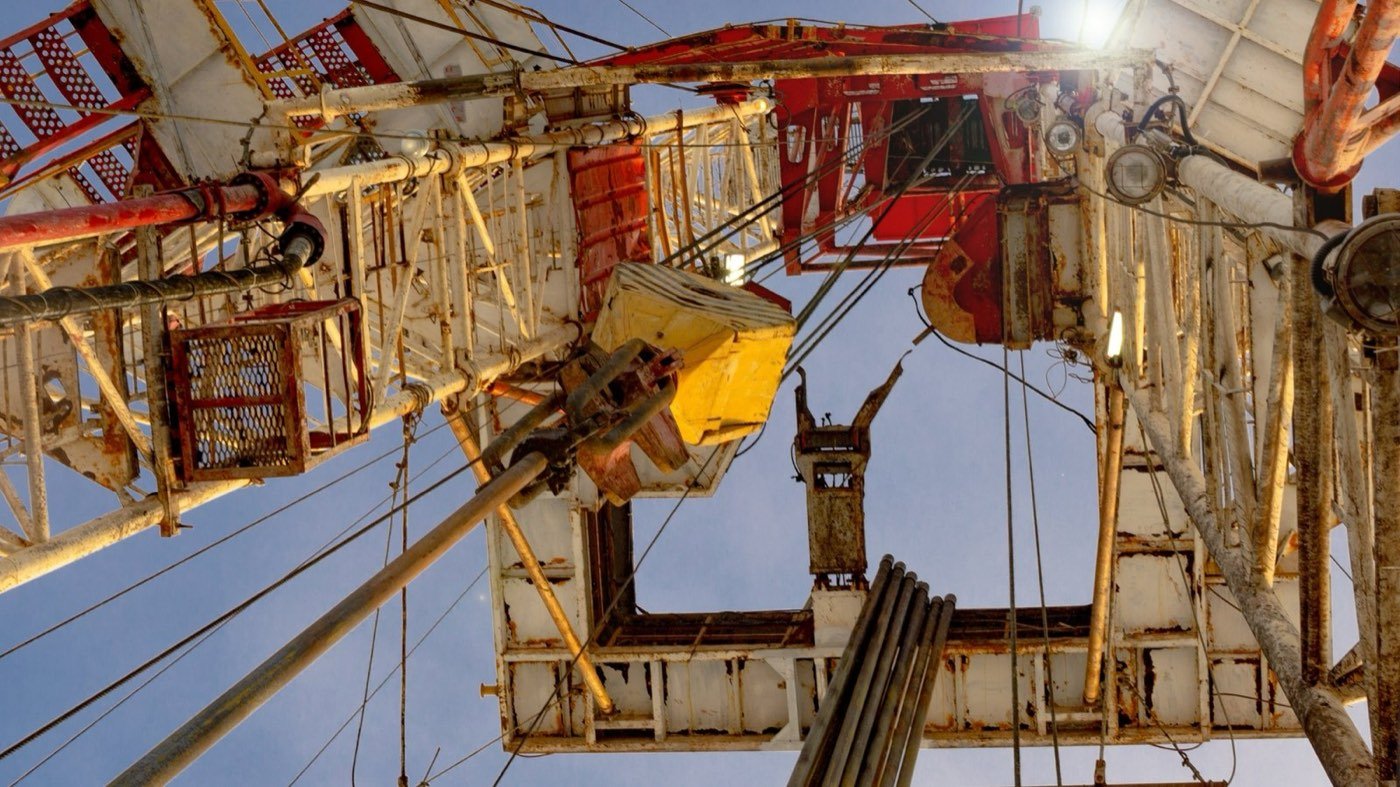 Project 54Low cost of supply is the moat. ConocoPhillips competes on how cheaply the barrel comes out of the ground, not on headline volume.
Cost of supply is the moat, capital discipline is the promise
ConocoPhillips is a pure-play upstream company, it explores for and produces oil and gas and does not own the refineries and chemical plants that an integrated major like ExxonMobil runs. That focus is a choice, and its logic is cost of supply. If your only job is to turn capital into barrels, the durable advantage is a deep inventory of wells that stay profitable at a low oil price. Buying Marathon was a way to extend that inventory cheaply, and the relentless cost-out afterwards is how you protect the margin on every one of those barrels through the cycle. When the company talks about being resilient at low prices, it is describing a business engineered to make money when weaker producers cannot.
The second half of the logic is the promise to shareholders. ConocoPhillips has built its reputation on a clear financial framework: fund the business, protect the balance sheet, and return a large and predictable share of cash flow, around 45 percent of operating cash flow, through a growing dividend and buybacks. Selling about five billion dollars of assets by the end of 2026 is part of the same discipline, pruning what does not compete for capital so the money flows to the lowest-cost barrels and back to owners. This is the same instinct Project 54 traced in BP's strategic reset and in Eni's self-funding capital engine, the majors reorganising around discipline and returns, but ConocoPhillips has made it the entire identity of the company rather than a correction after a strategy that drifted.
| Metric | Figure |
|---|---|
| Marathon Oil acquisition | 22.5 billion dollars, all-stock, closed Q4 2024 |
| Resource added | More than two billion barrels |
| Average cost of supply added | Below 30 dollars a barrel WTI |
| Marathon synergies captured 2025 | More than one billion dollars run-rate |
| Further cost and capital target 2026 | About one billion dollars |
| Cash returned to shareholders | About 45 percent of operating cash flow |
| Asset sales by end 2026 | About five billion dollars |
| Willow (Alaska) peak output | Around 180,000 barrels a day |
Long-life, low-cost projects and a quiet move into LNG
A discipline story still needs a growth story, and ConocoPhillips places its bets on a small number of long-life, low-cost projects rather than a scramble for production. The clearest is Willow, its oil development on Alaska's North Slope, expected to reach a peak of around 180,000 barrels a day and to deliver stable cash flow for decades, exactly the kind of durable, low-decline barrel that suits a cost-of-supply model. Alaska also gives ConocoPhillips something most shale-heavy independents lack, a large conventional asset with a long plateau rather than the steep decline curves of tight oil.
The quieter move is into liquefied natural gas. ConocoPhillips holds equity positions in Qatar's North Field expansion, with North Field East expected to start up in the second half of 2026, and in Port Arthur LNG on the US Gulf Coast. For a company that sells molecules, an equity LNG position is a way to reach the fastest-growing demand in energy, gas for Asian and European buyers and for the power that data centres consume, without abandoning capital discipline. Taken together the growth engine is narrow and deliberate: a handful of world-scale, low-cost projects that extend the plateau, plus an LNG option on rising global gas demand, funded from within a framework that still hands most of the cash back to owners. It is a deliberate contrast with the LNG land grab Project 54 has documented elsewhere, growth taken in measured equity slices rather than headline capacity races.
Willow, Alaska
A long-life oil project expected to peak near 180,000 barrels a day, the low-decline barrel a cost-of-supply model is built around.
Equity LNG
Stakes in Qatar's North Field, with North Field East starting up in the second half of 2026, and in Port Arthur LNG on the US Gulf Coast.
Growth inside the framework
A few world-scale projects rather than volume chasing, all funded while returning about 45 percent of operating cash flow.
Sell cost and reliability, or do not get the meeting
For suppliers, ConocoPhillips is the archetype of the returns-first buyer, and it changes the pitch. A company whose entire identity is cost of supply and capital discipline does not reward scale, novelty or a longer feature list, it rewards a measurable reduction in the cost of a barrel, fewer non-productive days, and capital efficiency that holds through a downturn. The vendors who win are the ones who can quantify the saving, prove the reliability, and stand behind it when the oil price falls. After absorbing Marathon, ConocoPhillips is also running a larger, more standardised US onshore machine, which favours suppliers who can serve a big, repeatable programme at a predictable unit cost over those who sell bespoke, high-touch solutions.
For competitors and buyers the read is strategic. ConocoPhillips has shown that an independent can reach supermajor scale and still compete on cost rather than growth, which resets the benchmark for every other US producer, the question boards now ask is not how fast you can grow but how cheaply you can produce and how much you can return. That pressure accelerates the consolidation Project 54 has tracked across the US oil and gas landscape, because sub-scale producers struggle to match the cost curve of a company this large and this disciplined. For LNG buyers, ConocoPhillips's equity positions make it a growing counterparty in Qatar and on the US Gulf Coast. The sensible posture for everyone else is to assume ConocoPhillips will keep buying low-cost inventory, keep cutting cost, and keep returning cash, and to plan, sell and compete against a rival that has made discipline its defining advantage.
Quantify the saving
Cost of supply is the buying criterion, win with measurable cost, uptime and capital efficiency, not scale or novelty.
Serve the machine
A larger, standardised US onshore programme rewards predictable unit cost at volume over bespoke, high-touch work.
Price the benchmark
A disciplined independent at supermajor scale resets the cost bar and accelerates consolidation among sub-scale peers.
Listen & take it with you
Prefer audio, or need the deck for an internal review? The full briefing is available as a podcast episode and a downloadable slide presentation.
What is the most important read on ConocoPhillips's pure-play strategy?
Frequently asked
The 22.5 billion dollar all-stock acquisition of Marathon Oil, which closed in the fourth quarter of 2024, made ConocoPhillips the largest independent exploration and production company in the world. It added more than two billion barrels of resource at an average cost of supply below 30 dollars a barrel WTI, concentrated in US unconventional plays such as the Permian, Eagle Ford and Bakken.
ConocoPhillips is running a disciplined pure-play upstream strategy: grow low-cost inventory through acquisition, then cut cost and capital rather than chase volume. In 2026 it targeted a further one billion dollars of cost and capital savings on top of the more than one billion dollars of Marathon synergies captured in 2025, aimed to return about 45 percent of operating cash flow to shareholders, and was on track to sell roughly five billion dollars of assets.
ConocoPhillips first guided to at least 500 million dollars of run-rate cost and capital savings within the first full year after closing, then more than doubled that to above one billion dollars during 2025. It has since targeted an additional one billion dollars of cost and capital reductions in 2026, extending the integration into a continuous cost-out programme.
Willow is ConocoPhillips's oil development on Alaska's North Slope. It is expected to reach a peak of around 180,000 barrels a day and to deliver stable cash flow for decades. As a long-life, low-decline conventional asset it fits a cost-of-supply model that most shale-heavy independents cannot match, giving ConocoPhillips a durable plateau alongside its US unconventional barrels.
Because it competes on cost of supply and capital discipline rather than growth, ConocoPhillips rewards suppliers who can prove a measurable reduction in the cost of a barrel, higher reliability and capital efficiency, not scale or novelty. For competitors, a disciplined independent at supermajor scale resets the cost benchmark and accelerates consolidation, as sub-scale producers struggle to match its cost curve.
Get the next intelligence drop
Join energy and industrial leaders getting our marketing, AI-growth and revenue-architecture intelligence, direct, no filler.
You're on the list
Welcome to The Energy Growth Brief, watch your inbox for the next dispatch.