

Occidental's Two Bets: How Oxy Funds Permian Oil and the World's Largest Carbon Business
Occidental sold its chemicals arm to Warren Buffett, poured the cash into Permian oil, and is building the world's most expensive carbon plant at the same time. The logic connects. The economics, for now, do not.
- Occidental sold OxyChem to Berkshire Hathaway for 9.7 billion dollars, its largest divestiture in years, and put roughly 6.5 billion toward cutting principal debt below 15 billion.
- The sale funds a doubling down on the Permian, where the 2024 CrownRock deal added low cost inventory and total production reached about 1.45 million barrels of oil equivalent a day in early 2026.
- Stratos, Occidental's direct air capture plant in Ector County, Texas, is designed to pull up to 500,000 tonnes of carbon dioxide from the air each year, the largest facility of its kind.
- Direct air capture still costs an estimated 600 to 800 dollars a tonne, far above the 180 dollar value of the 45Q tax credit, so the economics depend on subsidy and a carbon removal market that does not fully exist yet.
- Berkshire Hathaway, Occidental's largest shareholder, now owns both a large equity stake and the chemicals business, tying Warren Buffett's capital tightly to Oxy's direction.
- For energy suppliers, Occidental behaves like two customers in one: a cost disciplined oil buyer and an experimental carbon buyer, each with different procurement logic.
The chemicals sale that reset the balance sheet
On 2 October 2025 Occidental agreed to sell OxyChem, its petrochemicals arm, to Warren Buffett's Berkshire Hathaway for 9.7 billion dollars in cash. It was the largest deal Berkshire had struck in three years, and it closed on 2 January 2026. OxyChem was a steady cash generator, but it was not the future Occidental wanted to sell to investors.
The company said it would use about 6.5 billion dollars of the proceeds to cut principal debt below 15 billion, and that the lower debt would let it restart share buybacks. Chief executive Vicki Hollub framed the sale not as a retreat but as a way to fund the oil business. "This transaction strengthens our financial position and catalyzes a significant resource opportunity we've been building in our oil and gas business for the last decade," she said, pointing to "20+ years of low-cost resource runway."
The logic is a familiar one for majors under pressure to simplify: convert a good but non-core business into balance sheet strength and a cleaner story. Occidental had carried heavy debt since its 2019 purchase of Anadarko. Selling chemicals to the one shareholder who already believes in the company removed a financing overhang in a single move. Sources: Occidental, CNBC.
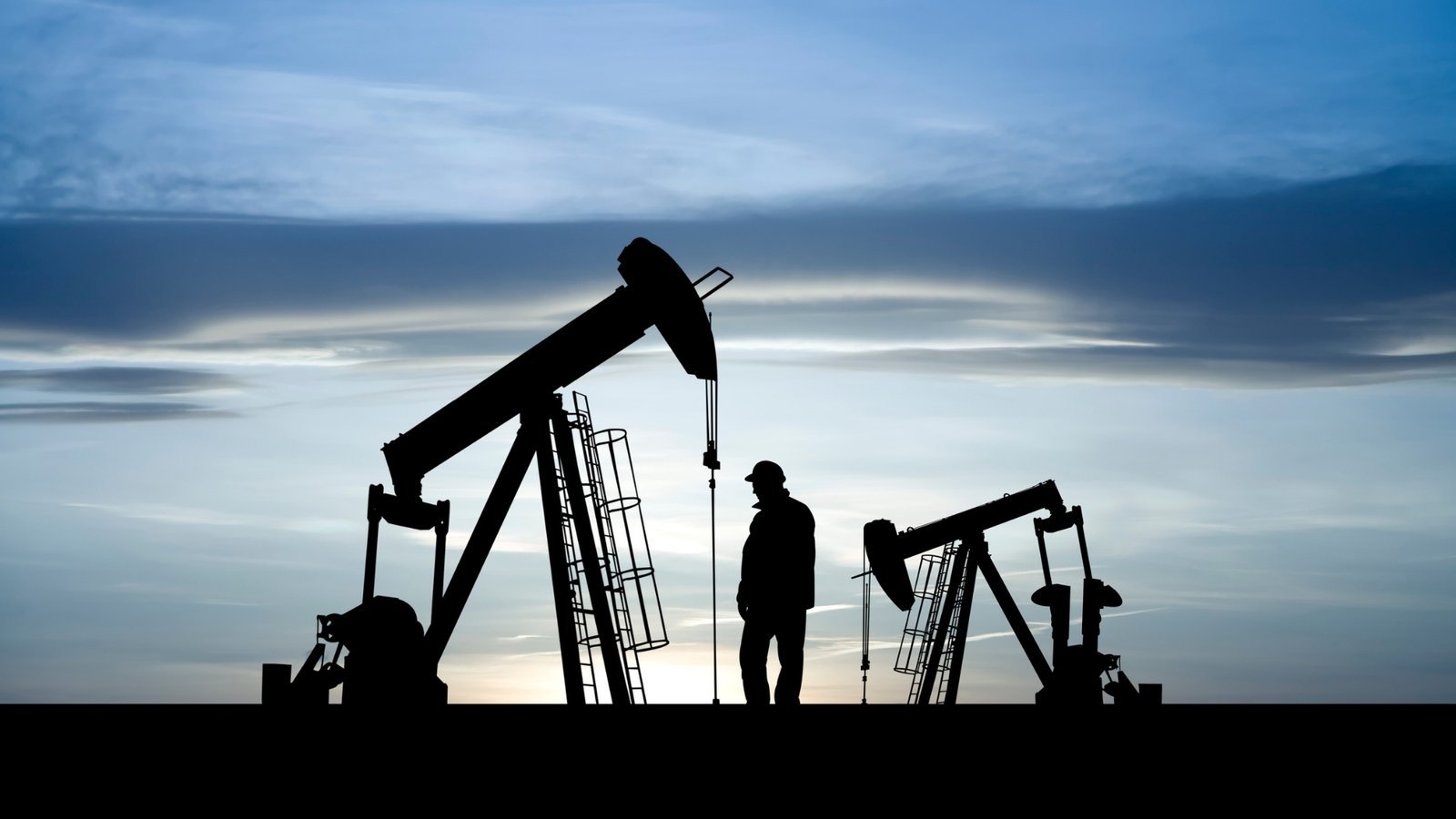 Project 54Pumpjacks at dusk. Occidental's cash engine is low cost Permian oil, which funds its far more expensive bet on carbon capture.
Doubling down on low cost Permian barrels
The debt reduction clears the way for Occidental to be what it now says it is above all else: a low cost Permian oil producer. Its 2024 acquisition of CrownRock, a private Permian operator, for roughly 12 billion dollars added a large block of tier one inventory next to Occidental's existing acreage. Total production reached about 1.45 million barrels of oil equivalent a day in early 2026.
The strategic idea is inventory life. Hollub's "20+ years of low-cost resource runway" is the number that matters to investors, because it means Occidental can keep drilling profitably even if oil prices soften. This is the same instinct behind ExxonMobil's advantaged assets strategy: own the lowest cost barrels, and price cycles become survivable rather than fatal.
It also changes how the company buys. A producer built around cost discipline and long inventory wants standardization, proven return on investment, and suppliers who can lower cost per barrel. That is a different buyer from the one described in the next section.
| Move | What it does | Scale |
|---|---|---|
| OxyChem sale to Berkshire | Cuts debt, funds oil focus | 9.7 billion dollars |
| Debt reduction | Principal debt below 15 billion | About 6.5 billion applied |
| CrownRock acquisition (2024) | Adds tier one Permian inventory | About 12 billion dollars |
| Total production, early 2026 | The cash engine | About 1.45 million boe per day |
| Stratos direct air capture | Builds the carbon business | Up to 500,000 tonnes CO2 per year |
The world's largest carbon vacuum
While the oil side gets simpler, the other bet gets bolder. Through its subsidiary 1PointFive, Occidental is building Stratos in Ector County, Texas, the largest direct air capture plant in the world. It is designed to remove up to 500,000 tonnes of carbon dioxide from the air each year, at a build cost reported near 1.3 billion dollars, and it secured its Class VI sequestration permits from the US Environmental Protection Agency in April 2025.
The reason an oil company is building a carbon vacuum is not sentiment. Occidental has decades of experience pumping carbon dioxide underground for enhanced oil recovery, so the physical skills transfer. The company wants to sell carbon removal credits to buyers who need to offset emissions, supply lower carbon fuels, and use captured carbon dioxide across its own operations. In effect, Occidental is trying to create a category and then own it.
This is the part of the strategy that echoes the reporting pressure now landing on the whole sector, the same pressure behind rules like CSRD and the CSDDD. If large companies are forced to account for and reduce emissions, someone has to sell them the means to do it. Occidental wants to be that seller.
Where the strategy meets the spreadsheet
Not yet on their own. Independent estimates put the cost of direct air capture at roughly 600 to 800 dollars a tonne of carbon dioxide removed, and these are estimates that vary widely by plant and stage. The main US subsidy, the 45Q tax credit, is worth about 180 dollars a tonne for this kind of capture. The gap between cost and credit is the whole problem.
That is why the supporting deals matter as much as the plant. Occidental has been awarded up to 650 million dollars from the US Department of Energy toward a separate South Texas direct air capture hub, and it has been in talks with XRG, the international investment arm of ADNOC, about a joint venture to help fund it. Read alongside our look at what XRG is, the pattern is clear: the carbon bet is being financed by subsidy and partners, not by carbon revenue.
So the honest reading is that Stratos is a real plant built on an incomplete market. It works commercially only if three things hold: government support continues, buyers pay a premium for verified removal, and costs fall with scale. None of these is guaranteed. That uncertainty is not a flaw in the analysis, it is the actual state of the business.
The Berkshire connection
Berkshire Hathaway is Occidental's largest shareholder, holding a stake reported at around 28 percent, and with the OxyChem purchase it now owns the chemicals business outright as well. Few majors have a single investor this closely tied to both their equity and their assets.
The signal is patient capital. Buffett has said he likes Occidental's oil and gas position and its management. A shareholder willing to buy the chemicals unit at 9.7 billion dollars, and to keep adding to the stock over years, gives Occidental something most peers lack: a large owner who is comfortable with a long payback and unlikely to force a break up. That tolerance is exactly what a two bet strategy needs.
It also concentrates risk. When one investor is this central, the company's freedom of action is shaped by that relationship. For now it is an advantage. It is worth watching as the carbon bet consumes cash.
Selling to a company making two bets at once
The practical lesson for suppliers and marketers is that Occidental is two buyers, and treating it as one will lose the deal. The oil side rewards cost discipline, standard equipment, fast payback, and evidence you lower cost per barrel. The carbon side rewards the opposite: willingness to pilot first of a kind technology, share risk, and co develop something that has never been done at scale.
A single generic pitch fits neither. The message to the Permian organisation should be about reliability and unit cost. The message to the 1PointFive and low carbon organisation should be about innovation, risk sharing, and helping build a category. Same logo, two procurement cultures.
The wider point applies beyond Occidental. Majors are increasingly building narrative categories, carbon management, integrated power, advantaged assets, and buying from vendors who help them tell that story credibly. Sellers who understand which story a buyer is trying to tell, and can prove they advance it, win. This is the same commercial discipline we described in how Eni makes money and TotalEnergies' two pillar strategy.
The next year or two
Two futures are visible. In the first, Stratos ramps, the Department of Energy funding and partner capital hold, buyers pay for verified removal, and Occidental becomes the reference carbon management major, a company selling both barrels and the means to offset them. In the second, the carbon economics stay stubborn, subsidy shifts, and Occidental settles into being a very well run Permian pure play with an expensive science project attached.
The signals to watch are specific: how fast Stratos reaches steady operation, whether real carbon removal offtake contracts appear at a premium price, whether the DOE and any ADNOC linked funding continues, and where oil prices sit, because oil cash is what keeps the carbon bet alive.
Either way, Occidental has made its choice legible. It has simplified the balance sheet, concentrated on low cost oil, and placed the sector's boldest carbon bet on top. The strategy is coherent. The open question is whether the market it is trying to create arrives before the patience of its capital runs out.
Listen & take it with you
Prefer audio, or need the deck for an internal review? The full briefing is available as a podcast episode and a downloadable slide presentation.
Which of Occidental's two bets will define it by 2030?
Frequently asked
Occidental sold OxyChem to Berkshire Hathaway for 9.7 billion dollars in cash. The deal was announced on 2 October 2025 and completed on 2 January 2026, making it Berkshire's largest acquisition in three years.
The company said it would apply about 6.5 billion dollars toward cutting principal debt below 15 billion, which in turn lets it restart share buybacks and keep investing in low cost Permian oil production.
Stratos is the world's largest direct air capture plant, built by Occidental's subsidiary 1PointFive in Ector County, Texas. It is designed to remove up to 500,000 tonnes of carbon dioxide from the air each year.
Not on its own yet. The cost is estimated at roughly 600 to 800 dollars a tonne, well above the 180 dollar value of the 45Q tax credit. The economics rely on government subsidy, partner funding, and a carbon removal market that is still forming.
Berkshire Hathaway is Occidental's largest shareholder, with a stake reported at around 28 percent, and after buying OxyChem it also owns the chemicals business outright.
Get the next intelligence drop
Join energy and industrial leaders getting our marketing, AI-growth and revenue-architecture intelligence, direct, no filler.
You're on the list
Welcome to The Energy Growth Brief, watch your inbox for the next dispatch.