



One Ratio Tells You Whether a Customer Is Growing or Just Busy
Book-to-bill is orders divided by revenue in the same period. Above 1 the order book is filling faster than the factory empties it; below 1 the company is delivering work it won earlier and not fully replacing it. In the last three weeks Siemens Energy reported 1.54 for its fiscal year and GE Vernova reported three different answers in one quarter: about 3.6 in Power, about 1.4 in Electrification and about 0.8 in Wind. For a supplier selling into those programmes, the three numbers call for three different conversations.
- Book-to-bill is orders divided by revenue over the same period. Siemens Energy states the definition in its own release as the “ratio of orders to revenue”, which makes it one of the few headline metrics with no reconciliation argument attached.
- Siemens Energy reported a book-to-bill of 1.54 for fiscal 2026, on €68.1bn of orders against €44.2bn of revenue, and an order backlog of €164bn. The arithmetic reproduces the stated ratio exactly, which is the test to apply to any company that quotes one.
- One quarter is not a trend. In the fourth quarter Siemens Energy took €14.8bn of orders against €12.8bn of revenue, about 1.16 against 1.54 for the year, and the company attributed the fall to “normal project phasing and the large-project nature of the business”.
- The ratio is most useful inside a company. In GE Vernova’s third quarter Power ran at roughly 3.6, Electrification at the approximately 1.4 the company reported itself, and Wind at roughly 0.8.
- Backlog and book-to-bill are different signals and can point opposite ways. GE Vernova’s Electrification orders fell 9% organically in the quarter while its equipment backlog rose 60% year-on-year. The backlog records what was won before; the ratio records what is being won now.
Orders won divided by revenue billed, over the same period
Most of the numbers an equipment maker publishes need a paragraph of explanation before they mean anything. Book-to-bill is the exception. It is the value of orders taken in a period divided by the revenue recognised in that same period, and Siemens Energy spells the definition out inside its Q4 FY 2026 earnings release, describing the “Book-to-bill ratio (ratio of orders to revenue)”. There is no adjusted version and no reconciliation table.
The interpretation is equally plain. Above 1, the company won more work in the period than it delivered, so the order book grew. Below 1, it delivered more than it won, so the order book shrank. At exactly 1 the company is replacing work at the rate it consumes it.
What makes it useful to someone selling into these companies is that it describes the direction of the queue rather than its size. A large backlog tells you the customer is busy. Book-to-bill tells you whether they are getting busier. Those two facts lead to very different commercial conversations, and most suppliers only ever hear the first one.
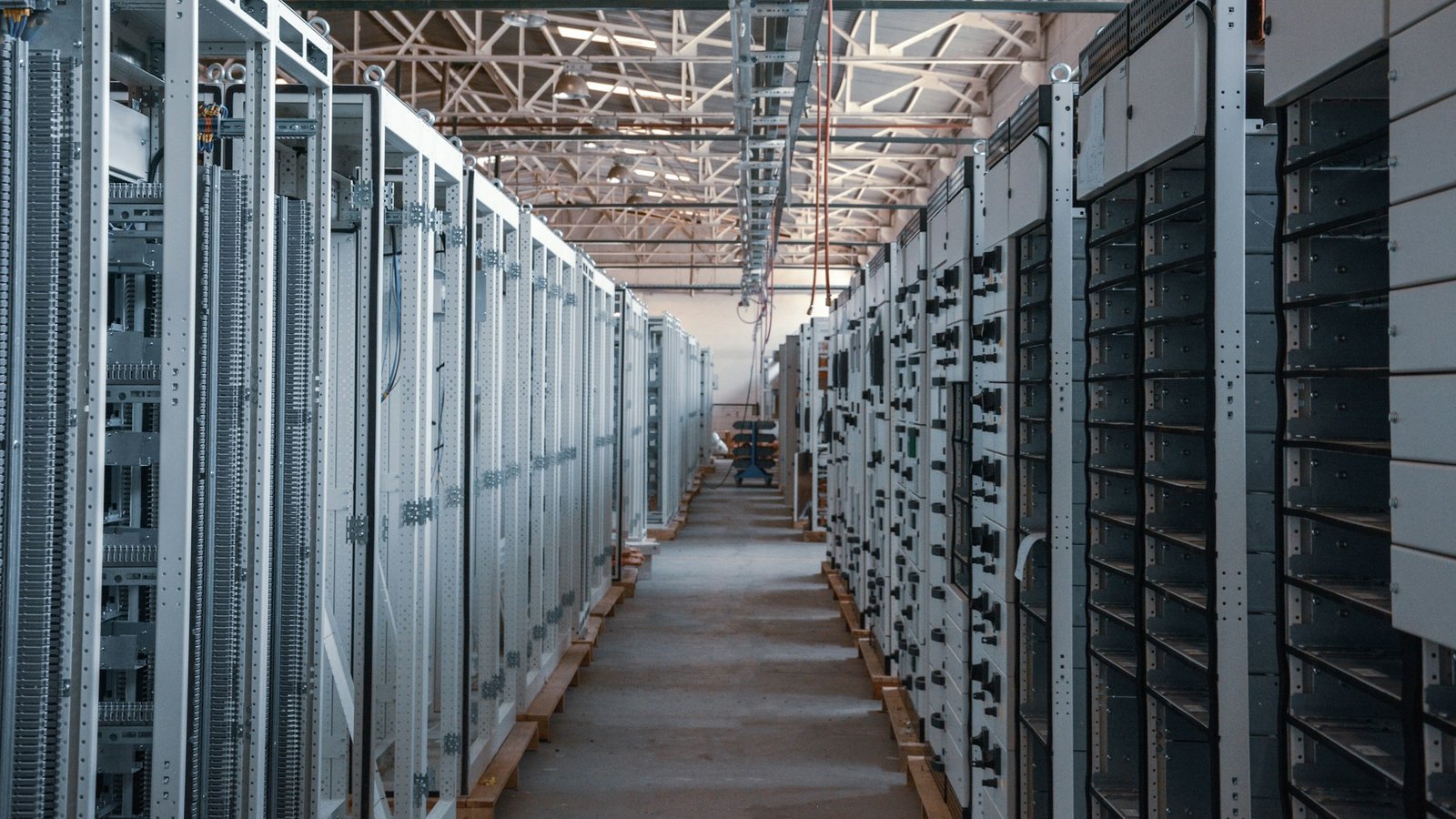 المشروع 54A data-centre hall. Demand from loads like these is behind the order intake that put GE Vernova's Power segment at a book-to-bill of roughly 3.6 in the third quarter of 2026.
The order book is filling faster than the factory empties it
Siemens Energy reported its fiscal 2026 results on 11 November 2026. Orders were €68.1bn, 18.8% above the prior year on a comparable basis, and revenue was €44.2bn. In the same release the company states that the “Book-to-bill ratio was strong at 1.54 for the fiscal year”.
Divide €68.1bn by €44.2bn and you get 1.54. That is worth doing rather than taking on trust, because it is the test to apply to any company that quotes a ratio: if the stated figure does not fall out of the disclosed orders and revenue, the company is using a different numerator or a different period, and you should find out which before relying on it.
The consequence of running at 1.54 for a year is arithmetic. Siemens Energy’s order backlog “increased to a new record level of €164bn at fiscal year-end”. Roughly €24bn of work was added to a queue that the company is emptying at about €44bn a year. A customer in that position is not short of demand. It is short of slots.
The same company’s ratio fell from 1.54 to about 1.16 in three months
In the fourth quarter alone Siemens Energy took €14.8bn of orders against €12.8bn of revenue. That is a book-to-bill of about 1.16, against 1.54 for the year. The company does not print the quarterly figure, saying only that it “remained clearly above 1”, which it did.
A supplier reading the quarter in isolation might conclude that demand had turned. The issuer gives the reason in the same sentence: order intake “moderated from the exceptionally strong levels of the first three quarters, reflecting normal project phasing and the large-project nature of the business”.
That is the structural caveat on the whole metric. In a business where a single grid or gas contract can be worth more than a quarter of segment revenue, the timing of signatures moves the ratio more than the health of the market does. Read book-to-bill over a year, or over four rolling quarters. Read a single quarter only against the company’s own explanation of it.
Inside one company, segment by segment
GE Vernova’s third quarter of 2026, reported on 28 October in its third-quarter 2026 press release filed with the SEC, is the clearest worked example available. At group level the company took orders of $29.3bn against revenue of $12.6bn, a ratio of about 2.3, and backlog reached $197bn.
The group number hides almost everything that matters. Power took “orders of $21.8 billion”, up 178% organically, against “revenues of $6.1 billion”: a book-to-bill around 3.6. Electrification took $5.4bn of orders against $3.9bn of revenue and the company reports the ratio itself, “a book-to-bill ratio of approximately 1.4”. Wind took $2.1bn of orders against $2.7bn of revenue, which is about 0.8.
Three segments of one company, in one three-month period, running at roughly 3.6, 1.4 and 0.8. Any supplier that treats “GE Vernova” as a single commercial situation is working from an average that describes none of its three businesses.
Wind is the case worth studying, because revenue still grew
GE Vernova’s Wind segment is the instructive one, because the obvious reading is wrong. Orders of $2.1bn “increased 16% organically” in the quarter. Revenues of $2.7bn “increased 4%”. Both numbers went up. The ratio is still about 0.8.
What that combination describes is a segment delivering work it won earlier, faster than new orders are replacing it. Revenue growth in such a period is backlog being converted, not demand arriving. The factory is full this year on the strength of last year’s signatures.
For a supplier the practical consequence is a change in who is under pressure. Where book-to-bill sits comfortably above 1, the buyer’s constraint is capacity and the scarce thing you can offer is a credible delivery date. Where it sits below 1, the buyer’s own sales team is competing for work, cost scrutiny moves down the chain within a quarter or two, and the scarce thing you can offer is a reason you are worth the price. Same account, same quarter, opposite pitch, and the ratio is published before the pressure reaches you.
No, and GE Vernova’s Electrification segment shows them pointing opposite ways
This is the distinction that catches people out. In the same quarter, Electrification’s “Orders of $5.4 billion decreased (9)% organically”, while the segment “Increased equipment backlog to $42.2 billion, up $15.7 billion, or 60% year-over-year”, a figure that includes $5bn from the Prolec GE acquisition.
Orders down 9%, backlog up 60%. Both are true and they are not in conflict, because they measure different moments. Backlog is the accumulated stock of work won at any time in the past and not yet delivered. Book-to-bill is the flow in the period just ended. A company can have a record stock and a falling flow at the same time, and the flow is the one that tells you what next year looks like.
GE Vernova also notes the reason for the decline, “given large synchronous condenser orders in the third quarter of last year”, which is a comparison-base effect rather than a demand signal. That is the second habit worth forming: when a ratio moves sharply, read the issuer’s own sentence about why before deciding what it means. The same discipline applies to the backlog figures we looked at in GE Vernova’s gas turbine and grid backlog وفي Siemens Energy’s Grid Technologies backlog.
It changes what you ask for, not just what you know
The metric earns its place when it changes the request. Three readings, three moves.
Comfortably above 1 and rising. The buyer is capacity-bound and knows it. The valuable question is not whether they need what you make but which of their constraints you could absorb: qualification lead time, a documented delivery slot, a component they are currently making themselves. This is the situation described in how Hitachi Energy allocates transformer capacity, where the supplier’s problem stops being persuasion and becomes access.
Around 1. The order book is stable and the buyer is managing mix rather than volume. Framework and long-term agreements are usually negotiated in these windows, because neither side is under acute pressure. We set out how those are structured in selling into long-term agreements.
Below 1. Expect procurement scrutiny to tighten within two quarters, and expect it to arrive through the EPC contractor rather than directly, as described in selling through EPC contractors. The work to do now is evidence: what you cost the programme in total rather than per unit, and what goes wrong without you.
None of this requires inside information. Both companies in this piece published their orders and revenue, and one of them published the ratio. The advantage goes to the supplier who reads the segment rather than the company, and who reads the flow rather than the stock. If you want a second read on what your own customers’ order books are saying, that is the kind of question we work through on a strategy call.
استمع وخذها معك
هل تفضل الاستماع إلى التسجيل الصوتي، أم تحتاج إلى العرض التقديمي للمراجعة الداخلية؟ يتوفر العرض التقديمي الكامل كحلقة بودكاست وعرض شرائح قابل للتنزيل.
A customer segment you supply has just reported orders below revenue for the second quarter running, while its backlog is still at a record. What is the highest-value move?
الأسئلة المتكررة
Divide the value of orders received in a period by the revenue recognised in the same period. Siemens Energy defines it in its Q4 FY 2026 release as the “ratio of orders to revenue”. Its fiscal 2026 orders of €68.1bn divided by revenue of €44.2bn give 1.54, the figure the company reports. Always use the same period for both halves, and check that the stated ratio reproduces from the disclosed numbers.
Anything above 1 means the order book grew in the period. There is no universal target: in large-project businesses the number is lumpy, so the level matters less than the trend across four or more quarters. Siemens Energy reported 1.54 for fiscal 2026 and about 1.16 in the fourth quarter alone, and attributed the difference to “normal project phasing and the large-project nature of the business” rather than to a change in demand.
1.54. The company stated that the “Book-to-bill ratio was strong at 1.54 for the fiscal year” in its Q4 FY 2026 earnings release of 11 November 2026, on orders of €68.1bn and revenue of €44.2bn. Order backlog reached a record €164bn at fiscal year-end.
In the third quarter of 2026 GE Vernova reported Power orders of $21.8bn against revenues of $6.1bn, about 3.6; Electrification orders of $5.4bn against revenues of $3.9bn, which the company itself described as “a book-to-bill ratio of approximately 1.4”; and Wind orders of $2.1bn against revenues of $2.7bn, about 0.8. Group orders were $29.3bn against revenue of $12.6bn.
No. Backlog is the stock of work won at any time and not yet delivered. Book-to-bill is the flow of orders against deliveries in one period. They can move in opposite directions: GE Vernova's Electrification orders fell 9% organically in the third quarter of 2026 while its equipment backlog rose 60% year-on-year to $42.2bn, a rise that included $5bn from the Prolec GE acquisition.
It means the customer is delivering work faster than it is winning replacement work, so revenue in that segment is being drawn from backlog. Revenue can still grow while this happens: GE Vernova's Wind revenues rose 4% in a quarter when the segment's ratio was about 0.8. For a supplier it usually signals tighter cost scrutiny within a quarter or two, and a shift in what wins work from delivery certainty to demonstrated value.
احصل على التالي إسقاط معلومات استخباراتية
انضم إلى قادة الطاقة والصناعة واحصل على معلوماتنا التسويقية، ونمو الذكاء الاصطناعي، وهيكلة الإيرادات، مباشرة وبدون حشو.
اسمك مدرج في القائمة
أهلاً بكم في موجز نمو الطاقة، تابعوا بريدكم الوارد للاطلاع على النشرة القادمة.