



Chevron in 2026: The Advantaged Portfolio That Won Guyana and Took Out the Cost
Chevron closed its roughly 53 billion dollar Hess acquisition in July 2025 after beating ExxonMobil in arbitration, then spent 2026 proving the thesis, buy advantaged barrels, integrate hard, and let capital discipline compound. Here is what Chevron is doing, the logic behind it, and what it means for anyone selling into a major.
- Chevron closed the roughly 53 billion dollar Hess acquisition on 18 July 2025 after winning arbitration against ExxonMobil and CNOOC over a right of first refusal in Guyana's Stabroek Block.
- Guyana added about 275 thousand barrels a day and the Bakken about 180 thousand in the second quarter of 2026, helping lift production 674 thousand barrels a day year on year.
- Chevron captured 1.5 billion dollars of Hess synergies, 50 percent above target and six months early, on the way to 3 to 4 billion dollars of structural cost cuts by end 2026.
- 2026 organic capital spending is guided to 18 to 19 billion dollars, the low end of the range, with Permian capital below 3.5 billion dollars and about 25 percent better capital efficiency.
- The cost program includes cutting 15 to 20 percent of the workforce, up to 8,000 roles, and underwrites 10 to 20 billion dollars of annual buybacks through 2030 at 60 to 80 dollar Brent.
Buy advantaged barrels, then engineer the cost out
Chevron spent 2026 executing one idea with unusual clarity, own the lowest cost, longest life barrels in the industry and take the cost of running them steadily down. The pivot point was the acquisition of Hess, which Chevron closed on 18 July 2025 for roughly 53 billion dollars in stock, but only after winning a landmark arbitration against ExxonMobil and CNOOC, who had claimed a right of first refusal over Hess's crown jewel, a 30 percent interest in Guyana's Stabroek Block. That block holds more than 11 billion barrels of recoverable oil equivalent, and the ruling handed Chevron a stake in one of the highest margin oil developments on earth.
The results showed up fast. In the second quarter of 2026 Chevron reported earnings of 12.1 billion dollars, or 6.11 dollars a share, and 22.6 billion dollars of cash flow from operations. Production rose 674 thousand barrels a day year on year, with Guyana contributing about 275 thousand, the Hess-acquired Bakken about 180 thousand, and organic United States onshore growth about 110 thousand. The Permian basin, Chevron's domestic engine, has now produced above one million barrels a day for five consecutive quarters. This is not growth chased at any price, it is growth that arrives already advantaged on cost.
Guyana, the crown jewel
A 30 percent stake in the Stabroek Block, more than 11 billion barrels recoverable, won through arbitration and expected to extend high-margin oil growth into the 2030s.
The Permian machine
Above one million barrels a day for five straight quarters, with 2026 Permian capital held below 3.5 billion dollars and about 25 percent better capital efficiency.
Cost out, cash back
3 billion dollars of run-rate structural savings already banked, targeting 3 to 4 billion by end 2026, funding 8.4 billion dollars of shareholder returns in the second quarter alone.
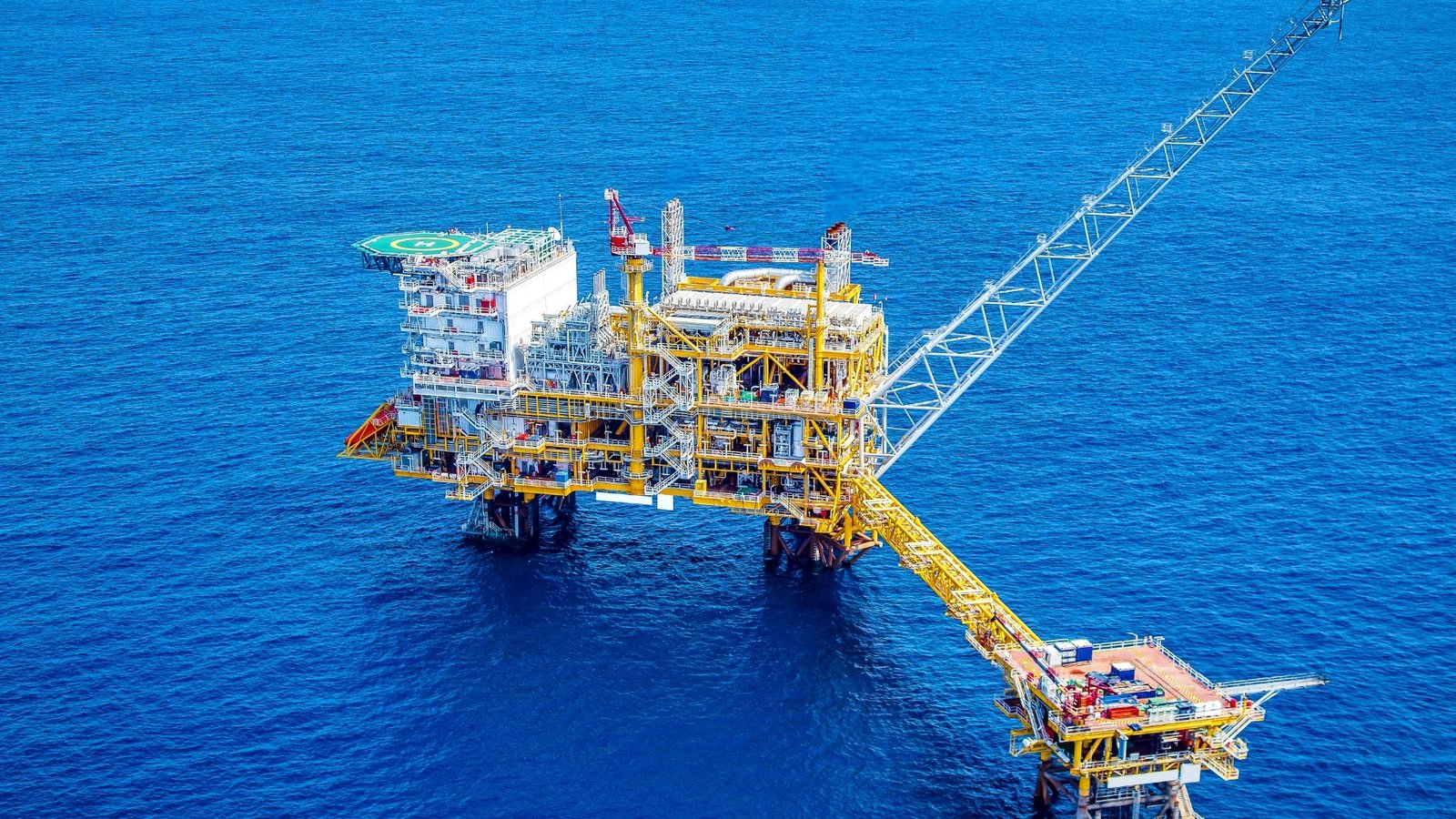 Project 54An offshore oil production platform at sea, the kind of advantaged, low-cost barrel Chevron is concentrating its capital on.
Capital discipline is the strategy, not a slogan
The logic is that in a commodity business you cannot control the oil price, so you compete on the two things you can control, the cost of your barrels and the discipline of your capital. Chevron's answer is to concentrate spending on a short list of advantaged assets, Guyana, the Permian, the Gulf of America and Kazakhstan's Tengiz expansion, and to hold 2026 organic capital to 18 to 19 billion dollars, the low end of its 18 to 21 billion dollar guidance range. Chief executive Mike Wirth framed it plainly, the 2026 program focuses on the highest-return opportunities while maintaining discipline and improving efficiency, enabling the company to grow cash flow and earnings.
The Hess deal is the same logic at scale. Chevron has already captured 1.5 billion dollars of synergies, 50 percent more than it first targeted and six months ahead of schedule, and is pushing a wider structural cost program toward 3 to 4 billion dollars of annual savings by the end of 2026, more than 70 percent of it from durable efficiency gains rather than one-off cuts. The uncomfortable half of that program is people, Chevron is reducing its workforce by 15 to 20 percent, up to 8,000 roles. The reward it promises owners is predictability, a plan set out at its late 2025 investor day to buy back 10 to 20 billion dollars of stock every year through 2030, assuming Brent averages between 60 and 80 dollars a barrel.
A 25 percent cheaper barrel rewires how Chevron buys
For suppliers, marketers and business developers selling into Chevron, the strategy is not abstract, it sets the terms of every conversation. When a major tells investors it will spend about 25 percent less capital per barrel and cut 3 to 4 billion dollars of structural cost, that discipline flows straight into procurement. Vendors are no longer evaluated on features or relationships, they are evaluated on cost per unit of outcome and on whether they make the operator's own efficiency numbers move. A post-merger integration of Hess also means supplier consolidation and standardization, fewer contracts, larger and more scrutinized. The commercial lesson mirrors what Project 54 has documented at ExxonMobil, Occidental and ConocoPhillips, the winning suppliers are the ones who can prove a durable contribution to cost and cycle time, in the buyer's language, not their own.
| What changed at Chevron | What it means for a supplier or marketer |
|---|---|
| About 25 percent less capital per barrel | Lead with cost per unit of outcome and payback, not feature lists |
| 3 to 4 billion dollars structural cost program | Quantify the efficiency or cycle-time gain you deliver, tie it to their targets |
| Hess integration and consolidation | Expect fewer, larger, more scrutinized contracts and a standardized vendor base |
| Advantaged-asset focus (Guyana, Permian) | Position where the capital is going, deepwater and short-cycle shale, not everywhere |
| 10 to 20 billion dollar annual buybacks | Capital returns are protected, so spend must defend itself against a share buyback |
Guyana and the Permian carry Chevron into the 2030s
The forward view, and Chevron presents it as a view rather than a certainty, is that this portfolio compounds. Guyana is expected to extend high-margin oil growth into the 2030s, the Permian keeps improving capital efficiency off a one million barrel a day base, and Tengiz in Kazakhstan adds long-plateau volumes. If Brent holds in the 60 to 80 dollar band the company has modelled, the math points to rising free cash flow and the promised 10 to 20 billion dollars of yearly buybacks, a machine designed to pay owners through the cycle rather than only at its peak.
The interesting second-order move is power. Chevron is building gas-fired generation aimed at data centres and artificial-intelligence demand, positioning its molecules directly against the fastest-growing load in the energy system while maintaining a lower-carbon story through carbon capture and hydrogen options. It is the same pattern visible across the majors Project 54 tracks, the advantaged barrel funds the transition option, and capital discipline decides which options survive. For anyone building a commercial strategy around these buyers, the takeaway is durable, the majors that win the 2030s are engineering cost and focus now, and they expect their partners to do the same.
Listen & take it with you
Prefer audio, or need the deck for an internal review? The full briefing is available as a podcast episode and a downloadable slide presentation.
What is the most important read on Chevron's 2026 strategy?
Frequently asked
Chevron acquired Hess in an all-stock deal valued at roughly 53 billion dollars when announced, and closed it on 18 July 2025. The close followed a favourable arbitration ruling against ExxonMobil and CNOOC, who had claimed a right of first refusal over Hess's 30 percent stake in Guyana's Stabroek Block.
Guyana's Stabroek Block holds more than 11 billion barrels of recoverable oil equivalent and is among the lowest-cost, highest-margin oil developments in the world. Chevron's 30 percent interest, won through the Hess deal, added about 275 thousand barrels a day in the second quarter of 2026 and is expected to extend high-margin growth into the 2030s.
Chevron guided 2026 organic capital spending to 18 to 19 billion dollars, the low end of its 18 to 21 billion dollar range. Permian capital is held below 3.5 billion dollars, reflecting about 25 percent better capital efficiency, part of a wider push to spend roughly 25 percent less capital per barrel than the prior year.
Chevron is targeting 3 to 4 billion dollars of structural cost reductions by the end of 2026, having already banked about 3 billion dollars of run-rate savings, more than 70 percent from durable efficiency gains. The program includes reducing the workforce by 15 to 20 percent, up to 8,000 roles, following the Hess integration.
A major spending about 25 percent less capital per barrel buys on cost per unit of outcome, not on features. Suppliers should expect fewer, larger, more scrutinized contracts, a consolidated vendor base after the Hess integration, and evaluation against Chevron's own efficiency and cycle-time targets rather than product specifications.
Get the next intelligence drop
Join energy and industrial leaders getting our marketing, AI-growth and revenue-architecture intelligence, direct, no filler.
You're on the list
Welcome to The Energy Growth Brief, watch your inbox for the next dispatch.