



Europe Put 46 Mineral Projects on a Statutory Clock
On 9 October 2026 the European Commission designated 46 new Critical Raw Materials Act Strategic Projects across 16 member states. The designation is not a grant. It is a legal deadline on the permit, and that is what turns a permanently pre final investment decision asset into a datable procurement event. Two harder deadlines land within seven weeks of it: black mass becomes hazardous waste on 9 November, and China's suspension of its expanded rare earth export controls lapses on 27 November.
- The mechanism is a deadline, not a subsidy. Strategic Project status caps the permit granting process at 27 months for extraction and 15 months for processing and recycling, and routes it through a single point of contact. That converts an undatable asset into a forecastable order book, which is the thing suppliers have never had in European mining.
- The clock demonstrably runs. Of the 47 projects designated in the first round in March 2025, 25 have completed environmental impact assessment and 17 hold a construction permit. That is the evidence that the second round of 46 is a pipeline rather than a press release.
- Nineteen of the 46 are recycling and five more are processing plus recycling. That is not a coincidence. Black mass becomes hazardous waste code 19 14 02 across the EU on 9 November 2026, which closes the non OECD export route and forces material that used to leave Europe to be treated inside it.
- The external trigger is dated. China's suspension of its expanded rare earth export controls runs to 27 November 2026, and the controls added in 2025 on samarium, gadolinium, terbium, dysprosium, lutetium, scandium and yttrium were never suspended at all. The IEA estimates that full application of the controls would put about USD 6.5 trillion of downstream production outside China at risk.
- Priority status changes who can pay you. Designated projects get priority in authorisation, can be recognised as serving the public interest, and get routed into the CRM Financing Hub, InvestEU, the Innovation Fund and EIB lending. Team Europe has mobilised more than EUR 2 billion since RESourceEU launched in December 2025. Developers become bankable earlier, so vendors can move off junior miner payment terms.
- Designation is conditional on ESG criteria and carries biennial reporting plus a public sustainability website. For a supplier, documentation capability stops being an overhead and becomes a line you can price, because your customer has a statutory reporting obligation it cannot meet without you.
- The honest counterweight is the European Court of Auditors. Its Special Report 04/2026, published on 2 February 2026, found that 10 of 26 critical raw materials are fully imported, that none of the rare earths used in the EU are processed domestically, that 10 critical raw materials are not recycled at all, and that many Strategic Projects will struggle to secure supply by 2030 because of financial, legal and administrative bottlenecks.
- Read the auditors' finding commercially rather than politically. The gap between the 2030 benchmarks and the measured reality is not an argument that nothing will happen. It is the size of the procurement budget, and it is being spent against a published, named, dated list.
Forty six projects, sixteen member states, and a split that gives the game away
The European Commission announced on 9 October 2026 that it had selected 46 new Strategic Projects under the Critical Raw Materials Act. They sit in Belgium, Bulgaria, Estonia, Finland, France, Germany, Greece, Italy, Lithuania, the Netherlands, Poland, Portugal, Romania, Slovakia, Spain and Sweden. They were chosen from 102 applications to a second call that closed on 15 January 2026, of which 92 were assessed against the Act's criteria with external experts and the Critical Raw Materials Board, with the European Parliament attending as observer.
The value chain split is where the strategy is visible. Eight are extraction, 11 are processing, 19 are recycling, and eight are integrated, of which three combine extraction and processing and five combine processing and recycling. Between them they cover 15 of the 17 strategic raw materials named in the Act. By material, the Commission counts 12 nickel projects, 10 cobalt, 7 lithium, 5 manganese, 4 graphite, 4 rare earth elements for permanent magnets, 3 tungsten and 2 magnesium. Those counts sum to 47 rather than 46, which simply means at least one project covers more than one material, and it is worth phrasing that way rather than treating the list as a clean partition.
Nineteen recycling projects out of 46, with five more combining processing and recycling, is slightly more than half the list pointed at material that is already inside Europe. Read alongside the waste rules described later in this dossier, that is not a preference for circularity on principle. It is a response to a statutory date.
The Commission has not published a total capital requirement for the 46. It would be easy to infer one from the first round and wrong to do so. What is published is that the first round, 47 projects across 13 member states announced on 25 March 2025, carried estimated capital requirements of about EUR 22.5 billion. Treat that as the only official capital figure in the programme to date.
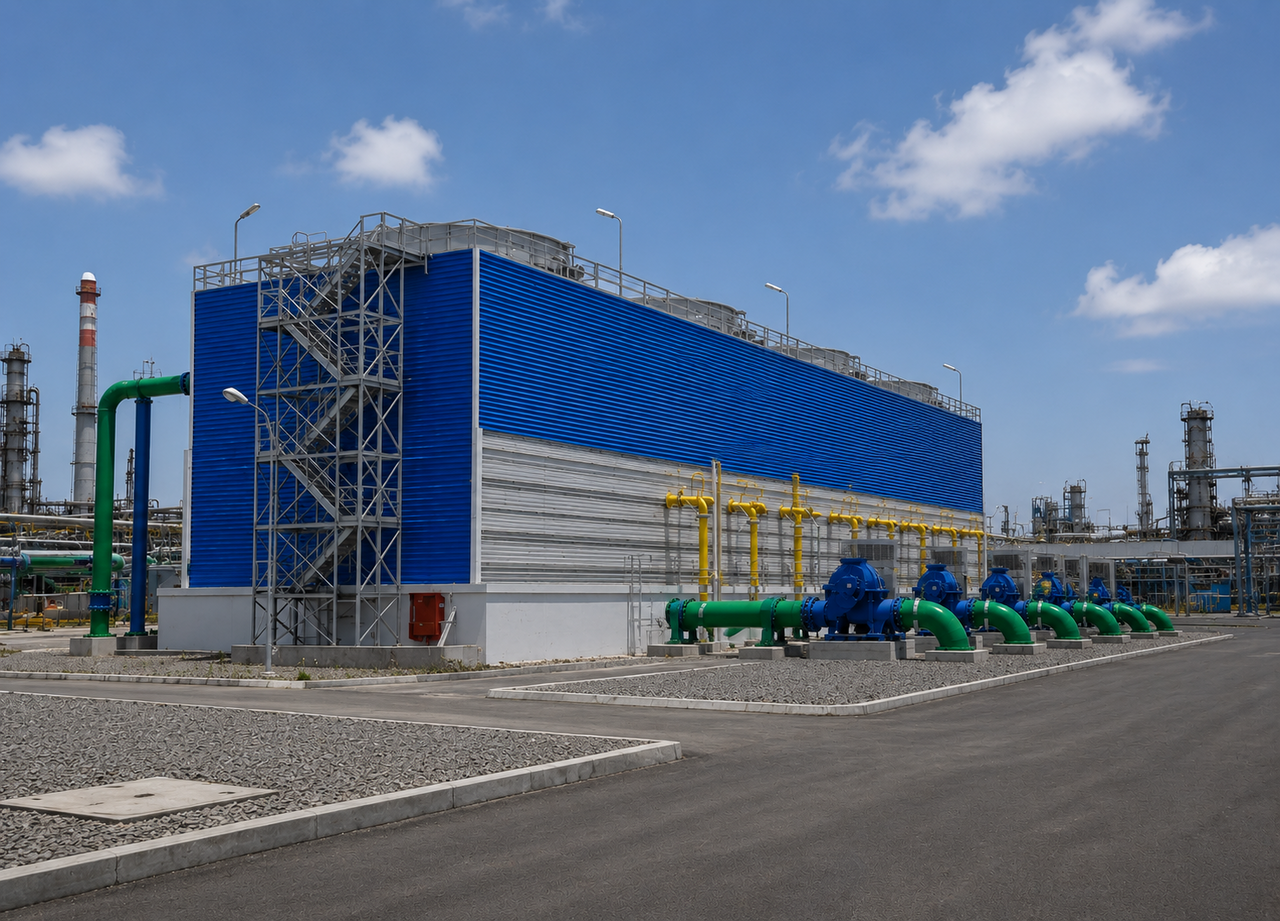 Project 54An industrial process plant. More than half of the 46 new EU Strategic Projects are recycling or processing rather than extraction, because the binding constraint in Europe is midstream capacity, not orebodies.
| Instrument or milestone | Figure | Date it applies | Source |
|---|---|---|---|
| CRMA Strategic Projects, first EU list | 47 projects, 13 member states, about EUR 22.5 billion estimated capital requirement | 25 March 2025 | European Commission, via UNCTAD Investment Policy Monitor |
| CRMA Strategic Projects, second EU list | 46 projects, 16 member states, from 102 applications; 19 are recycling | 9 October 2026 | European Commission IP/26/2113 |
| Permit granting cap, extraction / processing and recycling | 27 months / 15 months, via a single point of contact | In force under Regulation (EU) 2024/1252 | European Commission |
| Permitting progress of the 2025 cohort | 25 completed environmental impact assessment, 17 hold a construction permit | As at 9 October 2026 | European Commission IP/26/2113 |
| 2030 capacity benchmarks and single country cap | 10 per cent extraction, 40 per cent processing, 25 per cent recycling; no more than 65 per cent from one third country | 2030 | European Commission |
| Black mass reclassified as hazardous waste, code 19 14 02 | Commission Delegated Decision (EU) 2025/934 | Applies 9 November 2026 | EUR-Lex |
| China's suspension of expanded rare earth export controls lapses | About USD 6.5 trillion of downstream production outside China at risk if fully applied, an IEA estimate | Suspension runs to 27 November 2026 | IEA Global Critical Minerals Outlook 2026 |
The Act does not pay for the plant. It puts a date on the plant.
Regulation (EU) 2024/1252, adopted on 11 April 2024, gives a designated project three things that money alone does not buy. The permit granting process is capped at 27 months for extraction and 15 months for processing and recycling. The applicant deals with a single point of contact in the member state rather than assembling consents across several authorities. And the project gets priority treatment in authorisation, with the possibility of being recognised as being in the public interest and, in some circumstances, of overriding public interest.
For anyone who has tried to sell capital equipment into European mining, the significance is immediate. The reason that market has been so hard to forecast is not that the orebodies are absent. It is that the date was absent. A project that might be permitted in four years or in eleven cannot be resourced by a supplier, cannot be put in a sales forecast, and cannot justify a dedicated engineering hour. A project with a statutory outside date can be all three.
The reasonable objection is that a statutory deadline on paper is not a permit in hand. That objection has now been partly tested. Of the 47 projects designated in the first round in March 2025, the Commission reports that 25 have completed their environmental impact assessment and 17 have obtained a construction permit. Eighteen months after designation, roughly a third of the first cohort is permitted to build. Whatever one thinks of the 2030 targets, that is a conversion rate a supplier can plan against.
The practical instruction is unglamorous. Take the published list, map each project to the member state single point of contact, and date it from designation plus 15 or 27 months depending on its value chain position. That gives a bid window, and it gives it to you roughly 12 to 24 months before the engineering, procurement and construction contractor starts tendering packages. Companies selling hydrometallurgical and pyrometallurgical process equipment, materials handling, water treatment, tailings management, electrical balance of plant, assay and quality assurance laboratory capability, and permitting and ESG advisory are all addressing the same list on the same clock.
Because on 9 November the export valve closes
Commission Delegated Decision (EU) 2025/934, adopted on 5 March 2025, amends the European List of Waste for battery related waste. It creates hazardous waste code 19 14 02 for black mass, the shredded and processed output of end of life lithium ion batteries that carries the nickel, cobalt, lithium and manganese worth recovering. The amended list applies from 9 November 2026.
Classifying black mass as hazardous does not ban recycling. It bans a route. Hazardous waste cannot be shipped from the EU to non OECD countries, so material that has been leaving Europe for treatment elsewhere has to be treated inside it, or inside another OECD state under prior informed consent procedures. Jessika Roswall, the European Commissioner for Environment, Water Resilience and a Competitive Circular Economy, put the intent plainly when the measure was adopted, saying it would lead to better control of black mass shipments and especially a ban on its export to non OECD countries, and that by keeping black mass in the economy longer the EU can boost battery recycling and its circular economy.
One date discrepancy is worth recording so it does not get repeated. The IEA's summary of the RESourceEU action plan describes the non OECD black mass export ban as applying from September 2026. The application date in the delegated decision is 9 November 2026. Use the later date.
Black mass is the sharp edge of a broader timetable. Under the 2024 Waste Shipment Regulation, exports of plastic waste to non OECD countries are banned from 21 November 2026, and the general non OECD waste export ban applies from 21 May 2027. On 18 September 2026 the Commission published a draft list of the non OECD countries that may continue importing EU non hazardous waste after May 2027, from 32 that applied, with the consultation closing on 16 October 2026 and the first authorised list due at the end of 2026.
Put the two policies next to each other and the design is obvious. One instrument puts a deadline on building processing and recycling capacity inside Europe. The other removes the option of sending the feedstock somewhere else. For suppliers of shredding, pyrolysis, leaching, solvent extraction, off gas treatment and hazardous waste logistics, a statutory date is creating domestic demand that the underlying economics were not creating on their own. That is an unusual and temporary advantage, and it is worth selling into now rather than after the capacity is specified.
A suspension, not a withdrawal, and it expires on 27 November
China's expanded rare earth export controls are not gone. They are paused. MOFCOM Announcement No. 70 of 7 November 2025 suspended six directives issued on 9 October 2025, including the extraterritorial licensing of foreign made products containing Chinese origin rare earth material or technology. Announcement No. 72 of 9 November 2025 suspended Article 2 of Announcement No. 46 of 2024 until 27 November 2026. These dates come from law firm summaries of the MOFCOM announcements rather than from the originals, and should be treated accordingly, but the structure is not in dispute.
Two things did not get suspended. The controls added by Announcement No. 18 of 2025 on samarium, gadolinium, terbium, dysprosium, lutetium, scandium and yttrium remain in force, and so do the 2025 controls on tungsten, tellurium, bismuth, molybdenum and indium. Terbium and dysprosium are the heavy rare earths that make a high temperature permanent magnet work. They are still controlled today.
The scale of what is paused is why procurement teams have the date in their calendars. The IEA's Global Critical Minerals Outlook 2026 estimates that full Chinese rare earth export controls could put about USD 6.5 trillion of downstream production outside China at risk, and that full disruption of battery grade graphite trade would put over USD 300 billion of downstream production at risk. Both are IEA estimates rather than measured outcomes, and should be quoted as such.
The European exposure is not an abstraction. The Commission's own material states that 98 per cent of EU rare earth magnet demand is met by Chinese imports and that the EU produces no rare earth elements itself, in applications including electric vehicle traction motors and wind turbines. Four of the 46 new Strategic Projects are rare earths for permanent magnets. Four projects against 98 per cent import dependence is the honest measure of how early this is.
Price is already carrying the signal. The IEA reports that in Europe gallium and the heavy rare earths dysprosium and terbium traded at roughly five times Chinese domestic prices, and germanium at nearly three times. If you are quoting a magnet dependent assembly into a European project in 2027, the question is not whether you have a Chinese supplier. It is whether your price holds if the 27 November date passes without a further extension.
The auditors say the targets are out of reach. That is the budget, not the obituary.
The European Court of Auditors published Special Report 04/2026, Critical raw materials for the energy transition, on 2 February 2026. Its findings are not comfortable. Ten of 26 critical raw materials are fully imported. None of the rare earths used in the EU are processed domestically. Renewable energy technologies require 26 critical raw materials. Ten critical raw materials are not recycled at all. And many Strategic Projects will struggle to secure supply by 2030 because of financial, legal and administrative bottlenecks.
Keit Pentus-Rosimannus, the ECA member responsible, told reporters at the launch that without critical raw materials there will be no energy transition, no competitiveness and no strategic autonomy, and that today 10 of the critical materials the EU needs for the energy transition are not recycled at all. Those remarks are press reported rather than taken from an institutional release, and are offered on that basis.
The market data points the same way. The IEA records that critical mineral investment fell 9 per cent in 2025, that battery metals capital expenditure fell more than 20 per cent, and that lithium company investment fell about 40 per cent. Excluding rare earths, the top refining country's average share rose to 72 per cent in 2025 from 70 per cent in 2023. In battery recycling specifically, China holds more than three quarters of pre treatment capacity and 90 per cent of material recovery capacity. The IEA also estimates that refining capital costs outside the dominant supplier run 20 per cent to more than 150 per cent higher, with operating costs about 50 per cent higher. Those are estimates and the range is wide, which is itself the point: nobody is claiming Europe can do this at parity.
So the targets will probably be missed. A supplier should be careful about the conclusion it draws from that. Public finance commitments in advanced economies reached about USD 65 billion in 2025, more than four times the 2023 level, and the EU has put a named, dated, legally time boxed list of 93 projects in front of that money across two rounds. Money is being spent into a gap, and the gap is wide. The procurement is real whether or not the 2030 benchmark of 40 per cent processing is met, and a vendor that waits for the target to look credible before resourcing the market will arrive after the specifications are written.
Stéphane Séjourné, the Commission's Executive Vice President for Prosperity and Industrial Strategy, framed the October announcement as a change of pace rather than a change of direction: our approach is simple, reduce dependency, increase production in Europe. He added that we have the resources, the projects and the funding, now we are picking up the pace. Read that next to the auditors' report and the two are not in conflict. One describes the ambition and the other describes the distance.
Four moves, all available before the end of the year
First, treat the designation list as a dated bid pipeline and load it into the CRM. Each project has a member state, a value chain position and therefore a statutory permit window of 15 or 27 months. That gives an indicative construction start, and the equipment tender sits ahead of it. The first round's conversion, 17 construction permits from 47 designations in about 18 months, is the base rate to plan against. This is the single most actionable thing in the announcement and almost nobody in the supply chain is doing it.
Second, register with the Raw Materials Mechanism. The Commission launched it on the EU Energy and Raw Materials Platform with its first call for buyers and suppliers on 13 April 2026. It aggregates demand and matches buyers with suppliers, financial institutions and storage providers, focused on rare earths, defence and battery materials. The Commission reports more than 30 demand and supply matches across 10 materials to date. It is a free, official route to the buyer side of a market that is otherwise very hard to map from outside.
Third, price the documentation. Strategic Project designation is conditional on ESG criteria, and designated projects owe biennial progress reporting and must maintain a public sustainability website. Your customer has a statutory disclosure obligation that it cannot discharge without data from its supply chain. Traceability, emissions data, chain of custody and audit ready documentation are therefore not overheads to be absorbed quietly. They are a scope item, and in a market where European cost sits well above the incumbent's, they are one of the few places a European or OECD supplier can honestly charge more.
Fourth, aim the recycling pitch at the 9 November date rather than at circularity. A plant manager deciding where black mass goes after 9 November is not making an environmental decision, they are making a compliance decision with a deadline. The commercial language that works is capacity availability, permitted hazardous waste handling, and the date you can take material. Nineteen of the 46 new projects are recycling, five more combine processing and recycling, and all of them have to buy equipment from someone.
A closing caution on framing. Dr Fatih Birol, the IEA's Executive Director, said in May 2025 that even in a well supplied market critical mineral supply chains can be highly vulnerable to supply shocks, and that critical minerals have emerged as a frontline issue in safeguarding global energy and economic security. That is the correct register for this market. It is not a growth story and it should not be sold as one. It is a security story with a procurement budget attached, and the buyers respond to risk language, delivery dates and documentation, not to a transition narrative.
Listen & take it with you
Prefer audio, or need the deck for an internal review? The full briefing is available as a podcast episode and a downloadable slide presentation.
You sell process equipment and your board asks what the EU critical raw materials announcement means for next year's pipeline. What do you say?
Frequently asked
It is a project designated by the European Commission under Regulation (EU) 2024/1252 as strategically important for the EU's supply of critical raw materials. Designation is not a grant. It confers a statutory cap on the permit granting process, 27 months for extraction and 15 months for processing and recycling, access to a single point of contact in the member state, priority treatment in authorisation, possible recognition as being in the public interest, and a route into EU financing instruments. In return the project owes biennial progress reporting, notification of material changes, and a public sustainability website. The Commission has designated 47 EU projects in March 2025, 13 third country projects in June 2025, and 46 further EU projects on 9 October 2026.
The Act caps the permit granting process at 27 months for extraction projects and 15 months for processing and recycling projects, administered through a single point of contact in the member state. The cap applies to the permit granting process rather than to every preparatory step, so it is an outside date rather than a promise of speed. Evidence from the first cohort suggests it is biting: of the 47 projects designated in March 2025, the Commission reported in October 2026 that 25 had completed environmental impact assessment and 17 had obtained a construction permit.
Not to non OECD countries. Commission Delegated Decision (EU) 2025/934 adds hazardous waste code 19 14 02 for black mass to the European List of Waste, and the amended list applies from 9 November 2026. Classifying the material as hazardous brings it within the shipment rules that prohibit export of hazardous waste from the EU to non OECD states. Shipments to other OECD countries remain possible under prior informed consent procedures. Note that the IEA's summary of the RESourceEU action plan gives the date as September 2026; the application date in the delegated decision is 9 November 2026.
The Raw Materials Mechanism sits on the EU Energy and Raw Materials Platform, run by the European Commission, and issued its first call for buyers and suppliers on 13 April 2026. It performs voluntary demand aggregation and matchmaking, connecting buyers with suppliers, financial institutions and storage providers, with an initial focus on rare earths, defence and battery materials. The Commission reported in October 2026 that it had generated more than 30 demand and supply matches across 10 materials.
The expanded controls are suspended rather than withdrawn. MOFCOM Announcement No. 70 of 7 November 2025 suspended six directives issued on 9 October 2025, and Announcement No. 72 of 9 November 2025 suspended Article 2 of Announcement No. 46 of 2024 until 27 November 2026. Separately, the controls introduced by Announcement No. 18 of 2025 covering samarium, gadolinium, terbium, dysprosium, lutetium, scandium and yttrium were not suspended and remain in force, as do the 2025 controls on tungsten, tellurium, bismuth, molybdenum and indium. The IEA estimates that full application of the controls would put about USD 6.5 trillion of downstream production outside China at risk.
Designated Strategic Projects are routed towards the CRM Financing Hub, InvestEU, the Innovation Fund, the Battery Booster and European Investment Bank lending. Under the RESourceEU action plan adopted on 3 December 2025, the Commission set out a CRM Financing Hub targeting EUR 3 billion mobilised within twelve months, up to EUR 2 billion a year in EIB loans and advisory, a EUR 1.8 billion Battery Booster including up to EUR 300 million for critical raw materials projects, and EUR 593 million from Horizon Europe for 2026 and 2027. The Commission reported in October 2026 that Team Europe had mobilised more than EUR 2 billion since the plan launched.
Get the next intelligence drop
Join energy and industrial leaders getting our marketing, AI-growth and revenue-architecture intelligence, direct, no filler.
You're on the list
Welcome to The Energy Growth Brief, watch your inbox for the next dispatch.