Libya's Oil Comeback: How the NOC Rebuilds Production Through Political Fracture
Libya is pumping oil at a 12 year high while two governments still fight over the money. The National Oil Corporation is the institution holding it together. Here is how the recovery works, why the 2026 licensing round underwhelmed, and what it means for suppliers weighing a return.
- Libya holds Africa's largest proven oil reserves, around 48 billion barrels, yet its output is set less by geology than by which faction controls the money.
- Production reached roughly 1.4 million barrels a day by June 2026, a 12 year high, with the NOC targeting 1.5 million near term and 1.6 million by year end.
- The 2024 blockade cut output from 1.2 million to about 600,000 barrels a day in weeks, and it ended only when a new central bank governor acceptable to both sides was agreed.
- Libya's first licensing round in 17 years awarded just 5 of 22 blocks in February 2026, a signal that investors are pricing the political risk, not ignoring it.
- For suppliers, the opening is real, the NOC expects 3 to 4 billion dollars of new investment, but the buyer sits inside a contested revenue chain that decides whether contracts get paid.
A 12 year high, built on one fragile institution
By the middle of 2026 Libya was producing around 1.4 million barrels of crude a day, its highest level since 2013, according to the National Oil Corporation. Chairman Masoud Suleman said the company expected to reach its official target of 1.5 million barrels a day before the end of the year, with a further goal of 1.6 million, up from about 1.38 million (AGBI, Ecofin Agency).
That number is remarkable given the context. Libya has no single functioning government. It has a Tripoli based administration in the west and forces aligned with Khalifa Haftar in the east, and the two have fought, blockaded and negotiated over the oil sector for a decade. The reason the barrels keep flowing is the NOC itself, a state owned corporation that has worked hard to present itself as a neutral, technical operator that serves the country rather than either faction. It is the closest thing Libya has to a stable national institution, and the entire recovery depends on it staying that way.
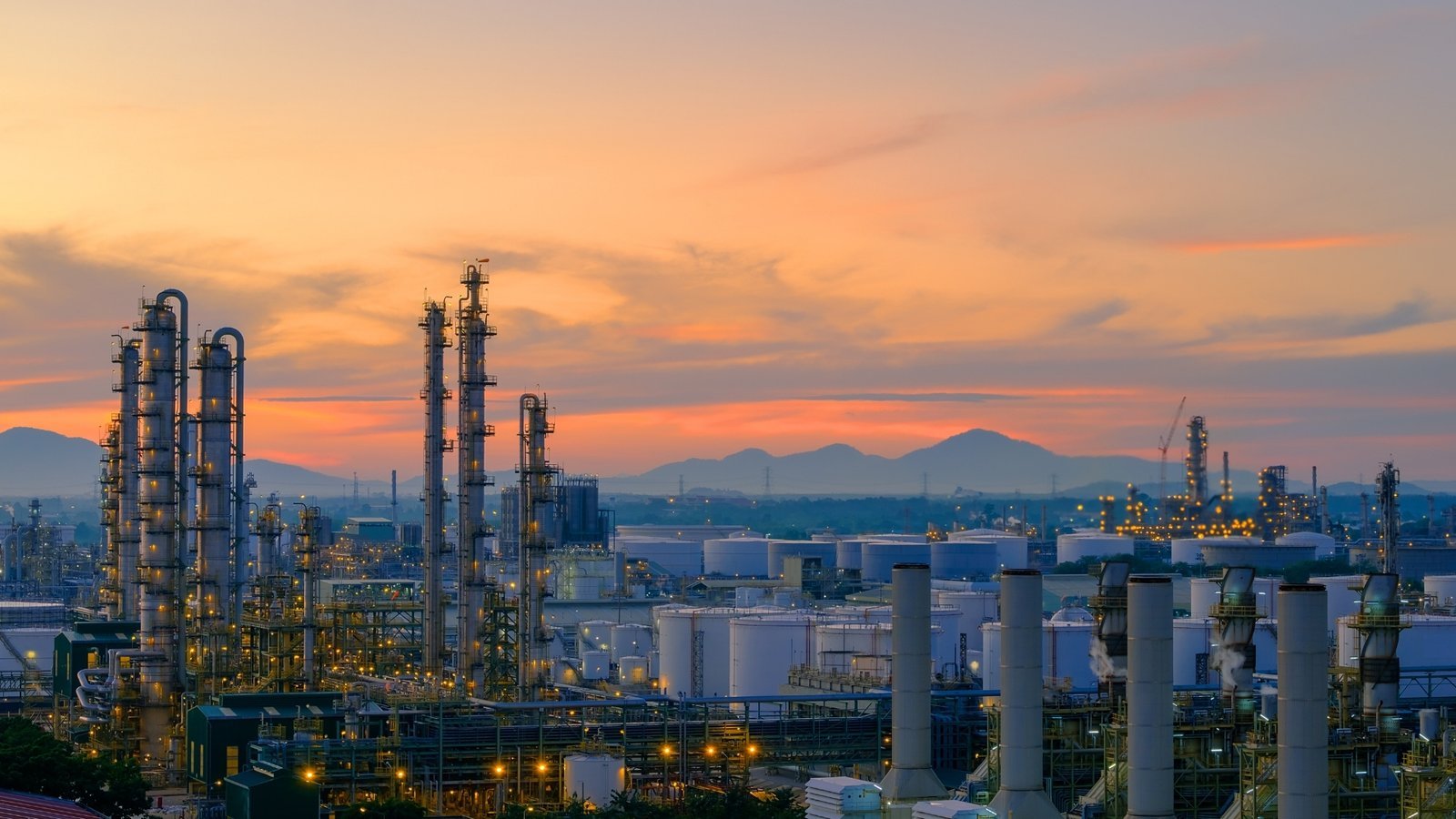 Project 54Libya routes almost all its oil revenue through the National Oil Corporation and the central bank. The institutions matter as much as the barrels.
The revenue chain is the real control point
Libya's weakness is not in the ground. It holds roughly 48 billion barrels of proven reserves, the largest in Africa, according to the US Energy Information Administration. The weakness is in the plumbing of the money. Oil is sold by the NOC, but the proceeds flow first into accounts managed by the Central Bank of Libya. Whoever controls the central bank controls the country's single largest revenue stream, which is why the bank, not the oil fields, is the prize both sides fight over.
This is the structural fact that governs everything else. In August 2024 the Tripoli government moved to replace the central bank's leadership. Eastern authorities responded by shutting in the fields they controlled and declaring a halt to exports. Production collapsed from about 1.2 million barrels a day to roughly 600,000 within weeks, and the large Sharara field went offline (VOA). The oil was a hostage. The ransom was control of the bank.
It ends with a deal over the bank, not the fields
The 2024 standoff lasted a little over a month. It was resolved on 3 October 2024, when the NOC lifted force majeure across the affected fields. Crucially, production did not resume because anyone won militarily. It resumed because the two sides agreed on a new central bank governor acceptable to Haftar and his allies. Once the money question was settled, the oil came back, to about 1.2 million barrels a day in October and 1.4 million by December.
The lesson for anyone reading Libya is precise. The oil is a lever, and it gets pulled to force a settlement over the revenue institutions. Output is a political signal, not a production plan. This is a different kind of instability from the supply discipline debates inside OPEC+, where the argument is about voluntary restraint, as we covered in OPEC and the monthly barrel era and in Kazakhstan's overproduction reckoning. Libya sits outside the OPEC+ quota system precisely because its output is too politically unstable to commit to a number.
Investors priced the risk, they did not ignore it
In early 2026 the NOC ran Libya's first public licensing round in 17 years, offering 22 blocks, 11 offshore and 11 onshore. The final bids were opened on 11 February 2026. The headline was designed to signal a reopening, and in one sense it delivered, Chevron returned to Libya for the first time in years, and Eni, QatarEnergy, Repsol and Turkiye's TPAO all took blocks (Oil and Gas Journal, MEES).
The detail told a quieter story. Only 5 of the 22 blocks were ultimately awarded, two offshore and three onshore. Several pre-qualified majors, including ConocoPhillips and TotalEnergies, chose not to submit final bids at all (OilPrice). Chairman Suleman framed the round as a milestone conducted, in his words, in accordance with the highest standards of quality and transparency. Both things are true at once. The round was a genuine step, and the market's restraint was a genuine verdict. Companies did not stay away because Libya lacks oil. They stayed selective because a barrel is only worth drilling for if the revenue chain around it holds.
Every move maps to a political trigger
The pattern is clearer as a table. Each large move in output lines up with an event in the fight over the revenue institutions, not with a change in geology or global demand. Figures are approximate and drawn from NOC statements and the EIA country profile.
| Period | Output (barrels/day) | Political trigger |
|---|---|---|
| Early Aug 2024 | ~1.2 million | Baseline before the standoff |
| Sep 2024 | ~600,000 | Central bank leadership dispute, eastern shut in |
| Oct 2024 | ~1.2 million | Force majeure lifted after new governor agreed |
| Dec 2024 | ~1.4 million | Recovery holds |
| Jun 2026 | ~1.4 million | Near the 1.5 million target, 12 year high |
| Target end 2026 | 1.6 million | Requires 3 to 4 billion dollars of investment |
The opening is real, and so is the payment risk
The NOC expects 3 to 4 billion dollars of new investment to modernise infrastructure and restore capacity, and the majors returning through the licensing round create a supply chain pull behind them, in seismic, drilling, engineering, refurbishment and field services. For companies that sell into upstream energy, Libya is moving from a market you avoid to a market you assess. That is a real shift.
The discipline is to price the same risk the majors just priced. The buyer in Libya is an institution sitting inside a contested revenue chain, so the questions that matter are not only technical. Who signs, whose budget authority is recognised by both sides, and does the payment route survive a fresh dispute over the central bank. The NOC noted publicly in January 2026 that it had operated through 2025 with no approved budget, a reminder that even the neutral institution runs on contested money. Suppliers who win here will do it the way winners do it in other high stakes energy markets, by qualifying the buyer and the payment path as carefully as the scope, a discipline we set out for the region in the GCC oilfield services market and, on the state champion question, in how Mexico is rebuilding Pemex.
Two futures, decided by the institutions not the fields
The optimistic path is a durable revenue sharing arrangement that removes the incentive to weaponise the fields, letting the NOC push toward 1.6 million barrels a day and beyond, with the 2026 entrants expanding once they trust the payment chain. The pessimistic path is another central bank dispute that shuts in fields overnight, resets investor confidence, and turns 1.4 million back into a number that only holds until the next crisis.
The decisive variable is not the oil price or the drilling rig count. It is whether Libya's factions keep treating the NOC as a shared asset worth protecting rather than a lever worth pulling. For an energy world used to reading balance sheets and reserve reports, Libya is a reminder that in some markets the most important infrastructure is institutional. The barrels are real. Whether they keep flowing is a governance question, engineered or abandoned, not a geological one.
Listen & take it with you
Prefer audio, or need the deck for an internal review? The full briefing is available as a podcast episode and a downloadable slide presentation.
If you were deciding whether to bid for work in Libya's oil sector today, what would weigh heaviest?
Frequently asked
Around 1.4 million barrels a day by mid 2026, a 12 year high, according to the National Oil Corporation. The NOC targets 1.5 million near term and 1.6 million by the end of 2026.
The National Oil Corporation sells the oil, but the revenue flows first through the Central Bank of Libya. Control of the central bank, split between the Tripoli government and eastern forces, is the real point of leverage over the sector.
It was Libya's first round in 17 years, offering 22 blocks, but only 5 were awarded. Majors including ConocoPhillips and TotalEnergies declined to submit final bids, signalling that investors are pricing the political and revenue risk rather than ignoring it.
Winners included Chevron, which returned to Libya, along with Eni, QatarEnergy, Repsol, Turkiye's TPAO and Nigeria's Aiteo, across two offshore and three onshore blocks.
Libya is an OPEC member but is exempt from OPEC+ production quotas because its output is too politically volatile to commit to a set target. Its production is driven by domestic disputes rather than cartel policy.
Get the next intelligence drop
Join energy and industrial leaders getting our marketing, AI-growth and revenue-architecture intelligence, direct, no filler.
You're on the list
Welcome to The Energy Growth Brief, watch your inbox for the next dispatch.