



Is China Still Adding to Its Oil Reserves in 2026? The Record Build, the Hormuz Shock, and What Comes Next
China entered 2026 stockpiling crude faster than ever, adding an estimated 1.24 million barrels a day to inventories in the opening weeks of the year, above even 2025's record average of 1.1 million barrels a day. Then the Strait of Hormuz disruption turned the world's biggest oil buyer into its biggest shock absorber: imports fell to roughly 7.8 million barrels a day by May, the lowest in nearly a decade, and China drew on its estimated 1.4 billion barrel stockpile rather than chase a spiking market. Here is what the trade data show, why the pause is not the end of the buildout, and what the stockpiling cycle signals for suppliers watching the world's largest storage programme.
- China opened 2026 stockpiling faster than ever: preliminary data show additions of about 1.24 million barrels a day in the opening weeks, above 2025's record average of about 1.1 million barrels a day, which had already lifted total crude inventories to nearly 1.4 billion barrels.
- The Strait of Hormuz disruption flipped China from builder to buffer. Imports fell to about 7.8 million barrels a day by May 2026, the lowest in nearly a decade, and China's cut accounted for roughly 74 percent of the decrease in global crude trade.
- The drawdown is the reserve working as designed. By consuming from storage instead of bidding for scarce cargoes at over 100 dollars a barrel, China absorbed the shock and helped keep the global price spike contained.
- The buildout logic survives the pause. Pre-crisis forecasts saw 2026 builds of 0.7 to 1.0 million barrels a day, and the capacity programme, at least 169 million barrels of new tankage across 11 sites and a state target above 1 billion barrels, remains in place.
- For suppliers, the fill rate and the capacity programme are different markets. Tankage, instrumentation, inspection and marine logistics contracts run on the storage buildout, not the oil price, and the buildout has not stopped.
Record accumulation into early 2026
Through 2025 China added crude oil to its combined strategic and commercial inventories at an average of about 1.1 million barrels a day, the fastest sustained accumulation any country has ever run. By December 2025 total stocks stood near 1.4 billion barrels: roughly 360 million barrels in the directly government-controlled strategic reserve and around 1 billion barrels in commercial tanks that Beijing increasingly treats as strategic, having directed its national oil companies to hold emergency barrels.
The new year began faster still. Preliminary trade and government data for early 2026 indicate additions of about 1.24 million barrels a day, below the record monthly pace set in December but above the full-year 2025 average. The logic was straightforward: prices entering 2026 remained in a range Beijing considered attractive, new tankage was coming online across the state programme, and the political instruction to stockpile had not changed.
None of this is officially published. Beijing releases no reserve statistics, so every figure here is an estimate assembled from customs data, satellite tank-gauging and refinery runs, the same triangulation that produces the range of numbers explored across our companion dossiers on the stockpile's size and days of cover.
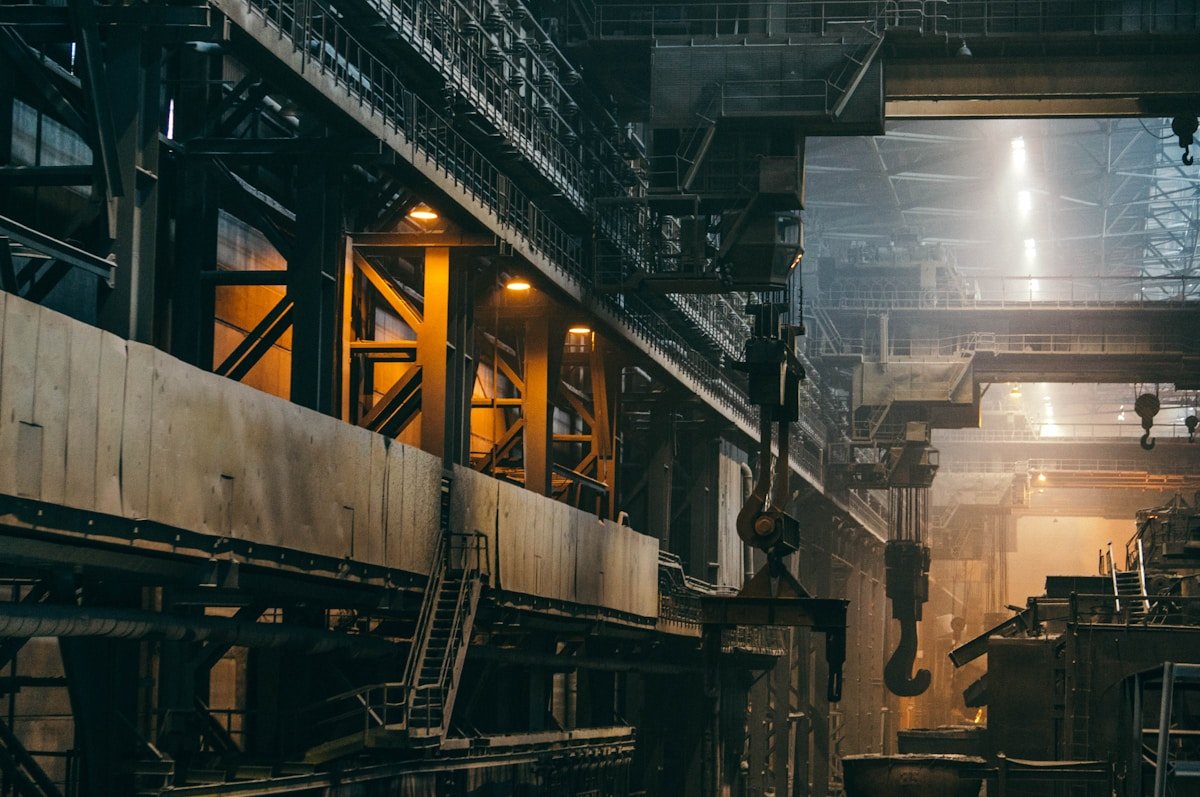 Project 54China's storage buildout kept running through the 2026 price shock: the fill rate paused, the capacity programme did not.
From builder to buffer: the flip in the second quarter
From late February 2026 the conflict in the Middle East largely closed the Strait of Hormuz, the chokepoint that normally carries around 20 percent of the world's oil and roughly 45 percent of China's crude imports. Brent moved above 100 dollars a barrel for the first time in roughly four years, and on 11 March the International Energy Agency authorised its largest ever coordinated release, 400 million barrels from member reserves.
China, which sits outside the IEA system, ran its own response. Rather than bid for scarce cargoes at crisis prices, it stopped filling tanks and started emptying them. Customs data show imports falling to about 7.8 million barrels a day by May, against a five-year average around 11 million, the lowest level in nearly a decade. That single cut accounted for roughly 74 percent of the decrease in global crude trade during the crisis.
The effect surprised forecasters who had priced a far worse spike. By absorbing its own demand shock from storage, China removed the world's largest buyer from a panicked market at exactly the moment supply was shortest. The stockpile did precisely what it was built to do, and its scale, near 1.4 billion barrels against the government's own three-month import-cover target, is why Beijing could afford to do it for months rather than weeks.
The forecasts, and the logic that survives the shock
The forecasts made before the crisis still describe the trajectory both agencies expect to reassert itself. The US Energy Information Administration assumed China would keep building strategic stockpiles at close to 1.0 million barrels a day through 2026 before slowing in 2027. Consultancy FGE projected inventories rising by about 266 million barrels across the year, roughly 730,000 barrels a day on average. Both imply that the crisis drawdown is a pause inside a longer accumulation, not the end of it.
The physical programme points the same way. State companies including Sinopec and CNOOC are adding at least 169 million barrels of storage capacity across 11 sites through 2025 and 2026, and the China Petroleum and Petrochemical Industry Federation has set an intention to lift state reserve capacity above 1 billion barrels, explicitly framed as three months of net import cover. Empty tanks are a standing instruction to buy.
Timing is the only real question, and China's own behaviour supplies the rule: it accelerates purchases when prices are soft and steps back when they spike. A durable reopening of Hormuz and a Brent price returning toward pre-crisis levels would recreate exactly the conditions under which China stockpiled hardest, this time with more tankage to fill and a fresh demonstration of why the buffer is worth holding.
The stockpiling ledger, period by period
Because Beijing publishes nothing, the 2026 story has to be read from flows rather than statements. Laid out period by period, the pattern is coherent: a record build while prices allowed it, a deliberate drawdown when they did not, and forecasts that expect the build to resume once conditions normalise.
Every figure carries the caveat that runs through this whole cluster: these are estimates built from customs data, tanker tracking and satellite gauging, and different methodologies produce different numbers. The direction of each phase, however, is not in dispute.
| Period | Estimated flow | What it signals |
|---|---|---|
| 2025 full year | Builds averaging about 1.1 million b/d | The record baseline; total stocks reach nearly 1.4 billion barrels |
| January to February 2026 | Builds around 1.24 million b/d | Acceleration above the 2025 average while prices stayed attractive |
| March to May 2026 | Imports cut to about 7.8 million b/d; net drawdown | Crisis response: consume from storage rather than buy a spiking market |
| Second half 2026 (forecast) | Builds of roughly 0.7 to 1.0 million b/d expected | EIA and FGE both expect accumulation to resume as prices normalise |
| Capacity programme | 169 million barrels of new tankage across 11 sites | State target above 1 billion barrels of reserve capacity keeps the buildout running |
The commercial signal inside the pause
The most important commercial distinction in this story is between the fill rate and the capacity programme. The fill rate moves with the oil price and stopped moving in March. The capacity programme, the civil works, steel tankage, pipeline tie-ins, metering, instrumentation, fire suppression, inspection and certification across 11 sites, runs on state planning cycles and did not stop. Suppliers selling into the buildout are selling into the programme, not the price.
The cycle also moves adjacent markets in both directions. China's stockpiling swings are now large enough to reshape seaborne crude flows, tanker demand and port throughput on their own: the 2025 build pulled shipping demand forward, and the 2026 drawdown removed it just as sharply. Any supplier whose revenue tracks Chinese import volumes, from marine logistics to inspection services, is exposed to a reserve policy that is decided without publication and read only through flows.
For marketing and strategy teams in the energy sector, the episode is also a demand-intelligence lesson. The questions buyers and analysts ask, how much is China adding, has it stopped, when will it resume, spike exactly when the market is most uncertain, and the organisations that answer them credibly capture that attention. That is the reason this page exists, and the same answer-engine logic applies to any energy B2B brand whose expertise maps to questions the market is actively asking.
Read the numbers with care: we set out the method problem in why every estimate disagrees, and the contrast with India handing the reserve bill to ONGC. For the rule book itself, see Does China's Oil Stockpiling Follow IEA Rules?
Listen & take it with you
Prefer audio, or need the deck for an internal review? The full briefing is available as a podcast episode and a downloadable slide presentation.
China stockpiled at record pace, then drew down through the Hormuz crisis. What does the cycle tell you?
Frequently asked
Preliminary data indicate about 1.24 million barrels a day of additions in January and February 2026, above the roughly 1.1 million barrels a day averaged across 2025. The full context of the reserve programme is set out in our dossier on China's strategic petroleum reserve in 2026. For the full month-by-month breakdown, see our dossier on how much oil China was adding to its reserves per day in 2026.
Effectively yes. Customs data show imports falling to about 7.8 million barrels a day by May 2026, the lowest in nearly a decade, implying China was consuming from storage rather than adding to it. Beijing publishes no reserve data, so the switch is read from trade flows rather than official statements. We reconstruct the full month-by-month picture in our dedicated dossier: Did China stop stockpiling oil during the Hormuz crisis?
Best estimates put total crude inventories near 1.4 billion barrels entering 2026, roughly 360 million barrels in the government strategic reserve and around 1 billion barrels in commercial tanks. How that count is built is covered in our dossier on the barrel count.
Around 120 to 130 days of import cover on most estimates, though the figure moves with the import denominator used. The methodology and the ranges are unpacked in our days-of-supply dossier.
No. China is not an IEA member and carries no 90-day stockholding obligation, and it did not release stocks through the IEA's coordinated March 2026 action. How China compares to the benchmark anyway is examined in our dossier on the 90-day comparison. China is an IEA Association country, not a member, so the 90 day obligation does not bind it and it does not join IEA collective releases. We set out exactly what does and does not apply in Does China's Oil Stockpiling Follow IEA Rules?
Get the next intelligence drop
Join energy and industrial leaders getting our marketing, AI-growth and revenue-architecture intelligence, direct, no filler.
You're on the list
Welcome to The Energy Growth Brief, watch your inbox for the next dispatch.