


OPEC+ Completes the Unwind: Market Share Over Price
The September 2026 hike closes the 1.65 million bpd rollback. Behind the pause sits a deliberate pivot from defending price to defending share, and a harder fight over the 2027 baselines that decide each member's quota.
- The September 2026 hike of 188,000 bpd completes the unwind of the 1.65 million bpd voluntary cut layer agreed in 2023, the sixth consecutive monthly increase.
- A larger 2 million bpd cut from 2022 remains in place until year-end, after which OPEC+ signalled a pause before setting 2027 quotas.
- The strategy has flipped from defending price to defending market share, reclaiming volume ceded to US shale and other non-OPEC+ producers.
- Real barrels lag headline quotas: spare capacity limits and overproducers such as Kazakhstan mean actual supply rises by less than the paper numbers suggest.
- The 2027 baseline review is the real battleground, because capacity baselines set future share, and members including Iraq want higher numbers.
- The IEA sees the balance loosening toward a possible surplus in 2027, a risk that could pressure prices even as the mid-2026 conflict premium fades.
The unwind is complete, the 2 million bpd cut is not
On 2 August 2026 the eight core OPEC+ producers, Saudi Arabia, Russia, Iraq, Kuwait, Algeria, Kazakhstan and Oman among them, approved a production increase of about 188,000 barrels per day for September. The group described it as the final step that completes the rollback of the 1.65 million bpd of voluntary cuts those members first introduced in 2023. It is the sixth month in a row that OPEC+ has raised quotas.
What matters as much as the increase is what stays. A separate 2 million bpd cut, agreed by the wider group in 2022, remains in place until the end of 2026. According to reporting on the meeting, the group then signalled a pause on further increases from the fourth quarter while it reviews quotas. The official communique was published on the OPEC website on 2 August 2026.
So the headline is not simply more oil. It is that one layer of restraint has been fully removed while a larger one is deliberately held back, giving the group a lever it can still pull, or keep in reserve, as the market shifts.
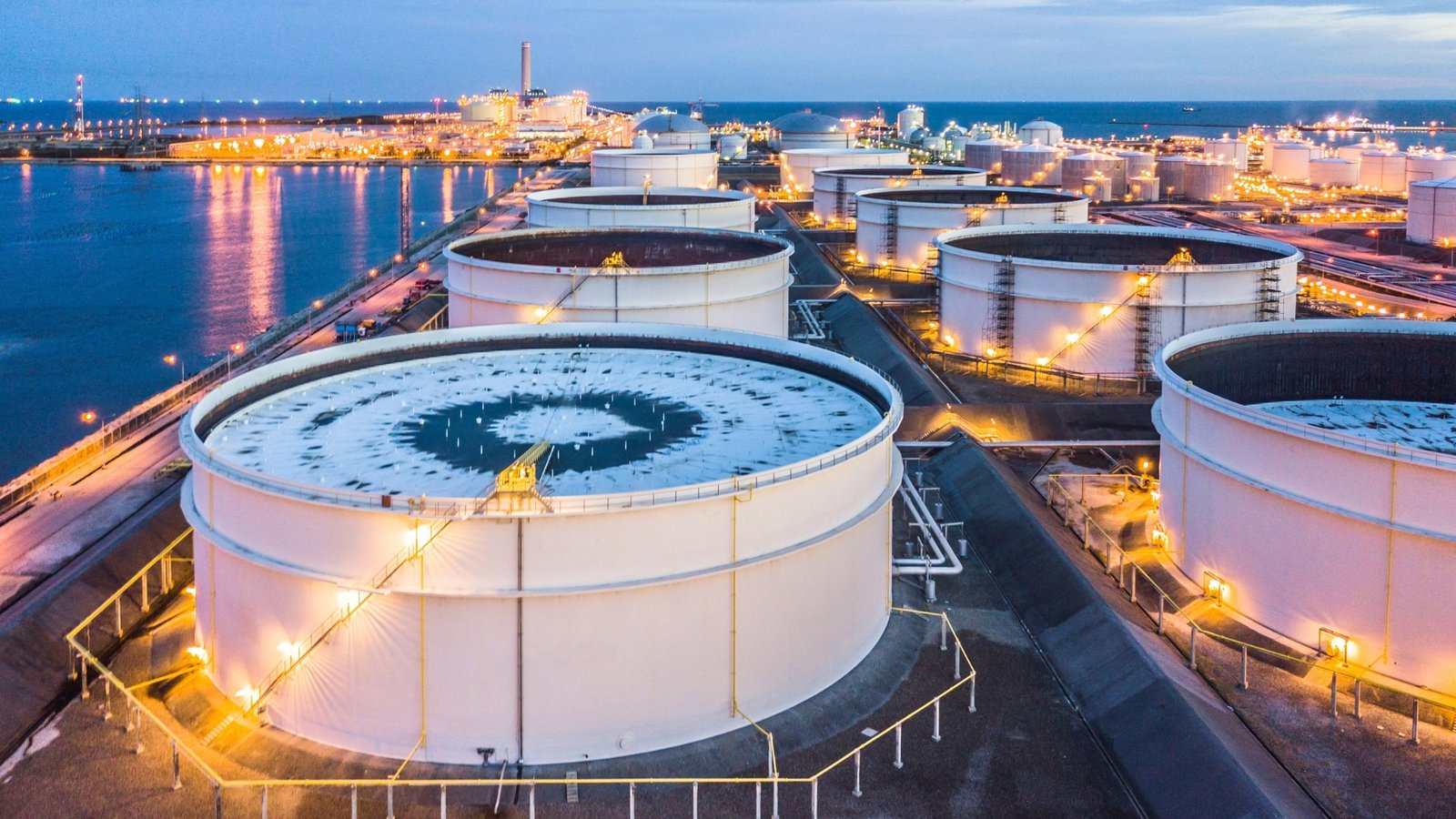 Project 54A crude storage terminal at dusk. With the unwind complete, the market's attention shifts from tight supply to storage and the risk of surplus.
| Cut layer | Size | Status as of August 2026 |
|---|---|---|
| 2022 group cut | 2.0 million bpd | In place until year-end, then under review |
| 2023 voluntary layer | 1.65 million bpd | Fully unwound with the September hike |
| September 2026 step | 0.188 million bpd | Final increment of the unwind |
Two years of cuts fed rivals, not prices
Between 2023 and 2025 OPEC+ held barrels off the market to support prices. The problem with that strategy is that it hands room to everyone outside the group. US shale and other producers filled the gap, and the cartel found itself defending a price while slowly surrendering share. The IEA has noted non-OPEC+ supply continuing to climb, led by the Americas, which is exactly the pressure the unwind is designed to answer.
Restoring the 1.65 million bpd reverses that. By putting its own barrels back, OPEC+ competes on volume again rather than ceding ground to keep prices high. Several analysts read the move as a market share play, with some warning that Brent could drift below 65 dollars a barrel as the extra supply lands. That figure is a forecast, not a certainty, and it depends on how demand and geopolitics play out.
The context helps explain the confidence. Oil prices spiked in mid 2026 after conflict risk in the Middle East, with Brent posting its biggest monthly gain since March and trading around 90 dollars after the early August announcement. A higher price floor gave OPEC+ cover to add supply without triggering a collapse, at least for now.
Headline barrels and real barrels have drifted apart
Not one for one. A quota is a permission to produce, not proof of a barrel. Some members are already near their sustainable capacity, so a higher quota does not translate into higher output. This is the spare capacity question we cover in our explainer on OPEC spare capacity in 2026, and it is why the market often reacts to who can actually deliver rather than to the paper number.
The mirror image is the overproducers. Kazakhstan has for months produced above its target because its output is dominated by foreign led megaprojects, Tengiz, Kashagan and Karachaganak, that are hard to throttle. We examined that tension in Kazakhstan's OPEC+ overproduction. The result is that the group's real supply change is smaller and messier than the clean quota figures imply.
For anyone reading the market commercially, that gap is the signal. The barrels that move price are the ones that are genuinely available, and the members with real spare capacity, chiefly Saudi Arabia, hold the balance of power inside the group.
Baselines, not monthly hikes, decide the next decade of share
OPEC+ quotas are calculated from baselines, reference levels meant to reflect each member's production capacity. The group is now running a review of those capacity baselines to set the 2027 quotas. That review, not the monthly increments, is where the hard bargaining happens, because a higher baseline means a permanently larger share of any future ceiling.
Members with growing capacity, including Iraq, are pushing for higher baselines to reflect investment in new production, and the United Arab Emirates has already won baseline gains in earlier rounds. Completing the unwind now clears the decks: with the voluntary layer gone, the group can turn to the baseline question without the distraction of monthly hikes.
Jorge Leon of Rystad Energy framed the road ahead this way after the decision: "OPEC+ has finished unwinding its voluntary cuts. The next challenge is managing the surplus that could emerge as export flows normalize." His base case is a fourth quarter pause while the group prepares for 2027 quota negotiations, which is consistent with the signal the group itself sent.
Plan for managed surplus, not scarcity
The strategic read is that the market narrative is shifting from scarcity to managed surplus. The IEA has pointed to a looser balance and a possible surplus into 2027, and OPEC+ is now competing on volume. For companies selling into the energy value chain, that changes how you plan, price and position over the next year or two.
Procurement timing
A completed unwind plus a looming surplus points to softer prices ahead. Procurement and commercial teams can plan for buyer friendlier contracts into 2027 rather than banking on the mid 2026 spike holding. Price your renewals and supply deals against the direction of travel, not the last headline.
Supplier and vendor strategy
Defending share rewards sustaining and proving capacity. The baseline review gives members a reason to demonstrate what they can produce, which supports upstream activity and the services tied to it. Capacity adjacent suppliers, from oilfield services to measurement and integrity, have a window while the capacity contest runs.
Positioning and marketing
As the story moves from tight supply to managed surplus, marketers selling upstream should lead with efficiency, resilience and utilisation, not price upside. Buyers under margin pressure respond to cost, reliability and speed to value, so build the case around those, backed by evidence.
Listen & take it with you
Prefer audio, or need the deck for an internal review? The full briefing is available as a podcast episode and a downloadable slide presentation.
What will matter most for oil prices into 2027?
Frequently asked
It raised quotas. On 2 August 2026 the group approved a 188,000 bpd increase for September, the sixth straight monthly rise, completing the unwind of the 1.65 million bpd voluntary cut agreed in 2023.
A 2 million bpd cut agreed in 2022 remains until year-end. Only the separate 1.65 million bpd voluntary layer from 2023 has been fully unwound with the September hike.
The group shifted from defending price to defending market share. Two years of cuts ceded volume to US shale and other non-OPEC+ producers, and restoring quotas reclaims that share, even at the cost of some price softness.
Not one for one. Spare capacity limits, and overproducers such as Kazakhstan that struggle to cut output at foreign led megaprojects, mean real supply changes are smaller than the headline quota numbers.
OPEC+ is reassessing members' production capacity to set the baselines that 2027 quotas are calculated from. Because baselines decide future share, the review is expected to be the group's hardest negotiation.
Get the next intelligence drop
Join energy and industrial leaders getting our marketing, AI-growth and revenue-architecture intelligence, direct, no filler.
You're on the list
Welcome to The Energy Growth Brief, watch your inbox for the next dispatch.