



Woodside: Building a Two-Hub Global LNG Business
How an Australian producer is turning itself into a two-hub liquefied natural gas major across Australia and the US Gulf, and what its capital-light playbook teaches energy B2B sellers.
- Woodside is becoming a two-hub LNG major, pairing Scarborough in Australia with Louisiana LNG on the US Gulf coast.
- Scarborough was about 96 percent complete in early 2026, on budget and on schedule for a first LNG cargo in the fourth quarter of 2026.
- Louisiana LNG is a roughly 17.5 billion dollar development, permitted for up to 27.6 million tonnes a year across five trains, targeting first LNG in 2029.
- The 5.7 billion dollar Stonepeak sale of a 40 percent infrastructure stake is the headline move: it recycles capital and de-risks the balance sheet, with the partner funding about 75 percent of near-term capex.
- For energy B2B sellers, the lesson is that partners, long-term offtake and turnkey engineering are what de-risk a mega project, and de-risking is what you sell to nervous buyers and investors.
Two LNG hubs, one company
Woodside Energy is an Australian oil and gas producer, but the story of 2026 is that it is turning itself into a global liquefied natural gas business with two centres of gravity. One is at home, in Western Australia. The other is on the US Gulf coast, a long way from where the company started.
The Australian hub is anchored by Scarborough, an offshore gas project feeding an expanded onshore LNG plant. By early 2026 it was around 96 percent complete, on budget and on schedule for its first LNG cargo in the fourth quarter of 2026. That is near-term cash, and near-term supply into a tight LNG market.
The second hub is Louisiana LNG, a roughly 17.5 billion dollar development in the United States. It is permitted for up to 27.6 million tonnes a year across five trains, with a foundation phase of about 16.5 million tonnes a year from its first three trains and a target of first LNG in 2029. Together the two hubs would give Woodside supply on both sides of the world and access to both Atlantic and Pacific buyers.
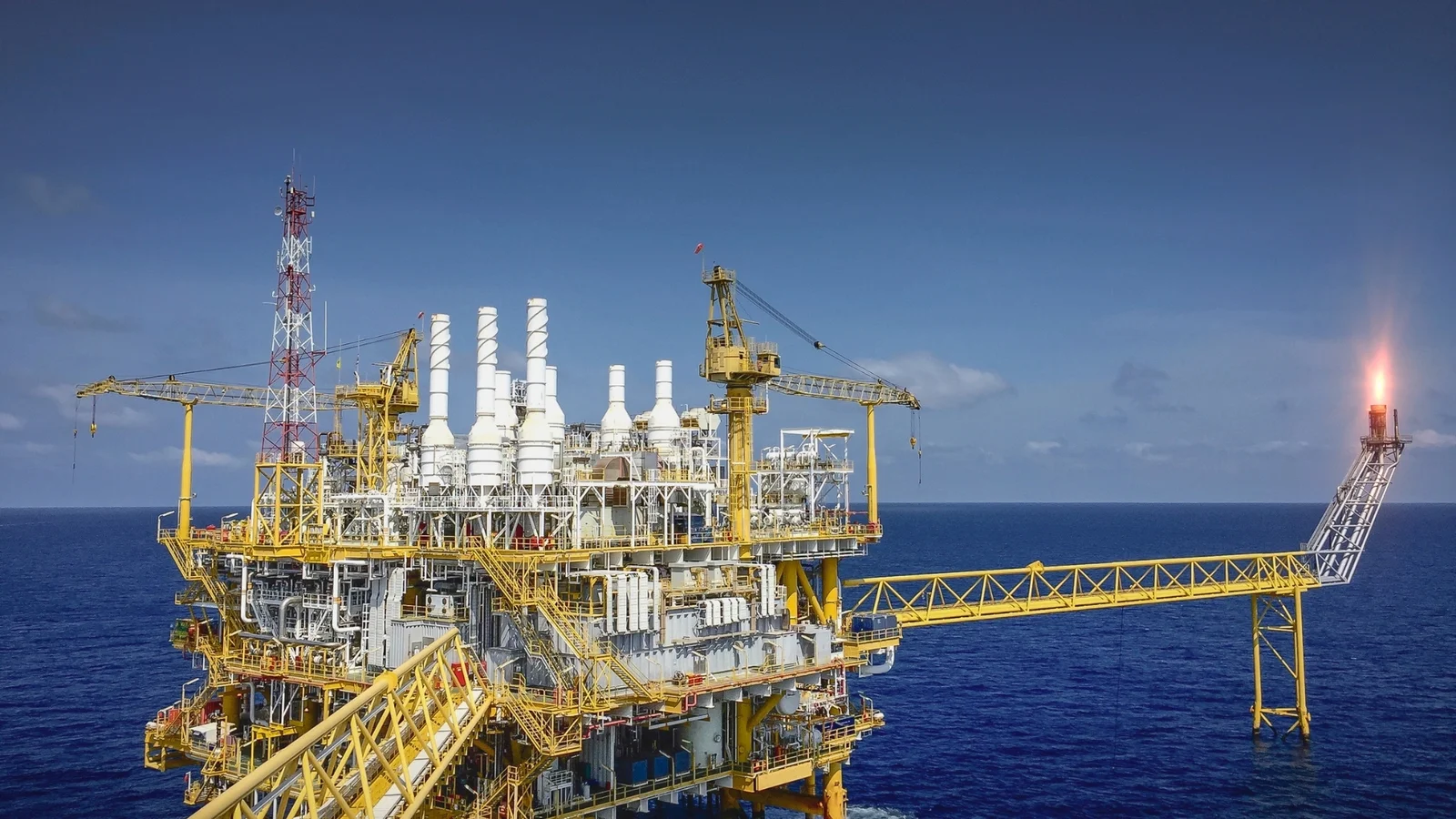 Project 54An offshore gas production platform, the upstream end of the liquefied natural gas chain Woodside is building across two hubs in Australia and the US Gulf.
Demand, diversification and permitted speed
The demand case is straightforward. Liquefied natural gas is the swing fuel of the energy transition, the flexible molecule that firms up power grids and displaces coal, and buyers in Europe and Asia want long, secure supply. A producer that can sell from both Australia and the United States can serve both basins and hedge the political and weather risk of any single location.
The US Gulf coast is attractive for a specific reason: speed. Louisiana LNG came with existing federal permits and a turnkey engineering contract with Bechtel, which lets Woodside move faster than a project starting from a blank sheet. In a market where the prize goes to whoever can deliver molecules this decade, a permitted, shovel-ready site is a strategic asset in itself.
This is the same logic that runs through Cheniere's contract-first LNG model and QatarEnergy's order book strategy: lock the demand and the permits, then build. Woodside is buying its way into that same US export wave rather than watching from Australia.
Sell the infrastructure, keep the molecules
A 17.5 billion dollar project is a lot for a company Woodside's size to carry alone, so it did not. In 2026 it sold a 40 percent infrastructure stake in Louisiana LNG to Stonepeak, an infrastructure investor, for 5.7 billion dollars. Crucially, the deal was structured so that Stonepeak funds about 75 percent of the project's capital spending in 2025 and 2026, taking the heaviest years of the build off Woodside's balance sheet.
Woodside chief executive Meg O'Neill said at the time of the deal: "This transaction confirms Louisiana LNG's position as a globally attractive investment. Our partnership with Stonepeak, together with our turnkey EPC agreement with Bechtel and existing regulatory permits, gives us confidence to move at pace toward FID."
It is a capital-light growth playbook: keep the offtake and the operating role, sell the infrastructure ownership to a partner that wants steady, long-dated returns. The first long-term customer, Uniper, signed a 13-year agreement for one million tonnes a year, giving the project contracted demand to point at.
Infrastructure capital
A 5.7 billion dollar Stonepeak stake funds the heaviest build years, so growth does not overload the balance sheet.
Long-term offtake
A 13-year Uniper contract anchors demand, the certainty a lender and a board want before a final investment decision.
Turnkey engineering
A Bechtel turnkey EPC contract and existing permits compress schedule and cap cost risk on a site that is already sanctioned.
Two hubs, one funding model
Set out together, the pieces show a company using partners and contracts to build more than its own balance sheet could carry, and to do it faster.
| Piece | Figure | What it signals |
|---|---|---|
| Scarborough, Australia | about 96 percent complete, first cargo Q4 2026 | Near-term cash and supply into a tight LNG market |
| Louisiana LNG, US Gulf | about 17.5 bn USD, first LNG target 2029 | The long-dated growth engine on the Atlantic basin |
| Louisiana LNG permit | up to 27.6 mtpa across five trains | Room to expand well beyond the foundation phase |
| Stonepeak partnership | 5.7 bn USD for 40 percent, funds ~75 percent of 2025 to 2026 capex | Capital-light funding that de-risks the balance sheet |
| Uniper offtake | 13-year, 1 mtpa | Contracted demand underpinning the final investment decision |
De-risking is the product
The first lesson is that in heavy energy infrastructure, the deal is not just the asset, it is the structure around it. Woodside did not sell LNG here, it sold a de-risked way to build LNG: a named infrastructure partner, a turnkey engineer, existing permits and a long contract. Each of those is a trust signal. Sellers and marketers in the energy supply chain should notice that the winning message is rarely the lowest price, it is the most credible path to delivery.
The second lesson is capital recycling as a growth story. By selling an infrastructure stake rather than issuing equity or piling on debt, Woodside told investors it can grow without losing discipline. That is a narrative worth studying for anyone who sells into capital projects, because it changes who the buyer is and what they need to hear. It rhymes with Eni's satellite model, which also brings outside capital into specialised vehicles.
The third lesson is basin diversification. A supplier that can serve both the Pacific and the Atlantic has a structural advantage in a fragmented, security-conscious gas market, the same instinct behind TotalEnergies' two-pillar LNG and power strategy.
From regional producer to global LNG name
If both hubs deliver, Woodside converts from a largely Australian producer into a genuinely global LNG supplier with balanced exposure to Pacific and Atlantic demand, and a funding model that lets it keep growing without overreaching. First LNG from Scarborough in late 2026 and from Louisiana around 2029 would give it two step changes in volume this decade. The five-train Louisiana permit means the site could grow further still, though any capacity beyond the foundation phase is an option, not a commitment.
The risks are the familiar ones for LNG builders: construction cost and schedule on a mega project, the direction of long-run gas prices, and policy on US export permits. For energy B2B teams the takeaway is not the Australian producer specifically, it is the model: the energy projects that get built this decade are the ones that arrive with a partner, a contract and a permit already in hand, and that is the story worth telling to buyers and boards alike.
Listen & take it with you
Prefer audio, or need the deck for an internal review? The full briefing is available as a podcast episode and a downloadable slide presentation.
In Woodside's LNG build, which move matters most for other energy suppliers?
Frequently asked
Woodside is building two liquefied natural gas hubs, one in Australia anchored by the Scarborough project and one on the US Gulf coast through Louisiana LNG. The aim is to supply both Pacific and Atlantic buyers and to diversify the political and operational risk of relying on a single location.
Scarborough was about 96 percent complete in early 2026 and is on schedule for its first LNG cargo in the fourth quarter of 2026. Louisiana LNG is targeting first LNG in 2029, with a foundation phase of about 16.5 million tonnes a year from its first three trains.
Woodside sold a 40 percent infrastructure stake in Louisiana LNG to the infrastructure investor Stonepeak for 5.7 billion dollars. The deal was structured so that Stonepeak funds about 75 percent of the project's capital spending in 2025 and 2026, taking the heaviest build years off Woodside's balance sheet.
Louisiana LNG is a roughly 17.5 billion dollar development permitted for up to 27.6 million tonnes a year across five trains, with a foundation phase of about 16.5 million tonnes a year from the first three trains. It uses a turnkey engineering contract with Bechtel and has Uniper as its first long-term customer under a 13-year, one million tonnes a year agreement.
The winning message in energy infrastructure is rarely the lowest price, it is the most credible path to delivery. Woodside de-risked its build with an infrastructure partner, a long offtake contract, a turnkey engineer and existing permits, and sellers should note that de-risking and certainty are what buyers and investors most want to hear.
Get the next intelligence drop
Join energy and industrial leaders getting our marketing, AI-growth and revenue-architecture intelligence, direct, no filler.
You're on the list
Welcome to The Energy Growth Brief, watch your inbox for the next dispatch.