



Australia Is Making Domestic Gas a Licence Condition
On 10 September 2026 Canberra released draft laws that turn domestic gas supply from a commercial choice into a condition of holding an LNG export licence. The obligation is capped at 20 per cent of export volume, calibrated annually by the energy regulator, and enforced with penalties reaching 910 million Australian dollars. It is the first standing statutory must-supply duty imposed on an established G20 LNG export industry, and Asian buyers are reading it as a template.
- This is a must-supply duty, not a must-offer duty. The Gas Market Code obliged producers to offer gas domestically on reasonable terms. The draft bills oblige exporters to physically deliver it, and hand enforcement to an independent economic regulator rather than to ministerial discretion. That is the whole substance of the change.
- The headline 20 per cent is a ceiling, not a target. The binding number is the lower of 20 per cent of export volume and the Australian Energy Regulator's demand calibrated quantity, set by 30 June each year against a target of 110 per cent of forecast domestic demand. The government kept the number and changed the mechanism.
- The stated policy mechanism is engineered oversupply. Climate Change and Energy Minister Chris Bowen said on 10 September 2026 that engineering a modest oversupply is very much designed for downward pressure on prices. No independent modelling of the price effect of the September draft has been published.
- The two sides are arguing about different volumes. Ministers cite up to 200 petajoules a year of potential additional supply against an AEMO forecast possible shortfall of 140 petajoules. Australian Energy Producers estimates the 110 per cent target forces roughly 50 petajoules in. Both are stated positions, neither has been independently audited.
- Japan has already filed a formal objection. The Institute of Energy Economics, Japan submitted on 30 June 2026 that Australian LNG supplies around 40 per cent of Japan's LNG imports and around 10 per cent of its primary energy supply, and that Asian markets are carefully reassessing future LNG supply options.
- For suppliers, the commercial consequence is a dated regulatory calendar rather than a single event. Licence applications open 1 January 2027, the first regulator determination falls by 30 June 2027, exemption determinations are due 31 December 2027, and the obligation commences 1 January 2028. Energy policy rarely hands sellers four non discretionary dates two years ahead.
Three bills, one idea
On 10 September 2026 the Ministers for Climate Change and Energy, Resources, and Industry released exposure drafts of three bills: the Domestic Gas Reservation Bill 2026, a Consequential Amendments Bill that also reforms the Gas Market Code, and a Domestic Gas Reservation Levy Bill. Consultation ran for a fortnight and closed at 11.59pm on 24 September 2026. The Department of Industry, Science and Resources says the feedback will inform final draft legislation for the government to consider. Nothing has been introduced to Parliament yet.
The architecture is simple and, in an established export industry, unusual. From 1 January 2028 exporting LNG from Australia requires a licence. Licences run 20 to 50 years and cannot be transferred without ministerial consent. Applications open on 1 January 2027. Attached to the licence is a domestic supply obligation, and the obligation is a duty to deliver gas into the Australian market, not a duty to offer it.
The quantity is set by a two step test. The headline domestic supply obligation is 20 per cent of the exporter's total export volume. Separately, the Australian Energy Regulator determines a demand calibrated quantity by 30 June in the year before each obligation year, and must target aggregate supply in each domestic market at 110 per cent of forecast demand. The Minister may reduce that target to 100 per cent. Whichever of the two numbers is lower binds the exporter.
Compliance is physical and annual. Exporters must supply at least 90 per cent of their minimum obligation in the obligation year. The remaining 10 per cent may be carried forward for up to three years. Penalties for a body corporate are the greatest of 50,000 penalty units, about 18.2 million Australian dollars, three times the benefit derived, or 10 per cent of turnover capped at 2.5 million penalty units, about 910 million Australian dollars.
Two existing instruments disappear. The 12 dollar a gigajoule price cap is repealed, and so is the Australian Domestic Gas Security Mechanism, the discretionary power that let the Resources Minister restrict exports in a declared shortfall quarter. Contracts entered before 22 December 2025 are grandfathered in principle, but an exemption requires the Minister to be satisfied of three conditions, legal analysts describe the threshold as high, and determinations are not due until 31 December 2027.
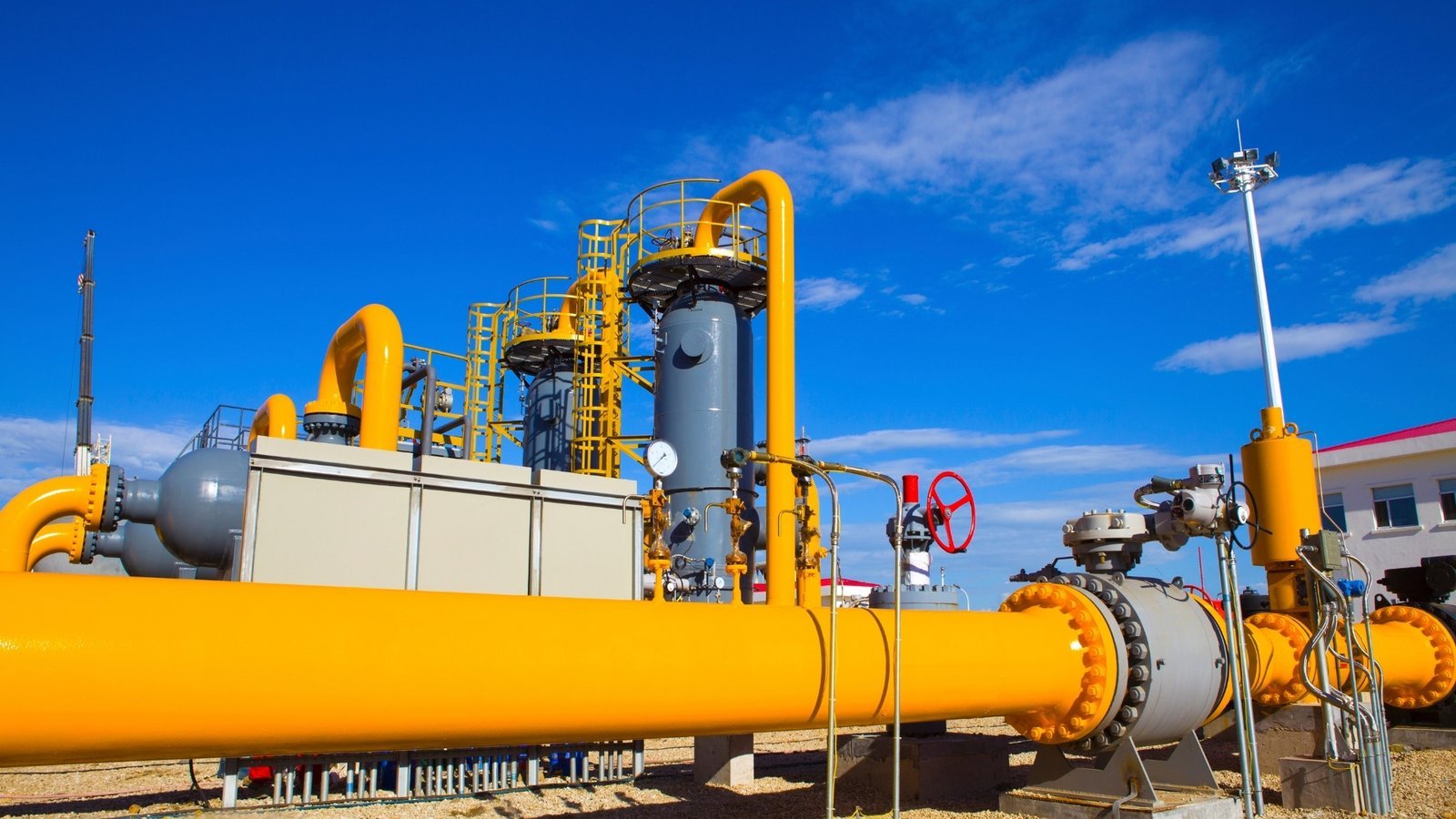 Project 54The obligation is physical. Exporters must deliver at least 90 per cent of their minimum domestic quantity into the Australian market each year, not merely offer it.
The arithmetic both sides are avoiding
Start with the market. Australian Energy Regulator figures for 2024 put east coast production at 1,947 petajoules, of which more than 1,300 petajoules were exported, the first year above that level, against domestic demand of roughly 488 petajoules. Three Queensland LNG trains sanctioned in 2010 and 2011 connected a previously isolated domestic market to Asian LNG pricing, and the domestic market has been the residual claimant ever since.
The government's claim is that exporters could supply up to 200 additional petajoules a year against an AEMO forecast possible shortfall of 140 petajoules, leaving the market modestly oversupplied. Australian Energy Producers says the 110 per cent target means forcing around 50 petajoules of additional gas into the domestic market, which it argues is not a moderate oversupply. These numbers are not actually contradictory. The 200 petajoule figure is the theoretical ceiling of a 20 per cent obligation. The 50 petajoule figure is the industry's estimate of gas forced in above what exporters already sell domestically. Neither has been independently audited, and readers should treat both as interested party estimates.
The price backdrop explains the politics. Australian Competition and Consumer Commission data show 2026 supply contracts agreed in the fourth quarter of 2025 at 13.55 dollars a gigajoule from producers and 13.93 dollars from retailers, with 2027 supply producer contracts up 10 per cent to 13.93 dollars. A price cap and a code of conduct did not deliver cheap gas. Meanwhile the Japan Korea Marker sat at 25.82 US dollars per million British thermal units on 25 September 2026, up 128.55 per cent year on year, widening the gap between what a petajoule earns abroad and what it earns at home.
Demand is the awkward part of the case. IEEFA's September 2026 tracker found Australian domestic gas demand at its lowest in eight years, taking just 15 per cent of national production, down from 16 per cent, while LNG exports rose marginally in the first half of 2026. Lead analyst Joshua Runciman noted that Australian LNG exports also increased, albeit only marginally, as falling domestic demand let the LNG sector soak up more of Australia's gas production for export. A reservation calibrated to 110 per cent of a shrinking demand forecast is a smaller obligation each year.
Near term supply is comfortable, which is why the timing looks political rather than emergency driven. The ACCC projected a 13 petajoule surplus for the fourth quarter of 2026 and a well supplied first quarter of 2027. AEMO's 2026 Gas Statement of Opportunities pushed peak day shortfall risk beyond 2029. The structural problem is later and southern: AEMO forecasts legacy southern field production down 46 per cent over five years and Victorian annual production down 52.8 per cent by 2030.
| Measure | Figure | Source and date |
|---|---|---|
| Headline domestic supply obligation | Up to 20 per cent of export volume; binding number is the lower of that and the regulator's demand calibrated quantity | Exposure drafts, 10 September 2026; King & Wood Mallesons analysis, 11 September 2026 |
| Regulator's supply target | 110 per cent of forecast domestic demand, reducible to 100 per cent by the Minister | King & Wood Mallesons, 11 September 2026 |
| Government claim vs AEMO shortfall | Up to 200 petajoules a year additional supply against a 140 petajoule forecast possible shortfall | Joint ministerial media release, 10 September 2026 |
| Industry counter estimate | About 50 petajoules of gas forced into the domestic market | Australian Energy Producers, 10 September 2026 |
| East coast market scale, 2024 | Production 1,947 petajoules; exports above 1,300 petajoules; domestic demand about 488 petajoules | Australian Energy Regulator, State of the Energy Market 2025 |
| Domestic contract price, 2027 supply | 13.93 dollars a gigajoule from producers, up 10 per cent; 14.31 dollars from retailers | ACCC Gas Inquiry interim report, released 1 April 2026 |
| Asian LNG spot benchmark | 25.82 US dollars per million British thermal units, up 128.55 per cent year on year | Japan Korea Marker series, 25 September 2026 |
| Maximum corporate penalty | Greatest of 18.2 million dollars, three times benefit derived, or 10 per cent of turnover capped at 910 million dollars | Exposure draft analysis, 11 September 2026 |
A must-offer duty was never going to work
The proximate cause is a design flaw the Australian government has now conceded. After the 2022 price shock Canberra imposed a 12 dollar a gigajoule price cap, then a Gas Market Code obliging producers to offer gas domestically on reasonable terms, and kept the Australian Domestic Gas Security Mechanism as a discretionary ministerial power in a declared shortfall quarter. An obligation to offer is not an obligation to supply, and a discretionary trigger is a poor foundation for twenty year industrial investment. Industrial buyers could not plan against it, and producers could satisfy it without moving a molecule.
The structural cause is geographic. Southern production in Victoria and South Australia is in decline, while the replacement gas sits in Queensland behind pipeline constraints and existing export commitments. The ACCC's March 2026 interim report projected a 16 petajoule southern gap in July 2026 alone and said southern states would need topping up every month from April to September. ACCC Commissioner Anna Brakey put the remedy in supply side terms on 10 July 2026, saying reducing barriers for new entrants and producers seeking to develop prospective resources would help increase and diversify supply.
The political trigger came on 22 December 2025, when the Albanese government announced an east coast reservation scheme with contracts entered before that date grandfathered. A Draft Design Framework followed on 25 May 2026 proposing a uniform 20 per cent obligation from 1 July 2027, and drew more than 140 submissions, including a formal institutional submission from Japan. The September exposure drafts moved commencement to 1 January 2028 and replaced the fixed 20 per cent with the calibrated mechanism.
Bowen defended that change directly. He called it sensible calibration, adding that the 20 per cent figure is still the absolute core of the policy, but there is no point reserving gas that Australians don't need. The Greens called the revision watered down. The gas industry argued the opposite, that a 110 per cent oversupply target makes the scheme more onerous rather than less. Both criticisms cannot be right, and the answer depends entirely on where domestic demand actually lands.
One external factor sharpened everything. The 2026 Iran conflict and the disruption around the Strait of Hormuz pushed Asian LNG spot prices sharply higher through the year. That simultaneously raised the opportunity cost of every reserved petajoule for exporters and strengthened the domestic political argument that Australian households and manufacturers should not pay war driven export prices for Australian gas.
Three live fights before the bill is introduced
The first fight is must-supply versus must-offer, and it is the only one that matters to the scheme's force. Australian Energy Producers lodged a submission on 25 September 2026 seeking eight changes, the first of which is replacing the forced sale with a genuine offer obligation. Chief executive Samantha McCulloch framed the industry position carefully: the government has made some important improvements to the proposed reservation scheme, but critical flaws must be addressed for the reservation scheme to work. Conceding this point would return the scheme to something close to the Gas Market Code it replaces.
The second fight is Western Australia. The state already runs its own 15 per cent reservation for the life of its LNG projects, and the Chamber of Minerals and Energy of Western Australia argued on 20 July 2026 that WA should be legislatively excluded, noting WA gas prices have run at roughly half east coast levels. The exposure drafts do not settle the interaction. A Wood Mackenzie analysis commissioned by Australian Energy Producers and released on 9 July 2026 put up to 142 billion dollars of export revenue at risk between 2027 and 2040 under a national obligation, a figure that should be read as commissioned advocacy analysis rather than independent modelling.
The third fight is quieter and is worth hundreds of petajoules over the scheme's life: how the obligation is shared between exporters. The Australian Industry Group, which broadly supports the package, welcomed the retained must-sell rule, independent oversight, reduced ministerial discretion and respect for existing export contracts, but argues all in-market exporters should contribute to the 20 per cent cap rather than the burden falling on whoever is already selling domestically. Chief executive Innes Willox said Australia needs a gas reservation that is strong and fair and we will work through new draft laws to ensure that happens.
Then there is Japan. The Institute of Energy Economics, Japan submitted on 30 June 2026 that Australian LNG accounts for around 40 per cent of Japan's LNG imports and around 10 per cent of its primary energy supply. It warned about interventionist regulation and ministerial discretion, asked for full grandfathering of long term contracts without additional approval, and noted that Asian markets are carefully reassessing future LNG supply options. It also made a technical argument the industry has echoed, that under-compliance is likely to be demand side, caused by the physical absence of East West interconnectors rather than by exporter unwillingness.
Finally, passage is not automatic. The Coalition has said it will scrutinise the bills while remaining open to constructive engagement. The Greens think the scheme has been weakened to appease the gas industry. A Senate that can be lobbied from both flanks is a Senate that can amend in either direction, and the exposure draft is not the law.
A dated calendar, two segments, one new objection
The most immediate commercial effect is that Australian industrial gas buyers now have a legislated reason to defer. Any manufacturer signing a three to five year supply contract in late 2026 or 2027 signs across a regime change explicitly designed to push prices down. Teams selling equipment, efficiency, fuel switching, on-site generation or energy management into Australian industrials will meet that objection from October onwards. The accurate counter is not optimism about the scheme, it is the mechanism: the obligation is capped at the lower of 20 per cent and a quantity the regulator calibrates against 110 per cent of a forecast that is falling. Relief is neither guaranteed nor unlimited. Sell against the 2027 exposure, not the 2028 hope.
Compliance becomes a budgeted procurement category with a statutory deadline. From 1 January 2027 exporters must apply for 20 to 50 year regulator administered licences. From 1 January 2028 they must prove physical delivery of 90 per cent of a calculated minimum, against penalties reaching 910 million dollars or 10 per cent of turnover. That creates board visible 2027 demand for custody transfer metering, nomination and allocation systems, contract management and regulatory reporting software, licence application advisory, and assurance and audit. If you sell any of that, your Australian campaign calendar is already written for you.
Segmentation has been done for you, in public, by the lobby groups. Exporters and their service chains lose optionality and buy compliance. Manufacturers, food processors, chemicals, glass, bricks and metals gain and buy expansion capacity. Australian Energy Producers and the Australian Industry Group have taken opposite public positions on the same draft, with named spokespeople you can cite to each side. Very few policy events hand a commercial team a pre-built two segment map with sourced quotes for both.
Sovereign risk is now a live objection in Asian LNG conversations, and a live differentiator if you sit on the other side of it. Japan's own energy economics institute has put reassessment of supply options on the record. If you sell into United States Gulf Coast or Qatari value chains, Australian regulatory risk is something you can name with a citable third party source rather than an assertion. If you sell into Australian LNG, you need a grandfathering and licence tenure story rather than a reassurance, because your customer's counterparties have read the same submission you have.
The infrastructure argument has been validated by the regulator's own numbers, and that is a demand signal. Both Japan's institute and the Australian industry argued the binding constraint is transport and receipt infrastructure, not exporter willingness. AEMO forecasts southern production down 46 per cent in five years and Victorian daily capacity down 35.2 per cent by 2030, while the ACCC has called storage vital to meeting winter demand in two consecutive quarterly reports. Pipeline capacity, compression, storage and import terminal proposals all become easier to fund and easier to pitch.
One discipline worth keeping. The genuinely novel feature here is a licence conditioned must-supply duty on an established export industry. There is no verified evidence as at 29 September 2026 that another national government is drafting an equivalent instrument. The defensible line for 2027 is that Australia has created a template, not that anyone else has adopted one. Sales teams that overstate the second version will be corrected by the first well informed buyer they meet.
Four non-discretionary milestones
Final bills are signalled for introduction later in 2026. Licence applications open on 1 January 2027. The Australian Energy Regulator must determine the demand calibrated quantity by 30 June 2027 for the first obligation year, and by 30 June annually thereafter. Ministerial determinations on pre-existing contract exemptions are due by 31 December 2027. The licence requirement and the domestic supply obligation commence on 1 January 2028, at which point the price cap and the Australian Domestic Gas Security Mechanism are repealed. The first annual compliance assessment against the 90 per cent physical supply test therefore falls in late 2028 or early 2029.
Two date conflicts are worth flagging because they are circulating. ABC News reported mid-2028 implementation on 10 September 2026, while the ministerial releases and the legal analysis of the draft text both say 1 January 2028. Use 1 January 2028 until the final bill says otherwise. Separately, several law firm notes from May 2026 cite a 1 July 2027 commencement; that reflects the superseded Draft Design Framework, not the September exposure draft.
What to watch for is not the vote, it is the definition. If the final bill converts the physical supply duty back into an offer duty, the scheme becomes a rebadged Gas Market Code and the price effect largely disappears. If Western Australia is carved out, the national export volume base shrinks and the east coast obligation concentrates. If the burden sharing rule lands pro rata across all exporters rather than on those already in market, the distribution changes materially between three companies. Each of those is an amendment, not a repeal, and each would be easy to miss in the headline coverage.
For anyone modelling the price outcome, the honest position as at 29 September 2026 is that nobody has published independent modelling of the September draft. The government has stated a mechanism, engineered oversupply, and an intent, downward pressure on prices. The industry has stated a cost. The ACCC has published contract prices that rose 10 per cent for 2027 supply before the draft appeared. Anyone quoting a specific price reduction from this scheme is extrapolating, and should say so.
Listen & take it with you
Prefer audio, or need the deck for an internal review? The full briefing is available as a podcast episode and a downloadable slide presentation.
What happens to Australia's domestic gas reservation scheme before it commences?
Frequently asked
Export licence applications open on 1 January 2027. The licence requirement and the domestic supply obligation both commence on 1 January 2028. Exemption determinations for pre-existing export contracts are due by 31 December 2027. As at 29 September 2026 the bills had not been introduced to Parliament, and introduction is signalled for later in 2026.
Twenty per cent is a ceiling. The binding obligation is the lower of 20 per cent of the exporter's total export volume and a demand calibrated quantity set annually by the Australian Energy Regulator, which is instructed to target aggregate domestic supply at 110 per cent of forecast demand. The Minister may reduce that target to 100 per cent. Because Australian domestic gas demand is falling, the calibrated number will often be the binding one.
It changed a fixed 20 per cent to up to 20 per cent, calibrated annually. Chris Bowen called it sensible calibration, saying the 20 per cent figure is still the absolute core of the policy, but there is no point reserving gas that Australians don't need. The Greens described the revision as watered down. The gas industry argues the opposite, that the 110 per cent oversupply target makes the scheme more onerous.
Contracts entered before 22 December 2025 are grandfathered in principle, but under the exposure draft an exemption requires the Minister to be satisfied of three conditions, and legal analysts describe the threshold as high. Determinations are due by 31 December 2027. Japan's Institute of Energy Economics has formally asked for full grandfathering of long term contracts without additional approval.
Unresolved as at 29 September 2026. Western Australia already operates a 15 per cent reservation for the life of its LNG projects, and both the Chamber of Minerals and Energy of Western Australia and Australian Energy Producers have asked for that framework to be preserved or for the state to be legislatively excluded. The exposure drafts do not settle it.
Both are repealed by the package. The 12 dollar a gigajoule price cap goes, and so does the Australian Domestic Gas Security Mechanism, the discretionary ministerial export restriction power. The Gas Market Code's must-offer obligation is replaced by a statutory must-supply obligation enforced by the Australian Energy Regulator, with penalties up to 910 million dollars or 10 per cent of turnover for a body corporate.
The stated mechanism is engineered oversupply. No independent modelling of the price effect of the September 2026 draft has been published as at 29 September 2026. For context, ACCC data show 2027 supply producer contracts at 13.93 dollars a gigajoule, up 10 per cent quarter on quarter, agreed before the draft was released.
Japan's Institute of Energy Economics submitted on 30 June 2026 that Australian LNG supplies around 40 per cent of Japan's LNG imports and around 10 per cent of its primary energy supply, warned about interventionist regulation and ministerial discretion, and noted that Asian markets are carefully reassessing future LNG supply options. No named Japanese government official has been verified on the record on this point.
Get the next intelligence drop
Join energy and industrial leaders getting our marketing, AI-growth and revenue-architecture intelligence, direct, no filler.
You're on the list
Welcome to The Energy Growth Brief, watch your inbox for the next dispatch.