



The EU's Carbon Border Tax Goes Live: What CBAM's 2026 Definitive Phase Means for Energy and Industrial Suppliers
On 1 January 2026 the EU's Carbon Border Adjustment Mechanism stopped being a paperwork exercise and started carrying a real, priced carbon cost. This is the root cause of CBAM, why it is wired to the EU carbon market, who is most exposed among the Gulf, Asian and neighbourhood exporters, and why verified supplier emissions data has become a gate on access to the European market. Cost projections are marked as estimates.
- CBAM's definitive, financial phase began on 1 January 2026, ending the transitional reporting-only period that ran from October 2023 to the end of 2025.
- The mechanism is wired to the EU Emissions Trading System: the certificate price mirrors the EU carbon price, set at 75.36 euros per tonne of CO2 for the first quarter of 2026.
- The bite escalates on a fixed schedule as free EU allowances are withdrawn, from just 2.5 percent of embedded emissions charged in 2026 to 100 percent by 2034, so the largest bills arrive later this decade.
- A 2025 simplification set a 50 tonne de minimis threshold that exempts about 90 percent of importers while still covering about 99 percent of embedded emissions, keeping the largest emitters firmly in scope.
- For suppliers the commercial signal is that verified embedded-emissions data is now a gate on EU market access, and carbon-intensive producers in the Gulf, Türkiye, India, China and the EU's neighbourhood are the most exposed.
From Paperwork to a Priced Carbon Cost
For two years CBAM was a reporting exercise. Importers of covered goods had to declare embedded emissions but paid nothing. That ended on 1 January 2026, when the definitive regime began and the emissions embedded in imported steel, aluminium, cement, fertilisers, hydrogen and electricity acquired a real, priced carbon cost tied to the EU carbon market.
Two dates need to be stated precisely, because the popular framing that importers start paying on 1 January 2026 is not quite right. The financial obligation begins with 2026 imports, but the actual purchase and surrender of CBAM certificates is deferred: certificates are bought from February 2027, and the first annual declaration covering 2026 imports is due by 30 September 2027. So 2026 is the first liability year, but the cash and the surrender land in 2027. The Commission is already publishing the price, with the first-quarter 2026 certificate price set at 75.36 euros per tonne of CO2.
The scope was also softened at the edges. A 2025 simplification, in force since 20 October 2025, introduced a single de minimis threshold: importers bringing in 50 tonnes or less of CBAM goods a year are exempt, though hydrogen and electricity are excluded from that carve-out. According to the International Carbon Action Partnership, this exempts about 90 percent of importers while still covering about 99 percent of embedded emissions. The design intent is clear: spare the small importer, keep the large emitter in scope. To understand why the EU built this, you have to start with the carbon price it is trying to protect.
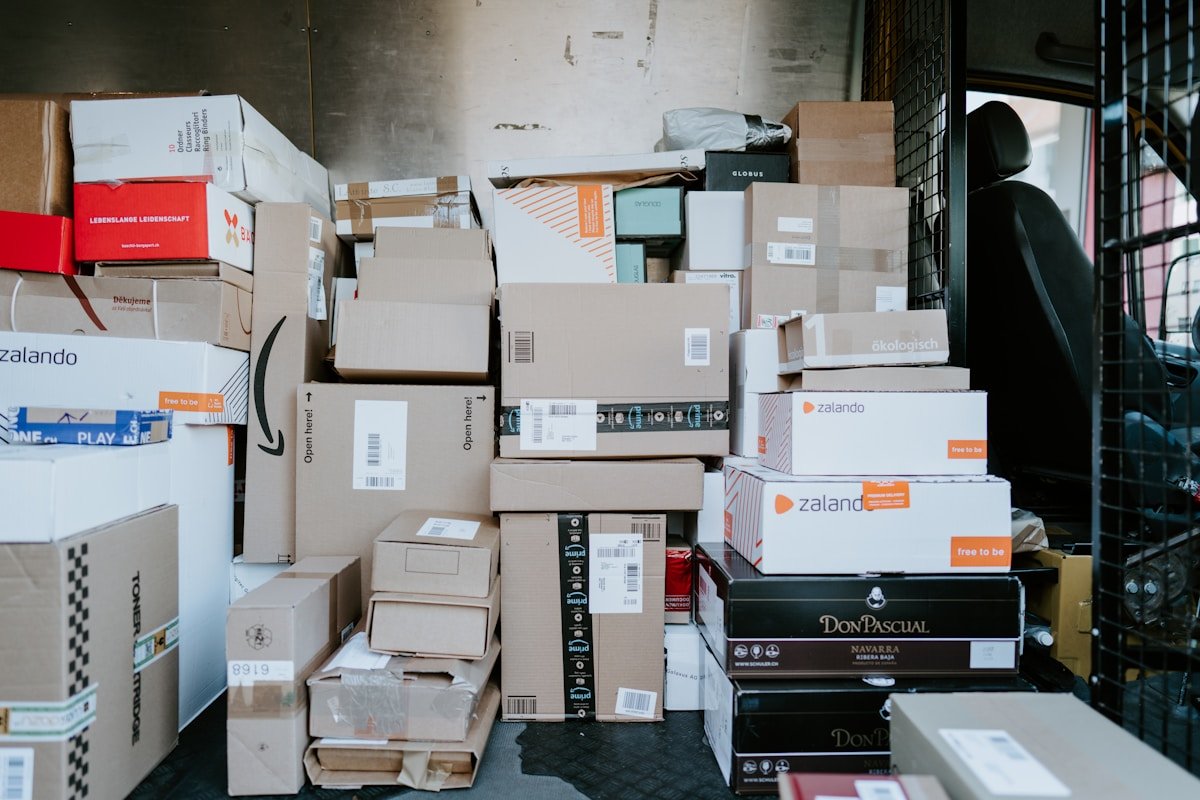 Project 54A carbon price at the border: CBAM extends the EU's emissions cost to imported steel, aluminium and cement
The Root Cause: Carbon Leakage and a Price Worth Protecting
The logic chain runs cleanly, and it is worth spelling out because it explains why CBAM is a structural fixture, not a temporary tariff. It starts with the EU Emissions Trading System, live since 2005, which caps industrial and power emissions and forces installations to buy allowances to cover what they emit. That puts a price on carbon inside the EU, which through 2025 and 2026 sat broadly in the 60 to 80 euros per tonne range.
Because a carbon price raises the cost of making steel, cement, aluminium and fertiliser inside the EU, policymakers feared carbon leakage: production and its emissions simply relocating to countries with no carbon price, or EU buyers switching to cheaper, higher-carbon imports. That would damage EU industry and achieve nothing for the climate, merely moving emissions around the map. As the European Commissioner for Climate, Wopke Hoekstra, framed it, "Climate change is a global crisis, and to tackle it, emissions have to go down all across the world, not just move from one place to the next."
The EU's historical fix for leakage was to hand its own industry free ETS allowances, which protected competitiveness but blunted the carbon-price signal for the heaviest emitters. CBAM is the replacement. It puts an equivalent carbon price on imports, so a buyer of foreign steel pays broadly what an EU producer pays through the ETS, and as the EU withdraws free allowances from domestic producers it phases CBAM in on imports at the same rate. This is why the certificate price is hard-wired to the ETS auction price: the entire design intent is price equivalence between a tonne made inside the EU and a tonne imported. The umbrella policy is the European Green Deal and its Fit for 55 package, and CBAM is what makes decarbonising heavy industry politically survivable, because you can only raise the internal carbon price and remove free allowances if you protect domestic producers from being undercut by unpriced imports. It is the same logic that turned supplier carbon accounting into a commercial gate, which we examined in Shell's Scope 3 procurement analysis.
A Cost That Escalates on a Fixed Schedule
The certificate price mirrors the EU ETS, calculated from the weighted average of allowance auction prices, published quarterly in 2026 and weekly from 2027. What makes 2026 gentle is the phase-in: only 2.5 percent of embedded emissions are chargeable this year, because 97.5 percent is still shielded by the free allowances that EU producers receive. That shield is withdrawn on a fixed schedule, and the CBAM charge rises in step, reaching 100 percent by 2034.
The escalation is the story. At a flat carbon price, the chargeable share climbing from 2.5 percent in 2026 to 100 percent in 2034 means the effective per-tonne cost of exporting to the EU rises roughly fortyfold over the period, and if the ETS price also rises, the two effects compound. The single largest annual jump falls between 2029 and 2030. Non-compliance is expensive too: the penalty in the definitive regime is 100 euros per tonne of CO2, indexed to inflation, and it is paid in addition to still having to surrender the certificates, not instead of them. The table sets out the phase-in.
Suppliers should therefore not read the modest 2026 bite as the steady state. The commercial signal is being sent now, in the first liability year, even though the largest invoices arrive later this decade. The rational response is to measure and reduce embedded emissions before the schedule bites, exactly the kind of forward liability pricing we set out in our energy asset acquisition risk framework.
| Year | CBAM charge on embedded emissions | Free EU allowance remaining |
|---|---|---|
| 2026 | 2.5 percent | 97.5 percent |
| 2027 | 5 percent | 95 percent |
| 2028 | 10 percent | 90 percent |
| 2029 | 22.5 percent | 77.5 percent |
| 2030 | 48.5 percent | 51.5 percent |
| 2032 | 73.5 percent | 26.5 percent |
| 2034 | 100 percent | 0 percent |
Verified Emissions Data Becomes a Gate on EU Access
Two different lenses matter. By volume of CBAM-covered exports to the EU, Russia is the largest supplier, followed by Türkiye, the UK, China and Norway. By projected cost exposure, analysts expect over half of CBAM costs by 2030 to fall on just five countries, India, Türkiye, China, Ukraine and Russia, with India bearing an estimated 18 percent because of its reliance on coal-based steelmaking and the absence of a domestic carbon price. For the Gulf and wider MENA audience, the exposure is concentrated in aluminium, where Bahrain is a significant EU supplier, and prospectively in fertilisers and hydrogen, and the key vulnerability is the absence of a domestic carbon price, because CBAM credits any carbon price already paid at origin and charges the full amount where none exists.
The commercial mechanics turn on data. From 2026 the importer's bill depends on the verified embedded emissions of the specific goods, and if a non-EU supplier cannot provide audited installation-level data, the importer falls back on default values that are deliberately conservative and therefore more expensive. In practice, can you give me verified embedded-emissions figures for this shipment becomes a qualification question EU buyers put to their suppliers, the same kind of supplier-data requirement that already decides who wins Gulf energy tenders under the local-content rules we set out in our IKTVA and ICV analysis.
The behaviour is already shifting. Trade data showed clear front-loading of aluminium and steel imports into the EU in late 2025, before the definitive regime bit, then a sharp fall from exposed origins in January 2026. Europe's steel industry wants the mechanism tightened further. Responding to the Commission's December 2025 proposals, the steel association EUROFER said they "correctly identify several loopholes that risk undermining its effectiveness," but "are insufficient, and fail to address key weaknesses. They do not yet provide the level of protection against carbon and jobs leakage European steel urgently needs to successfully transition while remaining competitive on global markets." The takeaway for a supplier is that carbon data is turning into a gating credential for EU access: those who can measure, verify and reduce embedded emissions convert CBAM into a selling point, and those who cannot watch EU demand migrate to cleaner competitors and to exempt origins such as Norway and Iceland.
Wider Scope, More Copies, and a Contested Legality
Scope expansion is the dominant forward story. In December 2025 the Commission proposed extending CBAM to roughly 180 downstream steel-intensive and aluminium-intensive products, such as machinery and construction goods, and its stated ambition is to reach, by 2030, all product groups covered by the ETS and goods at risk of leakage, with chemicals, polymers and plastics the most-cited next candidates. Suppliers of manufactured and downstream goods, not just raw steel or aluminium, should expect to be pulled in. The Commission also proposes that from 2028, 75 percent of CBAM revenue flow to the EU budget, an estimated figure in the region of 1.4 billion euros a year that is best treated as a projection.
Other jurisdictions are following. The United Kingdom has confirmed its own CBAM from 1 January 2027, covering aluminium, cement, fertilisers, hydrogen and iron and steel, and other economies are studying similar measures, so a patchwork of carbon border mechanisms is emerging. That is, in fact, the outcome the EU says it wants: a world that prices carbon so that CBAM eventually becomes redundant.
The legality is genuinely contested. Trading partners argue CBAM may breach World Trade Organization non-discrimination principles, and developing economies invoke the principle of common but differentiated responsibilities, arguing the mechanism pushes costs onto countries that contributed least to historical emissions. India has been among the most vocal objectors. The EU's theory of change is that CBAM exports the carbon price, giving third-country producers and governments an incentive to price and cut carbon at home and keep the revenue rather than hand it to Brussels. Whether that materialises, or whether CBAM triggers a formal trade challenge, is the central geopolitical question of the next several years, and it sits alongside the supply-and-policy uncertainty we track in oil markets through our analysis of OPEC and the monthly-barrel era.
Listen & take it with you
Prefer audio, or need the deck for an internal review? The full briefing is available as a podcast episode and a downloadable slide presentation.
What is the most important thing for a non-EU supplier to do about CBAM now?
Frequently asked
CBAM is the EU's carbon tariff on imports of carbon-intensive goods, currently iron and steel, aluminium, cement, fertilisers, hydrogen and electricity. It puts a carbon price on imports equivalent to what EU producers pay through the Emissions Trading System, so that importing high-carbon goods no longer undercuts EU industry or simply relocates emissions abroad. Its definitive, financial phase began on 1 January 2026.
The financial obligation began with 2026 imports, but certificates are purchased from February 2027 and the first declaration covering 2026 is due by 30 September 2027. The first-quarter 2026 certificate price was 75.36 euros per tonne of CO2. In 2026 only 2.5 percent of embedded emissions are charged, because most is still covered by free EU allowances, but that share rises on a fixed schedule to 100 percent by 2034.
By export volume, Russia, Türkiye, the UK, China and Norway supply the most CBAM-covered goods. By projected cost, analysts expect India, Türkiye, China, Ukraine and Russia to bear most of the burden, with India especially exposed through coal-based steel. Gulf producers are exposed mainly in aluminium, where Bahrain is a significant EU supplier, and prospectively in fertilisers and hydrogen, with the absence of a domestic carbon price the key vulnerability.
It turns verified embedded-emissions data into a gate on EU market access. From 2026 the importer's bill depends on the emissions of the specific goods, and suppliers who cannot provide audited data are assigned conservative default values that cost more. Carbon-intensive producers face a disadvantage that grows every year, so measuring, verifying and reducing embedded emissions becomes a commercial requirement, not an option.
The legality is contested. Trading partners argue CBAM may breach WTO non-discrimination principles, and developing economies invoke common but differentiated responsibilities, so a formal challenge is possible. Other jurisdictions are nonetheless following: the UK has confirmed its own CBAM from 1 January 2027, and several economies are studying similar measures, which is the outcome the EU says it wants.
Get the next intelligence drop
Join energy and industrial leaders getting our marketing, AI-growth and revenue-architecture intelligence, direct, no filler.
You're on the list
Welcome to The Energy Growth Brief, watch your inbox for the next dispatch.